


How to Test Dropshipping Products Without Spending a Fortune on Ads
Discover practical ways to validate dropshipping products, reduce ad waste, and find winning items using organic testing, small-budget campaigns, and supplier checks.
.avif)

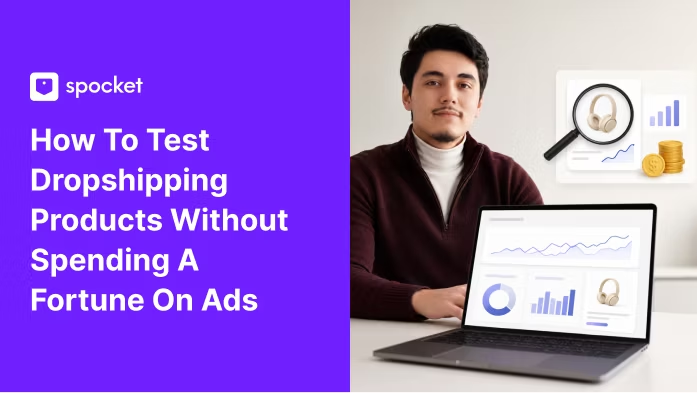
Testing dropshipping products is one of the most important steps in building a profitable store. But for many beginners, product testing becomes expensive because they depend too much on paid ads from the start. They pick a product, launch a campaign, spend money, get little response, and move on without understanding what went wrong.
The better approach is to test products in stages. You can validate demand, check supplier quality, understand customer interest, and improve your offer before putting a large budget behind it. This helps you avoid random guessing and makes every product test more useful.
You do not need a huge ad budget to find a winning dropshipping product. You need a clear process. Start with research, look for buying signals, test with organic content, create a strong product page, and use small-budget ads only when the product shows promise.
.avif)
Why Product Testing Matters in Dropshipping
Product testing helps you avoid building your store around assumptions. Just because a product looks interesting does not mean people will buy it. A product may get views on social media but still fail because the price is too high, the benefit is unclear, the audience is too broad, or the supplier is unreliable.
Testing gives you real signals before you scale. It helps you understand whether customers care about the product, whether your product page explains it well, and whether your offer is strong enough to convert visitors into buyers.
It also protects your budget. Instead of spending heavily on every product idea, you can test small, study the results, and only invest more when the product shows potential.
Testing Is Not the Same as Scaling
Many new dropshippers confuse testing with scaling. Testing is about learning. Scaling is about increasing investment after you already have proof that something is working.
During testing, your goal is to answer questions like:
- Do people understand the product quickly?
- Does the product solve a real problem?
- Are customers interested enough to click, save, comment, or buy?
- Can you sell it at a profitable price?
- Is the supplier reliable enough?
- Does the product fit your store’s niche?
If the product shows strong signals, you can slowly increase your budget. If the results are weak, you can improve the page, change the angle, or move on before wasting more money.
How to Test Dropshipping Products Without Wasting Your Budget
Before you start testing individual products, it helps to understand that product validation is not about spending more money. It is about collecting the right signals in the right order. A smarter testing process starts with research, supplier checks, organic content, product-page improvements, and small controlled campaigns.
This way, you can find out whether a product has real demand before putting a larger ad budget behind it.
1. Start With Product Research Before Spending on Ads
Product research is the cheapest form of product testing. Before you spend money on campaigns, you should first check whether the product has real market potential.
A strong dropshipping product usually solves a problem, saves time, improves comfort, supports a hobby, makes daily life easier, or works well as a gift. Products that are easy to explain and demonstrate often perform better because customers can understand their value quickly.
Research also helps you avoid weak products. Some items may look trendy but have poor margins, limited demand, slow shipping, or too much competition.
Look for Real Buying Signals
A product going viral does not always mean people want to buy it. Sometimes people engage with products because they are unusual or entertaining, not because they have purchase intent.
Look for signs that customers are seriously interested, such as:
- People asking where to buy the product
- Questions about price, size, color, or shipping
- Comments about using the product in real life
- Reviews mentioning specific benefits
- Repeated interest across different platforms
- Demand in niche communities
These signals show that people are thinking beyond entertainment. They may actually want the product.
Understand the Problem Behind the Product
A good product usually connects to a clear problem or desire. If you cannot explain why someone would buy it, the product may be hard to sell.
Ask yourself:
- What problem does this product solve?
- Who has this problem?
- How often does the problem happen?
- Is the problem frustrating enough to make someone buy?
- Can the solution be shown clearly in content?
- Does the product create an emotional reaction?
For example, a pet grooming tool may help with shedding. A travel organizer may reduce packing stress. A storage product may help people manage small spaces. When the problem is clear, your marketing becomes much easier.
2. Choose Products That Are Worth Testing
Not every product deserves your time or money. Some products may look interesting but are difficult to explain, hard to ship, or too expensive to sell profitably.
A product worth testing should have a clear audience, strong visual appeal, reasonable margins, and a simple value proposition. Customers should be able to understand what it does within a few seconds.
Look for Visual and Practical Appeal
Products that can be shown in action are often easier to test. This is especially useful for short-form videos, product demos, and social media posts.
Good test products often have:
- A clear before-and-after effect
- A simple problem-solution angle
- A useful everyday purpose
- Strong gift potential
- A unique design
- A visible transformation
- A clear audience
If the product does not look interesting in photos or videos, it may still sell, but it will need stronger copy and positioning.
Check Margins Before Testing
A product can generate sales and still fail if the profit margin is too low. Before testing, calculate the product cost, shipping cost, transaction fees, possible discounts, returns, and ad spend.
Avoid products where there is almost no room for profit. If one refund or discount removes your margin, the product may be too risky for paid testing.
A good test product should leave enough room for marketing, customer support, and profit after all costs.
3. Validate Supplier Quality Before Promotion
Supplier quality is a major part of product testing. Many sellers only test whether people want the product, but they forget to check whether the product can be delivered properly.
A product with strong demand can still damage your store if the supplier ships late, sends poor-quality items, or provides unreliable tracking. This can lead to refund requests, negative reviews, and unhappy customers.
This is where Spocket can help store owners test with more confidence. Spocket connects merchants with vetted suppliers, including suppliers closer to major customer markets. This allows sellers to consider product quality, shipping time, and fulfillment reliability before scaling.
Review the Full Supplier Experience
Do not judge suppliers only by product cost. A cheaper supplier can become expensive if they create customer service problems later. Before testing a product, check:
- Processing time
- Estimated delivery time
- Shipping cost
- Tracking availability
- Product images
- Product description accuracy
- Stock reliability
- Return policy
- Supplier responsiveness
If anything feels unclear, fix it before promoting the product.
Order a Sample When Possible
Ordering a sample is one of the smartest low-cost testing steps. It helps you see what customers will actually receive.
When your sample arrives, check the product quality, packaging, delivery time, tracking accuracy, size, color, material, and overall presentation. Ask yourself whether you would confidently sell the product to a paying customer.
A sample also helps you create original content. You can record videos, take photos, write more accurate product descriptions, and create better product demos.
4. Use Organic Content to Test Product Interest
Organic content is one of the best ways to test products without spending much money. You can post short videos, product demos, unboxings, comparison clips, and problem-solution content to see how people respond.
The goal is not always to go viral. The goal is to collect early signals. If people watch, comment, save, share, or ask questions, the product may have potential.
Create Simple Product Demo Videos
Product demos work well because they show the product in action. Customers can quickly understand what the item does and why it may be useful.
You can create content around:
- Before-and-after results
- Daily routine use
- Gift ideas
- Common problems
- Unboxing clips
- Comparison with a basic alternative
- “Things that make life easier” angles
Keep your videos simple and realistic. Content that feels natural often performs better than content that looks overly polished.
Test Different Angles
The same product can appeal to different customers for different reasons. A storage product may attract parents, students, renters, or home organization lovers. A pet product may appeal to new pet owners, busy professionals, or gift buyers.
Test angles such as saving time, saving space, reducing stress, improving comfort, looking aesthetic, or solving a daily frustration. If one angle gets stronger engagement, use that insight when creating your product page and ads.
5. Build a Product Page Before Running Ads
A product test is not only about the product. It is also about whether your product page can turn visitors into buyers.
A good product can fail if the page is unclear, slow, confusing, or missing important details. Before sending traffic to the page, make sure it explains the product clearly and builds trust.
Your product page should include strong images, simple product copy, clear benefits, shipping information, return details, and FAQs.
Focus on Benefits, Not Just Features
Features describe what the product has. Benefits explain why customers should care.
Instead of only saying “compact design,” explain that the product saves space in small homes or travel bags. Instead of saying “adjustable strap,” explain that it creates a more comfortable fit.
Your product page should answer:
- What is the product?
- Who is it for?
- What problem does it solve?
- How does it work?
- Why is it useful?
- What comes in the package?
- How long does delivery take?
The clearer your page is, the more reliable your test results will be.
Add Clear Shipping and Return Information
Customers may leave your page if they do not know when the product will arrive. Add simple shipping details near the product description or buy button.
Mention the estimated delivery window, tracking availability, and basic return policy. This reduces uncertainty and makes your store feel more trustworthy.
6. Run Small-Budget Ad Tests Carefully
Paid ads can be useful, but they should not be your first or only testing method. When you do use ads, start small and stay controlled.
The purpose of a small-budget test is to collect early data. You want to see whether people click, visit the page, add to cart, start checkout, or buy.
Set a Clear Testing Budget
Decide your budget before launching the test. This prevents emotional spending when results are unclear.
Your budget should be enough to collect useful signals but small enough that a failed test does not hurt your business. If a product gets no engagement, no clicks, and no add-to-cart activity, pause it and review the product, page, or audience.
Test One Main Variable at a Time
If you test too many things at once, your data becomes confusing. You may not know whether the product failed because of the creative, price, audience, or landing page.
Start with a few creative angles for one product. Once you find an angle that gets attention, test different hooks, videos, images, or product page improvements.
7. Use Waitlists and Pre-Launch Pages
A waitlist or pre-launch page can help you measure interest before spending heavily on ads. This works well for niche products, seasonal products, premium items, or products you are unsure about.
A waitlist does not guarantee sales, but it shows whether people are interested enough to share their email.
Keep the Page Simple
Your waitlist page should include a clear headline, short product benefit, product image, signup form, and simple incentive.
You can offer early access, a small launch discount, or first notification when the product becomes available.
Treat Signups as a Demand Signal
If people visit the page but do not sign up, your product, headline, image, or offer may need improvement. If people do sign up, you have a warm audience for launch.
You can later send a product preview, discount code, or survey to learn more about what they want.
8. Test With Your Existing Audience
If you already have website visitors, social followers, email subscribers, or past customers, use them before spending on cold ads. Warm audiences are often more affordable to test because they already know your brand.
Even a small audience can provide useful feedback.
Use Polls and Questions
Polls help you compare product ideas quickly. Ask questions like:
- Which product would you use most?
- Which color do you prefer?
- Would you buy this as a gift?
- What problem would you want this to solve?
- Which product should we launch next?
Polls are not the same as purchases, but they help you understand interest.
Send Product Preview Emails
If you have an email list, send a short preview with one clear benefit, a product image, and a call to action.
Ask subscribers to join a waitlist, vote on a variant, reply with feedback, or visit the product page. Track clicks, replies, and signups to decide whether the product deserves more testing.
9. Track the Right Product Testing Metrics
Testing only works when you track the right numbers. Sales matter, but they are not the only early signal.
A product may show promise through engagement, clicks, add-to-carts, checkout starts, comments, and email signups before it produces steady sales.
Watch Early Interest Signals
Look for:
- Video watch time
- Click-through rate
- Comments and questions
- Saves and shares
- Product page visits
- Add-to-cart activity
- Checkout starts
- Email signups
If people click but do not buy, review the product page, pricing, offer, trust signals, and shipping details before rejecting the product completely.
Know When to Stop Testing
Not every product deserves more time. If a product has weak engagement, poor clicks, no add-to-cart activity, and no meaningful customer questions, it may be time to stop.
Stopping early is not failure. It protects your budget and helps you move toward stronger product ideas.
10. Improve the Offer Before Blaming the Product
Sometimes the product is not the problem. The offer may be weak.
Your offer includes the product, price, discount, shipping, bundle, guarantee, product page, and perceived value. Improving these elements can sometimes turn a weak test into a stronger one.
Try Bundles or Quantity Offers
Bundles can improve perceived value and average order value. They work well when customers naturally need more than one item.
For example, a storage product may work better as a set. A beauty accessory may work better in a bundle. A pet item may perform better when paired with a related product.
Improve Product Copy
If people click but do not buy, your copy may not be clear enough. Make the benefits stronger, address objections, explain who the product is for, and show why it is worth buying now.
A good copy should feel helpful, not pushy.
Common Mistakes to Avoid
Many dropshippers lose money because they test without structure. They spend too quickly, ignore supplier issues, or judge products with incomplete data. Avoiding these mistakes helps protect your budget.
Testing Too Many Products at Once
Testing too many products can make your data messy. Start with a small number of carefully selected products and give each one enough attention.
Spending Big Too Early
A product should earn more budget through performance. Start small, study the data, and scale only when results are promising.
Ignoring Supplier Reliability
Demand is not enough. If the supplier is unreliable, the customer experience will suffer. Always check quality, shipping, tracking, and communication before scaling.
Copying Competitors Blindly
A competitor’s success does not guarantee your success. Their audience, pricing, supplier, offer, and creative may be different. Use competitors for research, not direct copying.
Final Thoughts
Testing dropshipping products without spending a fortune on ads is possible when you follow a clear process. Start with research, choose products with real demand, validate suppliers, order samples when possible, create organic content, build a strong product page, and use small-budget ads only when the product shows promise.
The biggest mistake is treating paid ads as the first step. Ads should support your testing process, not replace it. Before spending heavily, make sure the product solves a real problem, has healthy margins, and can be fulfilled reliably.
With Spocket, merchants can reduce some of the risk by sourcing from vetted suppliers and choosing products with better quality and shipping potential. This makes product testing more focused and less random.
A winning product is not found by luck alone. It is discovered through research, small experiments, honest data, and consistent improvement.
Start your dropshipping business today
FAQs about Testing Dropshipping Products
How can I test dropshipping products without spending too much on ads?
You can test products through research, organic content, polls, waitlists, sample orders, email previews, and small-budget ad campaigns. The goal is to collect demand signals before investing heavily.
Can I test dropshipping products without paid ads?
Yes. You can use organic videos, product previews, waitlists, customer polls, and email campaigns to test early interest before using paid ads.
How much should I spend to test a dropshipping product?
There is no fixed amount. Start with a small budget you can afford to lose while collecting useful data. Increase spending only when the product shows promising signals.
What makes a dropshipping product worth testing?
A product is worth testing when it solves a clear problem, has visual appeal, offers healthy margins, has reliable supplier support, and can be explained easily.
Should I order samples before testing a product?
Yes, when possible. Samples help you check quality, packaging, delivery time, and whether the product matches the listing.


Launch your dropshipping business now!
Start free trial


Related blogs
How to Set Up Automated Order Fulfillment With Spocket and Shopify
Set up a smoother Shopify dropshipping workflow with Spocket by connecting your store, importing products, processing orders, syncing tracking, and reducing manual fulfillment tasks.

How to Open a Business Bank Account for Your Dropshipping Store
Set up your dropshipping finances the right way with a dedicated business bank account built for payouts, supplier payments, taxes, and long-term store growth.
Spocket vs Dropified: Which Tool Is Better for Multi-Store Scaling?
Compare Spocket and Dropified for multi-store dropshipping, supplier quality, automation, fulfillment, product sourcing, and scaling across ecommerce platforms.
