Social Media Content Calendar for Dropshipping Stores: Template and Tips
Learn how to build a social media content calendar for your dropshipping store with a practical template, content ideas, and planning tips.
.avif)

Running a dropshipping store without a social media content calendar can quickly become confusing. You may post a product photo one day, forget to post the next day, and then rush to create a caption when you finally remember. Over time, your social media starts to feel random instead of strategic.
A social media content calendar helps you plan what to post, when to post, where to post, and why each post matters. Instead of creating content at the last minute, you can organize product promotions, educational posts, seasonal campaigns, customer-focused content, and brand-building updates in advance.
For dropshipping stores, this is especially useful because your business moves fast. You may be testing new products, managing suppliers, updating your Shopify store, handling customer questions, and running ads all at once. A content calendar keeps your social media organized so your brand stays active even when the rest of the business gets busy.
A strong calendar also helps you connect your products with real customer needs.
What Is a Social Media Content Calendar?
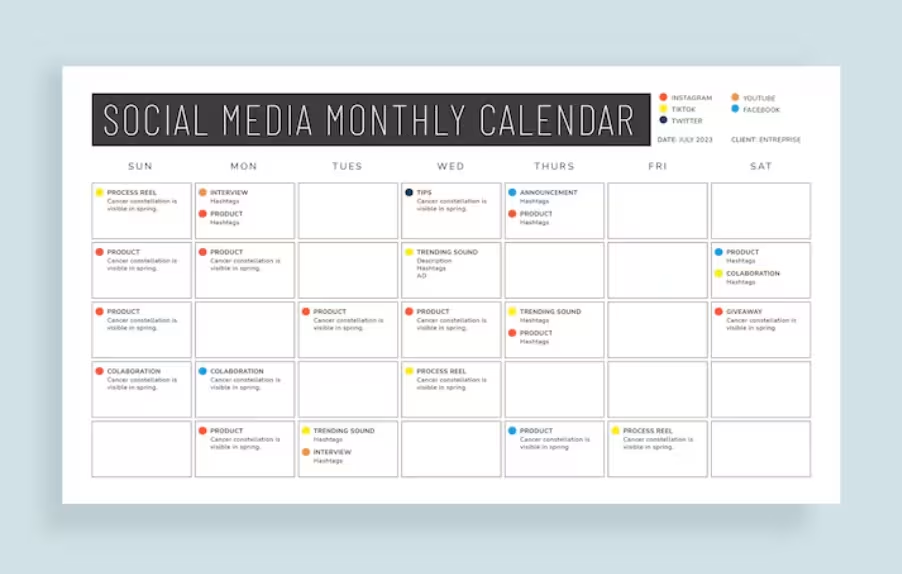
A social media content calendar is a planning system that organizes your upcoming posts across different social platforms. It helps you map out your content ideas, posting dates, captions, visuals, campaigns, and performance notes in one place.
For a dropshipping store, a content calendar is more than a basic schedule. It is a marketing tool that helps you connect your products with the right audience at the right time. It gives you a clear view of upcoming launches, discounts, seasonal opportunities, educational topics, and engagement posts.
A good content calendar usually includes:
- Posting date and time
- Social platform
- Content format
- Caption or post copy
- Product or campaign focus
- Visual asset link
- Call to action
- Hashtags or keywords
- Publishing status
- Performance notes
The goal is simple: make your social media less random and more intentional. When every post has a purpose, your content becomes easier to manage and more useful for your audience.
Why Dropshipping Stores Need a Social Media Content Calendar
Dropshipping stores often rely heavily on social media for product discovery. Customers may see your product on Instagram, TikTok, Facebook, Pinterest, or YouTube Shorts before they ever visit your store.
That means your social content plays a major role in building awareness and trust. If your posts are inconsistent or too sales-heavy, customers may not feel confident enough to buy. A content calendar helps you create a steady mix of posts that educate, engage, and convert.
It Helps You Stay Consistent
Consistency is one of the biggest trust signals for an online store. When customers visit your social profile and see regular, helpful posts, your brand feels more active and reliable.
If your last post was several weeks ago, shoppers may wonder whether your store is still operating. This can hurt conversions, especially for newer dropshipping brands.
A calendar helps you stay visible by planning posts ahead of time. Even a simple weekly schedule can make your store look more professional.
For example, you can plan:
- Product demos on Mondays
- Educational posts on Wednesdays
- Customer-style content on Fridays
- Promotional posts on weekends
This creates a rhythm your audience can recognize.
It Reduces Last-Minute Content Stress
Without a calendar, social media often becomes a daily task that keeps getting pushed aside. You may end up posting whatever is easiest instead of what is most useful.
A content calendar lets you batch your work. You can plan captions, visuals, videos, and campaigns in advance. This saves time and improves quality because you are creating content with a clear goal.
Instead of asking, “What should I post today?” you already know what is planned, what asset is needed, and what message the post should deliver.
It Helps You Promote Products More Strategically
Dropshipping stores need more than product images. Customers want to know how the product fits into their life, what problem it solves, and why they should buy from your store.
A calendar helps you create different content angles for the same product.
For example, if you sell a travel organizer, you can plan:
- A packing tips reel
- A product demo
- A before-and-after bag organization post
- A customer-style testimonial
- A limited-time offer
- A travel checklist carousel
- A delivery FAQ post
This gives one product multiple chances to connect with different types of buyers.
It Helps You Prepare for Seasonal Demand
Dropshipping stores can benefit from seasonal trends, but only if content is planned early. If you wait until the holiday or trend is already happening, you may miss the best window for promotion.
A calendar helps you prepare for:
- Valentine’s Day
- Mother’s Day
- Summer travel
- Back-to-school season
- Black Friday
- Cyber Monday
- Christmas gifting
- New Year wellness trends
- Seasonal home décor
- Festival shopping periods
Planning ahead gives you time to prepare visuals, captions, product pages, discounts, and email campaigns before demand peaks.
What to Include in a Social Media Content Calendar
A useful content calendar does not need to be complicated. In fact, the simpler it is, the easier it is to maintain.
For dropshipping stores, your calendar should include the details that help you publish faster, stay organized, and measure results. Start with the basics and add more fields only when needed.
1. Posting Date and Time
Every post should have a planned date and time. This helps you avoid posting too much on one day and disappearing for the rest of the week.
You can start with a simple schedule and adjust it later based on analytics. Over time, you will learn when your audience is most active and which posting times drive better engagement.
2. Platform
Each platform has a different content style. TikTok favors short, casual, fast-moving videos. Instagram works well for reels, carousels, and visual storytelling. Pinterest is more search-driven and useful for evergreen product discovery.
Include the platform in your calendar so you can adjust each post properly instead of copying the same caption everywhere.
Common platforms for dropshipping stores include:
- TikTok
- YouTube Shorts
- Threads
- LinkedIn, if your brand has a business or founder-led angle
3. Content Format
Mention the content format so you know what type of asset needs to be created. Useful formats include:
- Reel
- Short video
- Carousel
- Product photo
- Story
- Poll
- Static graphic
- Customer-style testimonial
- Educational post
- Product demo
- Behind-the-scenes post
This helps you balance your calendar and avoid repeating the same format too often.
4. Content Theme
Your content theme explains the purpose of the post. Dropshipping stores should avoid making every post a direct sales pitch.
Good content themes include:
- Product education
- Product demo
- Customer problem
- Lifestyle use case
- Trust-building
- Social proof
- Promotional offer
- Seasonal campaign
- FAQ
- Behind-the-scenes
- UGC-style content
A theme keeps each post focused and helps your feed feel more varied.
5. Caption or Post Copy
Your calendar should include the full caption or at least the main caption idea. This saves time when the post is ready to publish.
For better results, write captions that are specific. Avoid generic lines like “Upgrade your lifestyle today.” Instead, explain the actual benefit.
For example: “Keep your skincare bottles, makeup brushes, and travel minis organized in one compact pouch, so your bag does not turn into a mess during trips.”
Specific captions feel more helpful and more human.
6. Visual Asset
Add a link or note for the image, video, or design file. This prevents last-minute searching when it is time to post.
If you work with a designer, video editor, or virtual assistant, this field is especially helpful. Everyone can see what content is ready, what still needs work, and what is waiting for approval.
7. Call to Action
Every post should guide the customer toward a next step. The call to action does not always have to be “buy now.”
You can use calls to action like:
- Shop the collection
- Save this for later
- Comment your favorite
- Check the link in bio
- Send this to someone who needs it
- Explore the product
- Read the size guide
- Watch the demo
- Sign up for updates
Different calls to action support different goals. Some drive sales, while others build engagement or trust.
8. Status
A status field helps you track progress. Common statuses include:
- Idea
- Draft
- Needs visual
- Ready for review
- Scheduled
- Published
- Repurpose later
This keeps your workflow organized, especially if more than one person is involved in content creation.
Social Media Content Calendar Template for Dropshipping Stores
A good template gives your dropshipping store a repeatable planning system. You can use a spreadsheet, project management tool, scheduling app, or simple document. The format matters less than whether you use it consistently.
Below is a practical structure you can copy into your workflow.
Monthly Planning Section
Use this section to map out your big-picture content direction for the month. This helps you avoid random posting and gives your social media a clear focus.
Include:
- Monthly campaign theme
- Main product categories
- Seasonal opportunities
- New product launches
- Discount campaigns
- Influencer or UGC content
- Key holidays
- Email and social campaign alignment
- Content goals for the month
Example:
Monthly theme: Summer travel essentials
Main products: Travel organizers, packing cubes, portable bottles, mini toiletry bags
Campaign focus: Practical products for organized packing
Primary goal: Drive product page visits and build brand trust
Content angle: Save space, reduce mess, travel lighter
This section keeps your monthly strategy focused and easy to follow.
Weekly Planning Section
Use this section to break your monthly plan into weekly themes.
Example:
Week 1: Product discovery and education
Week 2: Lifestyle use cases and product demos
Week 3: Social proof and FAQs
Week 4: Promotional offer and seasonal urgency
This gives each week a purpose. It also makes your content feel more balanced because you are not posting the same type of message every day.
Daily Post Planning Section
Use this section for individual posts. Include:
- Date
- Platform
- Format
- Topic
- Product focus
- Caption
- Visual asset
- Call to action
- Status
- Performance notes
Example entry:
Date: June 5
Platform: Instagram
Format: Reel
Topic: Travel bag organization before and after
Product focus: Travel organizer pouch
Caption idea: Show how one pouch keeps small items in place during weekend trips
CTA: Save this for your next trip
Status: Needs video
Performance notes: Add after posting
This simple structure gives you everything needed to plan, create, publish, and review each post.
Sample Weekly Content Calendar for a Dropshipping Store
A weekly content calendar should balance selling, educating, entertaining, and reassuring customers. If every post is promotional, your audience may lose interest. If every post is educational, you may not drive enough sales.
The best approach is to mix content types throughout the week.
Monday: Problem-Awareness Post
Start the week by focusing on a customer problem. This makes your content relatable before introducing the product.
Example: “Still losing small items in your travel bag? Here are three ways to pack smarter for your next trip.”
This type of post works because it leads with the customer’s pain point, not the product.
Tuesday: Product Demo
Show how the product works. Keep it simple, visual, and easy to understand.
Example: A short video showing how a kitchen storage rack folds, expands, or fits into a small space.
Product demos are especially useful for dropshipping stores because customers cannot touch or test the product before buying.
Wednesday: Educational Post
Use this day to teach something useful.
Example: “How to choose the right pet travel accessory for long car rides.”
Educational content builds trust because it helps customers make better decisions. It also makes your brand feel more knowledgeable in the niche.
Thursday: UGC-Style Content
Post content that feels natural, casual, and customer-led.
Example: “Trying this desk organizer for one week to see if it actually keeps my workspace clean.”
UGC-style content often feels more relatable than polished ads. It helps products feel real and usable.
Friday: Social Proof or Trust Post
Use this day to reduce buying hesitation. Examples include:
- Customer review
- Before-and-after result
- FAQ about shipping
- Product quality highlight
- Return policy reminder
- Supplier or sourcing explanation
For Spocket sellers, this is a natural place to highlight reliable sourcing, curated products, and clearer fulfillment expectations.
Saturday: Promotional Post
Weekends can work well for offers, bundles, and product highlights.
Example: “Weekend travel sale: organize your carry-on before your next trip.”
Promotional posts work better when your audience has already seen educational and trust-building content earlier in the week.
Sunday: Community or Engagement Post
End the week with an easy engagement post.
Examples include:
- “Which color would you choose?”
- “What is one product you always forget to pack?”
- “Pick your favorite home organization hack.”
- “Would you use this for travel or daily storage?”
Engagement posts help you learn about your audience while keeping your page active.
Tips to Build a Better Social Media Content Calendar
A content calendar should be practical, not complicated. If it becomes too hard to maintain, you will stop using it. The best calendar helps you publish consistently, improve content quality, and understand what works.
Plan Content Around Customer Questions
Your best content ideas often come from customer questions. If people keep asking about shipping, sizing, product use, or returns, turn those questions into posts. For example:
Customer question: “Will this fit in a carry-on bag?”
Content idea: “Here is how this organizer fits inside a standard carry-on.”
This makes your content more useful and reduces repeated support questions.
Create Content Pillars
Content pillars are the main themes your brand posts about. They help you stay focused and avoid random content.
A dropshipping store can use pillars like:
- Product education
- Product demos
- Lifestyle inspiration
- Customer trust
- Social proof
- Promotions
- FAQs
- Seasonal content
Choose four to six pillars and rotate them weekly.
Batch Your Content Creation
Batching means creating multiple pieces of content at once. This saves time and improves consistency.
For example, you can spend one day recording five product demos, another day writing captions, and another day scheduling posts.
Batching is helpful for dropshipping stores because daily content creation can become overwhelming.
Repurpose Strong Content
Not every post needs to be brand new. If a product demo performs well on TikTok, adapt it for Instagram Reels, YouTube Shorts, Pinterest, or Facebook.
You can also turn:
- A blog section into a carousel
- A customer question into a reel
- A product demo into a story
- A review into a social proof post
- A FAQ into a short video
Repurposing helps you get more value from your best ideas.
Leave Space for Trends
A calendar should guide your content, not trap you. Leave room for trends, sudden product updates, or unexpected opportunities.
For example, if a product starts trending on TikTok, you may want to pause a planned post and create trend-based content instead.
A useful rule is to plan most of your content in advance while keeping some space flexible.
Review Performance Weekly
Your calendar should include space for performance notes. This helps you understand what works and what needs improvement.
Track simple metrics like:
- Reach
- Saves
- Shares
- Comments
- Link clicks
- Product page visits
- Sales from social campaigns
- Follower growth
Do not only chase likes. For dropshipping stores, clicks, saves, comments with buying intent, and product page visits often matter more.
Conclusion
A social media content calendar helps dropshipping stores stay consistent, organized, and strategic. It turns social media from a daily guessing game into a planned system for product promotion, customer education, engagement, and trust-building.
Start simple. Plan your monthly themes, create weekly content pillars, schedule daily posts, and review performance regularly. Mix product demos, educational posts, UGC-style content, FAQs, social proof, and promotions so your feed feels useful instead of repetitive.
With Spocket, sellers can strengthen their content strategy by sourcing quality products from reliable suppliers and building campaigns around products customers can trust. When strong products and consistent content work together, social media becomes more than a posting channel. It becomes a growth system for your dropshipping store.
Start your dropshipping business today
FAQs About Social Media Content Calendars for Dropshipping Stores
What is a social media content calendar for dropshipping stores?
A social media content calendar is a planned schedule that helps dropshipping stores organize posts across platforms like Instagram, TikTok, Facebook, Pinterest, and YouTube Shorts. It usually includes posting dates, content themes, captions, product focus, visuals, calls to action, and performance notes.
Why do dropshipping stores need a social media content calendar?
Dropshipping stores need a social media content calendar to stay consistent, reduce last-minute posting stress, plan product promotions, and build customer trust. It helps store owners balance product demos, educational posts, social proof, FAQs, and seasonal campaigns instead of posting randomly.
What should I include in a dropshipping social media content calendar?
A dropshipping social media content calendar should include the date, platform, content format, topic, product focus, caption, visual asset, call to action, status, and performance notes. You can also add monthly themes, weekly content pillars, campaign goals, and seasonal product ideas.
How often should a dropshipping store post on social media?
Most dropshipping stores can start with 3 to 5 high-quality posts per week on their main platforms. Stores using TikTok, Instagram Reels, or Pinterest may post more often if they have enough useful content. The goal is to stay consistent without posting repetitive or low-value content.
How can Spocket help with a dropshipping content calendar?
Spocket helps dropshipping stores build a stronger content calendar by giving sellers access to quality products from reliable suppliers, including suppliers from regions like the US and Europe. Better product sourcing makes it easier to create trust-building posts, product demos, lifestyle content, and clear shipping-related social media updates.


Launch your dropshipping business now!
Start free trial


Related blogs

Dropshipping Supplier Directory: Where to Find Vetted Suppliers
Browse our directory of vetted dropshipping suppliers across the US and EU, complete with niches, shipping speed, and pricing. Start your free trial today.


How to Negotiate With Dropshipping Suppliers: 9 Tactics That Actually Work
Learn how to negotiate with dropshipping suppliers on price, MOQs, and payment terms. Proven tactics and email scripts to boost your margins. Try Spocket free.

Best Clothing Dropshipping Suppliers: The 2026 Guide
Compare the best clothing dropshipping suppliers for 2026 — US/EU shipping speeds, pricing, and product quality — and find the right fit to launch your store.