The Role of Social Proof in Conversion Rate Optimization (CRO)
Understand how social proof builds trust, influences decisions, and improves conversion rates with actionable CRO strategies for ecommerce.
.avif)

Driving traffic to your ecommerce store is only the first step. The real challenge lies in converting that traffic into paying customers.
This is where conversion rate optimization (CRO) becomes critical. And among all CRO techniques, one stands out for its simplicity and effectiveness—social proof.
When users land on your store, they are often uncertain. They question product quality, brand credibility, and whether they should trust you at all. Social proof answers those concerns instantly by showing that other people have already made the same decision.
Instead of relying only on your messaging, social proof lets your customers do the convincing for you. In this guide, you’ll learn how social proof works, why it is essential for CRO, and how to use it strategically to increase conversions, build trust, and grow your ecommerce business.
What Is Social Proof in Ecommerce?
Social proof is the psychological concept where people rely on the actions, opinions, and experiences of others to guide their own decisions. In ecommerce, it acts as a trust signal that reduces uncertainty and helps customers feel more confident about purchasing.
It appears in many forms across an online store:
- Customer reviews and ratings
- Testimonials and case studies
- User-generated content (UGC)
- Influencer endorsements
- Real-time purchase notifications
At its core, social proof reassures potential buyers that others have already tried and trusted your product. This reduces perceived risk and makes the decision to buy feel safer and more justified.
Why Social Proof Matters for CRO
Social proof plays a central role in improving conversion rates because it directly addresses one of the biggest barriers in ecommerce—trust. When customers feel uncertain, they hesitate. When they see proof, they act.
Builds Instant Credibility
When visitors arrive at your store, they don’t know your brand yet. Social proof bridges that gap by providing evidence that others have already engaged with your products. This instantly increases credibility and reduces skepticism, especially for new or unfamiliar brands.
Reduces Decision Friction
Every purchase involves some level of doubt. Social proof helps eliminate that doubt by validating the customer’s decision. Seeing others buy, review, or recommend a product makes it easier for users to move forward without overthinking.
Strengthens Purchase Confidence
Customers feel more confident when they see positive feedback from others. This confidence plays a key role in pushing users from browsing to buying, especially for higher-value or unfamiliar products.
Improves Conversion Rates
By reducing uncertainty and reinforcing trust, social proof directly increases conversions. When customers feel reassured, they are more likely to complete their purchase instead of abandoning the page.
The Psychology Behind Social Proof
Social proof works because it taps into fundamental human behavior—people tend to look to others when making decisions, especially in uncertain situations. In ecommerce, where customers cannot physically experience a product, this psychological trigger becomes even more powerful.
By understanding how social influence, trust, and group behavior shape buying decisions, you can use social proof more strategically to reduce hesitation and guide users toward conversion.
The Bandwagon Effect
People tend to follow the actions of others, especially in uncertain situations. When a product appears popular or widely used, it signals that it is a safe and reliable choice. This encourages more people to follow the same behavior.
Fear of Missing Out (FOMO)
Social proof can create urgency by showing that others are actively buying or engaging with a product. This triggers a fear of missing out, prompting users to act quickly rather than delay their decision.
Trust Through Similarity
Customers trust people who are similar to them. Reviews, testimonials, and user-generated content from relatable users make the experience feel more authentic and believable.
Core Types of Social Proof That Drive CRO
Not all social proof is equally effective. The most impactful types are those that feel authentic, relevant, and easy to understand.
1. Customer Reviews and Ratings
Customer reviews are one of the most influential forms of social proof. They provide real insights into product quality, usability, and satisfaction.
Why They Work: Reviews answer common customer questions and provide reassurance through real experiences. A product with multiple reviews appears more trustworthy and reduces hesitation.
2. Testimonials
Testimonials highlight positive experiences and outcomes from customers.

Why They Work: They provide detailed, story-driven validation that helps customers relate and visualize their own experience with the product.
3. User-Generated Content (UGC)
UGC includes photos, videos, and content created by customers.
Why It Works: It feels more authentic than brand-created content and helps customers see how the product looks and performs in real life.
4. Influencer and Expert Endorsements
Influencers and experts bring authority and credibility.
Why They Work: Their recommendations carry weight because of their perceived expertise and audience trust.
5. Social Media Proof
Engagement metrics like likes, shares, and comments act as social validation.
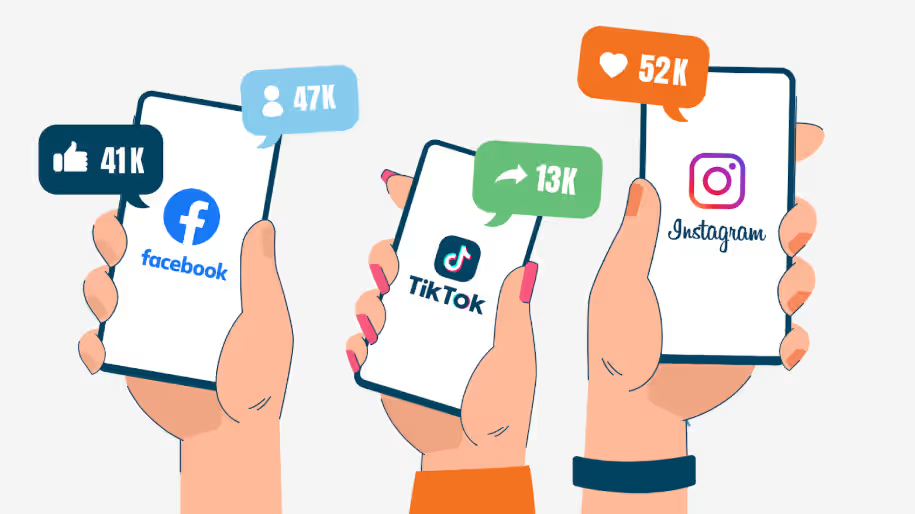
Why It Works: It shows that your brand is active and widely accepted, reinforcing trust.
6. Real-Time Activity Notifications
These include messages like:
- “Someone just purchased this”
- “Only a few items left”
Why They Work: They create urgency and show that others are actively engaging with your store.
Core Social Proof Strategies That Improve CRO
Using social proof effectively requires more than just adding reviews—it requires strategy.
1. Display Reviews Where They Matter
Reviews should be visible on product pages, near pricing, and close to the call-to-action.
Why It Works: Placing social proof at decision points reduces hesitation at the exact moment customers are deciding to buy.
2. Highlight Popular Products
Labels like “Best Seller” or “Most Popular” guide users toward trusted options.
Why It Works: Customers naturally gravitate toward products that others have already chosen.
3. Use Testimonials on High-Impact Pages
Landing pages and checkout pages benefit greatly from testimonials.
Why It Works: They reinforce trust at critical conversion stages.
4. Incorporate User-Generated Content
Show real customer photos and videos.
Why It Works: It adds authenticity and helps customers visualize real-world usage.
5. Add Trust Signals
Trust badges and certifications reinforce security and reliability.
Why It Works: They reduce perceived risk and increase confidence during checkout.
Best Practices for Using Social Proof in CRO
Using social proof effectively is not just about adding reviews or testimonials—it’s about presenting them in a way that actually influences decisions. When implemented thoughtfully, social proof can guide users, reduce hesitation, and improve conversions without overwhelming the experience. The key is to focus on relevance, placement, and authenticity so that each element supports the buying journey.
Keep It Authentic
Authenticity builds trust faster than anything else in ecommerce. Customers can easily recognize overly polished or fake-looking reviews, which can damage credibility instead of improving it.
- Use real customer reviews and unedited feedback
- Include names, images, or verified badges where possible
- Avoid exaggerated claims or scripted testimonials
Authentic proof feels relatable and believable, which makes it far more persuasive.
Place It Strategically
Where you show social proof matters just as much as what you show. If it appears at the wrong moment, it loses impact.
- Add reviews near product descriptions and pricing
- Place testimonials close to CTAs or checkout sections
- Use trust badges at high-friction points
Strategic placement ensures that social proof supports decision-making exactly when users need reassurance.
Use Variety
Relying on a single type of social proof limits its effectiveness. Different users respond to different signals.
- Combine reviews, testimonials, and user-generated content
- Add social media mentions or influencer proof
- Include real-time notifications for urgency
A mix of formats creates a stronger and more layered sense of trust.
Keep It Updated
Outdated social proof can reduce credibility, especially in fast-moving ecommerce niches. Fresh content signals that your store is active and relevant.
- Regularly update reviews and testimonials
- Highlight recent purchases or feedback
- Remove outdated or irrelevant proof
Keeping your proof current ensures it remains trustworthy and impactful.
4 Common Social Proof Mistakes to Avoid
While social proof is powerful, using it incorrectly can reduce its effectiveness or even hurt conversions. Many stores either overuse it or fail to present it in a meaningful way. Avoiding these mistakes helps you maintain clarity, trust, and a smooth user experience.
1. Overloading the Page
Adding too much social proof can create clutter and overwhelm users.
- Too many popups, badges, or notifications can distract
- Excessive reviews can make content harder to scan
Instead of adding everything, focus on the most relevant and high-impact elements.
2. Using Generic Testimonials
Generic testimonials lack specificity and fail to build real trust.
- “Great product” or “Amazing quality” doesn’t add value
- Users look for detailed, experience-based feedback
Strong testimonials highlight specific benefits, outcomes, or use cases that customers can relate to.
3. Ignoring Negative Feedback
A perfect rating can sometimes feel unrealistic.
- A mix of positive and slightly critical reviews builds authenticity
- Addressing negative feedback shows transparency
Balanced reviews make your brand feel more honest and trustworthy.
4. Poor Placement
Even strong social proof won’t work if users don’t see it.
- Hidden reviews or testimonials reduce impact
- Proof placed too late in the journey may not influence decisions
Ensure visibility at key decision points for maximum effectiveness.
How Social Proof Impacts Key CRO Metrics
Social proof does more than build trust—it directly influences key performance metrics that determine your store’s success. When implemented correctly, it improves how users interact with your site and how often they convert.
Conversion Rate
Social proof reduces uncertainty and increases confidence at the moment of purchase.
- Customers feel reassured by others’ experiences
- It removes doubt and shortens decision time
This leads to a higher percentage of visitors completing their purchases.
Average Order Value (AOV)
Social proof can encourage customers to buy more, not just buy once.
- “Frequently bought together” suggestions increase cart size
- Reviews on bundled products improve upsell success
When customers see others buying multiple items, they are more likely to do the same.
Engagement
Relevant social proof keeps users interacting with your store longer.
- Reviews encourage scrolling and reading
- UGC and videos increase time spent on pages
Higher engagement often signals better interest and intent, improving overall performance.
Customer Trust
Trust is the foundation of all ecommerce success.
- Social proof validates your brand through real experiences
- It reduces perceived risk for new customers
As trust increases, so does the likelihood of repeat purchases and loyalty.
How Social Proof Drives Long-Term Growth
Social proof is not just about immediate conversions—it plays a critical role in building a sustainable ecommerce business. Over time, it strengthens your brand, improves customer relationships, and creates a cycle of trust and growth.
Builds Brand Authority
Consistent positive feedback positions your brand as reliable and credible.
- Strong reviews create a perception of quality
- High engagement signals popularity
This authority makes it easier to attract and convert new customers.
Encourages Repeat Purchases
Satisfied customers are more likely to return when they feel confident in your brand.
- Positive experiences reinforce trust
- Familiarity reduces hesitation in future purchases
Repeat buyers are often more valuable than new customers.
Amplifies Word-of-Mouth
Happy customers naturally share their experiences.
- Reviews, social posts, and referrals expand reach
- User-generated content acts as organic marketing
This creates a compounding effect where social proof continues to grow over time.
Conclusion
Social proof is one of the most practical and persuasive tools in conversion rate optimization because it helps customers feel confident when they are closest to making a decision. In ecommerce, trust is often the difference between a bounced visitor and a completed purchase, and social proof fills that trust gap by showing real validation from other buyers.
When used strategically through reviews, testimonials, user-generated content, and trust signals, it can reduce hesitation, strengthen credibility, and improve the overall performance of your store.The real advantage of social proof is that it does not just help you convert more customers today—it also helps you build a stronger brand over time. Better customer experiences lead to better reviews, stronger word-of-mouth, and more trust for future buyers.
If you want your CRO strategy to work harder, pair strong social proof with a dependable product and fulfillment experience. With Spocket, you can offer high-quality products and faster shipping, making it easier to deliver the kind of customer experience that naturally generates stronger reviews, more trust, and higher conversions.
Start your dropshipping business today
FAQs Social Proof in Conversion Rate Optimization
What is social proof in CRO?
Social proof in CRO is evidence that other people trust, use, or recommend your product or brand, which helps new visitors feel more confident about buying. It can include customer reviews, ratings, testimonials, user-generated content, influencer endorsements, and trust badges. Its main role is to reduce uncertainty and make purchasing decisions feel safer.
Why is social proof important for ecommerce conversions?
Social proof is important because ecommerce shoppers cannot physically inspect a product before buying, so they rely on external signals to judge trustworthiness. When they see that other people have had positive experiences, it reduces hesitation and increases purchase confidence. This makes social proof a powerful driver of conversions, engagement, and customer trust.
What type of social proof works best for CRO?
The most effective type depends on the product and audience, but customer reviews and ratings are usually the strongest starting point. User-generated content, testimonials, and trust badges also work well because they add authenticity and credibility at key decision points. A mix of these formats usually performs better than relying on just one.
Where should social proof be placed on an ecommerce store?
Social proof works best when it appears close to moments of decision. Product pages, landing pages, cart pages, and checkout sections are some of the most effective places to show reviews, testimonials, trust badges, or purchase activity. The goal is to make sure reassurance appears exactly where users may feel doubt.
Can social proof increase average order value as well as conversions?
Yes, social proof can increase average order value by making upsells and cross-sells feel more trustworthy. Features like “frequently bought together,” best-seller labels, and positive reviews on bundled or recommended products can encourage customers to add more items to their cart. This helps improve both conversion rate and overall revenue per order.


Launch your dropshipping business now!
Start free trial


Related blogs

The Future of Social Commerce: TikTok Shop, Instagram Checkout, and Beyond
What is the future of social commerce? Social commerce trends are changing how people shop online. Get the latest insights.


How to Monetize Your Facebook Page in 2025
Learn how to monetize your Facebook page in 2025 with real strategies, tools, and tips to earn through Reels, Shops, and more. Start building income today.


Best Time to Post on Instagram Today
Discover the best time to post on Instagram today for maximum likes and engagement. Get the latest 2025 data for each day of the week, expert tips, and a complete guide to boost your Instagram performance.