


Print on Demand Baby Onesies: Cost, Best Designs, and Profit Margins
Learn print on demand baby onesies costs, best design ideas, pricing formulas, and realistic profit margins plus supplier tips to sell babywear confidently.
.avif)

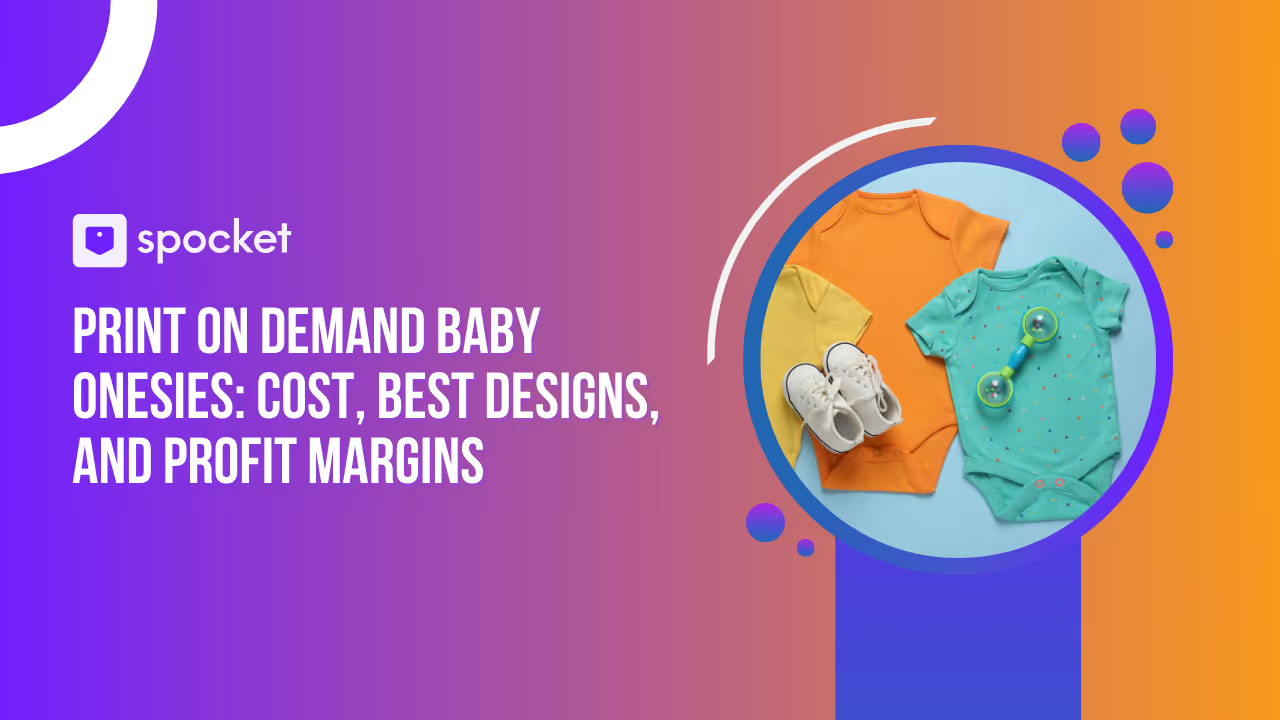
Print on Demand Baby Onesies are one of the most profitable and beginner-friendly products in the custom apparel space. Parents love personalized baby clothes, and gift buyers are always searching for unique, meaningful designs. If you’re exploring print on demand baby clothes, understanding the real costs, best-selling designs, and realistic profit margins is essential before you start selling.
From base blank prices and baby clothes printing methods to shipping, packaging, and compliance, every factor affects your bottom line. The good news? With the right pricing formula and design strategy, baby clothing print on demand can deliver strong margins without holding inventory. In this guide, you’ll learn exactly how much it costs to make baby clothes using POD, which designs convert best, and how to price your Print on Demand Baby Onesies for consistent profit.
What are Print on Demand Baby Onesies and Who Are They For
Print on Demand Baby Onesies are custom baby bodysuits that are printed only after a customer places an order. Instead of buying inventory in bulk, you upload a design, connect to a supplier, and the product is produced and shipped on demand.
This model is popular in print on demand baby clothes because it removes upfront inventory costs while allowing full design flexibility. Sellers can test trends, offer personalization, and expand into other print on demand baby products without financial risk.
They are ideal for two main audiences: gift buyers (baby showers, newborn announcements, milestone photos) and brand builders creating niche baby clothing print on demand collections.
What “Baby Onesie” and “Bodysuit” Mean in POD Listings
In most POD platforms, “baby onesie” and “infant bodysuit” are used interchangeably. Technically, “Onesie” is a trademarked term, so many suppliers list the product as a baby bodysuit.
.avif)
These garments typically feature:
- Soft cotton or organic cotton fabric
- Envelope shoulders for easy dressing
- Snap closures at the bottom
- Sizes from Newborn to 18–24 months
When browsing supplier catalogs, always check fabric weight, print area dimensions, and size charts. Small sizing variations can affect returns and profit margins.
Why Parents Buy Them
Parents prioritize three things: comfort, sentiment, and practicality.
First, babies grow fast. Affordable, customizable pieces allow parents to capture milestones without overspending. Second, personalized baby clothes make perfect gifts for baby showers, gender reveals, and first birthdays. A simple name or birth date instantly increases perceived value.
Third, baby clothes printing enables photo-ready outfits. Matching family sets and announcement onesies perform especially well because they are shareable on social media. Emotional value drives purchase decisions more than just price.
When POD Beats Bulk Buying
If you want to make baby clothes without holding stock, POD is usually the smarter choice.
Bulk ordering requires upfront capital, storage, and guessing which designs will sell. If a design flops, you’re stuck with inventory. With Print on Demand Baby Onesies, you can test multiple designs at low risk.
POD works best when:
- You are testing a new niche
- You want personalization options
- You prefer low startup costs
- You want to scale gradually
For new sellers entering baby clothing print on demand, this flexibility protects margins and reduces stress.
Real Cost Breakdown for Print on Demand Baby Onesies
Understanding cost structure is the foundation of profit. Every dollar matters in print on demand baby clothes, especially when pricing for gift buyers.
Here’s how the total cost typically breaks down.
Base Blank Cost
The blank baby bodysuit is your foundation cost. Pricing varies depending on:
- Fabric type (standard cotton vs organic cotton)
- Brand quality
- Fabric weight and softness
- Size range
- Country of production
Standard cotton blanks are usually more affordable, while organic or premium-branded ones cost more but allow higher retail pricing. Organic options can justify premium positioning in print on demand baby products.
.avif)
Printing Cost by Method
Printing method directly affects both cost and perceived value.
DTG (Direct-to-Garment): Ideal for detailed designs and small batches. Common in baby clothes printing because it works well on cotton and doesn’t require minimum orders.
Screen Printing: Cost-effective for bulk orders but less flexible for one-off POD unless your supplier automates small runs.
Embroidery: More premium and durable. Great for small logos or names but increases unit cost.
Vinyl/DTF: Works for bold graphics and text but may feel slightly heavier on soft baby fabric.
DTG remains the most popular method for baby clothing print on demand due to flexibility and softness.
Shipping Cost and Delivery Expectations by Region
Shipping varies by supplier location and customer region.
Domestic shipping (within the US or EU) is typically faster and cheaper. International shipping increases delivery time and cost, which can impact conversion rates.
Customers buying baby items expect reasonable delivery windows because they are often tied to events (baby showers, announcements). Delays can lead to refunds or negative reviews.
When calculating pricing, decide whether to:
- Offer free shipping and include it in the product price
- Charge separately
- Use tiered shipping rates
Packaging and Branding Add-Ons
Basic packaging is usually included, but premium options cost extra. These may include:
- Custom branded inserts
- Eco-friendly packaging
- Gift-ready wrapping
- Branded labels or tag removal
While add-ons increase cost, they also increase perceived value. Gift packaging is especially powerful in Print on Demand Baby Onesies because many buyers are purchasing for special occasions.
Your Hidden Costs Most Sellers Forget
Many beginners underestimate real expenses. Beyond the base and printing costs, you should account for:
- Product samples (always order at least one)
- Refunds and exchanges (sizing issues are common in babywear)
- Payment processing fees
- Platform fees
- Ad spend
- Mockup tools or design software
Ignoring these hidden costs can shrink your profit margin quickly.
A safe rule when selling print on demand baby clothes is to build a small buffer into your pricing. That margin cushion protects you from returns, shipping fluctuations, and promotional discounts.
Sample Cost Scenarios You Can Copy Paste Into Your Pricing
Understanding theory is helpful. Seeing real numbers makes it actionable. Below are practical pricing models you can adjust based on your supplier and region when selling Print on Demand Baby Onesies.
Example A: Budget DTG Onesie (Blank + DTG + Shipping)
Positioning: Simple graphic or short phrase, everyday wear.
- Blank cotton bodysuit: $6.00
- DTG printing: $4.00
- Shipping (domestic average): $4.00
- Payment processing + platform fees (est.): $1.50
- Returns buffer (5% estimate): $1.00
Total Cost: ≈ $16.50
Suggested Retail Price: $24.99 – $29.99
Estimated Profit:
- At $24.99 → ~$8.49
- At $29.99 → ~$13.49
This model works well for print on demand baby clothes targeting everyday buyers rather than premium gift shoppers.
Example B: Premium Embroidered Gift Onesie (Blank + Embroidery + Premium Packaging)
Positioning: Baby shower gift or personalized milestone piece.
- Premium blank: $8.00
- Embroidery: $6.00
- Shipping: $5.00
- Premium gift packaging: $2.50
- Fees + buffer: $2.00
Total Cost: ≈ $23.50
Suggested Retail Price: $39.99 – $44.99
Estimated Profit:
- At $39.99 → ~$16.49
- At $44.99 → ~$21.49
Gift buyers are less price-sensitive. Emotional value increases pricing power in baby clothing print on demand.
Example C: Organic Positioning (Organic Blank + DTG + Eco Packaging)
Positioning: Sustainable, sensitive-skin friendly branding.
- Organic cotton blank: $9.00
- DTG printing: $4.50
- Shipping: $4.50
- Eco packaging: $1.50
- Fees + buffer: $2.00
Total Cost: ≈ $21.50
Suggested Retail Price: $34.99 – $39.99
Estimated Profit:
- At $34.99 → ~$13.49
- At $39.99 → ~$18.49
Organic positioning allows you to compete on values, not just price, which strengthens margins across print on demand baby products.
Profit Margins and Pricing Formulas for Baby Onesies
If you understand these formulas, you can confidently price any design.
The Two Formulas That Matter
Profit = Selling price − (Product cost + shipping you cover + fees + returns buffer)
Always include everything. Even small overlooked costs destroy margins over time.
Margin % = Profit ÷ Selling price × 100
Example: If you sell at $29.99 and profit is $12 → 12 ÷ 29.99 × 100 ≈ 40% margin
For most sellers in baby clothes printing, targeting 35%–60% margin is healthy and sustainable.
What Margins Are Realistic in Baby POD and Why
Baby products have strong emotional buying triggers. Parents and gift buyers care about sentiment, not just price.
Typical margin ranges in baby clothing print on demand:
- Budget positioning: 30%–40%
- Mid-tier branded look: 40%–50%
- Premium personalized gift: 50%–65%
Higher margins are possible because:
- Personalization increases perceived value
- Baby gifts justify premium pricing
- Designs are often simple (low print complexity)
However, competition and ad costs affect real-world profitability.
Pricing Strategies That Work for Babywear
Gift Pricing (Premium for Occasion)
Price higher when positioning around:
- Baby showers
- Newborn announcements
- First birthdays
- Holiday gifts
Emotion allows a higher price ceiling.
Bundle Pricing (2-Pack or 3-Pack)
Example: Single onesie → $29.99
2-pack bundle → $54.99
Your per-unit cost barely changes, but perceived savings increase conversion while improving overall order value.
Personalization Upsells
Offer paid add-ons like:
- Baby’s name (+$4.99)
- Birth date (+$3.99)
- “Est. 2026” family designs (+$5.99)
This strategy works extremely well in print on demand baby clothes because customization feels meaningful.
Quick Margin Guardrails Checklist
Before launching your Print on Demand Baby Onesies, confirm:
- You included shipping in your pricing decision
- You factored payment processing fees
- You accounted for returns and exchanges
- Your margin is at least 35%
- You ordered and tested a sample
- You’re not competing only on lowest price
If you follow these guardrails, you protect profitability while scaling your baby clothing print on demand business with confidence.
Best Designs That Actually Sell for Print on Demand Baby Onesies
When it comes to Print on Demand Baby Onesies, conversion is driven by emotion, simplicity, and giftability. The designs that perform best are not overly complex. They’re easy to read, meaningful, and photo-ready.
Here’s what consistently sells in print on demand baby clothes.
Best-Selling Design Categories (And Why They Work)
Newborn Announcements
Examples:
- “Hello World”
- “Born in 2026”
- “Mom + Dad = Me
These designs sell because they are tied to a life event. Parents and relatives want keepsake photos, and announcement onesies are often purchased quickly without heavy price comparison.
Funny Short Phrases (Parent Humor, Clean and Simple)
Examples:
- “Milk Drunk”
- “Tiny Boss”
- “Nap Queen”
Short phrases convert better than long sentences. Clean humor feels gift-friendly and safe. In baby clothes printing, minimal text also improves print durability and clarity.
Minimal Icons (Tiny Hearts, Moons, Animals)
Soft, neutral designs like:
- Small teddy bears
- Rainbows
- Stars and moons
- Simple line-art animals
These appeal to modern, minimalist parents. Gender-neutral designs also expand your audience and reduce inventory complexity in baby clothing print on demand.
Milestone Onesies (1–12 Months)
Monthly milestone bodysuits are popular for photo documentation.
Examples:
- “1 Month”
- “Halfway to One”
- “Officially 6 Months”
Parents love structured photo progressions. Offering a 12-piece bundle increases average order value significantly.
Matching Sets (Mom/Dad + Baby)
Examples:
- “Mama Bear” + “Baby Bear”
- “Copy” + “Paste”
- “The Boss” + “The Real Boss”
Matching family sets perform well because they encourage multi-product purchases. This is one of the most profitable angles within print on demand baby products.
Design Rules for Baby Clothes Printing
Design success isn’t just about creativity. It’s about print performance.
1. Keep text bold and readable.
Avoid thin scripts that disappear on small garments.
2. Prioritize soft-hand feel.
DTG printing is popular in print on demand baby clothes because it keeps fabric flexible and breathable.
3. Avoid heavy ink saturation.
Large solid prints can feel stiff on small bodysuits.
4. Test wash durability.
Always order samples. Check cracking, fading, and shrinkage after washing.
Simplicity almost always outperforms complexity in baby clothing print on demand.
Color and Fabric Pairing Tips
Color pairing directly impacts perceived quality.
- Light garments (white, cream, pastel) → darker ink works best.
- Dark garments → require underbase printing, which can increase cost.
- Earth tones and muted palettes appeal to modern parents.
- Avoid overly neon combinations unless targeting niche humor.
Print placement also matters. Chest-centered designs perform best. Oversized prints can overwhelm small sizes.
Soft cotton and organic cotton fabrics enhance premium positioning for Print on Demand Baby Onesies.
Personalization Ideas That Increase AOV
Personalization increases profit without increasing base cost dramatically.
Consider offering:
- Baby’s name
- Birth date
- Family nickname
- “Est.” year (for new parents)
- Custom short phrase option
Charging $4.99–$9.99 for personalization is common in print on demand baby clothes and can increase margins significantly.
Compliance and Safety Basics for Printing Baby Clothes
When selling to parents, trust is everything. Compliance protects your business and reassures buyers.
What Counts as a “Children’s Product” in the US
In the United States, products designed for children 12 years and under fall under children’s product regulations. Baby bodysuits clearly qualify.
This means your baby clothing print on demand items must meet federal safety standards regarding materials, labeling, and testing if you’re selling into the US market.
CPSIA Essentials to Be Aware Of
The Consumer Product Safety Improvement Act (CPSIA) governs children’s products.
Key concepts to understand:
- Lead content limits
- Phthalate restrictions
- Children’s Product Certificate (CPC)
- Tracking label requirements
If you’re using a POD supplier, confirm they comply with CPSIA standards and can provide documentation if required. Compliance is critical for anyone selling print on demand baby products in regulated markets.
Practical Storefront Best Practices
Even if your supplier handles testing, your storefront should reflect transparency.
Include:
- Fabric composition (100% cotton, organic cotton, etc.)
- Care instructions (wash cold, tumble dry low)
- Clear size charts
- Age guidance (Newborn, 0–3M, etc.)
- Honest shipping timelines
Avoid making medical or skin-related claims unless certified.
Clear product information reduces returns and increases trust. In Print on Demand Baby Onesies, credibility can be the difference between a one-time sale and repeat customers.
Choosing the Right POD Supplier for Baby Clothing Print on Demand
Your supplier directly impacts print quality, delivery time, and profit margins. In baby clothing print on demand, quality matters even more because parents expect softness, safety, and durability.
Here’s how to choose wisely.
What to Evaluate
When comparing suppliers for Print on Demand Baby Onesies, focus on these criteria:
1. Print Quality
- Is the DTG print soft to the touch?
- Are colors vibrant after washing?
- Does embroidery look clean and tight?
2. Baby-Safe Materials
- 100% cotton or organic cotton options
- Breathable fabric
- No heavy or plastic-like ink feel
3. Size Range
At minimum: Newborn, 0–3M, 3–6M, 6–12M, 12–18M.
Limited sizing reduces conversions.
4. Shipping Speeds
Fast domestic shipping (US/EU) improves trust and reduces refund risk.
5. Branding Options
- Custom packaging
- Branded inserts
- Private label (tear-away tags)
These elements elevate your positioning within print on demand baby products.
Why Sampling Is Non-Negotiable
Never sell without ordering a sample first.
Run three tests:
Wash Test: Wash and dry the onesie at least twice. Look for fading, shrinkage, or cracking.
Softness Test: Touch matters in baby clothes printing. If it feels stiff or heavy, customers will notice.
Stretch & Snap Test: Check stitching durability and snap quality. Weak snaps increase return rates.
Sampling protects your reputation and ensures your Print on Demand Baby Onesies meet real-world expectations.
Where Spocket Fits for POD Baby Products
If you're sourcing baby clothing print on demand with faster delivery expectations, Spocket positions itself through its US and EU supplier network. This reduces long international shipping times, which is especially important for event-based purchases like baby showers.
With Spocket, products are produced after purchase, meaning you can test multiple baby designs without holding inventory. This aligns perfectly with low-risk print on demand baby clothes strategies.
Depending on the supplier listing, you may find:
- Cotton or organic cotton baby bodysuits
- DTG printing options
- Eco-friendly packaging availability
- Transparent base pricing and shipping breakdown
This allows you to calculate margins clearly before launching your store.
How to Launch and Market Baby Onesies Without Wasting Money
Great design and pricing mean nothing without smart execution. Here’s how to launch efficiently.
Product Page Checklist
Your product page should answer every parent’s question upfront.
Include:
- Clear size chart
- Fabric details (cotton, organic cotton, etc.)
- Print method mention (if relevant)
- Care instructions
- Delivery timeframe
- Gift positioning (“Perfect for baby showers”)
Clarity reduces returns and increases trust in print on demand baby clothes.
Photography and Mockups
High-quality visuals drive conversions.
Lifestyle shots (baby wearing the onesie) increase emotional appeal.
Flat lays showcase design clarity.
Tips:
- Use soft, natural lighting
- Avoid exaggerated claims in overlays
- Keep designs clearly visible
- Show close-up texture details
For compliance safety, avoid making unverified medical or “hypoallergenic” claims.
SEO Angles That Rank
To rank for Print on Demand Baby Onesies, align your content with buyer intent:
Gift Intent:
“Best baby shower gift onesies”
“Personalized newborn announcement outfit”
Personalization Intent:
“Custom name baby bodysuit”
“Birth date baby onesie”
Organic Intent:
“Organic cotton baby onesie print on demand”
Use your secondary keywords naturally:
- print on demand baby clothes
- baby clothes printing
- print on demand baby products
- baby clothing print on demand
- make baby clothes
Target long-tail variations in blog posts and product descriptions.
Ads and Organic Growth
You don’t need a massive budget to start.
- Pinterest: Excellent for baby milestone and announcement designs. Parents actively search there.
- Etsy-Style Keywords: Even if you sell on Shopify, study Etsy search phrases for high-converting wording.
- UGC Requests: Offer small discounts in exchange for customer photos. Authentic baby photos outperform stock images.
- Bundles and Limited Drops: Create urgency with milestone bundles or seasonal releases.
Smart positioning combined with strong margins makes Print on Demand Baby Onesies a scalable and low-risk entry into print on demand baby products.
Common Mistakes That Kill Profit Margins in Print on Demand Baby Clothes
Even strong designs can fail if your pricing or compliance strategy is weak. Avoid these costly mistakes when selling print on demand Baby Onesies.
Underpricing Shipping and Fees
Many beginners calculate only the blank and printing cost. They forget:
- Shipping (especially international)
- Payment processing fees
- Platform subscription costs
- Refund and return buffers
If shipping costs $4–$6 and you absorb it without adjusting your retail price, your margin shrinks fast. Always build shipping and a small safety buffer into your pricing formula for print on demand baby clothes.
Too-Complex Designs That Print Poorly Small
Baby onesies have limited print space. Overly detailed artwork, thin fonts, or heavy ink saturation often look blurry or stiff on small garments.
Simple, bold designs perform better in baby clothes printing. Clean typography and minimal graphics reduce print errors and increase durability after washing.
Complex artwork also increases production risk, which can lead to reprints and hidden losses.
Ignoring Returns and Sizing Issues
Babies grow quickly, and sizing varies by supplier. If your size chart is unclear, expect returns.
Common issues:
- Shrinkage after washing
- Inconsistent measurements
- Parents ordering the wrong milestone size
Each return reduces your profit margin. Always provide detailed sizing guidance in your baby clothing print on demand listings.
Selling “Sleepwear” Without Understanding Stricter Rules
Sleepwear has stricter flammability and safety regulations than general baby apparel in many regions.
Before expanding into pajamas or nightwear, research regulatory requirements carefully. Compliance mistakes can result in serious penalties and product removal.
Stick to standard bodysuits unless you fully understand the legal framework.
Conclusion
Success with Print on Demand Baby Onesies comes down to a simple loop: control your costs, design for emotional value, and protect your margins with smart pricing. Start by ordering samples, testing wash durability, and calculating your true all-in cost before launching.
Once your numbers are clear, position for gift appeal or personalization and price for at least 35–50% margin. If you want access to reliable US and EU suppliers for print on demand baby clothes, explore Spocket to test designs without inventory risk and scale confidently.
Start your dropshipping business today
Print on Demand Baby Onesies FAQs
How much does Print on Demand Baby Onesies cost per unit?
Print on Demand Baby Onesies typically cost $12–$25 per unit, including the blank bodysuit, printing method (DTG or embroidery), and shipping. Final pricing depends on fabric type, size range, supplier location, and packaging options.
What profit margin is good for print on demand baby clothes?
A healthy profit margin for print on demand baby clothes ranges between 35% and 60%. Personalized or gift-focused designs often allow higher margins, while basic everyday onesies may fall closer to 30%–40%.
What printing method is best for baby clothes printing?
DTG printing is best for detailed designs on cotton baby onesies because it feels soft and flexible. Embroidery adds a premium touch for small logos, while screen printing works better for bulk production.
Do I need to worry about CPSIA for baby clothing print on demand in the US?
Yes. Baby clothing print on demand products sold in the US must comply with CPSIA regulations covering lead limits, labeling, and safety standards. Always confirm your supplier follows children’s product compliance requirements.
What are the best-selling designs for Print on Demand Baby Onesies?
Top-selling Print on Demand Baby Onesies include newborn announcement designs, minimalist icons, funny short phrases, milestone prints, and personalized name options. These styles convert well because they are giftable and photo-friendly.
Is organic cotton worth it for POD baby onesies?
Organic cotton baby onesies can justify premium pricing due to sustainability and sensitive-skin positioning. In print on demand baby products, organic options often increase perceived value and improve brand differentiation.
Should I offer free shipping on baby onesies?
Free shipping can improve conversions if you include the cost in your retail price and maintain margins. Transparent, fast shipping options also perform well in print on demand baby clothes stores.
What size range should I sell?
Offer Newborn, 0–3M, 3–6M, 6–12M, and 12–18M sizes to cover major gifting windows. This focused size range works best for Print on Demand Baby Onesies and reduces complexity while maximizing sales potential.


Launch your dropshipping business now!
Start free trial


Related blogs
Dropshipping Supplier Directory: Where to Find Vetted Suppliers
Browse our directory of vetted dropshipping suppliers across the US and EU, complete with niches, shipping speed, and pricing. Start your free trial today.

How to Negotiate With Dropshipping Suppliers: 9 Tactics That Actually Work
Learn how to negotiate with dropshipping suppliers on price, MOQs, and payment terms. Proven tactics and email scripts to boost your margins. Try Spocket free.

Best Clothing Dropshipping Suppliers: The 2026 Guide
Compare the best clothing dropshipping suppliers for 2026 — US/EU shipping speeds, pricing, and product quality — and find the right fit to launch your store.
