How to Use Birthday Email Marketing Effectively
Learn how to use birthday email marketing effectively to boost engagement, drive repeat sales, and build stronger customer loyalty with smart, timely campaigns.

.avif)

Birthday email marketing is one of the simplest ways to make your brand feel more personal without making your campaigns complicated. Instead of sending another generic promotion, you send something tied to a moment that already matters to the customer. That small shift changes how the message is received. It feels warmer, more relevant, and more welcome in a crowded inbox. Industry guides consistently describe birthday emails as high-performing lifecycle messages because they combine timing, personalization, and a built-in emotional hook.
For ecommerce brands, birthday emails do more than celebrate a date. They can increase repeat purchases, strengthen customer loyalty, and create a better post-purchase relationship. When done well, they help a store stay memorable without relying on constant discounts.
Why Birthday Email Marketing Works So Well
Birthday email marketing works because it combines relevance with positive emotion. Customers already expect brands to market to them, but a birthday message feels less like a sales push and more like recognition. That makes people more likely to open, click, and engage.
Another reason these emails work is timing. A birthday gives you a natural reason to reach out without interrupting the customer journey awkwardly. The message is anchored to the customer’s life, not only your sales calendar. That timing makes the email feel intentional, and the offer inside it feels more personal than a random weekend sale.
The emotional advantage of birthday campaigns
People respond to recognition. When a brand remembers a customer’s birthday, it signals attention and care. Even when the message is automated, it can still feel thoughtful if the copy, design, and offer are handled well. That emotional response matters because customers rarely stay loyal to stores that only show up when they want to sell.
Birthday emails also give you a chance to soften the commercial tone. Instead of leading with urgency, you can lead with celebration. This changes the energy of the email and often creates stronger goodwill, especially for brands trying to build a community rather than chase one-time orders.
The commercial value behind the sentiment
The emotional side is important, but birthday email marketing is also commercially smart. A well-built birthday flow can help you:
- drive repeat purchases from existing customers
- bring inactive subscribers back to the store
- increase average order value with limited-time offers
- improve customer retention without heavy ad spend
- create positive brand associations that support long-term loyalty
That is why birthday emails are often treated as a core lifecycle automation instead of a nice extra. They can be simple to set up, but the upside is meaningful when the strategy is solid.
What Makes a Birthday Email Effective
A birthday email is not effective just because it says “happy birthday.” The strongest campaigns blend timing, personalization, and clarity. They feel celebratory, but they still guide the customer toward action. The message should feel like a gift, not disguised pressure.
A lot of brands miss this balance. Some make the email too promotional and lose the warmth. Others make it too vague and forget to include a compelling next step. The best birthday campaigns sit between those extremes.
A strong subject line
The subject line matters more than most brands think because birthday emails compete with everything else in the inbox. It should feel personal and instantly understandable. Short, warm subject lines tend to work well because they are easy to scan and emotionally clear.
Good birthday subject lines usually do one of these things:
- lead with the birthday wish
- mention the customer’s name
- hint at a gift or reward
- create curiosity without sounding gimmicky
The goal is not to be clever for the sake of it. The goal is to make the customer feel seen and give them a reason to open the message.
Personalization that feels real
Adding a first name is a start, but good personalization goes further. A brand can personalize based on:
- purchase history
- product category preferences
- location or season
- loyalty status
- browsing behavior
This matters because not every customer should receive the same birthday email. A new subscriber may need a lighter introduction, while a repeat buyer might respond better to a more tailored reward or curated recommendation. Current email-marketing guidance emphasizes that stronger birthday campaigns go beyond basic merge tags and use real customer context where possible.
A clear and attractive offer
Not every birthday email needs a discount, but most should include something that feels like a perk. This could be:
- a percentage discount
- a fixed-value coupon
- free shipping
- a small gift with purchase
- loyalty points or store credit
- early access to selected products
The offer should be easy to understand within seconds. If the customer has to hunt for the value, the email loses impact. The best birthday messages make the reward obvious and easy to redeem.
When to Send Birthday Emails
Timing plays a major role in how effective a birthday campaign becomes. Sending on the exact birthday is common, but it is not the only option. Some brands send a message a few days before the birthday to give customers more time to redeem the offer. Others create a sequence that starts before the birthday and ends shortly after it.
The best timing depends on your product type, purchase cycle, and audience habits. Still, guidance across the email-marketing space generally supports testing send timing instead of assuming one universal rule. Some sources also recommend avoiding late-evening sends and considering active daytime windows, especially if the goal is quick opens and redemptions.
Popular timing approaches
Here are the most common birthday timing strategies:
- On the birthday: simple, direct, and easy to automate
- A few days before: useful when the offer needs planning or browsing time
- Birthday week: gives customers flexibility and extends redemption opportunities
- Multi-email sequence: ideal for brands with stronger segmentation and automation
Each can work. The key is matching the timing to the customer experience you want to create.
How to choose the right window
If you sell impulse-friendly products, a same-day birthday email may perform well because it pairs emotion with immediacy. If your products involve more browsing, comparison, or gifting, sending slightly before the birthday can produce better results because the customer has room to act.
For many ecommerce brands, a practical setup looks like this:
- one email 3 to 7 days before the birthday
- one reminder on the birthday
- one final reminder before the reward expires
That approach gives the campaign more chances to convert without becoming annoying.
How to Collect Birthday Data Without Hurting Conversions
Birthday email marketing only works if you have the data. The challenge is collecting that data without making forms feel intrusive. Asking for a full birth date too early can reduce signups, especially if customers do not yet trust the brand or understand the benefit.
That is why the data collection moment matters just as much as the field itself.
Best places to collect birthday information
Brands usually collect birthday data through:
- email signup forms
- account creation pages
- post-purchase surveys
- loyalty program profiles
- preference centers
- quiz flows and onboarding forms
The best place depends on the customer journey. If you ask too soon, the field may feel unnecessary. If you ask after the customer has already bought or joined your loyalty program, it often feels more natural.
How to ask in a way that feels worth it
Customers are more likely to share their birthday when they understand the benefit. Instead of adding the field with no explanation, tell them what they get in return. A simple line about a birthday surprise, special offer, or annual reward can improve the perceived value of sharing personal information.
Keep the experience clean:
- ask only for what you need
- explain the benefit clearly
- make the field optional if possible
- respect privacy and local data rules
- avoid cluttering the signup flow
This is one of the most important parts of birthday marketing. A great email campaign starts long before the send. It starts with how you ask for the date.
How to Write Birthday Emails That Feel Personal, Not Robotic
Many birthday emails fail because they sound like templates. The structure may be correct, but the tone feels flat, overproduced, or obviously automated. Customers can sense that immediately.
To make a birthday email work, the copy has to sound human. It should feel like your brand is speaking to a real person, not pushing a workflow.
Start with warmth, not a hard sell
The first lines of the email should acknowledge the occasion before introducing the offer. This matters because it sets the emotional tone. When the customer opens the email, they should feel greeted first and marketed to second.
A strong opening often includes:
- a warm birthday wish
- a short line of appreciation
- a simple transition into the reward or offer
This sequence feels smoother and more genuine than opening with a coupon code right away.
Keep the message simple and readable
Birthday emails do not need heavy copy. They should be easy to scan and easy to act on. Most customers will read them quickly, especially on mobile.
That means the best-performing structure usually looks like this:
- greeting
- short celebratory message
- reward or birthday perk
- clear redemption instructions
- one main call to action
A clean structure improves both the customer experience and the chances of conversion. Multiple sources on birthday email strategy emphasize clarity, concise writing, and making the reward easy to understand and redeem.
What Offers Work Best in Birthday Email Marketing
The offer is often what turns a nice email into a revenue-producing campaign. But the reward has to match your brand and your margins. A generous offer that hurts profitability is not a good strategy. A weak offer that feels forgettable is not useful either.
The sweet spot is something that feels special without training customers to wait for deep discounts.
High-performing birthday offer types
Many ecommerce brands succeed with one of these offer formats:
- 10% to 20% off
- free shipping for a limited period
- free gift with purchase
- points bonus in a loyalty program
- spend-and-save style reward
- exclusive product access or early access
The right choice depends on your business model. If your margins are tight, free shipping or loyalty points may work better than a deep discount. If you want to increase average order value, a minimum-spend birthday reward can be more effective.
How to make the offer feel more valuable
Perceived value often matters as much as raw value. A birthday offer feels stronger when you:
- give it a clear expiration date
- frame it as a gift, not just a promo
- design the email around celebration
- reduce friction in the redemption process
- connect the offer to products the customer may actually want
This is where Spocket merchants can do well. If a store already has a strong product mix and thoughtful branding, the birthday campaign does not need to rely on huge discounts. A well-positioned reward paired with curated product recommendations can still feel premium and effective.
How to Design a Birthday Email That Gets Clicks
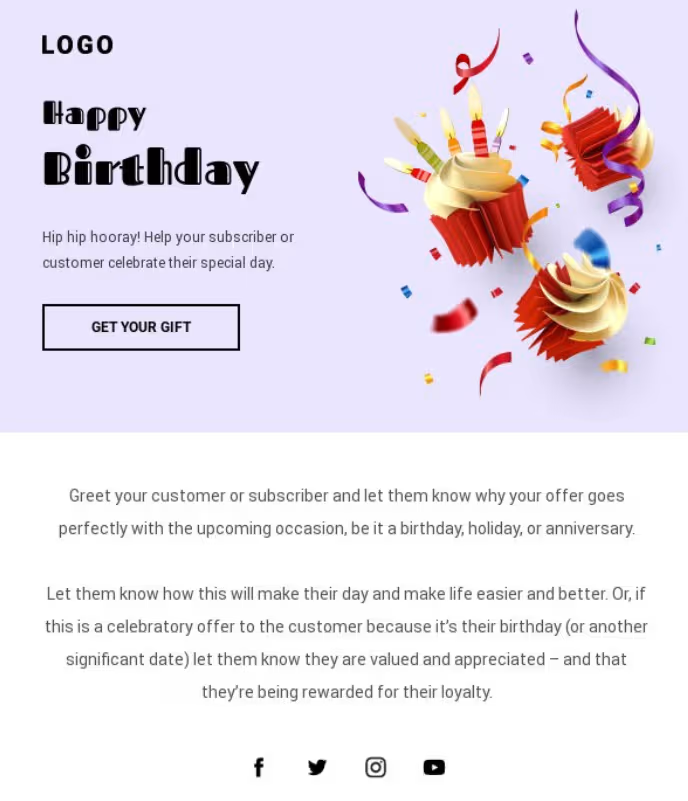
Design shapes how the customer feels before they even read the full copy. A birthday email should look festive enough to feel special, but not so cluttered that it becomes distracting. The layout should support the message, not overpower it.
Core design elements that usually work
A strong birthday email design often includes:
- a celebratory headline
- light festive visuals such as confetti, candles, or gift cues
- a prominent offer block
- one standout button
- mobile-friendly spacing
- branding that still feels consistent with the store
The point is to create a moment. The email should feel distinct from your normal campaign templates while still looking like your brand.
Why mobile-first design matters
A large share of email opens now happens on mobile devices, so birthday emails need to work well on smaller screens. If the button is buried, the code is hard to copy, or the headline breaks awkwardly, the campaign loses momentum.
Keep the design practical:
- large, tappable CTA buttons
- short text blocks
- clear visual hierarchy
- easy-to-read offer details
- minimal distractions above the fold
Recent birthday email guidance and examples continue to emphasize mobile-friendly layouts, visual clarity, and clear calls to action as core performance drivers.
Automation Tips for Birthday Email Marketing
Birthday emails are ideal for automation because the trigger is predictable and recurring. Once the system is built correctly, it can run with minimal manual effort while still feeling timely and personalized.
That makes birthday flows one of the most efficient retention automations a brand can build.
What to automate
At minimum, brands should automate:
- audience entry based on stored birth date
- send timing based on time zone or schedule
- reward insertion or coupon generation
- reminder sends for non-openers or non-buyers
- suppression rules for recent purchasers if needed
This keeps the experience consistent and saves time as your list grows.
How to keep automation from feeling cold
Automation only feels robotic when the creative is lazy. To keep it effective:
- write like a person, not a system
- use dynamic product blocks when possible
- tailor offers by segment
- cap reminders so they stay helpful
- refresh the design and copy over time
Common Birthday Email Marketing Mistakes to Avoid
Birthday campaigns are simple in theory, but there are still plenty of ways to get them wrong. Small mistakes can make the email feel generic, confusing, or forgettable.
Sending without a real incentive
A birthday message with no meaningful reward can still build goodwill, but it may not drive action. If the goal includes sales, the customer needs a reason to click now instead of smiling and moving on.
Making redemption too hard
If the offer requires too many conditions, hidden steps, or confusing code entry, customers will abandon the process. Birthday emails should feel easy. The path from inbox to checkout should be smooth.
Using generic copy
A birthday email should not read like every other campaign. If the message feels copied from a template, the emotional impact disappears. Even a simple copy can feel personal when the tone is warm and specific.
Ignoring deliverability and list quality
A birthday flow cannot perform if it lands in spam or reaches disengaged contacts with poor data. Deliverability best practices still matter here, including list hygiene, permission-based collection, and sending infrastructure quality. Birthday email resources tied to deliverability also note that timing, data quality, and engagement patterns all affect outcomes.
How to Measure Birthday Email Marketing Success
To improve birthday email performance, you need to track more than opens. Opens can be useful directionally, but they do not tell the full story. The better question is whether the campaign creates meaningful engagement and revenue.
Metrics worth watching
Measure the campaign using:
- click-through rate
- conversion rate
- revenue per recipient
- redemption rate of the birthday offer
- average order value
- unsubscribe rate
- repeat purchase lift over time
These metrics help you understand whether the email is only getting attention or actually driving business value.
How to evaluate performance properly
Birthday emails should not always be judged against regular promotional sends. They serve a different role in the lifecycle. Compare them against other retention automations, such as welcome emails, browse abandonment, or post-purchase flows.
Look at performance by segment too. New subscribers, loyal customers, and reactivated customers may all behave differently. That is where real optimization happens.
Best Practices for Long-Term Birthday Email Success
The strongest birthday campaigns are not built once and forgotten. They improve over time through testing, segmentation, and creative refreshes. What works for one brand may not work for another, which is why consistent optimization matters.
What to keep testing
Test the pieces that most affect response:
- subject lines
- send timing
- discount versus gift-style reward
- CTA wording
- reminder versus no reminder
- static versus personalized product blocks
Even small changes can improve performance meaningfully over time.
What never goes out of style
No matter how much you test, a few core principles stay consistent:
- respect the customer’s data
- make the email feel warm and relevant
- keep the offer easy to understand
- remove friction from redemption
- design for mobile first
- measure the campaign by revenue and retention, not vanity metrics alone
That is what makes birthday email marketing effective in a lasting way.
Conclusion
Birthday email marketing works because it meets customers at a moment that already matters to them. When the campaign is timed well, written naturally, and paired with a clear reward, it can create a rare mix of emotional connection and commercial impact. That is why it continues to be one of the most reliable lifecycle email strategies for ecommerce brands.
For Spocket merchants, the opportunity is even bigger. A well-executed birthday flow can support repeat purchases, strengthen brand affinity, and make customers feel valued beyond the transaction. The brands that do this best are not the ones shouting the loudest in the inbox. They are the ones that make the customer feel remembered.
Start your dropshipping business today
FAQs About Birthday Email Marketing
What is birthday email marketing and how does it work?
Birthday email marketing is a strategy where brands send personalized emails to customers on or around their birthday. These emails usually include a greeting and a special offer or reward. It works by using stored customer data to trigger automated messages at the right time.
When should you send a birthday email for best results?
You can send birthday emails on the actual day, a few days before, or even as part of a short sequence. Many brands find success by sending one email before the birthday and a reminder on the day. Testing different timings helps identify what works best for your audience.
What should be included in a birthday email?
A good birthday email should include a warm greeting, personalized elements, and a clear offer such as a discount or gift. It should also have a simple call-to-action that guides the user to shop. Keeping the message short and visually appealing improves engagement.
Do birthday emails really increase sales?
Yes, birthday emails often perform better than regular campaigns because they feel more personal and timely. Customers are more likely to open and engage with them. When paired with a strong offer, they can drive repeat purchases and improve customer retention.
How can I collect customer birthday data effectively?
You can collect birthday data through signup forms, account pages, or post-purchase surveys. It’s important to explain the benefits, such as a birthday reward, to encourage users to share this information. Keeping the process simple and optional helps maintain trust and conversions.


Launch your dropshipping business now!
Start free trial


Related blogs
How to Set Up Automated Order Fulfillment With Spocket and Shopify
Set up a smoother Shopify dropshipping workflow with Spocket by connecting your store, importing products, processing orders, syncing tracking, and reducing manual fulfillment tasks.

How to Open a Business Bank Account for Your Dropshipping Store
Set up your dropshipping finances the right way with a dedicated business bank account built for payouts, supplier payments, taxes, and long-term store growth.
Spocket vs Dropified: Which Tool Is Better for Multi-Store Scaling?
Compare Spocket and Dropified for multi-store dropshipping, supplier quality, automation, fulfillment, product sourcing, and scaling across ecommerce platforms.