Can You Combine Dropshipping and Private Label?
Learn how to combine dropshipping and private label, when it works best, its risks, benefits, and how to build a branded ecommerce business step by step.

.avif)

A lot of ecommerce beginners think they have to choose one path: either run a low-risk dropshipping store or build a private label brand. In reality, the line between the two is not as rigid as it seems.
Yes, you can combine dropshipping and private label. That model is often called private label dropshipping. It allows you to sell products under your own brand while a supplier handles inventory storage, packing, and shipping. In other words, you get some of the branding advantages of private label without taking on the full inventory burden of a traditional wholesale business.
That said, this model is not as simple as standard dropshipping. It usually comes with stricter supplier requirements, higher costs, more quality-control pressure, and in many cases some kind of minimum order commitment. It can be a smart next step for sellers who already have traction, but it is usually harder for brand-new stores to pull off well.
If your goal is to build a business that looks more credible, earns better margins, and stands out from generic stores, combining dropshipping and private label can make a lot of sense. The key is knowing when to do it, how to do it, and what trade-offs come with it.
What Does It Mean to Combine Dropshipping and Private Label?
Before getting into strategy, it helps to define the model clearly. Many sellers use the term loosely, but there is a real difference between ordinary dropshipping and private label dropshipping.
The basic idea
In a standard dropshipping model, you sell products made and branded by someone else. You list them in your store, collect the order, and the supplier ships directly to the customer.
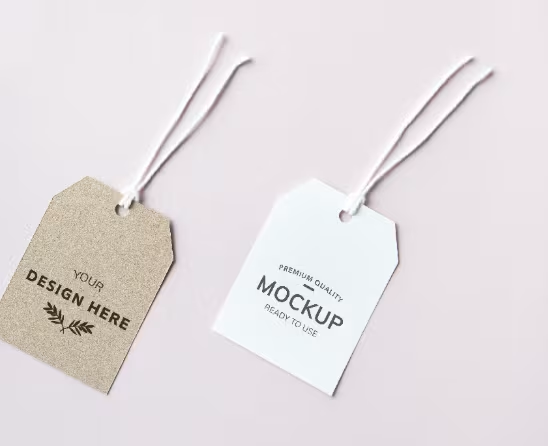
In a private label model, a manufacturer produces goods that are sold under your brand identity. That can include your logo, packaging, inserts, labeling, or other custom branding elements. When you combine these two, the supplier still fulfills the orders, but the customer receives a product that feels like it came from your brand rather than from a generic marketplace seller.
What changes compared with standard dropshipping
The biggest change is not the shipping method. It is the ownership of the brand experience. That usually includes:
- Custom product labeling
- Branded packaging
- A more distinct store identity
- Stronger perceived value
- Better customer recall after purchase
This shift matters because many dropshipping stores struggle with the same problem: they sell the same product photos, same generic items, and same forgettable experience as dozens of competitors. Private label help reduce that sameness.
Is Private Label Dropshipping a Good Idea?
The short answer is yes, but not for every seller at every stage.
This model works best when you already know what products are selling, what audience you want to serve, and what kind of brand positioning you want to create. It is less effective when you are still randomly testing products with no clear direction.
A practical way to think about it is this:
- Standard dropshipping is often better for testing
- Private label dropshipping is often better for building
If you are still unsure about demand, private label can feel premature. If you already have a winning product or a niche with repeat purchase potential, it becomes far more attractive.
Why Sellers Want to Combine the Two Models
There is a reason this approach keeps getting attention. It solves some of the biggest weaknesses of generic dropshipping while keeping the business lighter than a traditional inventory-heavy brand.
You can build a brand, not just a store
Generic dropshipping often struggles with memorability. A customer may buy once, but they do not remember who sold the product because the experience feels interchangeable.
Private labels change that by giving your store a stronger identity through branded products, packaging, and messaging. That can lead to better brand recognition and more repeat buying over time.
You may improve your margins
Branded products often have higher perceived value. Customers are usually more willing to pay a premium when the product looks more intentional, polished, and trustworthy.
That does not mean every private label product becomes highly profitable overnight. But it does mean you have more room to position your offer above the purely price-driven competition.
You can stand out in crowded niches
This matters a lot in beauty, skincare, accessories, wellness, home goods, pet products, and similar niches where branding plays a major role in purchase decisions.
When the products themselves are easy to copy, your differentiation often comes from:
- Presentation
- Packaging
- Messaging
- Customer trust
- Brand story
Private label gives you more control over all of that.
You still avoid holding large inventory in many cases
One of the biggest appeals of dropshipping is reduced operational complexity. If your supplier is willing to support a private label arrangement while still fulfilling orders directly, you may be able to keep that convenience while upgrading the customer-facing experience.
The Real Challenges of Combining Dropshipping and Private Label
This model sounds attractive, but it is not friction-free. In fact, many sellers underestimate the operational challenges.
Finding suppliers is harder
Not every supplier wants to offer custom branding on low-volume orders. From the supplier’s perspective, private label work adds extra steps, extra cost, and more risk.
That is why many private label suppliers prefer working with stores that can already prove demand or consistent sales. They may want reassurance that your orders will justify the branding effort.
Costs are higher than regular dropshipping
Even if you do not hold inventory yourself, private label usually increases your costs. That can include:
- Branded packaging fees
- Label printing costs
- Product sample costs
- Design and creative expenses
- Setup fees for custom production
Compared with standard dropshipping, this makes testing more expensive and margins less forgiving early on.
Minimum order quantities may apply
This is one of the biggest hurdles. Suppliers often require a minimum order quantity before they will manufacture or package products under your brand.
That creates a challenge for newer sellers because it increases commitment before demand is fully validated. If the product does not move, you may be left with sunk costs or a strained supplier relationship.
Quality control becomes more important
The moment your brand name goes on the product, the customer experience becomes much more personal. If the packaging looks cheap, the product quality is inconsistent, or shipping is slow, customers do not blame the supplier. They blame your brand.
That means you need tighter oversight on:
- Samples
- Packaging consistency
- Delivery times
- Product durability
- Returns and complaints
It is harder to pivot quickly
One reason many beginners like generic dropshipping is flexibility. If one product fails, they switch fast.
Private label usually slows that down. Once you invest in branding, creative assets, and supplier setup, changing direction is not as effortless. This makes product selection more important from day one.
When It Makes Sense to Combine Dropshipping and Private Label
Not every store is ready for this move. But there are certain situations where it makes strategic sense.
You already have a winning product
This is probably the clearest sign. If a product is already selling well, private labeling it can help you create a moat around it.
Instead of competing as yet another store selling the same thing, you start turning it into a branded offer with better customer recall.
You are in a brand-sensitive niche
Some niches are extremely branding-driven. Customers do not just buy the item. They buy what the product says about taste, quality, trust, or lifestyle.
This is especially true in categories like:
- Beauty
- Wellness
- Fashion accessories
- Home organization
- Pet care
- Fitness add-ons
In these niches, branding can influence buying behavior almost as much as the product itself.
You want repeat customers
Private label is especially useful when your business model benefits from repeat purchases. Examples include:
- Consumables
- Skincare
- Supplements
- Grooming
- Small lifestyle products
- Bundled niche items
If buyers are likely to come back, the value of branding goes up significantly.
You are moving from short-term selling to long-term brand building
A lot of sellers start with standard dropshipping to learn the basics, then move toward more brand-led models once they understand their market better.
That transition often looks like this:
- Test a niche
- Validate a product
- Learn customer behavior
- Improve offer positioning
- Add brand assets
- Shift into private label or semi-private-label fulfillment
That path is often safer than trying to private label too early.
When It May Not Be the Right Move Yet
Just because it is possible does not mean it is the best move right now.
You have not validated demand
If you do not know whether customers actually want the product, private label adds unnecessary risk. It is usually smarter to validate demand first with a leaner setup.
Your budget is very tight
Private label nearly always requires more upfront spending than ordinary dropshipping. If your budget is already stretched, standard dropshipping may give you more room to test and learn.
You are still figuring out your niche
Branding works best when your message is clear. If you are switching niches every month, your brand foundation will feel weak and inconsistent.
You care more about speed than brand equity
If your goal is pure speed testing, trend chasing, or short product cycles, the private label process can feel too slow and restrictive.
How to Combine Dropshipping and Private Label Step by Step
If you want to pursue this model, the smartest way is to build into it gradually rather than treating it like an overnight transformation.
1. Start with product and niche validation
Before branding anything, make sure there is a real reason to invest. Focus on:
- Steady demand
- Clear target audience
- Acceptable margins
- Product quality potential
- Low refund risk
- Strong visual or emotional appeal
This is also where a curated supplier network can help.
Order samples early
Do not wait until you start scaling. Samples help you assess:
- Actual product quality
- Packaging experience
- Delivery reliability
- Product-photo accuracy
- Whether the item is worth branding at all
This is one of the most practical ways to reduce future customer disappointment.
2. Find a supplier that supports private label fulfillment
This is the step where many sellers get stuck. You are not just looking for a supplier with good products. You are looking for one that can support your brand standards.
Ask questions such as:
- Do you support custom labels?
- Do you offer branded packaging?
- What is your MOQ?
- Can you ship directly to customers?
- What are your lead times?
- Can you include inserts or thank-you cards?
- How do you handle defects or returns?
- Do you support custom bundles?
You need operational clarity before you commit. If you are building on Spocket, you can start by testing products with faster-shipping suppliers and a more premium product selection, which helps you validate demand before you invest more deeply into branding.
3. Build a store that feels like a brand
If you are combining dropshipping and private label, your site cannot look generic. A brand-led model requires better presentation. That usually means improving:
- Homepage messaging
- Product-page copy
- Product photography
- Visual consistency
- Trust signals
- Packaging story
- FAQ and support structure
Your store should make the branding feel believable, not cosmetic.
Position the offer, not just the product
A lot of weak stores focus only on features. Stronger branded stores build an angle around the product.
That angle may be based on:
- Convenience
- Quality
- Lifestyle
- Simplicity
- Premium feel
- Problem solving
- Niche identity
The better your positioning, the easier it becomes to justify pricing and create repeat buyers.
4. Create consistent branding assets
Private label is not just about adding a logo. Customers notice the entire experience. Think through:
- Brand name
- Color direction
- Packaging style
- Unboxing feel
- Tone of voice
- Email language
- Post-purchase experience
This does not need to be overdesigned. It just needs to feel coherent.
5. Launch with a smaller branded range first
You do not need a huge catalog. In fact, starting with a tight range is often better because it helps you:
- Focus ad spend
- Improve creative consistency
- Simplify supplier coordination
- Strengthen brand clarity
- Learn faster from customer feedback
A smaller, better-positioned catalog usually outperforms a scattered store full of mismatched items.
6. Build your marketing around trust and identity
Once you move into private label territory, your marketing should evolve too. Instead of relying only on “cheap product” angles, focus more on:
- Why the brand exists
- What problem the product solves
- Why the product feels more credible
- What makes the experience better
- Why customers should remember your store
That is how you start moving from transactional selling to brand building.
7. Best Products for Private Label Dropshipping
Not every product category is a good fit. The best candidates usually have these traits:
- Light and easy to ship
- Strong branding potential
- Stable quality standards
- Good perceived value
- Repeat-purchase potential or bundle potential
- Less complexity in sizing or customization
Products often considered stronger fits include:
- Beauty tools
- Skincare accessories
- Wellness items
- Pet accessories
- Kitchen gadgets
- Lifestyle organizers
- Small home goods
- Personal care accessories
Products that can be difficult include highly regulated items, fragile goods, size-sensitive products, or anything where quality inconsistency creates immediate refund risk.
Can You Start With Dropshipping and Move Into Private Label Later?
Yes, and for many sellers, that is the smartest route.
This progression is often more sustainable because it lets you use standard dropshipping as a research and validation phase before you make branding commitments.
A common path looks like this:
Phase one: test demand
Use a lean model to figure out:
- What niche responds
- What products convert
- What creatives work
- What objections buyers have
Phase two: improve the offer
Once you identify product-market fit, improve:
- Store branding
- Product pages
- Supplier quality
- Delivery experience
Phase three: introduce private label elements
That may begin with:
- Branded packaging
- Custom inserts
- Logo stickers
- Better bundle design
- A branded hero product
This phased approach lowers risk and tends to be more practical than starting fully private label from scratch.
Instead of filling your store with random products from unknown sources, Spocket helps you work with suppliers that are often better aligned with faster shipping, more reliable fulfillment, and a more polished customer experience. That matters whether you stay in standard dropshipping or use dropshipping as your bridge toward a future private label brand.
Final Verdict
Yes, you can absolutely combine dropshipping and private label. In fact, for the right product and the right niche, it can be one of the smartest ways to move from a generic store toward a real brand.
But it is not a shortcut. It usually costs more, demands stronger supplier relationships, and requires more discipline around quality, branding, and customer experience. It tends to work best once you have already validated demand and understand your audience.
So the better question is not just “Can you combine dropshipping and private label?” It is “Are you ready to?”
If you are still testing, start lean. If you already have traction, a clear niche, and a product worth building around, combining the two models can help you create a business that feels more durable, more credible, and much harder to copy.
Start your dropshipping business today
FAQs About Combining Dropshipping and Private Label
Can beginners start with private label dropshipping?
They can, but it is usually harder than starting with standard dropshipping. Beginners often benefit from validating demand first, because private label usually involves higher costs, stricter supplier requirements, and more branding work.
Do you need to hold inventory for private label dropshipping?
Not necessarily. In private label dropshipping, the supplier can still store and ship the products for you. The difference is that the items are sold under your branding rather than as generic products.
Is private label dropshipping more profitable?
It can be, because branded products often allow for stronger pricing and better customer loyalty. But profitability depends on supplier costs, shipping performance, product quality, and how well your brand is positioned.
What is the biggest challenge in combining dropshipping and private label?
The biggest challenge is usually supplier fit. Many suppliers are cautious about custom branding for low-volume sellers, and some require minimum order quantities or proof of sales before agreeing to private label arrangements.
Should you use generic dropshipping before moving to private label?
In many cases, yes. Testing products first can help you reduce risk, learn your market, and choose the right product to brand later. That step-by-step approach is often more sustainable than trying to build a private label store with no market validation.


Launch your dropshipping business now!
Start free trial


Related blogs
Dropshipping Supplier Directory: Where to Find Vetted Suppliers
Browse our directory of vetted dropshipping suppliers across the US and EU, complete with niches, shipping speed, and pricing. Start your free trial today.

How to Negotiate With Dropshipping Suppliers: 9 Tactics That Actually Work
Learn how to negotiate with dropshipping suppliers on price, MOQs, and payment terms. Proven tactics and email scripts to boost your margins. Try Spocket free.

Best Clothing Dropshipping Suppliers: The 2026 Guide
Compare the best clothing dropshipping suppliers for 2026 — US/EU shipping speeds, pricing, and product quality — and find the right fit to launch your store.