The Future of Dropshipping: Faster Shipping and Better Margins
Discover how modern dropshipping is evolving with faster shipping, smarter sourcing, and better margins. Learn strategies to build a sustainable store today.
.avif)

Dropshipping has come a long way from its days of 30-day shipping windows and razor-thin profit margins. For years, the model had a reputation problem. Customers grew tired of waiting, and sellers struggled to make the numbers work. But that story is changing fast.
Today, a new generation of dropshippers is building real, sustainable businesses by focusing on two things: getting products to customers faster and finding smarter ways to protect their margins. The tools, suppliers, and strategies available now make it genuinely possible to compete, even against established retailers.
This article breaks down where dropshipping is headed, what's driving the shift, and how you can position your store to take advantage of it.
Why Shipping Speed Has Become Non-Negotiable
Customer expectations around delivery have been reshaped permanently. Amazon Prime normalized two-day shipping. During the pandemic, online shopping habits accelerated. And now, a significant portion of online shoppers will abandon a cart or leave a negative review simply because shipping timelines felt too long.
For dropshippers, this created a real problem. The traditional model relied heavily on overseas manufacturers, often based in China, with fulfillment times stretching to three or four weeks. That worked when online shopping was still novel. It doesn't work anymore. But speed alone is not enough. Customers also want clear updates and a delivery process they can trust.
Adrian Iorga, Founder & President of Stairhopper Movers, says speed only matters when customers can trust the process. “Customers can wait a little longer if they know what is happening. What hurts trust is silence, missed delivery windows, and unclear updates. In dropshipping, fast shipping helps. Clear tracking and honest communication matter just as much.”
The good news is that the industry has responded. Suppliers have built warehouses in the US, Europe, and Australia. Regional fulfillment networks have expanded. Platforms now make it straightforward to source products from suppliers that can deliver within five to eight business days, sometimes faster.
According to a Statista report on ecommerce delivery expectations, 41% of global online shoppers expect same-day or next-day delivery, a figure that has more than doubled over the past five years. For dropshippers, this isn't just a trend worth noting. It's a benchmark worth building toward.
Speed isn't just about customer satisfaction either. It directly affects your bottom line. Faster shipping means fewer disputes, fewer refund requests, and better reviews. All of that feeds back into lower operational costs and a stronger store reputation.
The Margin Problem and How to Fix It
Margins have always been the trickiest part of dropshipping. When you're not buying in bulk and you're relying on a third party to fulfill orders, the per-unit cost is naturally higher. Layer on advertising spend, platform fees, and the occasional return, and margins can get squeezed down to almost nothing.
But the dropshippers who are thriving right now aren't just accepting thin margins as a fact of life. They're actively engineering better ones.
Choose Products With Built-In Margin Room
Not all products are created equal when it comes to dropshipping viability. High-volume, low-ticket items are a trap for many beginners. The math rarely works out once you account for ad spend. The smarter play is to focus on products where the market price is naturally higher than what you're paying to source and ship.
Specialty products, niche categories, and items that solve specific problems tend to command better prices. A generic phone case is a race to the bottom. A specifically designed phone case for a particular hobby or lifestyle is a different conversation entirely.
Christian Lyche, Founder and CEO of Gold Standard Auctions, says margin starts with choosing products people see real value in. “The strongest products are not always the cheapest ones. They are the ones buyers understand, trust, and feel confident paying more for. In dropshipping, that means avoiding random items and focusing on products with clear demand, clear value, and a reason to stand out.”
Reduce Hidden Costs
Many dropshippers underestimate the cost of returns, customer service time, and payment processing fees. These hidden costs can quietly eat away at margins that looked healthy on paper.
Working with reliable suppliers dramatically reduces return rates. When product quality is consistent and descriptions are accurate, customers are less likely to send things back. That alone can add several percentage points back to your effective margin.
Karina Simonovič, Marketing Manager at Optimal Warranty, says margins are often lost after the sale, not before it. “A return, a complaint, or a confused customer can wipe out the profit from an order. Dropshippers need clear product details, simple support, and honest promises. When customers know what to expect, fewer problems come back to the seller.”
Bundle and Upsell Strategically
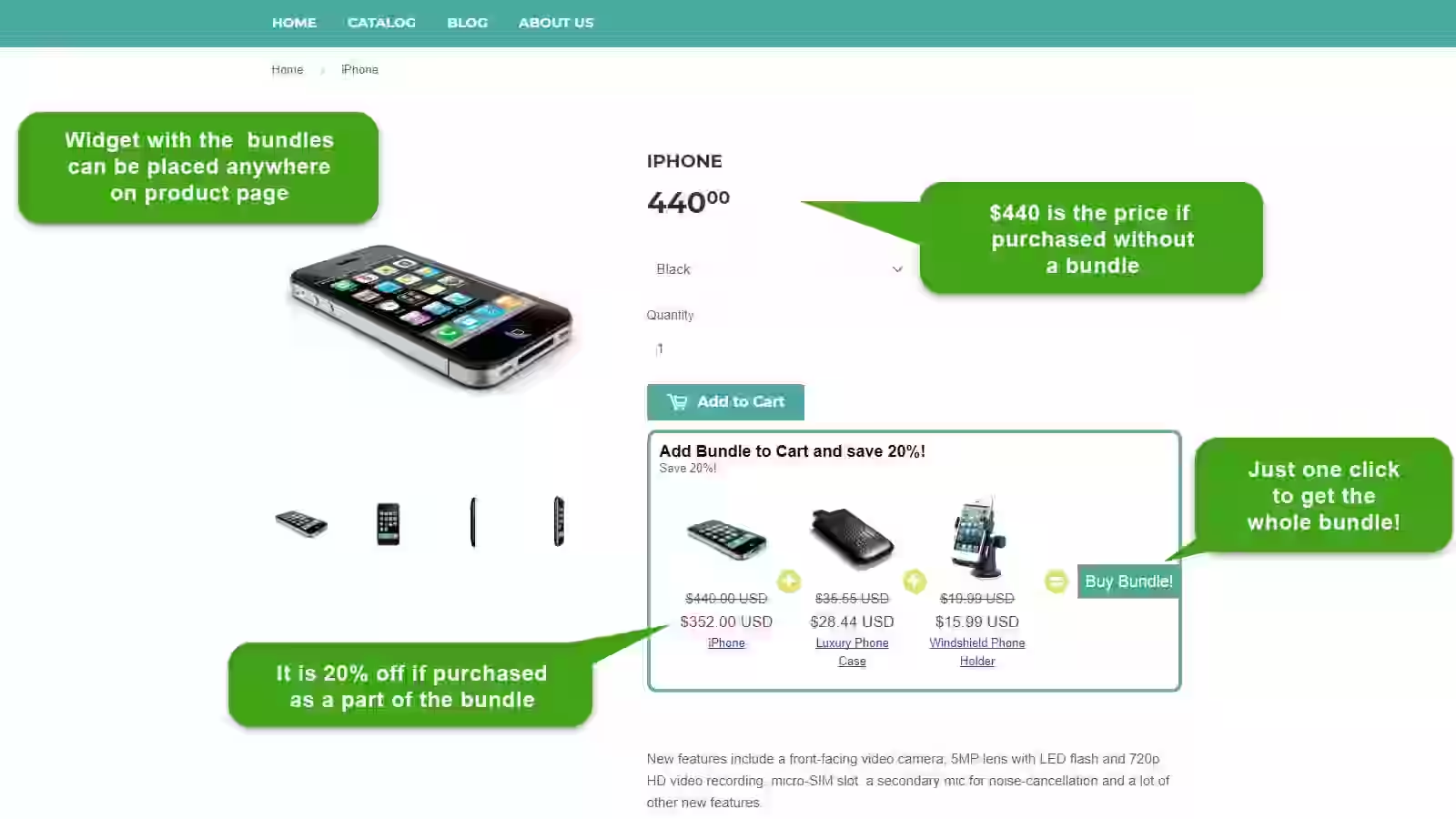
One of the fastest ways to improve margin per transaction is to increase the average order value. Bundling complementary products, offering upgrades, or adding post-purchase upsells can turn a $30 order into a $60 one, with almost no increase in fixed costs like ad spend or customer acquisition.
How Supplier Relationships Are Evolving
The old dropshipping model treated suppliers as interchangeable commodity sources. You found the lowest price, placed orders, and hoped for the best. That approach produced inconsistent quality, unreliable fulfillment, and constant customer complaints.
The shift happening now is toward genuine supplier partnerships. Sellers who communicate regularly with their suppliers, understand their production timelines, and give them visibility into demand patterns are getting better service, better pricing over time, and sometimes early access to new products.
This matters practically, too. A supplier who sees you as a valued partner is more likely to go the extra mile when something goes wrong, whether that's rushing an order, resolving a defect, or holding stock during a promotional push.
Platforms that vet suppliers carefully, checking for quality standards, fulfillment rates, and communication responsiveness, remove a lot of the guesswork from this process. When you're working within a curated ecosystem, the baseline quality is already higher before you even place your first order.
Technology Is Doing the Heavy Lifting
One of the most significant shifts in dropshipping over the last few years is how much of the operational work can now be automated. Inventory syncing, order routing, tracking updates, and even pricing adjustments can all run in the background without manual intervention.
This matters for margins because time is money. Every hour spent manually updating tracking numbers or checking stock levels is an hour not spent on marketing, product research, or store optimization.
David Lee, Managing Director at Functional Skills, says tools only help when people understand what they are doing. “A dropshipper can have all the software in the world, but it means little without basic checks. Orders need to move on time. Customers need clear updates. Costs need regular review. Simple habits like these help sellers spot problems early and protect their margins.”
Inventory Sync and Demand Forecasting
One of the most frustrating experiences in dropshipping, for both the seller and the customer, is selling a product that's actually out of stock. Real-time inventory sync, now standard on most major platforms, has largely solved this problem. When a supplier's stock changes, your store reflects it automatically.

More sophisticated tools are also starting to incorporate demand forecasting, helping sellers identify which products are likely to see increased demand before it happens. That kind of lead time is genuinely valuable when you're planning promotions or scaling ad spend.
AI-Assisted Product Research
Finding winning products used to require hours of manual research, scrolling through marketplaces, analyzing trends, and trying to guess what would sell. AI-powered tools have compressed that process significantly. They analyze sales data, search trends, social signals, and competitive pricing to surface product opportunities that meet specific criteria.
This doesn't replace human judgment. You still need to evaluate whether a product fits your brand and audience. But it dramatically speeds up the discovery phase and surfaces options you might not have found otherwise.
Rawad Baroud, CEO of ZeroGPT, says AI works best in dropshipping when it helps sellers make sharper choices, not faster guesses. “AI can spot demand, pricing gaps, and weak competition early. But it should not replace human judgment. The strongest sellers will use AI to filter noise, then rely on taste, timing, and customer understanding to choose what actually deserves a place in their store.”
Building a Brand, Not Just a Store
The dropshippers seeing the strongest long-term results aren't just running transactional stores. They're building brands. And that distinction makes a real difference in both margins and customer loyalty.
A branded store can charge more. Customers are willing to pay a premium for a shopping experience that feels curated, trustworthy, and aligned with their values. A generic store selling the same products as a hundred other stores has to compete primarily on price, which is a losing game long-term.
Brandy Hastings, SEO Strategist at SmartSites, says dropshipping brands need to earn trust before they ever ask for the sale. “A good dropshipping store should not feel like a product dump. It needs clear pages, honest product details, fast answers, and a reason for shoppers to remember it. When people trust the store, they compare less on price. That is where better margins start.”
Brand-building in dropshipping doesn't require a massive investment. It starts with a few fundamentals:
- A clear niche and audience, knowing exactly who you're selling to and speaking directly to them
- Consistent visual identity, a recognizable logo, color palette, and store design that feels intentional
- Strong product copy, descriptions that communicate benefits, not just features
- Quality customer communication, fast responses, transparent policies, and genuine follow-up after purchase
Even small touches, like a well-crafted thank-you email or a branded tracking page, signal to customers that they're dealing with a real business, not just a middleman. That perception justifies better prices and generates repeat buyers who don't need to be re-acquired through paid ads every time.
What to Look for in a Supplier Network
Choosing where to source your products is one of the most consequential decisions you'll make. The right supplier network can be the difference between a store that scales and one that stalls out at the first sign of growth.
When evaluating supplier platforms, the key factors to assess are fulfillment location, average processing time, quality control standards, how they handle returns and disputes, and the depth of their product catalog. A supplier who can deliver on all of these reliably is worth paying slightly more for. The downstream savings in customer service and refunds will more than cover the difference.
Curated supplier marketplaces do a meaningful portion of this vetting work for you. Rather than discovering a supplier's reliability problems after you've already sent customer orders, you're starting from a pool that has already been screened. That's a significant operational advantage, especially when you're scaling quickly and don't have time to manage quality issues manually.
Shift Toward Domestic and Regional Sourcing
One of the clearest trends reshaping dropshipping right now is the move toward domestic and regional suppliers. This isn't just about shipping speed, though that's a big part of it. It's also about product quality consistency, easier communication, simpler returns logistics, and reduced exposure to international shipping disruptions.
Sellers in the US sourcing from US-based suppliers benefit from shorter supply chains, faster restocking, and the ability to market "ships from the US" as a genuine selling point. In categories where customers are particularly quality-conscious, such as home goods, pet products, and health and wellness, domestic sourcing can be a meaningful differentiator.
The same logic applies in Europe and other markets. Regional sourcing reduces transit times, lowers the risk of customs delays, and often comes with quality standards that align more closely with customer expectations in those markets.
Sharon Amos, Director at Air Ambulance 1, says faster delivery depends on clear handoffs. “Speed is not just moving fast. It is knowing each step and where delays can happen. Local sourcing helps because fewer gaps usually mean fewer surprises for the customer.”
A useful resource for understanding how regional fulfillment networks are developing is the BigCommerce guide to e-commerce fulfillment strategies, which breaks down how different sourcing models affect delivery performance and operational costs. For dropshippers evaluating whether to shift toward domestic suppliers, it provides a solid framework for thinking through the tradeoffs.
Pricing Strategy: Protecting Margins Without Losing Customers
Getting your pricing right is part science, part judgment. Price too high and you lose conversions. Price too low, and you're working hard for very little return. The goal is to find the zone where your price reflects genuine value and still leaves room for sustainable profit.
Muzammil Sayed, CEO of NYC Leather Jackets, says better pricing starts with showing clear value. “Customers do not always choose the lowest price. They choose the product that feels worth it. Good photos, clear details, and strong quality signals make a higher price easier to accept. That is how sellers protect margins without pushing buyers away.”
A few approaches that work well for dropshippers looking to protect margins without pricing themselves out of the market:
- Value-based pricing means setting your price based on the perceived value to the customer, not just a markup over cost. If your product solves a specific problem well, customers are often willing to pay more than a cost-plus formula would suggest.
- Tiered product offerings involve offering a base product at a competitive price point, with premium versions or bundles at higher price points. This captures buyers at different budget levels while naturally moving average order value upward.
- Dynamic pricing adjustments require monitoring competitor pricing and adjusting yours strategically. You don't always need to be the cheapest, but you do need to be aware of where you sit in the competitive landscape.
Looking Ahead: Where Dropshipping Is Going
The dropshipping model isn't going away. It's maturing. The sellers who understood it as a low-effort, passive income play are increasingly finding it difficult. The sellers who treat it as a real business, with real operational standards and genuine customer focus, are finding more opportunities than ever.
A few trends worth watching over the next couple of years: warehouse networks will continue to expand closer to end consumers, making sub-week delivery the norm rather than the exception, even for dropshippers working with overseas suppliers. Personalization technology will make it easier to offer product recommendations and shopping experiences that feel tailored, a significant advantage for building loyalty. And sustainability will become a more prominent consideration, with customers increasingly asking questions about packaging, sourcing, and shipping footprint.
The fundamentals, though, remain constant. Fast, reliable fulfillment. Products with genuine margin room. Suppliers you can trust. A brand that customers connect with. Get those right, and the rest becomes much more manageable.
Conclusion
The future of dropshipping belongs to sellers who stop thinking about it as a shortcut and start thinking about it as a business model. That means caring about shipping times, protecting margins with intention, building real supplier relationships, and creating a brand that customers actually want to buy from again.
The infrastructure to do all of this better than ever before already exists. Supplier networks have expanded. Automation tools have matured. Customer acquisition channels, while more competitive, are also more sophisticated. The opportunity is real. It just requires showing up with a bit more strategy than the early days demanded.
For sellers willing to do that work, faster shipping and better margins aren't aspirational goals. They're achievable outcomes, and they're what separates the dropshipping businesses that last from the ones that don't.
Start your dropshipping business today


Launch your dropshipping business now!
Start free trial


Related blogs
Dropshipping Supplier Directory: Where to Find Vetted Suppliers
Browse our directory of vetted dropshipping suppliers across the US and EU, complete with niches, shipping speed, and pricing. Start your free trial today.

How to Negotiate With Dropshipping Suppliers: 9 Tactics That Actually Work
Learn how to negotiate with dropshipping suppliers on price, MOQs, and payment terms. Proven tactics and email scripts to boost your margins. Try Spocket free.

Best Clothing Dropshipping Suppliers: The 2026 Guide
Compare the best clothing dropshipping suppliers for 2026 — US/EU shipping speeds, pricing, and product quality — and find the right fit to launch your store.