


Chargebacks in Dropshipping: Prevention and Dispute Templates
Learn how to prevent dropshipping chargebacks with proven strategies, real examples, and dispute templates to protect your ecommerce business and revenue.

.avif)

Dropshipping makes it easier than ever to launch an ecommerce business without holding inventory. But with convenience comes risk—especially when it comes to dropshipping chargebacks. A single chargeback can cost you the order value, shipping fees, product cost, and additional penalties from payment processors.
For online merchants, chargebacks are more than just refunds. They can damage your payment processor reputation and, in severe cases, lead to account suspension. Understanding how chargebacks work and how to prevent them is essential for any successful dropshipping store.
In this guide, you’ll learn what dropshipping chargebacks are, why they happen, how to prevent them, and how to respond effectively using ready-to-use dispute templates.
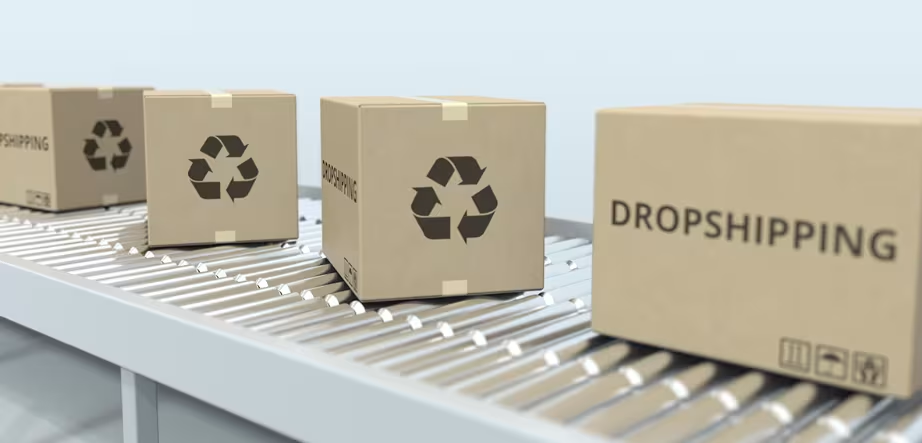
What Are Dropshipping Chargebacks?
A chargeback occurs when a customer disputes a transaction with their bank or credit card provider instead of requesting a refund directly from the merchant. The bank temporarily reverses the transaction while investigating the claim.
Originally designed as consumer protection, chargebacks allow customers to recover funds from unauthorized or problematic purchases. However, for ecommerce businesses—including dropshipping stores—they can become costly and difficult to manage.
Common reasons customers file chargebacks include:
- Unauthorized transactions
- Products not received
- Products not as described
- Duplicate billing
- Dissatisfaction with the purchase
When a chargeback happens, the merchant must provide evidence proving the transaction was legitimate. If the bank rules in favor of the customer, the funds are permanently returned to the buyer.
Why Chargebacks Are a Major Problem in Dropshipping
Chargebacks affect all ecommerce businesses, but they are particularly challenging for dropshipping stores.
Dropshipping involves selling products from third-party suppliers who handle inventory and shipping. This setup can lead to delays, inconsistent quality, and limited control over fulfillment—all factors that increase the likelihood of disputes.
Financial Losses
Chargebacks often cost far more than the original sale. Merchants may lose:
- Product cost
- Shipping fees
- Transaction fees
- Chargeback penalties
In many cases, businesses lose both the product and the revenue.
Risk of Payment Processor Penalties
If your chargeback rate exceeds the acceptable threshold (typically around 1%), payment processors may classify your business as high risk.
This can result in:
- Higher processing fees
- Temporary payment holds
- Account suspension
Operational Complexity
Responding to chargebacks requires gathering evidence, writing rebuttals, and communicating with payment processors.
Studies show that resolving a single dispute can take several hours of work from a merchant’s team.
Chargeback Statistics Every Dropshipper Should Know
Understanding the scale of the problem helps businesses take chargeback prevention seriously. Some important statistics include:
- Global businesses are expected to lose $15 billion to fraudulent chargebacks annually.
- Around 24% of ecommerce chargebacks occur due to “item not received” claims.
- Friendly fraud—when customers falsely dispute legitimate purchases—accounts for over 40% of disputes.
These numbers highlight a crucial point: preventing chargebacks is far more effective than fighting them after they happen.
Common Causes of Dropshipping Chargebacks
Chargebacks rarely happen randomly. Most disputes come from predictable problems within ecommerce operations.
Long Shipping Times
Dropshipping suppliers often ship internationally, which can lead to delivery delays.
When customers expect fast delivery but receive products weeks later, they may file disputes claiming the product never arrived.
Poor Product Quality
One of the most common dropshipping issues is selling low-quality or misleading products.
If customers receive something different from what they expected, they may initiate a “not as described” chargeback.
Fraudulent Transactions
Fraud occurs when someone uses stolen credit card information to make a purchase.
The real cardholder later notices the charge and disputes it.
Confusing Billing Descriptors
Sometimes customers file chargebacks simply because they do not recognize the merchant name on their credit card statement.
This is surprisingly common in ecommerce.
Lack of Customer Support
Customers usually attempt to contact a merchant before filing a dispute. If they cannot get a response quickly, they may go directly to their bank.
The Chargeback Process Explained
Understanding the dispute process helps you respond effectively when a chargeback occurs. The process usually follows these steps:
1. Customer Files a Dispute: The cardholder contacts their bank to dispute a transaction.
2. Bank Investigates: The issuing bank reviews the complaint and temporarily reverses the transaction.
3. Merchant Receives Notification: The payment processor notifies the merchant about the chargeback and requests evidence.
4. Merchant Submits Evidence: The merchant submits proof that the transaction was legitimate.
5. Bank Makes a Decision: The bank evaluates the evidence and decides whether the chargeback is valid.
How to Prevent Dropshipping Chargebacks
Preventing chargebacks is the most effective way to protect your ecommerce business. Fortunately, many disputes can be avoided with better systems and customer communication.
1. Work With Reliable Suppliers
Choosing the right suppliers is one of the most important steps in preventing disputes. Reliable suppliers ensure:
- Consistent product quality
- Accurate inventory
- Reliable shipping timelines
When sourcing products, many merchants prioritize suppliers that provide faster shipping and transparent tracking. Platforms like Spocket help merchants connect with vetted suppliers, which can significantly reduce fulfillment-related disputes.
2. Provide Accurate Product Descriptions
Misleading product listings are one of the biggest causes of chargebacks. Always include:
- High-quality product images
- Detailed specifications
- Size charts where relevant
- Realistic delivery times
Clear product pages reduce customer confusion and build trust.
3. Use Secure Payment Gateways
Fraud detection tools from payment processors can help block suspicious transactions before they happen.
Features to look for include:
- Address Verification System (AVS)
- CVV verification
- Fraud detection algorithms
- 3D Secure authentication
These tools reduce the risk of unauthorized purchases.
4. Offer Clear Refund Policies
Customers are less likely to file chargebacks when they know they can get a refund directly from the store. Make your refund policy:
- Easy to find
- Clearly written
- Fair to customers
A transparent policy often prevents disputes before they start.
5. Send Automated Order Updates
Customers feel more confident when they know where their order is. Send updates such as:
- Order confirmation
- Shipping confirmation
- Tracking information
- Delivery notifications
These messages also create documentation that can help you win disputes.
6. Use Tracking and Delivery Confirmation
Tracking is one of the strongest pieces of evidence in a chargeback dispute. For high-value orders, consider using:
- Signature confirmation
- Insurance
- Real-time delivery tracking
How to Reduce Friendly Fraud
Friendly fraud occurs when customers dispute legitimate transactions. This type of fraud is surprisingly common in ecommerce. Some common examples include:
- Customers forgetting they made the purchase
- Family members using the same credit card
- Buyers claiming non-delivery after receiving the product
To reduce friendly fraud:
- Use clear billing descriptors
- Send order confirmation emails
- Maintain communication records
Documentation is your best defense.
Building a Chargeback Prevention System
Successful ecommerce businesses treat chargeback prevention as part of their operations. A simple system should include:
Fraud Screening
Use automated fraud detection tools to identify risky transactions before fulfillment.
Order Monitoring
Flag suspicious patterns such as:
- Multiple orders from different cards
- High-value purchases from new customers
- Orders with mismatched addresses
Customer Communication
Fast support responses can stop disputes before they escalate.
Supplier Verification
Reliable suppliers reduce shipping problems and product quality complaints. Many dropshippers use Spocket to work with trusted suppliers and improve delivery reliability.
Evidence Checklist for Chargeback Disputes
If a chargeback occurs, gathering strong evidence is essential. Typical evidence includes:
- Order invoice
- Payment transaction details
- Customer billing address
- Shipping tracking information
- Delivery confirmation
- Product description screenshots
- Customer communication records
The more evidence you provide, the higher your chances of winning the dispute.
Chargeback Dispute Templates for Dropshipping
Below are practical templates that dropshipping merchants can use when responding to disputes.
Unauthorized Transaction Template
Subject: Chargeback Response – Unauthorized Transaction – Order #[Order ID]
Hello,
We are responding to a chargeback regarding Order #[Order ID] placed on [Date].
The transaction was authorized using verified payment credentials and passed our fraud screening checks.
Order Details:
Customer Name: [Name]
Email: [Email]
Transaction Amount: [Amount]
Shipping Details:
Carrier: [Carrier Name]
Tracking Number: [Tracking Number]
Delivery Confirmation: Delivered on [Date]
Attached are the following documents:
- Order receipt
- Transaction verification
- Shipping confirmation
- Delivery tracking
Based on the evidence provided, we respectfully request a review and reversal of this chargeback.
Best regards,
[Store Name]
Item Not Received Template
Subject: Chargeback Rebuttal – Item Not Received – Order #[Order ID]
Hello,
We are responding to the chargeback claim stating that the item was not received.
Our records show that the order was shipped and successfully delivered.
Tracking Information:
Carrier: [Carrier Name]
Tracking Number: [Tracking Number]
Delivery Date: [Date]
The customer was provided with tracking information via email on [Date].
Attached are supporting documents including shipping confirmation and delivery verification.
Thank you for reviewing this case.
Best regards,
[Store Name]
Product Not As Described Template
Subject: Chargeback Response – Product Not As Described – Order #[Order ID]
Hello,
We are disputing the claim that the product was not as described.
The product page clearly lists the specifications and images associated with the item purchased. Attached are:
- Product page screenshots
- Order confirmation
- Customer communications
These documents demonstrate that the product description matched the item purchased.
We respectfully request reconsideration of this dispute.
Best regards,
[Store Name]
Best Practices for Handling Chargebacks
Even with strong prevention strategies, some chargebacks are inevitable. Here are some best practices when handling disputes.
- Respond Quickly: Chargeback deadlines are strict. Missing the response window automatically results in losing the dispute.
- Provide Organized Evidence: Present your evidence in chronological order with clear labels.
- Stay Professional: Your response should be factual and objective. Avoid emotional language.
- Learn From Every Dispute: Each chargeback reveals a potential weakness in your store. Use disputes as opportunities to improve systems and customer experience.
Tools That Help Reduce Dropshipping Chargebacks
Many ecommerce tools can help prevent disputes and protect revenue. Common solutions include:
- Fraud detection software
- Payment verification tools
- Shipping tracking platforms
- Customer service automation
Additionally, sourcing products from trusted supplier networks like Spocket helps reduce fulfillment errors, which are a common cause of disputes.
The Future of Chargeback Prevention in Ecommerce
As ecommerce grows, chargeback management will become even more important. Emerging technologies are helping merchants reduce disputes, including:
- AI fraud detection
- automated dispute management
- advanced payment authentication
- predictive risk analysis
Businesses that invest in prevention systems will have a competitive advantage in managing chargebacks effectively.
Conclusion
Chargebacks are one of the biggest operational challenges in dropshipping. They can reduce profits, damage merchant accounts, and create unnecessary administrative work.
However, most dropshipping chargebacks can be prevented with better systems, clearer communication, and stronger supplier relationships. By improving product transparency, offering reliable shipping, and implementing fraud detection tools, you can significantly reduce the number of disputes your store experiences.
When disputes do occur, having a structured response process and ready-to-use dispute templates can help you resolve them faster and improve your chances of winning the case.
For dropshipping businesses looking to reduce fulfillment problems and maintain reliable shipping timelines, working with vetted supplier networks like Spocket can also help prevent many of the issues that lead to chargebacks in the first place. A proactive approach to chargeback management not only protects your revenue but also builds long-term trust with customers—an essential ingredient for sustainable ecommerce growth.
Start your dropshipping business today
FAQs About Dropshipping Chargebacks
What are dropshipping chargebacks?
Dropshipping chargebacks occur when a customer disputes a purchase with their bank instead of requesting a refund from the merchant. The bank temporarily reverses the payment while investigating the claim. In ecommerce and dropshipping, chargebacks commonly happen due to delivery delays, unauthorized transactions, or customers claiming the product was not as described.
What causes the most chargebacks in dropshipping?
The most common causes of dropshipping chargebacks include long shipping times, poor product quality, items not received, unauthorized credit card use, and unclear billing descriptors. Many disputes also happen when customers cannot easily contact the store or when product descriptions do not match what customers receive.
How can dropshipping businesses prevent chargebacks?
Dropshipping businesses can prevent chargebacks by working with reliable suppliers, providing accurate product descriptions, offering clear refund policies, and sending tracking information to customers. Using fraud detection tools, secure payment gateways, and responsive customer support also helps reduce disputes significantly.
Can you win a dropshipping chargeback dispute?
Yes, merchants can win dropshipping chargeback disputes if they provide strong evidence. This includes order invoices, payment verification details, shipping tracking numbers, delivery confirmations, and screenshots of the product page. The more documentation you provide, the higher the chances of winning the dispute.
How long does a chargeback dispute take to resolve?
A chargeback dispute typically takes between 60 and 120 days to resolve, depending on the payment network and issuing bank. The process involves investigation, evidence review, and final decision-making by the bank or card network. During this time, merchants must provide documentation supporting the legitimacy of the transaction.


Launch your dropshipping business now!
Start free trial


Related blogs
Dropshipping Supplier Directory: Where to Find Vetted Suppliers
Browse our directory of vetted dropshipping suppliers across the US and EU, complete with niches, shipping speed, and pricing. Start your free trial today.

How to Negotiate With Dropshipping Suppliers: 9 Tactics That Actually Work
Learn how to negotiate with dropshipping suppliers on price, MOQs, and payment terms. Proven tactics and email scripts to boost your margins. Try Spocket free.

Best Clothing Dropshipping Suppliers: The 2026 Guide
Compare the best clothing dropshipping suppliers for 2026 — US/EU shipping speeds, pricing, and product quality — and find the right fit to launch your store.
