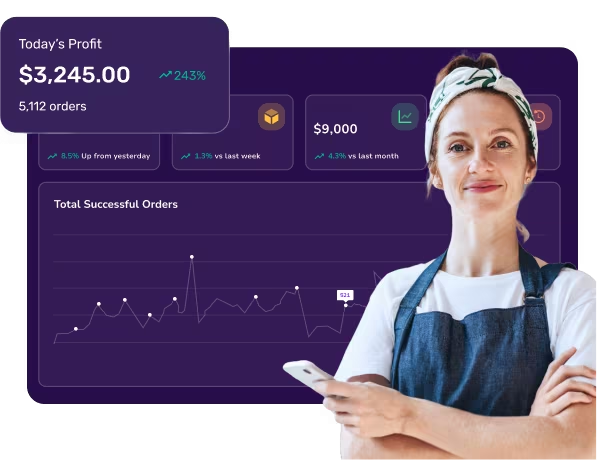
Dropshipping AI Product Research: Best Practices for Online Stores
Stop guessing. Use dropshipping AI product research to find winning products. Learn the best tools, workflows, and strategies to scale your store in 2026.


The days of mindless scrolling through TikTok or asking basic chatbots for product ideas are over. If you are still digging through garbage on public marketplaces hoping to strike gold, you are wasting precious time. In 2026, the most profitable dropshippers don't guess; they use data. Dropshipping AI product research has changed the game, allowing anyone with a computer to analyze millions of data points and pinpoint exactly what is selling right now. You don't need to invent a new billion dollar company. You just need to identify what is already working, understand why it works, and execute better than the competition.
What is AI Product Research?
AI product research is the practice of using artificial intelligence to process massive amounts of ecommerce data to identify potentially profitable products. Instead of relying on gut feelings or surface level trends, AI tools scan competitor stores, social media platforms, and ad libraries to provide actionable insights. These insights include sales velocity, ad spend, customer sentiment, and market saturation. The goal is to validate demand and spot trends while they are still climbing, ensuring you invest your budget in products backed by real data rather than just a hunch.
Best AI Tools for Dropshipping Product Research
To execute a winning AI dropshipping strategy, you need the right tools in your stack. Here are some of the top platforms that are changing how dropshippers find inventory.
1. Dropshiptool for Competitor Tracking
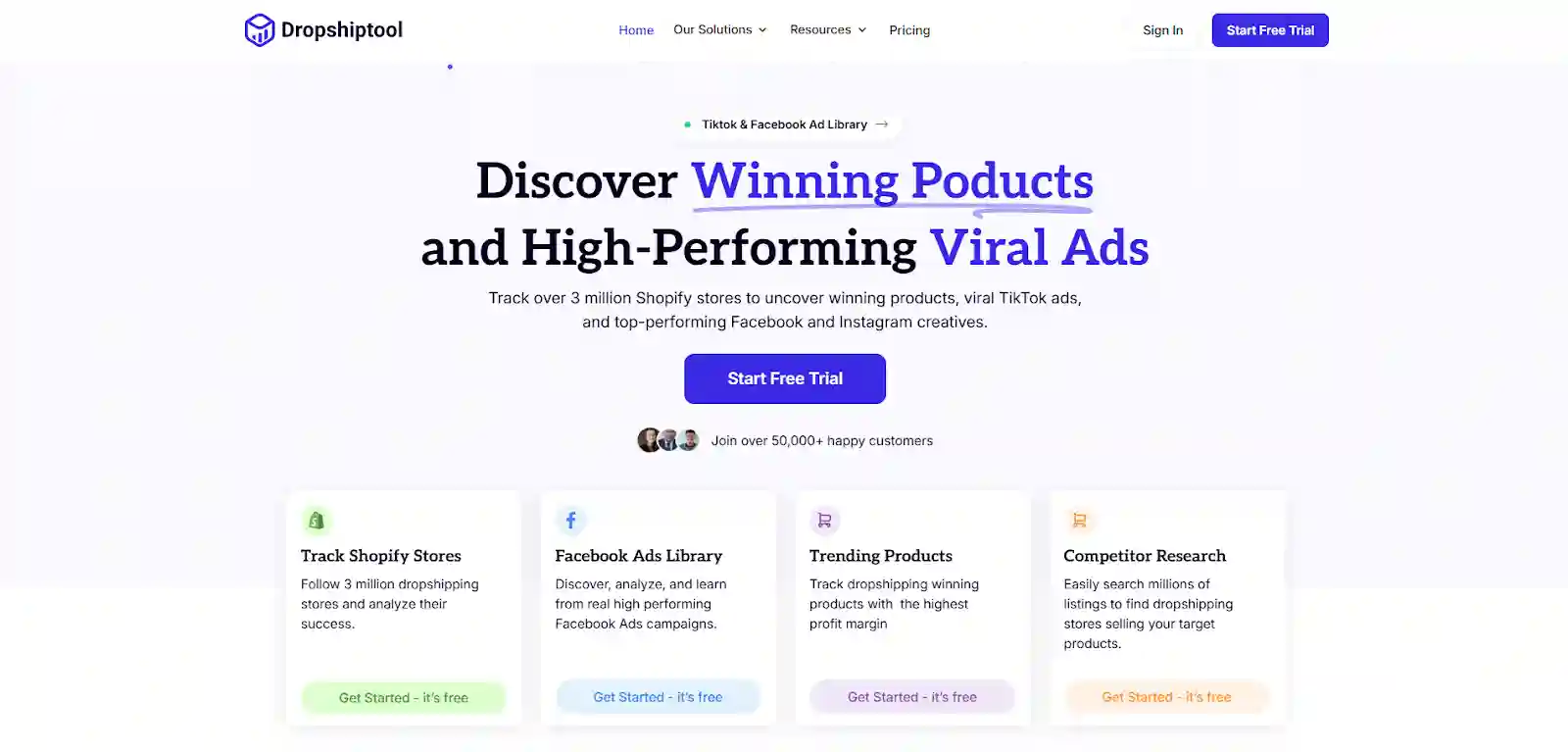
If you want to know what is working, look at who is already making money. Dropshiptool is a powerful suite that allows you to track any Shopify store anonymously. You can see their monthly visits, average daily revenue, best selling products, and even their best performing ads. The transparency this provides is invaluable for competitor research. You can filter for stores doing over $1,000 a day in English speaking markets and instantly view their winning product lineup. Using an AI sales tracker within this tool shows ad longevity; if a competitor has run an ad for nine or ten months, that product is almost certainly profitable for them and could be for you too.
2. Spocket for Supplier Validation
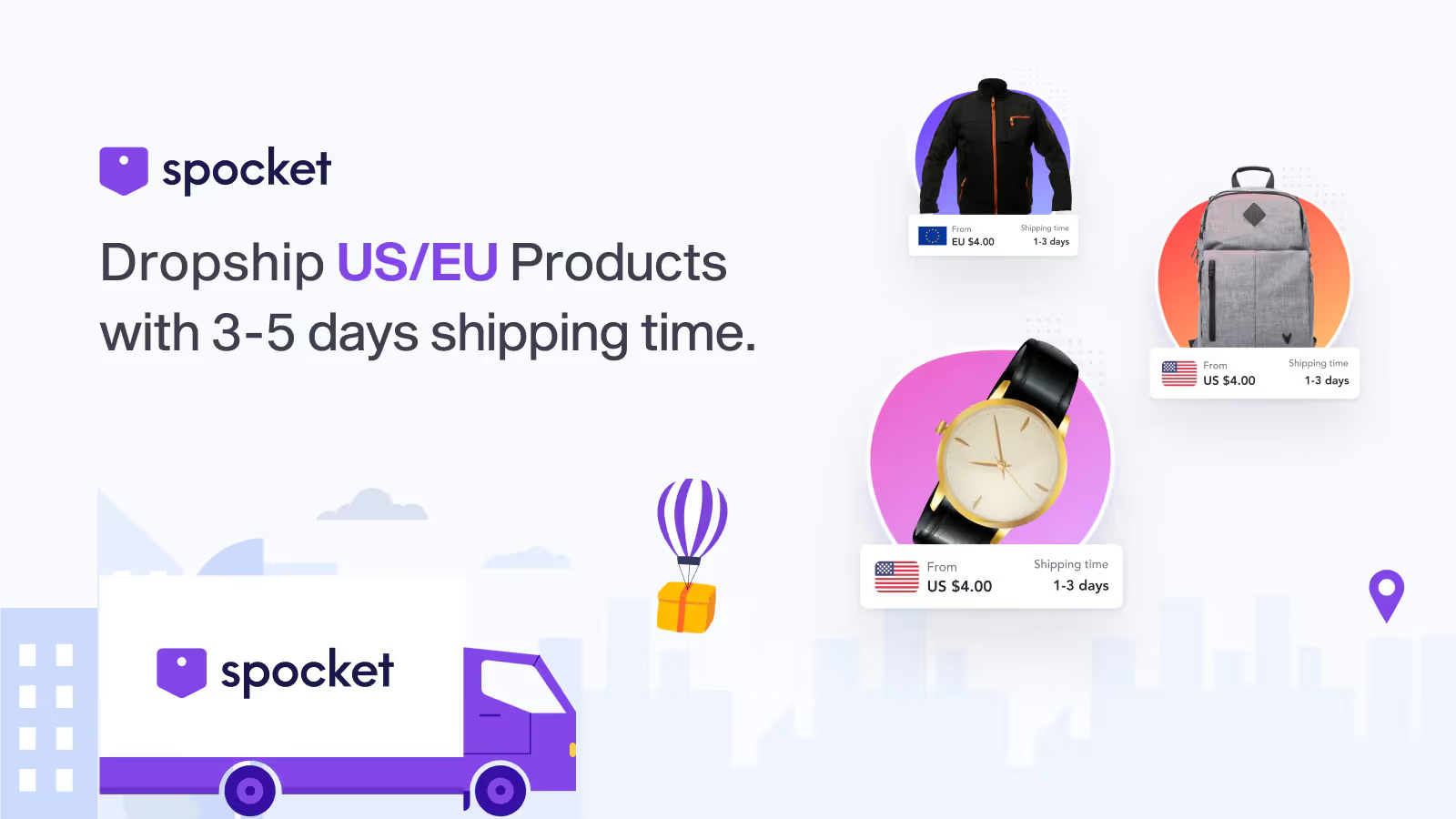
Finding a product is one thing; finding a reliable supplier is another. Spocket uses AI to connect you with suppliers, many of whom are based in the USA and Europe. This solves the long shipping time problem that destroys conversion rates. When you use a dropshipping product research tool like Spocket, you are not just looking at products; you are vetting suppliers with real time inventory tracking. The platform's AI driven recommendations help you spot trending dropshipping products that can be shipped fast. Plus, Spocket has no MOQs, which means you can test new items without committing to large bulk orders. This flexibility is critical when you are trying to validate a new market.
3. Minea for Ad Intelligence
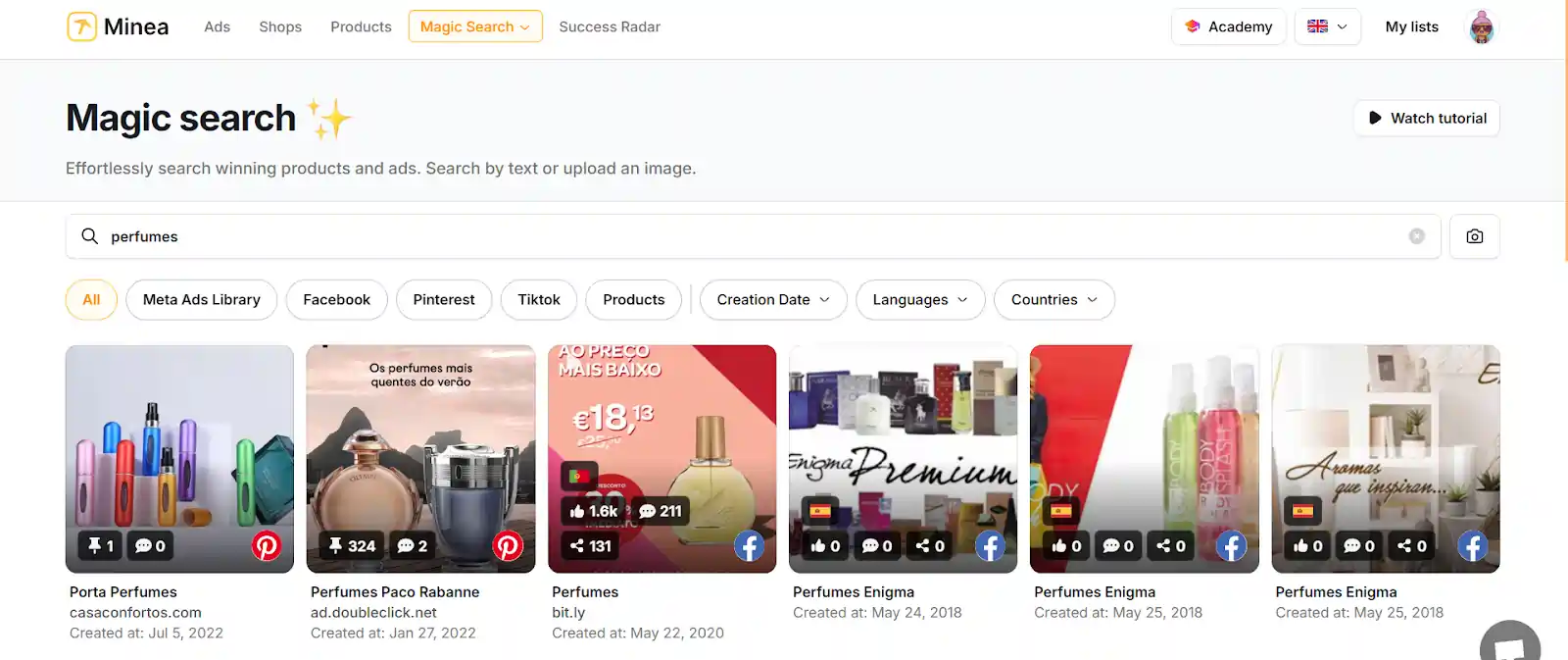
Minea offers a free AI product finder that scans millions of ads across social platforms. It allows you to see exactly which creatives are driving sales for your competitors. You can filter by engagement, platform, and even specific countries to see what is resonating with audiences right now. This tool is essential for anyone looking to spot trends before they become mainstream. By analyzing ads data, you can see which marketing angles are converting and apply those lessons to your own stores.
4. AI Powered Platforms for Niche Discovery
Sometimes you need a broader view. Tools that function as an Amazon AI research assistant can help you identify gaps in the market. By performing Amazon quick research through AI interfaces, you can see what customers are buying and, more importantly, what they are complaining about in reviews. This uncovers opportunities to sell improved versions of existing products. Platforms like Mixpanel can also be integrated to track user behavior if you have existing traffic, but for pure product discovery, dedicated AI tools are faster and more efficient.
5. Grok AI and Super Grok on X

Social listening is a major part of product research. Grok AI and Super Grok on X allow you to monitor real time conversations on social media. You can see what people are complaining about, what they are excited about, and what trends are bubbling up in specific communities. This real time data is gold for finding niche product ideas that haven't hit the mainstream ad platforms yet. It acts as an early warning system for cultural shifts and emerging needs.
How AI Can Steal Products for You Like a Pro from Competitors
The fastest way to build a profitable store is to model what is already working. Stop trying to invent a brand new product category. Instead, shift your focus from finding individual items to finding profitable brands. Using an AI agent for product research, you can analyze thousands of stores and identify the ones with consistent growth.
Once you find a target, dig into their data. Look at their monthly visitors, their ad libraries, and their bestsellers. If they have been running the same ad for six months or more, that product is a proven winner. Your job is not to copy it exactly; your job is to create a better version. Use the insights from their ads data to understand their marketing angle, then use AI to build a superior store and write better copy. You can also use tools like ImportYeti to find their suppliers. By tracing their supply chain, you can often source the same product directly, cutting out the middleman and increasing your margins.
Most Popular AI Product Research Dropshipping Workflows and Strategies
There is no single way to use AI for product research. The best approach combines multiple data sources and validation steps. Here are the workflows that are generating the most results right now.
- The Competitor Filter Method: Start with a tool like Dropshiptool. Set your filters to show only stores with average daily revenue above $2,000, active Meta ads (minimum of five), and English language targeting. This instantly weeds out the amateurs. From the results, look for stores with simple product lines, usually one to three core items. These are often one product stores that have cracked the code. Analyze their best performing ads and their sales trajectory. If they are growing, they have a winning product.
- The Data Analyst Method: Do not just look at revenue. Upload your store's sales data into an AI tool and ask it to act as a senior analyst. Provide prompts asking it to identify products that are inventory constrained but have high potential, or products that look successful on revenue but are actually bleeding profit due to high return rates. This AI winning product research method reveals hidden opportunities and risks that a simple glance at a spreadsheet would miss. It provides specific recommendations like "throttle acquisition until return rates are addressed."
- The Deep Research Prompt Method: Use AI models with deep research capabilities. Create a prompt that outlines your specific criteria, such as products solving painful problems in emotionally hungry markets with at least 300,000 monthly visits to competitor sites. The AI will scan the web and return a list of validated products with links, traffic estimates, and market analysis. This method is perfect for finding winning products for dropshipping in USA markets because you can specify geographic targeting in your prompt.
- The Affiliate Validation Method: Use TikTok analytics to find products with momentum. Look at real sales data like units sold and growth trends over 7, 30, and 90 days. Ignore vanity metrics like views. If a product has fifty or more affiliates promoting it, there is real money to be made. Affiliates do not waste time on products that do not convert. This validates market demand and gives you a list of proven products to test.
Is AI Product Research Illegal?
No, AI product research is not illegal. It is a data analysis practice. The tools are simply collecting publicly available information, such as Shopify storefronts, Meta ad libraries, and social media posts. This is the same data any human could find, just aggregated and analyzed at scale. However, there is an ethical line. Copying a product exactly, including trademarks and copyrighted images, is illegal. Using AI to understand the market and create your own unique brand around a popular product concept is smart business. The goal is to use AI to identify demand, then build a better brand, better funnel, and better offer than your competitors.
Best Dropshipping AI Product Research Practices for Stores
Knowing the tools is only half the battle. You need a framework for using them. These practices will help you avoid common pitfalls and build a sustainable business.
Validate Manually with Real Ad Data
AI can give you a list of potential winners, but you must validate manually. Go into the Meta Ad Library and look at the ads for the products your AI tools flagged. How long have they been running? Are the comments positive? Does the engagement look real or botted? Manual validation is your safety net. It ensures you are not acting on bad data. This step separates the pros from the amateurs.
Focus on Ad Longevity Over Virality
Viral spikes are like fireworks, they burn bright and die fast. Look for products with consistent ad spend over months. If a competitor has been running the same creative for nine months, that is a sign of sustainable profitability. Use an Ad Spy Tool to track these long running campaigns. These are the products you can build a real business around, not just a two week trend. They are the foundation of a stable AI dropshipping strategy.
Build a Custom AI Knowledge Base
Generic prompts yield generic results. To get the best out of AI, you need to feed it specific information. Create a set of foundational documents for your brand, including market research, customer avatars, and your unique offer brief. Load these into a platform like Claude's Projects. This creates a custom knowledge base. When you ask it to write copy or analyze a product, it is working with your specific context, not generic internet data. This yields copy that converts and analysis that is actually relevant to your audience.
Use Image Ads for Cost Efficient Testing
Before spending thousands on video production, test your concepts with static image ads. Before spending thousands on video production, test your concepts with static image ads. Alternatively, use an AI video generator to produce low-cost test creatives quickly, so you can validate a product angle before committing to a full shoot. AI image generators can now create high quality, professional looking ads with perfect text rendering. Use these to test different marketing angles quickly. You can often reduce your CPMs and identify winning hooks faster with statics. Once you have a winning angle, then scale it up with video. This lean testing approach preserves your ad budget for proven concepts.
Analyze the Entire Funnel, Not Just the Product
A winning product paired with a bad funnel will fail. Use AI to analyze not just what competitors are selling, but how they are selling it. Look at their landing page structure, their trust signals, and their copy. Tools that offer email and landing page templates based on top ecom brands can help you replicate successful layouts. Your product research should always include a plan for the customer journey from ad impression to checkout.
Pros and Cons of Dropshipping AI Product Research
Like any tool, AI product research has advantages and drawbacks. Understanding them helps you set realistic expectations.
Pros
- AI processes data at a scale no human can match, uncovering patterns and opportunities you would miss.
- It saves an enormous amount of time by automating the tedious parts of research. It provides data backed validation, reducing the risk of investing in dud products.
- It also levels the playing field, allowing solo entrepreneurs to access insights that once required a full analytics team.
Cons
- AI is only as good as the data it is trained on and the prompts you give it. Garbage in, garbage out still applies.
- There is a risk of following the herd if everyone uses the same tools and finds the same products, leading to market saturation.
- Over reliance on AI can also make you lazy; you still need human creativity to build a brand and connect with customers emotionally.
Impact of AI on Product Research: 2026 Report
As we move through 2026, the role of AI in ecommerce has solidified from a novelty into a necessity. The gap between stores that use AI and those that don't is widening into a chasm. Here is the current state of the industry.
- AI Agents Are Now Standard: The use of an AI agent for product research is no longer optional. These agents continuously monitor competitor stores, alerting you to new product launches and inventory changes in real time. They act as your personal buying team, working 24/7 to find opportunities.
- Data Analysis Is Automated: Tools have evolved to not just show you data, but to interpret it. Platforms now function like an Amazon AI research assistant, providing summaries and actionable recommendations. The era of staring at spreadsheets and guessing what the numbers mean is over. AI provides the "why" behind the data.
- Ad Creation Is Integrated with Research: The line between product research and marketing is blurring. When you find a product using an AI dropshipping product finder, the same platform can now generate ad creatives, write hooks, and even suggest landing page layouts based on what is working for that specific product type. This creates a seamless workflow from discovery to launch.
- Focus on Profit, Not Just Revenue: AI analysis has shifted the focus from top line revenue to bottom line profit. Sophisticated tools now factor in return rates, ad costs, and operational inefficiencies. They help you identify products that look like winners but are actually profit killers, saving you from scaling yourself out of business.
- Real Time Trend Spotting: With tools like Super Grok on X and advanced social listening AI, you can spot trends in their infancy. You are no longer waiting for products to appear in ad libraries. You are seeing the cultural conversation shift and predicting what will be in demand next month.
Conclusion
AI has permanently changed the landscape of ecommerce. The days of blind testing and hoping for the best are gone. In 2026, success belongs to those who can harness data to make informed decisions. Dropshipping AI product research gives you the power of a million dollar analytics team for a fraction of the cost.
By using the right tools, validating with real data, and focusing on building better brands rather than just copying products, you can compete with anyone. The information is out there; AI just helps you see it first. Now it is time to put these workflows into action and build your next winning store.
Start your dropshipping business today
Dropshipping AI Product Research FAQs
What is the best free dropshipping AI product research tool available?
Minea offers a free AI product finder that provides access to a large database of winning products and ad examples. It is a great starting point for beginners. You can also use the free tiers of ChatGPT or Claude with deep research prompts to generate product ideas based on market data, though dedicated tools provide more structured ecommerce data.
How do I use AI to find winning products for dropshipping in the USA?
Use AI tools that allow geographic filtering. Set your parameters to target the USA market specifically. Look for products with high engagement from US based audiences on social media. Also, use an Amazon AI research assistant to scan bestseller lists and review data on Amazon.com to identify gaps and opportunities specific to American consumers.
Can AI really predict which products will be profitable for my store?
AI cannot predict the future with 100% certainty, but it can analyze patterns to identify products with a high probability of success. By examining factors like competitor ad longevity, sales velocity, and market demand, AI reduces the guesswork. You still need to test products, but AI ensures you are testing items with a proven data backed foundation.
What is the role of an AI sales tracker in product research?
An AI sales tracker monitors competitor stores and provides estimates of their daily and monthly revenue. This helps you validate whether a product is actually profitable or just looks popular. Seeing consistent sales over time is a much stronger signal than a viral social media post. It helps you focus on sustainable winners rather than fleeting fads.
How do I combine AI research with my own manual validation?
Use AI to generate a shortlist of potential products. Then, manually visit the competitor's store, read recent reviews, check their social media comments, and look at their ads in the Meta Ad Library. Ask yourself if the product has a real problem solving angle and if the market seems engaged. This manual step catches any nuances the AI might miss and confirms the opportunity is real.
Is there a risk of market saturation if everyone uses the same AI tools?
There is a risk, but it is mitigated by how you use the tools. If you simply copy the top product from a generic list, you will face saturation. The real advantage comes from using AI to find underserved niches or unique angles within popular markets. Combine broad AI research with specific human creativity to find your own profitable corner of the market.


Launch your dropshipping business now!
Start free trial.avif)


Related blogs
Dropshipping Supplier Directory: Where to Find Vetted Suppliers
Browse our directory of vetted dropshipping suppliers across the US and EU, complete with niches, shipping speed, and pricing. Start your free trial today.


How to Negotiate With Dropshipping Suppliers: 9 Tactics That Actually Work
Learn how to negotiate with dropshipping suppliers on price, MOQs, and payment terms. Proven tactics and email scripts to boost your margins. Try Spocket free.

Best Clothing Dropshipping Suppliers: The 2026 Guide
Compare the best clothing dropshipping suppliers for 2026 — US/EU shipping speeds, pricing, and product quality — and find the right fit to launch your store.