Competitive Dropshipping: Advantages and Disadvantages of Dropshipping
Explore genuine advantages and disadvantages of dropshipping. Learn why 90% fail, what 10% succeed with, and how to build a profitable online store.



Is dropshipping still worth it in 2026? You've probably heard the mixed opinions—some swear by it, others say it's oversaturated. The truth is both. It's not dead, but it's definitely different. What worked five years ago (generic AliExpress products, zero marketing, fingers crossed) won't cut it now. But for those who understand the real advantages and disadvantages of dropshipping and adapt accordingly, it's still a viable way to build a profitable online business.
Let's be clear about one thing from the start: dropshipping isn't a get-rich-quick scheme. But it is a legitimate business model if you approach it with real strategy, patience, and the willingness to learn. In this guide, I'll walk you through what dropshipping actually is, how it works, the genuine benefits, the real pain points, and what it actually takes to succeed in 2026.
What is Dropshipping?
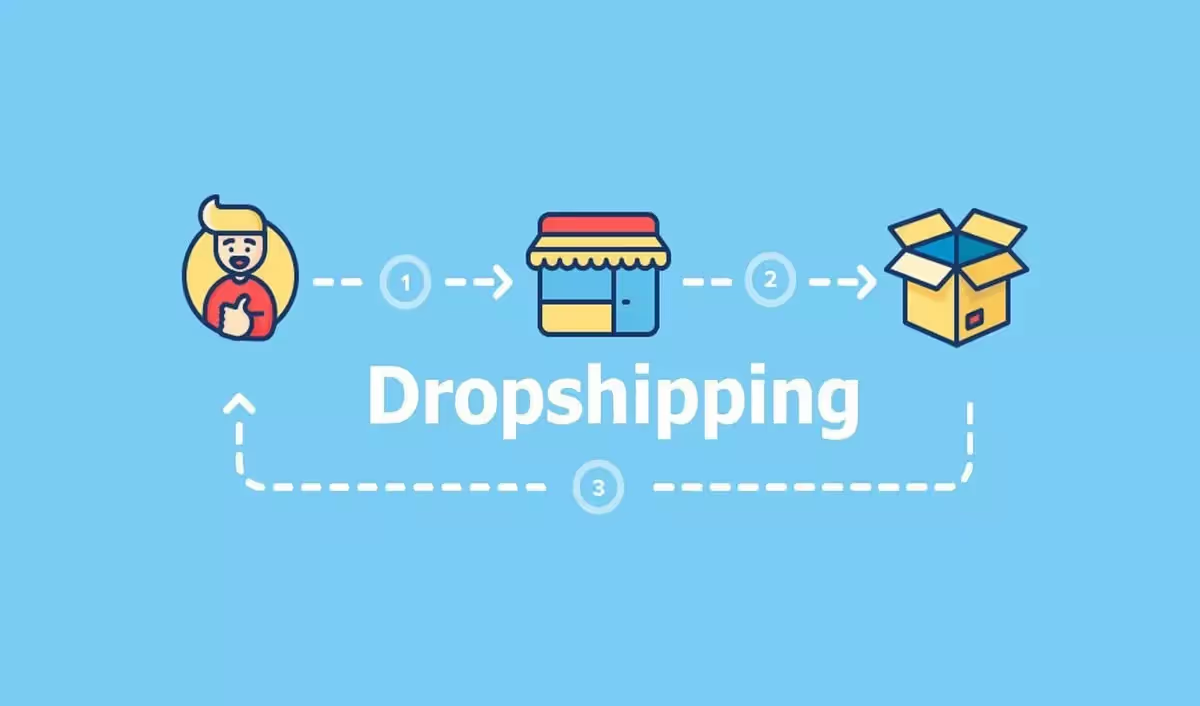
According to the dropshipping definition most used in the industry: dropshipping is a retail fulfillment method where you sell products without ever holding inventory. Instead, you partner with a supplier who manufactures and ships directly to your customers when an order comes in. You're the middleman—you handle the marketing, customer service, and the relationship. They handle the logistics.
What is Dropshipping and How Does It Work? (H3)
Here's the basic flow:
- You set up an online store (Shopify, WooCommerce, or another platform)
- A customer places an order on your store
- You purchase the product from a supplier at a wholesale price
- The supplier ships directly to the customer's address
- You keep the difference between what the customer paid and what you paid the supplier
It sounds simple because, mechanically, it is. But running a profitable dropshipping business requires a lot more moving parts.
How Dropshipping Works
Let's go deeper. When you're dropshipping, inventory management looks completely different from traditional retail. You're not stocking anything. But that's also where things get tricky.
Here's what actually happens in the background:
- You sync products from your supplier's catalog into your store
- Prices fluctuate based on supplier costs and your markup strategy
- Inventory levels need to stay in sync to avoid overselling (selling something that's out of stock)
- Returns and refunds go back to the supplier, but the customer relationship stays with you
- Your profit margin is whatever's left after product cost, shipping, ad spend, and platform fees
The challenge most dropshippers face: suppliers change prices, products go out of stock, and shipping times vary. If you're not monitoring constantly, you'll lose money or frustrate customers. Automation tools help here, but you still need to stay aware.
What is a Dropshipper?
A dropshipper is anyone running an online store using the dropshipping model. That could be someone working part-time from home testing their first product. It could also be a full-time operator running multiple stores with hundreds of products.
Who are Dropshippers?
Dropshippers come from every background. Some transitioned from traditional retail. Others started with affiliate marketing and moved into dropshipping. Many are just entrepreneurs who liked the low barrier to entry and decided to give it a shot.
The reality: most dropshippers don't make significant money in year one. Only about 10% of dropshipping businesses turn a profit in their first year. But of those who persist, automate, and refine their approach, many build real six-figure operations. The difference between the 90% who fail and the 10% who succeed usually comes down to three things: niche selection, supplier reliability, and marketing discipline.
Is Dropshipping Legal?
Yes, dropshipping is 100% legal. There's nothing illegal about the business model itself. You're simply acting as a retailer—something people have done for centuries.
How Old Do You Have to be to Dropship?
Age-wise, most platforms require you to be at least 18 to open a business account and accept payments. If you're younger, you can start learning the skills, but you'll need a legal guardian or business partner who's 18+ to handle the official setup.
The legal part that matters more: make sure your suppliers are legitimate. Don't sell trademarked items without authorization. Don't use copyrighted images. And if you're selling across borders, handle VAT, import duties, and local regulations correctly. These aren't dropshipping-specific laws—they're just standard ecommerce rules. But many beginners overlook them and get their accounts shut down.
How to Do Dropshipping?
This section really deserves its own breakdown because "how to do dropshipping" gets asked constantly, and most guides skip the hard parts.
Step 1: Choose a Real Niche
Not a broad category like "electronics." A niche. Something specific. Pet care for anxious dogs. Fitness accessories for women over 40. Sleep tech for remote workers. Eco-friendly home goods. Subscription boxes for hobbyists.
Why? Broad categories are crowded. Niches are easier to market to, easier to become an expert in, and easier to differentiate.
Step 2: Validate That Demand Exists
Use keyword research tools, check what's selling on TikTok and Instagram, look at competitor reviews on Amazon. Don't just assume people want what you're thinking of selling.
Step 3: Find Reliable Suppliers
This is where most people mess up. They pick the cheapest option and regret it immediately. Order samples. Test fulfillment times yourself. Check third-party reviews. Ask suppliers direct questions about their return policies, pricing changes, and customer service responsiveness.
Unreliable suppliers will destroy your business. Slow shipping, poor quality, price hikes, and lack of communication are deal-breakers.
Step 4: Set Up Your Store
Use Shopify, WooCommerce, or another platform. Import products from your supplier. Create actual product descriptions (not copy-paste from the supplier). Take time with product photos if you can.
Step 5: Test and Refine
Start with small ad budgets on TikTok, Instagram, or Google. Track what converts. Optimize based on data. Most new dropshippers lose money early—that's expected. You're learning.
How to Start Dropshipping Businesses in 2026
The dropshipping landscape shifted significantly in 2025-2026. Here's what's different now compared to even two years ago.
Speed is Non-Negotiable
Five years ago, customers tolerated 15-30 day shipping from overseas. Now? One in three shoppers abandon their cart if delivery takes more than five days. This is probably the biggest shift in dropshipping in 2026.
That means:
- Overseas suppliers are becoming less viable (unless you're targeting a specific market that expects slow shipping)
- Local and regional fulfillment is becoming standard
- Brands using suppliers with domestic warehouses see 40-55% higher conversions
If you're starting new in 2026, seriously consider suppliers that can deliver within 3-5 days. Yes, it costs more. But the conversion rate difference justifies it.
Branding is Non-Optional
Generic AliExpress products don't win anymore. White label and private label dropshipping now dominates. 48% of active dropshippers have shifted to white label.
What does that mean? Instead of selling the exact same phone case as 500 other dropshippers, you:
- Put your brand name on the product
- Create custom packaging
- Control the unboxing experience
- Build actual brand loyalty instead of one-time sales
White label stores see 2.1X more repeat purchases. Profit margins jump 25-45% when branding is involved. It costs more upfront, but the long-term economics are way better.
AI and Automation Are Your Competitive Edge
In 2026, 70% of successful dropshippers use AI for daily operations. Not optional. Not "nice to have." Standard.
Where dropshippers are using AI:
- Product research: Finding trending items before they spike
- Ad creative: AI-generated ad copy and designs (18-32% cheaper than hiring)
- Pricing automation: Adjust prices based on competition and demand in real-time
- Inventory syncing: Prevent overselling and stockouts automatically
- Customer service: Chatbots handling 40-60% of support inquiries
A manual dropshipper in 2026 operates at 5X lower efficiency than someone using AI strategically. It's not hype. It's just how the math works.
Social Commerce is Where Sales Happen
30-40% of dropshipping sales in 2026 come through social platforms. Not your store directly. Instagram, TikTok, Facebook, Pinterest.
Short-form video ads convert 6.5X better than static images. User-generated content (customer reviews, unboxing videos) builds more trust than branded ads.
If you're not active on at least one social platform in 2026, you're leaving money on the table. Stores with active social media presence generate 32% more revenue than those that don't.
Consider Subscription Models
Subscription-based dropshipping is growing 80% faster year-over-year. Instead of one-time sales, customers get products on a recurring basis.
Works for: beauty boxes, wellness subscription kits, self-care products, men's grooming kits, specialty food.
Why? Recurring revenue is predictable. Customer lifetime value jumps 3-4X. Ad cost per customer drops. You're building a real business, not chasing one-off sales.
Spocket is a Resource
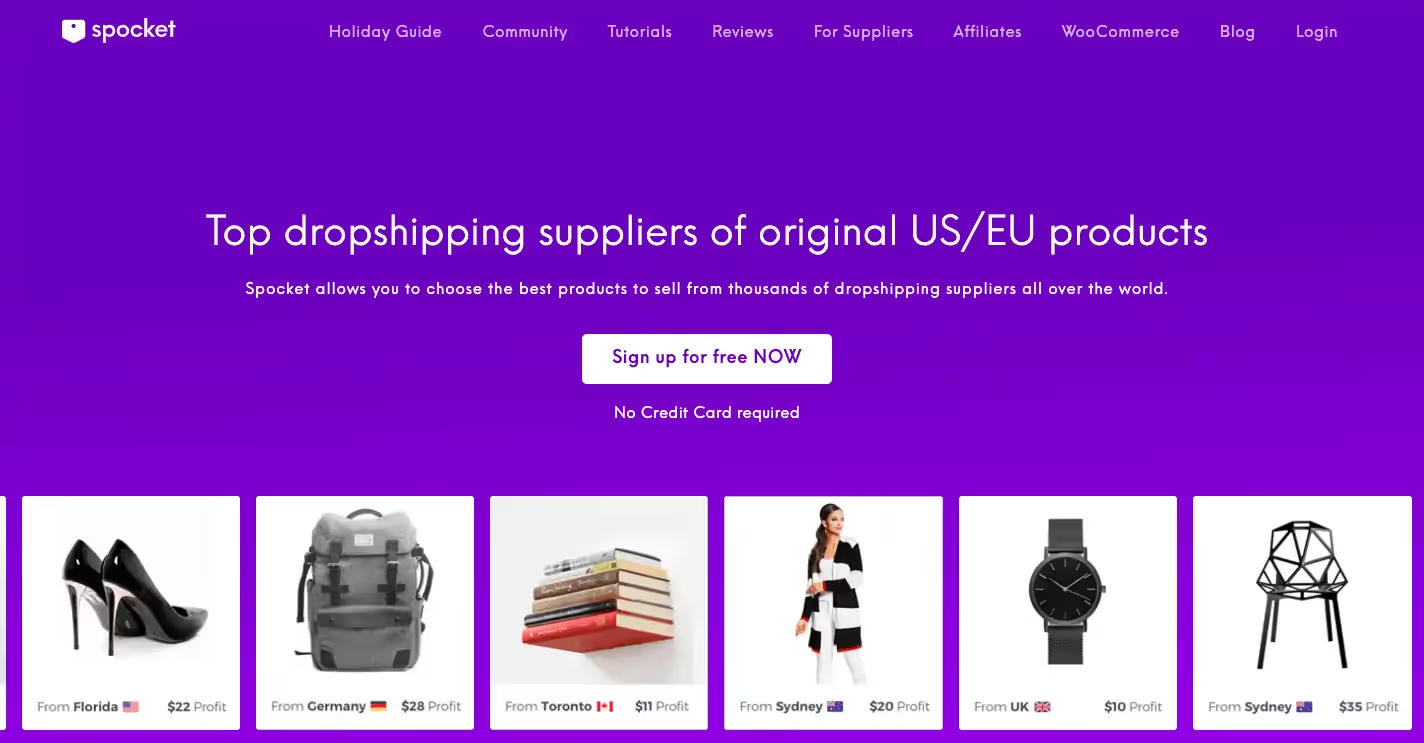
If you're looking for a dropshipping platform that handles some of these modern requirements, Spocket is worth checking out. They offer verified US and EU suppliers (addressing the speed issue), automated inventory syncing, and integration with multiple platforms. It's not the only option, but it's built for 2026 standards rather than 2015 standards.
What's the Latest Dropshipping News?
The dropshipping market is projected to hit $1.2 trillion by 2030. That's a 22.6% compound annual growth rate. Translation: the market is growing, but so is competition.
Key trends shaping the industry right now:
- Automation is table stakes. Manual dropshipping is dying. Automation isn't about replacing human judgment—it's about freeing you up to make better decisions instead of drowning in busywork.
- Profitability is possible but rare. Most successful dropshippers operate at 15-30% profit margins. That means for every $10,000 in sales, you're netting $1,500-$3,000 after all costs. It's real money, but not passive income.
- Local fulfillment is standard. Micro-fulfillment centers and regional warehouses are replacing overseas-only sourcing. Slower shipping = dead in 2026.
- White label is winning. Generic dropshipping (if you can even call it that anymore) is oversaturated. Building an actual brand is how you differentiate.
Benefits of Dropshipping
Let's cut through the hype and talk about what dropshipping actually offers.
Low Upfront Investment
You don't need to buy inventory upfront. You don't need a warehouse. You don't need capital tied up in stock. You can start a dropshipping store for under $500-$1000 (platform fees, domain, initial ads). Compare that to traditional retail, where you'd need thousands or tens of thousands just to get started.
This is the biggest advantage for people testing a business idea. You can validate demand without risking a fortune.
No Physical Logistics Burden
You're not packing boxes. You're not dealing with returns logistics. You're not managing warehouses. That's on the supplier. Your job is marketing and customer communication.
This means you can run a dropshipping business from anywhere. You don't need physical space. You don't need inventory management systems. It's lean.
Flexibility to Test Products Fast
You can add new products to your store in minutes. You can remove products that aren't selling. You can pivot your niche without liquidating excess inventory at a loss.
Traditional retail is locked in. Dropshipping lets you iterate.
Scalability Without Proportional Cost Increases
Once you have a winning product and proven marketing, scaling is mostly about increasing ad spend. Your operational costs don't triple just because you're selling 3X more volume.
A supplier handles the fulfillment. You handle the top of the funnel. That's leverage.
Passive Income Potential
Once you have a system in place—products that sell, marketing that works, and automation handling the repetitive stuff—income becomes more passive than active.
Key word: eventually. Most new dropshippers work hard for 6-12 months before hitting this stage. But it's possible.
Advantages and Disadvantages of Dropshipping
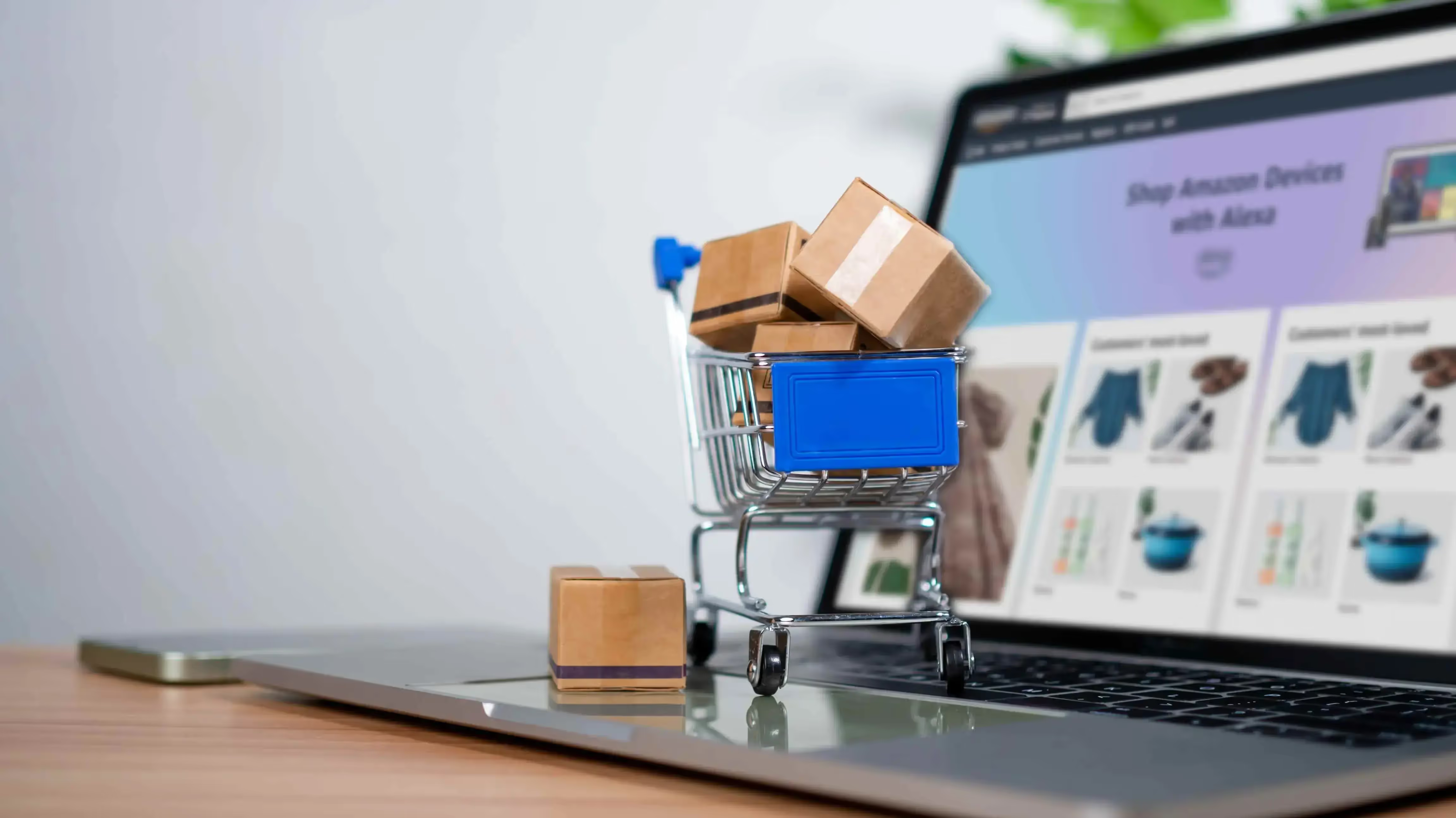
Here is a list of the advantages and disadvantages of dropshipping:
Advantages of Dropshipping
- Low barrier to entry. Start with minimal capital. Test an idea quickly. Low financial risk if it doesn't work.
- No inventory headaches. No dead stock. No overordering mistakes. No need for warehouse space.
- Wide product selection. You can offer hundreds or thousands of products without stocking any of them.
- Location independent. Run your store from anywhere with internet. No need for a physical storefront or office.
- Less operational complexity. Supplier handles fulfillment. You focus on marketing and customer relationships.
- Easy to pivot. Test different products, niches, and marketing channels without huge sunk costs.
- Scalable. Grow revenue without proportionally increasing your overhead.
Disadvantages of Dropshipping
- Low profit margins. After product cost, shipping, and ads, you're looking at 15-30% margins on most products. That's real money, but not a goldmine.
- Supplier unreliability. You're at the mercy of your suppliers. Slow shipping, quality issues, price hikes, and stockouts happen. And when they do, the customer blames you, not the supplier.
- Shipping costs are unpredictable. What you quoted the supplier might not match what they charge. Your margins shrink unexpectedly.
- Long shipping times kill conversions. If your supplier takes 15-30 days to deliver, you'll get fewer sales and more refunds. 2026 customers expect 3-5 day delivery.
- High refund rates. Dropshipped products often come with higher return rates because customers can't touch them before buying. Defective items, wrong sizes, poor quality—all lead to refunds.
- Massive competition. Thousands of dropshippers sell the exact same products. Differentiation is hard. Price wars are common.
- Customer service burden. You take the blame for supplier mistakes. Slow shipping? Bad product? Wrong item? The customer contacts you, not the supplier.
- Quality control is limited. You can order samples, but you can't control quality on every order. Consistency issues will happen.
- Intellectual property risks. Selling branded items without authorization gets your account suspended. Using copyrighted images costs you money. One IP strike can kill your store.
- It's not passive. Don't let anyone tell you dropshipping is passive income. You need to actively manage your store, monitor products, optimize marketing, and handle customer service. It's as active as most businesses in year one.
Pros and Cons of Dropshipping
Combining everything above, here's the real trade-off:
Pros:
- Low startup cost
- Minimal operational overhead
- Easy to test and pivot
- Scalable revenue
- Location independent
Cons:
- Thin profit margins
- Supplier dependency
- Shipping delays tank conversions
- High refund rates
- Intense competition
- Customer service headaches
- Quality control limitations
The question isn't "are the pros worth the cons?" It's "can I execute well enough to overcome the cons?"
10% of dropshippers do. 90% don't. The difference usually comes down to niche selection, supplier vetting, and marketing discipline—not luck or timing.
What to Stock in Your Dropshipping Shop
Product selection makes or breaks a dropshipping store. Here's what actually sells in 2026:
- Electronics and tech accessories still dominate (30% of North American dropshipping activity). But they're crowded. You need a specific angle in tech accessories.
- Fashion and apparel are stable. Beauty, skincare, and wellness are growing. Home goods, sleep tech, and eco-friendly products are trending. Check out Spocket’s women’s clothing.
- Niche subscription items are growing faster than one-off products. Pet supplies, self-care, fitness accessories—anything that creates recurring orders.
- Private label products outperform generic ones. Instead of selling the commodity version, find a supplier who'll white label for you.
What not to sell:
- Exact same products as 500 other dropshippers (you'll lose on price)
- Heavy or oversized items (shipping costs kill margins)
- Items with high return rates (defective electronics, sizing-sensitive clothing)
- Trademarked products without authorization
- Anything you wouldn't personally buy or recommend
Best Dropshipping Business Ideas in 2026
Based on actual trends in 2026, here’s what’s working. If you want to start dropshipping businesses, try these dropshipping business ideas for best results:
- Sleep technology for remote workers. Growing category. Decent margins. Clear audience.
- Eco-conscious home goods. Consumers care about sustainability. Premium pricing opportunity.
- Pet wellness products. Pet owners spend freely. Recurring purchase potential.
- Self-care and clean beauty. Growing faster than traditional beauty. Higher margins.
- Fitness accessories for specific demographics. Women over 40. Remote workers. Busy parents. Specific = better marketing.
- Biofeedback and wellness tech. Sleep trackers, meditation devices, stress-relief tech. Growing niche.
- AI-integrated home products. Smart home accessories. AI-powered gadgets. Newer category with less saturation.
- Subscription boxes. Monthly recurring revenue. Higher lifetime value. Works for almost any niche.
The pattern: all of these are specific, have clear audiences, and solve real problems. None of them are generic.
The Verdict
Is dropshipping worth it in 2026? Yes. But only if you understand what you're actually signing up for.
Dropshipping is a legitimate business model. The global market is projected to exceed $1.3 trillion by 2026. But it's not a shortcut. It's not passive income. And it's definitely not "make money while you sleep."
What's changed:
- Speed matters. Get fast shipping or lose sales.
- Branding matters. Generic doesn't win.
- Automation matters. Manual operations can't scale.
- Social media matters. That's where customers buy.
- Differentiation matters. Everyone can start dropshipping. Not everyone can succeed.
Conclusion
The advantages of dropshipping (low investment, scalability, flexibility) are real. The disadvantages (thin margins, supplier issues, competition) are equally real. Your job is to navigate both.
If you're willing to invest 6-12 months into learning, testing, failing, and iterating, dropshipping can build a real business. If you're looking for a quick buck with minimal effort, move on to something else.
Ready to start a dropshipping business? Use Spocket today.
Start your dropshipping business today
Advantages and Disadvantages of Dropshipping FAQs
What's the difference between dropshipping and print-on-demand dropshipping?
Dropshipping involves selling pre-made products sourced from suppliers. Print-on-demand (POD) allows you to customize products (t-shirts, mugs, hats) before shipping. POD gives you brand control and lower per-unit costs but slower production times. Dropshipping offers faster fulfillment but less customization. POD is better for branded merchandise; dropshipping works for general products.
How much can you realistically earn dropshipping in your first year?
Most beginners earn $0-$1,000 monthly for the first 3 months. Intermediate sellers (6-12 months in) typically make $500-$5,000 monthly after expenses. Only 10% of dropshippers turn a profit in year one. Success depends on niche selection, supplier reliability, and marketing discipline. Expect to reinvest earnings back into the business before seeing significant net income.
What makes dropshipping different from affiliate marketing?
Dropshipping requires you to purchase products and resell them at a markup. Affiliate marketing means promoting others' products and earning commission. Dropshipping gives you customer ownership and control but requires upfront investment. Affiliate marketing is lower-risk but you don't own the customer relationship. Dropshipping builds a business; affiliate marketing builds referral income.
Can you dropship on multiple platforms at the same time?
Yes, many successful dropshippers sell on multiple platforms (Shopify, Amazon, eBay, Etsy). However, managing inventory across platforms requires automation to prevent overselling. Syncing tools help maintain consistent stock levels. Start with one platform to learn the basics, then expand once you understand how everything works. Overextending too early is a common beginner mistake.
What happens if a supplier runs out of stock of a product you're selling?
The order gets delayed or cancelled. If you didn't catch it quickly, your customer receives a late notification or refund request. This is why real-time inventory syncing matters in 2026. Best practice: monitor supplier stock levels daily, pause products before they're completely out, and have backup suppliers for popular items. Always communicate delays to customers immediately.
Is it legal to dropship on Amazon and Facebook Marketplace?
Dropshipping is legal, but Amazon and Facebook have restrictions. Amazon allows dropshipping if you fulfill orders quickly and maintain high customer ratings. Facebook and Instagram prohibit dropshipping in their terms (though enforcement is loose). Your best bet: use your own Shopify store where you control the rules, or check current platform policies before listing products.


Launch your dropshipping business now!
Start free trial


Related blogs
Top WordPress eCommerce Themes for 2026
Explore the best WordPress eCommerce themes for 2026. Compare WooCommerce themes by speed, design, features, and dropshipping potential.


Saba Mohebpour Didn't Stop at Spocket: His New $50M Fund, ILA Capital, Is Buying Up Shopify and Amazon Apps
After building Spocket into a major ecommerce platform, Saba Mohebpour is launching ILA Capital with a $50M strategy to acquire Shopify and Amazon apps powering modern ecommerce.

Top Trendsi Alternatives for Fashion Dropshipping
Explore the best Trendsi alternatives for fashion dropshipping, fast shipping, branding, Shopify integration, and reliable suppliers.