Best Order Management System Ecommerce (OMS) Solutions for Growing Brands
Order management system ecommerce keeps orders, stock, shipping, and returns in one view. See how growing brands handle fulfillment with less confusion.


You can get traffic, sales, and repeat buyers, but your store still feels messy if orders are scattered all over the place. One sale hits your site, another comes from a marketplace, another gets delayed in shipping, and now your support inbox is full. That is where order management system ecommerce starts to matter. It gives you one place to track orders, stock, shipping status, and returns so you are not guessing all day. If you notice your team spending too much time checking spreadsheets, order emails, and warehouse updates, you are already paying for disorder. You want cleaner order flow, fewer mistakes, and fewer “where is my package?” messages. That is the real pitch here.
What is Order Management System Ecommerce?
An order management system is the software layer that tracks a customer order from checkout to fulfillment, shipping, delivery, and even returns. In plain English, it keeps your store from acting confused when orders come in from different places. If you sell on your site, on marketplaces, through social channels, or through wholesale, an OMS pulls that activity into one operating view instead of making you chase updates across tabs. Shopify, BigCommerce, Salesforce, Brightpearl, and other vendors all describe OMS around the same idea: central order visibility, inventory awareness, fulfillment routing, and post purchase tracking.
You will also see people ask what is order management system in ecommerce when they are really asking when they need one. The answer is usually this: once manual order checks start eating time, once overselling starts happening, or once your team has to juggle warehouses, apps, and customer messages all day. That is when the order management system ecommerce model stops being “nice to have” and starts feeling like basic operating hygiene. If you need a better grip on understanding order processing, this is the part of the stack that keeps the whole flow moving.
Benefits of Order Management System Ecommerce
You will know you need this when your store is selling fine, but your back end is tired. Orders are coming in, but your team is doing too much hand checking.
That is usually where order management system ecommerce pays off. It cuts the mess, gives clearer order status, and keeps your stock story closer to the truth.
Fewer order mistakes and less manual chasing
If you are still checking orders channel by channel, people will miss things. One late update can turn into an oversold SKU, a split shipment, or a customer complaint you did not need. A good OMS keeps order intake, status changes, and fulfillment steps visible in one place, which cuts back on human error and repeated checking.
You can also route work better inside your team. Customer support sees status faster, warehouse staff sees what needs packing, and finance is not guessing what shipped and what is still open. If you already care about inventory management, this is where order flow and stock flow start talking to each other properly.
Better stock visibility across channels
A lot of stores do not actually have an order problem first. They have a stock visibility problem that turns into an order problem. If stock does not update fast enough across channels, you get cancellations, backorders, and weird customer messages that burn trust.
That is why many brands pair OMS with strong stock syncing and cloud inventory controls. If you need a quick read on the importance of cloud-based inventory management, it connects directly to cleaner fulfillment and fewer “we sold what we do not have” moments.
Faster shipping updates and cleaner post purchase service
Customers do not just care that you shipped the item. They care that they can see what is happening. Good OMS setups support status updates, package progress, and return handling, which matters a lot once order count rises.
That is where ecommerce order tracking becomes less annoying for your team too. Instead of support digging through carrier emails and store dashboards, the order record is easier to follow from payment to doorstep. If you run dropshipping or sell trending dropshipping products, that visibility matters even more because fulfillment touches more moving parts.
Order Management System Ecommerce Examples
If you want real order management system in ecommerce examples, think less about theory and more about what the brand is dealing with every day.
You are not buying software for fun. You are fixing missed orders, messy stock counts, slower warehouse handoffs, and customer support noise.
- A DTC store selling beauty products on its site plus Amazon uses an OMS to pull orders into one dashboard. That means the team is not flipping between store admin, marketplace panels, and warehouse messages all afternoon.
- A fashion brand with two warehouses uses rule based routing so orders go out from the closest location or the location that has stock. That can lower split shipments and reduce the silly situation where one warehouse is overloaded while another is quiet.
- A wholesale seller running a b2b order management system alongside its retail site uses the same order layer to keep purchase orders, customer allocations, and shipment status cleaner. This matters when wholesale and retail stock pools start colliding.
- A marketplace seller working with Amazon prep partners like New York FBA Prep can use an OMS plus fulfillment tools to watch incoming orders, stock transfers, and shipment status without treating every order like a mini crisis. That is one of the more practical ecommerce order management system examples for brands that do not ship everything from one room.
- A seller using Print-on-demand still needs order status clarity even if it does not hold much stock. The OMS side of the setup keeps order states cleaner, so support knows if an item is paid, in production, shipped, or delayed.
- A small brand trying to keep bookkeeping for e-commerce cleaner may connect order flow to finance tools like doola or accounting apps so shipped orders, refunds, and sales data line up better. That is not magic. It just saves a lot of end of month confusion.
- A marketplace first seller may compare Shopify style workflows with Meesho order management software habits and see the same pain point: too many orders, too many status checks, and not enough clean visibility. That is why an order management platform matters once sales stop being tiny.
How are Brands Using Order Management Systems in Ecommerce: Use Cases
Here are some use cases of order management systems in ecommerce for brands:
Multi channel selling without losing control
A lot of brands hit their first wall when they expand sales channels. The website is fine, but then Amazon, retail, social commerce, and wholesale all start pulling from the same stock pool. That is where e-commerce order management stops being a back office term and starts becoming daily survival. Brands use OMS to keep one order record, one stock story, and one clearer fulfillment queue instead of running five disconnected mini businesses.
Faster fulfillment handoff for warehouses and 3PLs
You could have a nice storefront and still look disorganized once the order hits the warehouse. Brands use OMS to pass cleaner order data to warehouse teams and 3PLs, control picking rules, and cut back on manual routing. If you are building your own warehouse management website workflow or comparing warehouse tools, this is the part that ties checkout activity to actual boxes moving out the door.
Better support for dropshipping and no MOQ catalogs
If you are selling from supplier catalogs, clean order status matters more than people think. Supplier orders, customer orders, tracking, and exceptions all need to stay readable. Brands using Spocket often care about faster supplier coordination, catalog sync, and the fact that Spocket has no MOQs on many products, which helps when testing catalog breadth without locking cash into big order quantities.
That is also why an OMS matters for supplier led stores. It gives the store owner a cleaner line of sight into what was paid, sent, packed, or delayed, instead of leaving every answer buried inside app notifications.
Teams that need cleaner handoffs and fewer status questions
Once a store hires support staff, ops staff, finance staff, or freelancers, everyone starts asking the same thing: what happened with this order? Brands use OMS to cut repeated status checks and keep order notes, shipment progress, and exceptions easier to read. That also matters for someone looking at an ecommerce order processing job, because the work gets much cleaner when order states are standardized instead of half guessed from email chains.
How to Switch to Order Management System Ecommerce
You do not switch all at once by throwing your old process in the trash. You switch by cleaning the order flow first, then moving the rules into software.
That part matters. A bad setup moved into a new app is still a bad setup.
- Map your current order path before buying anything. List where orders come from, where stock lives, how shipping gets triggered, and where mistakes usually happen. If you skip this, you will buy an OMS and still keep the same messy habits.
- Decide what you need the system to own. Some brands want the OMS to handle routing, returns, and ecommerce order tracking. Others just need cleaner stock sync and status visibility across channels. That decision changes which vendor makes sense.
- Check your channel and warehouse connections first. Your inventory and order management software only works if it connects cleanly to your storefront, marketplaces, carriers, warehouses, and finance stack. This is where people discover too late that their favorite app is missing one important connection.
- Clean your SKU data before migration. Duplicate SKUs, messy naming, and bad stock numbers will poison the new setup. If you are planning an order management system ecommerce project, bad data is the part that comes back to embarrass you.
- Run a short parallel test. Keep old and new order flow side by side for a controlled period, watch missed statuses, shipping updates, and return handling, then fix rule gaps. You want proof the new flow works before all orders depend on it.
- Train people on exceptions, not just normal orders. Normal orders are easy. The real mess is split shipments, partial refunds, low stock, delayed supplier handoff, and cancelled orders. That is what your support and ops people need to practice.
- Think about future shape, not just today. If you may add wholesale, retail, subscriptions, or more warehouses later, your OMS choice should not box you in. That matters if you are comparing sales order management software, order booking software, or broader ecommerce management software for a growing store.
Best Order Management System Ecommerce Platforms and Apps in 2026
These are six solid options to look at for 2026. I am not calling one winner for every brand because that would be lazy. The better pick depends on channel count, warehouse setup, order volume, and how much control you want over routing, stock, and fulfillment.
1. Shopify
Shopify works well for brands that want built in order control inside the same commerce system they already use to sell. Its official order management page highlights shipping labels, fulfillment automation, inventory handling, and returns from the admin, which is a big reason smaller and mid sized brands stay inside the Shopify stack instead of stitching together too many outside tools. Shopify’s enterprise OMS content also frames OMS around multi location inventory and fulfillment coordination, so it is not just a simple order list. If your store wants one central admin without too much ops sprawl, Shopify is an easy first look.
Key features
- Built in order handling from the same admin used for products, customers, and sales. You are not forcing staff to learn a totally separate operating system for daily order work.
- Shipping label workflows sit close to the order record, which cuts back on tab hopping. That matters when support and ops are working from the same store admin.
- Inventory visibility is part of the broader Shopify operating layer. If you sell from more than one location, that matters a lot more than people think.
- Returns are included in Shopify’s order management messaging, which is good for brands that do not want returns living in total chaos. Post purchase order clarity matters as much as shipment speed.
- App ecosystem depth is a practical advantage. If you outgrow the default flow, you can add OMS adjacent tools from the Shopify App Store rather than rebuilding your whole store.
2. BigCommerce
BigCommerce makes sense for brands that want strong commerce infrastructure and broader integration flexibility. Its support docs define order management around receiving, fulfilling, and tracking orders, while its product pages lean hard into multi-channel inventory and multi storefront expansion. That is useful for stores running multiple brands, regions, or storefronts from one account setup. You could call it a good fit for operators who want control without being locked into one exact fulfillment shape. It also belongs on any serious order management system companies list and among major order management system ecommerce companies in USA because of its enterprise and multi storefront footprint.
Key features
- Multi Storefront lets one BigCommerce store power multiple storefronts with separate domains and experiences. That is good for brands adding regions or sister brands without cloning operations blindly.
- Channel Manager and inventory syncing support selling across marketplaces and social channels. That matters once a brand outgrows single channel thinking.
- BigCommerce plays well with ERP, PIM, and outside systems, which is helpful for teams that already have a bigger back office stack. It is not trying to force every workflow into one narrow lane.
- Order handling is documented clearly in support resources, which helps operations teams train faster. That sounds boring, but boring clarity is useful when order volume rises.
- Good fit for brands selling both retail and wholesale. BigCommerce’s B2B direction makes it relevant for mixed channel brands that need retail and business buying in one environment.
3. Linnworks
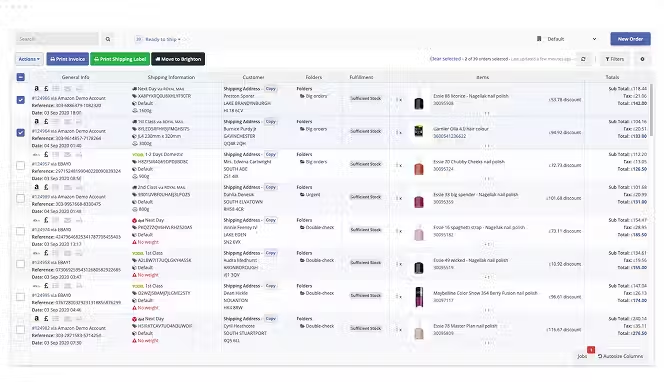
Linnworks is for brands that are already feeling channel sprawl. Its official material is very clear about one dashboard for orders across channels, intelligent sorting, direct shipping connections, and routing by stock, marketplace, item type, or location. That is the language of an ops team trying to keep up, not just a store owner doing ten orders a day. Linnworks also released a 2026 commerce ops report centered on automation and visibility, which fits the kind of problems growing brands are trying to fix this year. If your pain is multichannel order chaos, Linnworks is a real candidate for OMS software for ecommerce.
Key features
- Single dashboard order control across channels. That is the main reason people look at Linnworks in the first place.
- Order routing rules can use stock availability, marketplace, item type, and location. That gives ops teams tighter control over where an order goes next.
- Shipping connections are built into the operating flow, so order handling and dispatch are less fragmented. That is useful for teams with big daily shipping batches.
- Inventory sync across 100 plus marketplaces is one of Linnworks’ strongest points. It is built for brands already selling in a lot of places.
- Its 2026 reporting around automation shows where commerce ops is heading. If you want a system built around operator pain, Linnworks speaks that language well.
4. Cin7
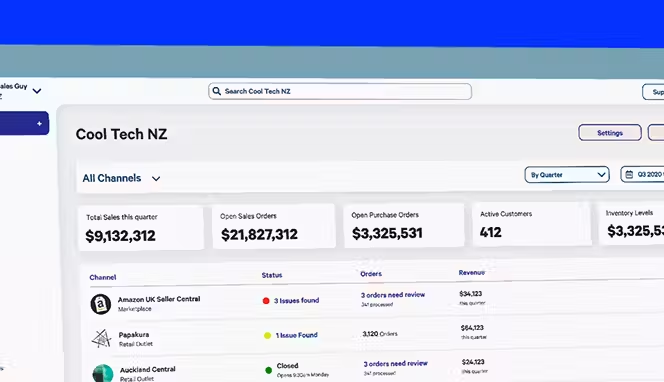
Cin7 is a good pick for brands that want inventory, warehouse work, and order flow tied together more tightly. Its official site talks about unifying stock data, warehouse workflows, financial data, and order management in one system, which is a stronger operational pitch than a simple storefront app. If you sell through ecommerce, EDI, wholesale, or multiple warehouses, Cin7 starts to look more serious. It is often better suited to brands that want a bigger operating layer than a basic store admin can offer.
Key features
- Centralized sales and order information across ecommerce sites, EDI systems, and business platforms. That matters for brands with mixed sales channels.
- Warehouse workflows sit close to order and stock data, which is useful for brands shipping from more than one location. Fewer disconnected tools means fewer silent mistakes.
- Financial clarity is part of the product story, so it is not only about pick and pack. Operations leaders usually care about margin and inventory value too.
- Good fit for sellers graduating from light tools into deeper operational software. That is why Cin7 often appears in conversations around best order management software for small business moving into a more demanding stage.
- Broad system connectivity is a real selling point. If your store has outgrown single purpose apps, Cin7 gives you a bigger control center.
5. Brightpearl
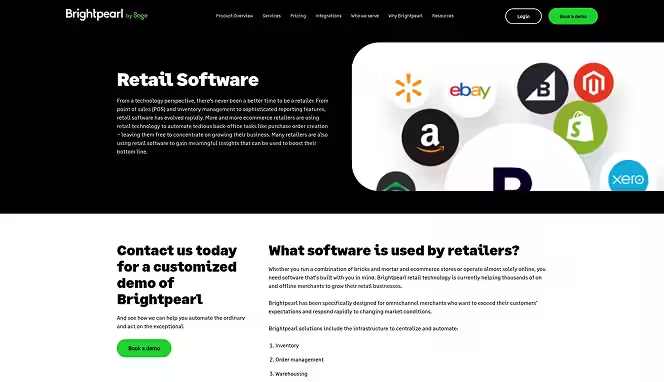
Brightpearl by Sage leans into retail operations hard. Its messaging is about automating order fulfillment, multi location inventory, shipping, accounting, invoicing, and partial fulfillment rules, which makes it attractive for brands doing enough volume that “just keep checking orders manually” is no longer cute. It is less about pretty storefront talk and more about keeping the business from getting dragged down by repetitive back office work. If your brand sells across channels and also cares about accounting handoff, Brightpearl deserves a real look.
Key features
- Automation engine for order and back office tasks. That matters when staff time is getting eaten by repeated manual steps.
- Handles partial fulfillment, dropshipping, multi location allocation, and invoicing in its order management story. Those are not small details for scaling brands.
- Strong retail operations angle rather than just storefront features. It is built for people who care what happens after checkout too.
- Brightpearl’s ecommerce order management guidance covers purchase through delivery and post purchase service. That lines up well with brands that need one cleaner ops picture.
- Useful for teams that want accounting and fulfillment closer together. That reduces end of month cleanup pain for many operators.
6. Zoho Inventory

Zoho Inventory is a practical option for smaller and mid sized sellers who want order handling, shipping, warehouses, and stock control without jumping straight into a giant enterprise setup. Zoho’s official pages talk about managing sales and purchase orders, package creation, shipping updates, and warehouse handling from one system. It also has a free plan path, so it comes up often when someone asks about order management software free while still needing real order control. If you want a more approachable entry point into inventory and order management software, Zoho is easy to shortlist.
Key features
- Sales orders, purchase orders, packages, and delivery updates live in one system. That is cleaner than juggling separate light apps for each task.
- Warehouse handling is part of the product story, so it is not only for sellers shipping from one shelf in one room. You can keep more of the fulfillment picture inside one environment.
- Free plan availability matters for smaller sellers. It gives brands a lower pressure way to test real order software before spending more.
- Works well inside the broader Zoho ecosystem. If your team already uses Zoho apps, that is a practical plus, not just a brochure point.
- Good option for merchants who want cleaner ecommerce fulfillment flow without starting with a very heavy operations suite.
Conclusion
If you notice your brand is selling fine but order flow feels sloppy, that is your sign. Order management system ecommerce is not about sounding more advanced than you are. It is about knowing where the order is, what stock is left, who needs to act next, and what the customer should be told. You can run without it for a while, sure. A lot of stores do. But once volume grows, the cracks get loud. Cleaner order handling means fewer support fires, fewer stock mistakes, and a calmer back end. That alone can save your team a lot of wasted hours.
Start your dropshipping business today
Order Management System Ecommerce FAQs
What is the main job of order management system ecommerce?
The main job of order management system ecommerce is to track and control an order from checkout through shipping, delivery, and returns. It also keeps inventory, fulfillment status, and customer updates easier to follow. If you sell on more than one channel, that shared visibility is usually what stops order confusion from piling up.
Can small brands use order management software free before moving to a paid setup?
Yes, some smaller sellers start with lighter or free options, then move up when order count grows. Zoho Inventory, for example, offers a free plan path, which is why it comes up in order management software free conversations. But free is only good if your store still has simple workflows and not too many channel or warehouse rules.
Do I need order management system ecommerce certification to work in operations?
No formal order management system ecommerce certification is required for most roles. Employers usually care more about whether you understand order states, stock flow, carrier updates, returns, and exception handling. If you are applying for an ecommerce order processing job, hands on platform familiarity and cleaner operational thinking usually matter more than a certificate. Some vendors do offer product training, but it is not a universal requirement.
What should I look for in ecommerce order management system architecture?
Good ecommerce order management system architecture should support channel connections, inventory visibility, warehouse logic, shipping updates, and clean status flow across the order lifecycle. If you also sell wholesale, check for b2b order management system support too. Brands comparing an order management platform should also look at app connections, routing rules, returns handling, and future warehouse or storefront expansion.


Launch your dropshipping business now!
Start free trial.avif)


Related blogs

Top WordPress eCommerce Themes for 2026
Explore the best WordPress eCommerce themes for 2026. Compare WooCommerce themes by speed, design, features, and dropshipping potential.


Saba Mohebpour Didn't Stop at Spocket: His New $50M Fund, ILA Capital, Is Buying Up Shopify and Amazon Apps
After building Spocket into a major ecommerce platform, Saba Mohebpour is launching ILA Capital with a $50M strategy to acquire Shopify and Amazon apps powering modern ecommerce.

Top Trendsi Alternatives for Fashion Dropshipping
Explore the best Trendsi alternatives for fashion dropshipping, fast shipping, branding, Shopify integration, and reliable suppliers.