What Is Dropshipping and How Does It Work? (2026 Guide)
Dropshipping means selling online without stock: your supplier ships each order. Learn how it works, what it costs, real margins and the rules to know in 2026.


Dropshipping is a way to sell products online without owning any stock. You list items in your store, a customer pays you, and you pass the order to a supplier who packs it and ships it straight to the customer. You keep the gap between what the customer paid and what the supplier charged. That gap is your gross profit, and it's the number this whole business model lives or dies on.
This guide explains what dropshipping is, how an order actually moves from checkout to doorstep, what it costs to run, where the margins really land in 2026, and the tax and customs rules that catch new sellers off guard. If you've read three other "what is dropshipping" pages already, skip to the sections on unit economics and cross-border rules. Those are the parts most guides gloss over.
What is dropshipping?
Dropshipping is a retail fulfillment method where the store never handles the product. There are three parties in every sale:
- The customer buys from your store and pays your price.
- You run the storefront, set prices, take payment, market the products and deal with customer questions.
- The supplier (a wholesaler, manufacturer, or marketplace seller) holds the stock, packs the order and ships it.
On paper you're the seller of record. Your name is on the checkout page and the invoice, you collect the payment and any sales tax, and you're the one who answers when something goes wrong. In practice you never touch the goods. A dog-bed shop, for example, might list 40 beds from two suppliers. When someone orders the grey medium one for $48, the shop forwards that order, pays the supplier $29 including postage, and keeps the $19 difference before its own costs.
That's different from a traditional shop, where you buy stock up front (and eat the loss on whatever doesn't sell), and different from ecommerce in general, which also covers brands that make and ship their own goods.
How does dropshipping work, step by step?
Here's the order flow from the moment someone clicks "buy" to the moment the parcel lands.
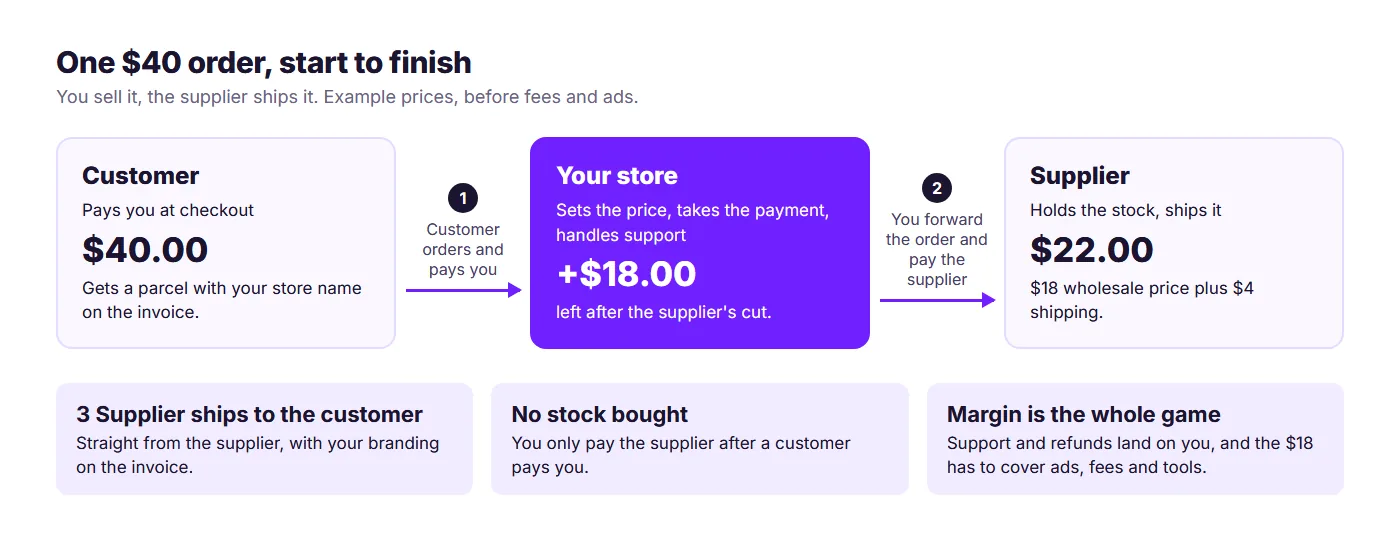
- You list a product at your own price. The supplier gives you a wholesale price and photos. You decide the retail price. Say the wholesale price is $18 and you list it at $40.
- A customer buys and pays you. Payment goes through your checkout (Shopify Payments, PayPal or similar). The full $40 reaches you, minus the card fee.
- The order goes to the supplier. With a dropshipping app this happens automatically. Without one, you copy the order details to the supplier by hand, which is fine for your first ten orders and painful after that.
- You pay the supplier. You pay the wholesale price plus shipping, here $18 plus $4. This is the moment your money leaves, and it happens after the customer has already paid you.
- The supplier ships to your customer. Good suppliers use plain or branded packaging and a packing slip without their own pricing on it. The tracking number comes back to your store and goes to the customer.
- You handle everything after the sale. Delivery questions, returns, refunds and reviews are yours. The supplier doesn't talk to your customer.
Step 4 is why dropshipping needs so little cash to start: you're only ever paying for goods you've already sold. It's also the source of the main risk. If the supplier is out of stock or ships late, the customer has already paid you and expects the product anyway.
Dropshipping vs other ways to sell online
People mix up dropshipping with a few similar models. The real differences come down to who holds stock and who sets the price.
| Model | Who holds the stock | Upfront cost | Margin control | Best for |
|---|---|---|---|---|
| Dropshipping | Supplier | Low | Medium. You set the price, but the supplier sets your cost | Testing products and niches cheaply |
| Holding inventory (wholesale) | You | High | High. Bulk pricing improves your margin | Products you already know will sell |
| Print on demand | Printer (made to order) | Low | Medium. Good for original designs | Creators and brand builders |
| Affiliate marketing | Nobody. You send traffic | Very low | Low. You earn a commission | Content creators with an audience |
The big trade-off with buying stock is cash: you pay for inventory before you know what sells, which is exactly the risk dropshipping removes.
What does it cost to start a dropshipping business?
"No money needed" is the claim you'll see most often, and it's wrong. You don't need to buy stock, but you do need to pay for a store, a way to get products into it, and traffic. A realistic first-month budget looks like this:
| Cost | Typical amount | Notes |
|---|---|---|
| Store platform | Shopify Basic is listed at $29/month on annual billing | Shopify advertises a 3-day trial, then $1/month for the first three months on most plans (checked October 2026) |
| Supplier or dropshipping app | Spocket plans start at $39.99/month, with a 7-day trial | Some apps have free tiers with limits |
| Payment processing | 2.9% + $0.30 per online card sale on Shopify Basic | Taken from each order, so it scales with sales |
| Test orders | One or two sample orders per product | Cheap insurance against bad quality |
| Advertising | Your biggest variable cost | Many beginners set aside a few hundred dollars to run a first round of tests |
That puts a bare-bones launch somewhere around the cost of a monthly app subscription plus a store plan, plus whatever you decide to spend on ads. Ads are where money disappears fast, so treat the ad budget as a test fund you're willing to lose, not an investment you expect back on week one. For a fuller breakdown by line item, see dropshipping startup costs.
If you want to see what product sourcing looks like before committing, you can try Spocket's 7-day trial and browse US and EU suppliers inside the app.
The unit economics most guides skip
Before you sell anything, work out how much you can afford to spend to get one order. Take the $40 product from earlier:
- Sale price: $40.00
- Supplier cost (product plus postage): $22.00
- Card fee at 2.9% + $0.30: $1.46
- Left before ads and everything else: $16.54
So the most you can spend on advertising per order and still break even is $16.54. Divide the sale price by that number and you get a break-even return on ad spend of about 2.4. If your ads bring back less than $2.40 in sales for every $1 spent, you're losing money on each order before you've paid for your store plan, apps or refunds.
This is the single most useful calculation a new dropshipper can do, and it's why pricing a $40 product at $40 and hoping works so rarely. If you want to run your own numbers, use the profit margin calculator.
Pros and cons of dropshipping
Dropshipping fits some people well and others badly. Here's an honest split.
What works in your favour
- Low upfront risk. You pay for stock only after a customer pays you, so a flop product costs you ad money and time, not a pallet of unsold goods.
- Location independence. All you need is a laptop and an internet connection.
- Easy to test. You can list 20 products in a weekend and see which ones people click on.
- No warehouse. No packing table, no storage lease, no trips to the post office.
What works against you
- Thin margins. Printful's 2026 analysis puts most dropshipping stores between 10% and 30% net, with beginners usually under 15%. More on that below.
- Less control. You can't inspect every parcel, and a supplier's stock-out becomes your problem.
- Slow shipping from some suppliers. Overseas suppliers can take weeks. Customers who expected 3 days will tell you about it.
- Easy for others to copy. If you can list a product from a supplier, so can anyone else. You need to win on brand, content and service.
- You own the complaints. Returns, chargebacks and angry emails land on your inbox even when the mistake was the supplier's.
Is dropshipping still profitable in 2026?
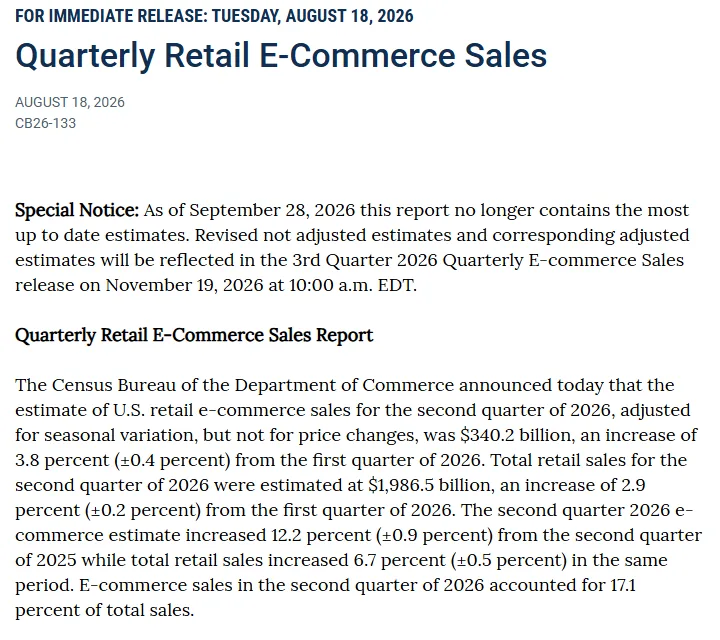
Yes, but not the way early YouTube videos made it look. Demand is not the problem. The US Census Bureau reports that retail e-commerce sales in the second quarter of 2026 were $340.2 billion (seasonally adjusted), up 12.2% from the same quarter in 2025, and made up 17.1% of all US retail sales. People are clearly still buying online.
The squeeze is on the seller's side of the ledger. Ad costs have climbed, shipping expectations have tightened, and plenty of stores sell identical products. Printful reports that most stores land between 10% and 30% net margin once product cost, shipping, platform fees and ads are paid, and TrueProfit's benchmark for a healthy store is a 15% to 25% net margin. Both are vendor-published figures, so read them as rough ranges rather than guarantees.
What separates the stores that keep going is mostly boring: they pick products with enough margin to survive ad costs, they use suppliers who ship quickly, and they answer customer emails the same day. If you want the full income picture, including a month-by-month look at what beginners actually earn, read how much dropshippers make.
Where to find dropshipping suppliers
Your supplier decides your shipping times, your product quality and a large part of your margin, so this is the decision to spend time on. There are four main places to look:
- Supplier marketplaces and apps. You browse and import products into your store, and orders are passed on automatically. Examples include Spocket, DSers and Syncee.
- AliExpress and similar platforms. The widest selection and the lowest prices, but delivery can be slow and quality varies from seller to seller.
- Wholesalers and distributors. You apply directly. Often better pricing, but you may have to meet minimums or pay a membership fee.
- Manufacturers and brands. Best for private label or higher-end products, though they're harder to get on board as a new store.
Whoever you pick, test them before you list anything. Order a sample to yourself, time the delivery, and check how the parcel looks when it arrives. A short checklist helps:
- Where does the product actually ship from, and how long does that take to your main customer country?
- Can they send branded or plain packaging with no supplier prices on the slip?
- What happens when an item goes out of stock?
- Who pays for returns, and how fast do they respond when you contact them?
For a deeper look, see our guide to dropshipping suppliers. Ready to browse products? Take a look at trending products from US and EU suppliers.
Where Spocket fits: it's a supplier marketplace focused on US and EU suppliers, so many orders ship from closer to your customer than a typical overseas order, with shipping typically in the 2 to 7 day range. It connects to Shopify and other platforms, and plans start at $39.99/month. It isn't the cheapest way to source a product, because you're paying for faster suppliers and a vetted catalogue, so it suits stores that care more about delivery speed and customer experience than the lowest possible item price.
Taxes, customs and rules that catch new dropshippers
This is the part nobody puts in the "make money from your bedroom" videos, and it's where dropshippers get blindsided. A few points worth knowing:
- You're the seller, so you owe the tax. In the US that can mean collecting state sales tax, depending on where you and your customers are. See dropshipping taxes for the basics, and check whether your state or city also requires a business license.
- Your profit is taxable income. In the US, self-employed people pay a 15.3% self-employment tax on top of income tax. The same goes for freelancers and gig workers.
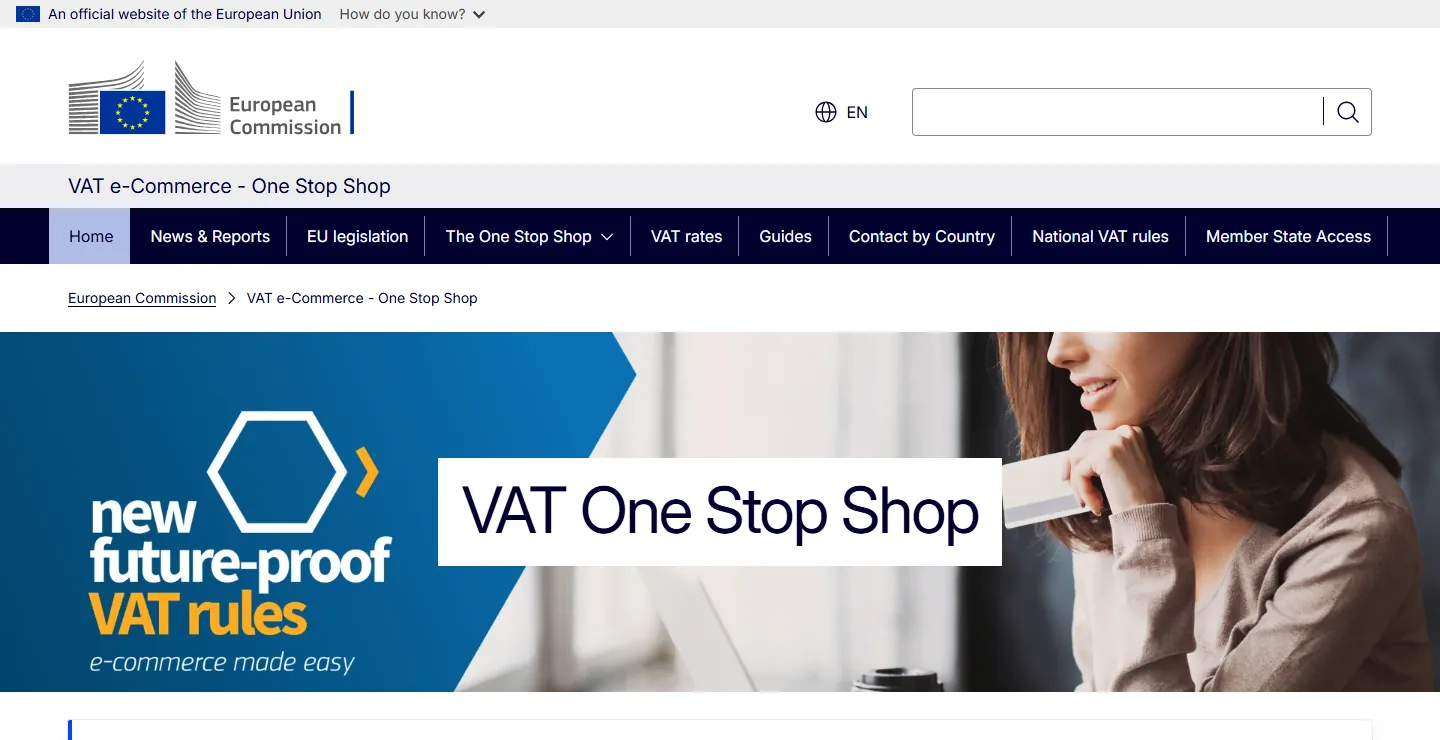
- Selling to the EU means VAT rules. Sellers shipping low-value goods to EU buyers deal with VAT through schemes like the Import One-Stop Shop. See VAT rules for international dropshippers.
- Customs rules changed. The US ended its duty-free de minimis exemption for most imports in August 2025, and the EU agreed a flat €3 customs duty on small parcels valued under €150 from 1 July 2026. Check the US CBP e-commerce page and the EU Council's small parcels page before you assume a cheap overseas parcel arrives with no extra charges.
The customs changes matter for one practical reason: cheap parcels from China are no longer as cheap to deliver, which narrows the price advantage of the slowest suppliers. That's one reason more sellers are moving toward domestic and regional suppliers.
How to start dropshipping: a short roadmap
Here's the order I'd do things in if I were starting today. Each step has a longer guide, but this is the sequence.
- Pick a niche with margin. Aim for products you can sell above roughly $25 where you can see a gap between supplier cost and retail price.
- Choose a supplier and order samples. Test before you list.
- Build your store. Shopify is the common choice. The step-by-step is in how to start a Shopify dropshipping store.
- Write your own product pages. Don't paste the supplier's description. Rewrite it and add your own photos where you can.
- Set shipping and returns policies. State delivery times honestly. Sellers who promise 3 days and deliver in 12 collect refund requests.
- Run small ad tests. Spend a little, check your numbers against the break-even figure above, then scale only what works.
- Handle the paperwork early. Register your business as your local rules require, and set up tax collection before your first big month.
Common beginner mistakes
- Pricing from the supplier's cost instead of the market. Check what similar products sell for before you set a price.
- Skipping the sample order. The photo and the product in your hand can differ a lot.
- Selling a product with no margin room. A $12 item with a $7 cost can't pay for ads.
- Using one supplier for everything. If they go out of stock, your whole store stalls.
- Ignoring support. Slow replies turn a late parcel into a chargeback, and chargebacks cost you the sale plus a fee.
- Scaling too fast. A product that works at $30 a day in ads may not work at $300.
Is dropshipping worth it?
It's worth it if you're comfortable with marketing, patient with small early numbers, and ready to treat it like a real business with customers, taxes and complaints. It's a poor fit if you need steady income in the first few months or expect the supplier to handle everything after the sale.
Start small, do the break-even math before you spend on ads, and pick suppliers you've tested yourself. When you're ready to look at suppliers, start your 7-day Spocket trial and see what US and EU products you could list this week.
Start your dropshipping business today
Start Dropshipping with Spocket
Dropshipping FAQs
Is dropshipping legal?
Yes. Dropshipping is a legal way to sell, as long as you follow the same rules as any online retailer. That usually means registering your business as local law requires, collecting and paying sales tax or VAT where it applies, being honest about delivery times, and only selling products you're allowed to sell. Check the rules where you and your customers are based.
How much money do you need to start dropshipping?
You can launch for a few hundred dollars, but the number depends on advertising. The fixed costs are a store plan (Shopify Basic is listed at $29/month on annual billing), a supplier app, and sample orders. Ads are the variable cost, and most beginners need a test budget to find a product that sells profitably.
Can you start dropshipping without a business license?
It depends on where you live and what you sell. Many sellers start as sole proprietors, but some states, cities and countries require a business registration or a sales tax permit before you take your first order. Look up your local requirements before launch rather than after your first sale. A local small business office can confirm what applies to you.
How long does dropshipping take to deliver?
It depends entirely on the supplier. Orders from overseas suppliers can take two to four weeks or longer, while US and EU suppliers often deliver within a few days. Spocket suppliers typically ship in 2 to 7 days. Always place a sample order to your own address and time it before you promise a delivery window to customers.
What's the difference between dropshipping and print on demand?
Both avoid holding stock, but print on demand makes the item after the order, usually with your own design on it, such as a shirt or mug. Dropshipping sells existing products from a supplier's catalogue. Print on demand gives you more room for branding and original products, while dropshipping gives you a much wider range of items to test.
Is dropshipping still worth it in 2026?
It can be, if you treat it as a real business. Online demand is strong, with US e-commerce at 17.1% of retail sales in Q2 2026, but margins are tight, typically 10% to 30% net. Stores that last pick products with healthy margins, use faster suppliers, and answer customers quickly. It's a poor fit for anyone expecting fast, easy income.
Who pays for returns in dropshipping?
You do, as the seller, unless your supplier agreement says otherwise. Customers return products to you or ask you for a refund, and whether the supplier reimburses you depends on their policy. Read the return terms before you list a product, write your own return policy, and decide upfront whether you'll accept returns, offer refunds only, or replace faulty items.


Launch your dropshipping business now!
Start free trial


Related blogs
Dropshipping Supplier Directory: Where to Find Vetted Suppliers
Browse our directory of vetted dropshipping suppliers across the US and EU, complete with niches, shipping speed, and pricing. Start your free trial today.

How to Negotiate With Dropshipping Suppliers: 9 Tactics That Actually Work
Learn how to negotiate with dropshipping suppliers on price, MOQs, and payment terms. Proven tactics and email scripts to boost your margins. Try Spocket free.
Is AliExpress Legit? A Safety Check for Buyers and Dropshippers
Is AliExpress legit? Yes, but sellers vary. See how Buyer Protection works, what the EU's 2026 fine means, customs costs, and whether it's safe for dropshipping.