What is Dropshipping? How It Works, Pros, Cons & How to Start in 2026
Learn what dropshipping is, how it works step-by-step, real profit data for 2026, and how to start with reliable US & EU suppliers. Read the full guide.
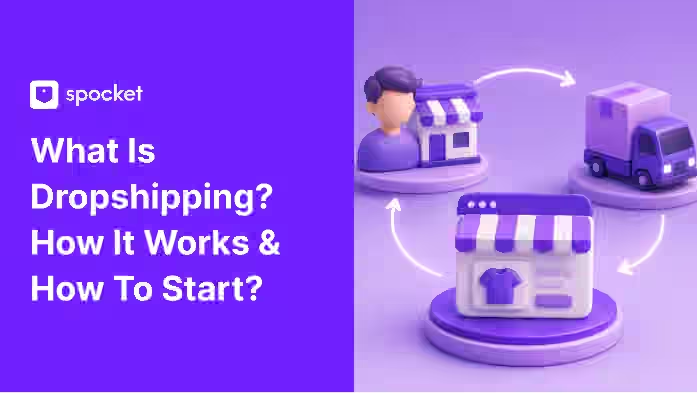


Dropshipping is one of those business models everyone's heard of but not everyone actually understands — and that gap is exactly why so many people either walk away from a good opportunity or walk into it blind. So let's clear it up properly.
Dropshipping is a retail method where you sell products online without ever holding inventory. When a customer buys from your store, your supplier ships the item directly to them — you never touch the product. Your job is picking the right products, building a store people trust, and marketing it well. Everything else — warehousing, packing, shipping — sits with your supplier.
That's it. That's the whole model in two sentences. Everything below fills in the how, the money, the risks, and — because 2026 has brought real changes in tariffs and tax rules — what's actually different about running a dropshipping business right now.
What is Dropshipping?
Dropshipping is an ecommerce fulfillment model in which you list and sell products through your own online store, but a third-party supplier — a manufacturer, wholesaler, or specialized dropship supplier — stocks, packs, and ships every order directly to your customer. You never buy inventory upfront, and you never see or handle the physical product.
.avif)
Here's what actually happens behind that one sentence:
- You run the storefront. Product pages, pricing, branding, customer service, and marketing are entirely on you.
- Your supplier owns the fulfillment. They manufacture or stock the item, and they ship it once you pass along the order.
- You keep the margin. You charge the customer your retail price; you pay your supplier their (lower) wholesale price. The gap is your profit.
- The customer usually never knows a third party was involved — a good supplier ships with neutral or branded packaging, not their own logo.
This is different from traditional retail, where you buy stock in bulk, store it, and ship it yourself, and it's also different from wholesaling, where you're the one doing the bulk buying and reselling to other businesses rather than to individual shoppers. Dropshipping removes the inventory step entirely, which is exactly why it's become the default way many first-time entrepreneurs enter ecommerce — you can test a product idea with real customers before you've spent a cent on stock.
How Does Dropshipping Work? (Step-by-Step)
Knowing the definition is one thing; seeing the actual order flow is what makes it click. Here's what happens between a customer clicking "Buy" and a package landing on their doorstep:
- A customer places an order on your online store (Shopify, WooCommerce, or wherever you sell) and pays your listed retail price.
- You receive the order notification and forward it — usually automatically, through your dropshipping platform — to your supplier.
- Your supplier picks, packs, and ships the item directly to your customer, charging you their wholesale price.
- You keep the difference between what the customer paid you and what you paid your supplier — that's your profit per order.
- You handle the relationship — order confirmations, shipping updates, and any customer service — while your supplier handles logistics in the background.
Notice what's missing from that list: a warehouse, a shipping label printer, and a garage full of boxes. That's the entire appeal of the dropshipping business model — your operational overhead stays close to zero while you focus on the two things that actually drive sales: product selection and marketing.
Pros and Cons of Dropshipping
No business model is free of trade-offs, and dropshipping has some real ones on both sides. Here's an honest breakdown, not a sales pitch.
Pros of Dropshipping
- Low startup costs — you're not tying up capital in inventory you might not sell.
- Location freedom — run the business from anywhere with an internet connection.
- Low overhead — no warehouse lease, no packing staff, no storage insurance.
- Wide product selection — test dozens of products without buying a single unit upfront.
- Fast to launch — a store can go live in days, not months.
Cons of Dropshipping
- Thinner margins in saturated niches, since suppliers set the wholesale price floor.
- Less control over shipping speed and quality — you're depending on someone else's fulfillment.
- Limited branding — many dropship suppliers ship generic packaging, though better platforms now offer branded invoicing.
- Inventory visibility gaps — if your supplier sells out, you find out the same way your customer does: a cancelled order.
None of these cons are dealbreakers on their own — they're just things a good supplier choice and a bit of planning can neutralize. That's really the whole game: the model itself is simple, but the supplier you build it on determines whether these cons show up rarely or constantly.
Is Dropshipping Still Profitable in 2026?
Short answer: yes, but it rewards people who treat it like a real business, not a get-rich-quick scheme. The long answer needs some numbers.
The global dropshipping market is valued at roughly $583.5 billion in 2026 and is projected to keep growing at a 20.7% compound annual rate through 2033. That's not a shrinking or saturated category — it's one of the faster-growing corners of ecommerce, and ecommerce itself keeps taking share from physical retail. In the U.S. specifically, online sales made up 16.6% of total retail sales in Q4 2025, up 5.3% year-over-year — meaning the pool of buyers shopping online, and available to a dropshipping store, keeps getting bigger every quarter.
Where it gets more nuanced is at the individual store level. Profitability depends heavily on:
- Your niche and margins — commodity products (generic phone cases, for example) compress fast; targeted, higher-perceived-value niches hold margin better.
- Your supplier's shipping speed — slow delivery is still the single biggest driver of refunds, chargebacks, and one-star reviews in this industry.
- Whether you build a brand or just resell — stores that invest in real product pages, a distinct look, and customer trust consistently outperform stores that just copy-paste supplier descriptions.
So "is dropshipping still profitable in 2026" isn't really a yes/no question — it's a "profitable for who" question. It's genuinely a strong entry point into ecommerce for someone willing to treat it as an actual business. It's a fast way to lose money for someone chasing a single viral product with no plan for what happens after the first 50 orders. If you want the fuller earnings picture, including realistic monthly income ranges, our dropshipping earnings guide for newbies walks through real numbers.
How to Start Dropshipping: A Step-by-Step Guide for Beginners
If you're wondering how to start a dropshipping business without getting lost in fifty conflicting YouTube videos, here's the actual sequence that matters:
- Pick one niche — something with real, ongoing demand, not just a single trending product (more on this below).
- Choose your platform — Shopify, WooCommerce, or another storefront builder.
- Find and vet your suppliers — this is the step most beginners rush, and it's the one that determines whether your store survives.
- Import a small starting catalog — 3 to 5 products, not fifty. You want clean data on what actually sells.
- Write real product pages — benefit-led copy, honest shipping timelines, and clear sizing or usage details, not the supplier's generic description.
- Set up payments, shipping policy, and basic legal pages — return policy, shipping policy, and terms of service build trust before the first sale even happens.
- Drive traffic — start with organic content (short-form video, SEO blog content) before layering in paid ads once you know what converts.
If you'd rather see this laid out in more depth with screenshots and platform-specific steps, our full guide on how to start dropshipping walks through all ten steps, and our organic dropshipping for beginners guide is worth reading if you want to start with $0 in ad spend.
How to Start a Shopify Dropshipping Store
Shopify remains the most common home for a dropshipping store because it removes most of the technical setup: hosting, checkout, and payment processing are handled for you, and its app ecosystem (including Spocket) plugs directly into product sourcing. To get a Shopify dropshipping store running:
- Create your Shopify account and pick a plan once your free trial ends.
- Choose a clean, fast-loading theme — page speed affects both conversions and Google rankings.
- Install a dropshipping supplier app (this is where a platform like Spocket connects your store to real inventory) and import your starting catalog.
- Configure shipping zones, taxes, and payment gateways before you launch, not after your first sale creates a support headache.
Our Shopify dropshipping guide covers the full setup checklist, and Spocket's own Shopify integration lets you sync products, inventory, and order fulfillment without leaving your Shopify dashboard.
Write a Simple Dropshipping Business Plan
You don't need a 40-page business plan to start dropshipping — but skipping planning entirely is how most stores stall out by month three. A working dropshipping business plan should cover, on one page:
- Your niche and target customer — who you're selling to and why they'd buy from you specifically.
- Startup budget — platform fees, initial ad testing budget, and any tools or subscriptions.
- Supplier and margin math — your wholesale cost, retail price, and target margin per product, before you list a single item.
- A 90-day traffic plan — which channel you'll test first (organic content, SEO, or small paid tests) and how you'll measure whether it's working.
Treat this as a living document you revisit monthly, not something you write once and file away. The businesses that last are the ones that keep adjusting the plan against real sales data.
How to Find Reliable Dropshipping Suppliers (US, EU & Beyond)
Here's the part most "what is dropshipping" articles skip entirely, and it's arguably the most important decision you'll make: your supplier is your business partner, whether you've formally thought of it that way or not. They determine your shipping times, your product quality, and — ultimately — whether your customers ever come back.
Knowing how to find dropshipping suppliers you can actually rely on comes down to checking a short list every time:
- Shipping speed and origin — suppliers based in the US or EU typically ship in 2–7 days; suppliers shipping from overseas can take 2–4 weeks, which is a real conversion killer.
- Product samples — order one before you list it. Photos on a supplier catalog and the actual product in hand are not always the same thing.
- Communication and support — test how fast they respond to a question before you're depending on them during a shipping dispute.
- Reviews from other dropshippers — not just star ratings, but specifics about stock reliability and packaging quality.
Our full guide on finding reliable dropshipping suppliers breaks down a vetting checklist you can run through in an afternoon.
Best US Dropshipping Suppliers
If most of your customers are American, US dropshipping suppliers solve the single biggest complaint in this industry: slow shipping. A domestic or near-domestic supplier can realistically ship in 2–5 business days, versus 2–4 weeks from an overseas source — and that difference alone often decides whether a customer becomes a repeat buyer or a one-star review.
Spocket's supplier network is built around exactly this: over 80% of Spocket's suppliers are based in the US and EU, which is why dropshippers consistently cite faster delivery as the reason they switched. If you want the specific rundown of the fastest-shipping options, see our guide to the fastest dropshipping suppliers in the USA, and if you're building specifically around an American customer base, how to start a dropshipping business with US suppliers walks through niche selection and marketing angles that work for that audience.
Best EU Dropshipping Suppliers
For stores selling into Europe, EU dropshipping suppliers matter for the same reason — shipping speed — plus an extra layer: VAT compliance (more on that below). A supplier physically based inside the EU means your customer's parcel doesn't cross a customs checkpoint at all, which sidesteps import VAT and customs delays entirely.
This is also why cross-border dropshippers selling into the UK need to understand the post-Brexit landscape specifically — our guide on dropshipping in the UK and the impact of Brexit on UK dropshipping cover what changed and how to stay compliant.
Best Dropshipping Platforms & Companies Compared
Not all dropshipping companies are built the same way, and the differences matter more than most beginner guides admit. Some platforms are best thought of as dropshipping websites — directories you browse for products — while others are full dropshipping platforms with automation, order syncing, and support built in.
When comparing the best dropshipping platform for your store, weigh:
- Supplier location and shipping speed (US/EU-based vs. overseas-only)
- Automation — does it auto-sync inventory, pricing, and order fulfillment, or is it manual data entry?
- Integration — does it plug directly into Shopify, WooCommerce, or wherever your store lives?
- Product breadth — from trending fashion items to niche categories, can it actually support the catalog you want to build?
For a full side-by-side of the best dropshipping suppliers and companies for Shopify specifically — including how Spocket compares to DSers, SaleHoo, and print-on-demand options — see our best Shopify dropshipping suppliers guide, and for a broader look at building your own dropshipping shop from the ground up, our dropshipping websites guide walks through real store examples.
Start your dropshipping business today
Start Dropshipping with Spocket
Best Dropshipping Niches and Trending Products for 2026
Picking dropshipping products is where most new sellers either set themselves up for a real business or burn a few months chasing a single viral item that fades in six weeks. The distinction that matters is evergreen vs. trending:
- Evergreen niches — pet supplies, beauty and skincare, home organization, wellness — stay in demand year-round and support long-term brand building.
- Trending niches — driven by TikTok, seasonal spikes, or pop culture — can generate fast sales but usually have a shorter shelf life.
The strongest dropshipping niches for 2026 combine both: a stable evergreen category with a rotating set of trending products inside it. For a full data-backed breakdown of 15 proven niches, see our best dropshipping niches guide, and if you're specifically targeting American shoppers, the best US dropshipping niches for 2026 covers category-specific data, including the U.S. ecommerce growth numbers cited above.
How to Find Trending Dropshipping Products
To actually find dropshipping products worth testing — instead of guessing off a TikTok trend — run through this checklist:
- Check what's already working — look at multiple stores selling the same item; repetition across stores is a signal of real demand, not a fluke.
- Use ad transparency tools — the Facebook Ad Library and TikTok Ad Library show you which products competitors are actively spending money to promote.
- Watch the holiday calendar — Valentine's Day, Mother's Day, back-to-school, and Black Friday all create predictable demand spikes; start marketing 4–6 weeks ahead of each one.
- Cross-check search and social data — Google Trends plus TikTok Creative Center gives you both search intent and social momentum in one pass.
Our detailed walkthrough on how to find trending products for dropshipping goes deeper into each of these methods, and for a ranked list of the best dropshipping products for 2026 across categories, see our top 100 dropshipping products guide.
How to Validate a Dropshipping Product Idea (Before You Spend on Ads)
Finding a promising product is only step one — the step that actually saves you money is validation. Before you commit ad budget, run a quick demand check:
- Search volume and trend direction — is interest flat, rising, or already past its peak?
- Competitor presence — a handful of established sellers usually signals real demand; zero competitors can just as easily mean zero demand.
- Supplier reliability — confirm stock levels and shipping times before you build a whole campaign around a product that goes out of stock in week two.
- A small, cheap test — a limited ad budget or organic post is a far cheaper way to learn than scaling blind.
Our full guide on how to validate a dropshipping product idea includes a simple checklist you can run through in under an hour before your next product launch.
Spotlight: Dropshipping Beauty Products
Beauty deserves a specific mention because it consistently ranks among the most profitable dropshipping categories — the beauty and personal care market is projected to reach $703.31 billion in revenue by 2026, growing at roughly 3.24% annually through 2030. What makes dropship beauty products particularly attractive as a niche:
- Built-in repeat purchases — customers restock skincare and makeup on a predictable cycle.
- Lightweight, low-shipping-cost items — easier margins than bulky home goods.
- Strong social discoverability — beauty content performs naturally well on TikTok, Instagram, and Pinterest without heavy ad spend.
If beauty is a niche you're considering, our dedicated beauty products to dropship guide covers 26 specific products and supplier options to get started.
Dropshipping Taxes, VAT & Import Tariffs You Need to Know in 2026
This is the section most beginner guides skip entirely — and it's become far more important in 2026 than it was even two years ago, because both US and EU trade rules have changed materially.
EU VAT Rules for Dropshippers
If you sell to customers anywhere in the EU, dropshipping VAT Europe rules apply the moment a package crosses into the bloc. The key mechanism to know is the Import One-Stop Shop (IOSS), which covers distance sales of imported goods valued at €150 or less — letting you charge VAT at the point of sale and remit it through a single monthly return, so the parcel clears customs without extra fees landing on your customer at delivery. Skip IOSS registration, and your customer may get hit with an unexpected customs bill on delivery — a fast way to generate refund requests and bad reviews. Our full dropshipping VAT rules guide walks through registration and country-specific quirks (France's 2026 TVA enforcement changes, for example, are worth a specific read if you sell there).
US Import Tariffs 2026 Update
On the US side, the rule that shaped low-cost dropshipping for a decade just ended. The de minimis exemption, which let shipments under $800 enter the US duty-free, was suspended for China and Hong Kong on May 2, 2025, and eliminated for every other country on August 29, 2025. In practice, that means every shipment into the US now requires full customs entry and applicable duties — no more shipping low-value parcels in duty-free.
The practical takeaway for dropshipping import tariffs 2026: sourcing from suppliers based in or closer to the US (or the EU, for European sales) increasingly beats overseas sourcing on both speed and landed cost, not just convenience. Our tariffs effect on dropshipping guide breaks down which product categories are hit hardest and how to adjust sourcing accordingly.
Why Dropshippers Choose Spocket Over Other Dropshipping Companies
Everything above is true regardless of which platform you use — but it's worth being direct about why Spocket exists as a response to the exact pain points this article covers.
.avif)
Most dropshipping platforms built their catalogs around overseas suppliers, which made sense when de minimis rules made overseas shipping cheap and fast enough. That world changed in 2025. Spocket built its network the other way around from the start: over 80% of Spocket's suppliers are based in the US and Europe, which means:
- Faster delivery — typically 2–7 days instead of 2–4 weeks, which directly reduces refund requests and improves repeat-purchase rates.
- Fewer tariff and customs surprises — sourcing closer to your customer sidesteps much of the new import-duty complexity covered above.
- Higher-quality, vetted products — every supplier is reviewed before being listed, instead of an open marketplace where quality varies wildly.
- Branded invoicing — so your packages reinforce your store's brand instead of a generic supplier's.
- Direct integrations with Shopify, WooCommerce, Wix, and more, so importing and syncing products takes minutes, not manual data entry.
If you've been comparing sourcing options, our direct comparison of Spocket vs. AliExpress covers shipping speed, supplier reliability, and 2026 tariff impact side by side. And if you're ready to see the difference in your own store, you can start a free trial with Spocket and browse the supplier catalog before committing to anything.
What is Dropshipping FAQs
What is dropshipping in simple terms?
Dropshipping is selling products online without holding any inventory yourself — your supplier ships each order directly to your customer, and you keep the difference between your retail price and their wholesale price.
Is dropshipping still profitable in 2026?
Yes, for sellers who treat it as a real business. The global market is valued at $583.5 billion in 2026 and growing at roughly 20.7% annually, but individual profitability still depends on niche selection, supplier reliability, and whether you build genuine customer trust instead of just reselling generic listings.
How much money do I need to start dropshipping?
You can start with very little — a store platform subscription, a small testing budget for ads or content, and no upfront inventory cost. Many sellers start with under $500 total. See our guide on starting a dropshipping business with no money for a full breakdown.
How do I find reliable dropshipping suppliers?
Check shipping speed and origin, order product samples before listing anything, test supplier communication speed, and read reviews from other dropshippers about stock reliability — not just star ratings.
What's the difference between dropshipping and wholesaling?
Wholesaling means you buy products in bulk and resell them to other businesses. Dropshipping means you never buy or hold inventory at all — your supplier ships individual orders directly to your end customer.
Do I need to worry about VAT or tariffs if I dropship internationally?
Yes. Selling into the EU generally requires IOSS registration for orders under €150, and as of August 2025, the US eliminated its $800 duty-free import exemption for all countries — meaning nearly every cross-border shipment is now subject to customs duties. See our full VAT and tariffs guides for specifics.
What are the best dropshipping niches for 2026?
Evergreen categories with steady demand — pet wellness, beauty and skincare, home organization, and health accessories — tend to outperform pure hype niches long-term. See our best dropshipping niches guide for 15 data-backed options.


Launch your dropshipping business now!
Start free trial


Related blogs

Best Clothing Dropshipping Suppliers: The 2026 Guide
Compare the best clothing dropshipping suppliers for 2026 — US/EU shipping speeds, pricing, and product quality — and find the right fit to launch your store.

.avif)
How to Set Global Pricing Rules on Spocket to Protect Your Margins
Learn how to configure Spocket pricing rules to protect your profit margins. Set global pricing rules, automate markups, and maximize dropshipping profits.
How to Increase Average Order Value in Your Dropshipping Store with Spocket?
Learn how to increase AOV dropshipping Spocket way. We share practical product positioning strategies, pricing, fulfillment tips.