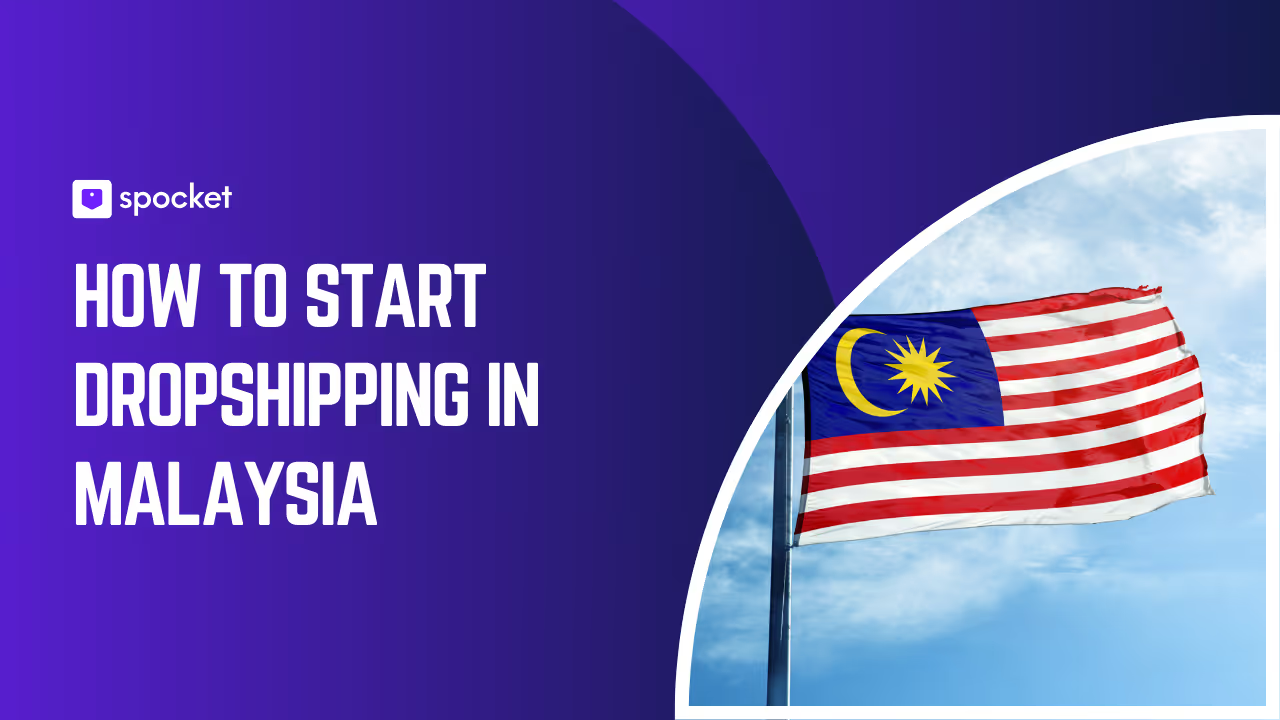
How to Start Dropshipping in Malaysia: A Step-by-Step Guide (2026)
Learn how to start dropshipping in Malaysia step-by-step — legal setup, top suppliers, products & tools. Start free with Spocket today.
.avif)

Dropshipping in Malaysia works like this: you register a business, pick a niche, connect with a supplier who holds and ships the inventory, and sell through your own online store — without ever touching the product yourself. It's one of the lowest-cost ways to start an online business in Malaysia right now, and with platforms like Shopee, Lazada, and TikTok Shop pushing e-commerce further into daily life here, the timing works in your favor.
But "low cost" doesn't mean "no effort." The sellers who actually make money are the ones who pick the right supplier, price correctly, and treat it like a real business from day one — not the ones chasing a get-rich-quick shortcut.
This guide walks you through exactly how to start, what it costs, which suppliers are worth your time, and the mistakes that quietly kill most new dropshipping stores in Malaysia.

To start dropshipping in Malaysia, register your business with SSM, choose a niche with real demand, partner with a reliable supplier (Spocket is built for exactly this), set up a Shopify or WooCommerce store, connect a local payment gateway like FPX, and start marketing on social media and Google.
Start your dropshipping store free with Spocket — no coding, no inventory, no upfront stock costs.
What Is Dropshipping, and Why Malaysia Is a Good Place to Start It
In a normal retail business, you buy stock, store it, and ship it yourself. In dropshipping, your supplier does the storing and shipping. You just run the storefront and the marketing.
Here's why Malaysia specifically makes sense right now:
- High smartphone and internet usage — Malaysians are already comfortable buying through Shopee, Lazada, and Instagram, which lowers the trust barrier for a new online store.
- Young, digitally native population — a large share of Malaysia's population is under 35, the exact demographic most active in online shopping.
- Established local payment rails — FPX, GrabPay, Touch 'n Go, and Boost are already trusted by shoppers, so checkout isn't a foreign concept you need to explain.
- Regional supplier access — being close to China, Vietnam, and other manufacturing hubs means shipping times to Malaysia can be shorter than to Western markets, if you pick the right supplier.
None of this guarantees success — it just means the infrastructure and customer behavior are already in place. The work is still on you.
Is Dropshipping Legal in Malaysia?
Yes, dropshipping is legal in Malaysia. But "legal" comes with a few boxes to tick:
- Business registration is required once you're operating as a business, not a hobby. Most solo dropshippers register as a sole proprietorship (Enterprise) with SSM (Suruhanjaya Syarikat Malaysia) — it's quick and inexpensive. As you scale, some sellers move to a Sdn Bhd structure for liability protection and tax planning.
- Tax obligations apply once your income crosses certain thresholds — you'll need to understand SST (Sales and Service Tax) registration and income tax reporting for your business.
- Consumer protection laws still apply to you — under Malaysia's Consumer Protection Act, customers have rights around refunds, accurate product descriptions, and delivery timelines, even though you never physically handle the product.
If you're serious about this as a long-term income stream (not a side experiment), register properly from the start. It protects you and makes it easier to open a business bank account, apply for ad accounts, and work with serious suppliers.
How to Start Dropshipping in Malaysia: Step-by-Step
Here is detailed step by step guide to start dropshipping in Malaysia
Step 1: Choose a Niche You Can Actually Compete In
Don't pick "trending" products blindly. Pick a niche where you can build some authority — pet accessories, home organization, skincare tools, fitness gear, whatever you can speak to credibly. A focused store outperforms a generic one because your marketing, content, and even customer trust all get easier when you're not selling 40 unrelated things.
Step 2: Register Your Business with SSM
This takes a day or two online and costs relatively little. Do this before you start taking real orders — it's the difference between running a legitimate business and running a liability.
Step 3: Find a Reliable Supplier
This is the single biggest factor in whether your store survives. A bad supplier means slow shipping, inconsistent quality, and refund requests that eat your margin. Look for suppliers that offer:
- Verified product quality and reviews
- Reasonable shipping times to Malaysia/Southeast Asia
- Branded invoicing (so it looks like your store, not a reseller)
- Easy integration with your storefront
This is exactly the gap Spocket fills — it connects you with vetted US, EU, and global suppliers, shows you real shipping estimates upfront, and lets you import products into your store in a couple of clicks instead of manually messaging suppliers on marketplaces.
Browse Spocket's supplier catalog free
Step 4: Set Up Your Online Store
Shopify is the most common choice for Malaysian dropshippers because it integrates cleanly with apps like Spocket, has strong local payment support, and doesn't require any coding. WooCommerce is a solid free alternative if you already run WordPress.
Step 5: Connect a Local Payment Gateway
Set up FPX at minimum — it's the most trusted online banking payment method in Malaysia. Adding Touch 'n Go, GrabPay, or card payments through gateways like iPay88 or Billplz reduces cart abandonment from shoppers who don't want to enter card details on a new store.
Step 6: Be Upfront About Shipping
This is where most dropshipping stores lose trust. If your supplier ships from overseas, tell customers the real delivery window on the product page — don't let them find out at checkout or after ordering. Suppliers with regional warehouses (some available through Spocket) can cut delivery time significantly compared to direct-from-China shipping.
Step 7: Market Where Your Customers Already Are
- TikTok and Instagram for product discovery and short-form video demos
- Google Search/SEO for buyers actively searching for a solution
- Facebook ads for retargeting people who visited but didn't buy
- Micro-influencers in your niche — often more cost-effective in Malaysia than large influencer partnerships
Step 8: Launch, Track, and Adjust
Track your conversion rate, cost per acquisition, and return rate from week one. Dropshipping margins are thinner than traditional retail, so knowing your numbers early prevents you from scaling a store that's quietly losing money.
Common mistakes Malaysian dropshippers should avoid
Many dropshipping businesses in Malaysia fail not because the model doesn’t work, but because of avoidable mistakes made early on. From choosing unreliable suppliers to overpromising delivery times or skipping business registration, these errors can quickly erode trust and profits.
Understanding the most common pitfalls helps you protect your store, maintain customer confidence, and build a dropshipping business that lasts.
- Overpromising shipping speed: If your supplier takes 12–18 days, don’t promise 5–7. You’ll pay for it in refunds and disputes.
- Selling “everyone” products: If your product fits everyone, your marketing fits no one.
- Running ads before your store is ready: Ads magnify problems. Fix your product page, shipping clarity, and checkout first.
- Ignoring compliance until it hurts: Register early and operate clean.
- Scaling products before you’ve validated supplier quality: Always test product quality and shipping consistency before pushing volume.
Conclusion
Starting a dropshipping business in Malaysia is absolutely doable, but the stores that succeed treat it like a real ecommerce operation, not a quick hack. Focus on a niche you can market consistently, choose suppliers that match your delivery promise, and build a store that earns trust on mobile. When you get the fundamentals right, your marketing becomes cheaper, your refunds drop, and your business becomes far easier to scale.
Once you’re getting traction, improve what already works instead of chasing endless new products. Tighten your shipping and customer service processes, automate repeat tasks, and build a supplier setup you can rely on. If you’re aiming to grow beyond a starter phase, adding dependable sourcing options like Spocket can help you deliver a better customer experience while you scale.
Start your dropshipping business today
Start Dropshipping in Malaysia with Spocket
Best Dropshipping Suppliers for Malaysia
If speed and product quality matter more to you than rock-bottom unit price, a vetted platform like Spocket generally outperforms raw marketplace sourcing — fewer refunds, fewer angry customers, more repeat buyers.
Compare suppliers and start free on Spocket
Best Dropshipping Products to Sell in Malaysia in 2026
These categories have shown consistent demand for Malaysian online sellers — treat this as a starting point for research, not a guarantee:
- Beauty and skincare tools (facial rollers, LED devices, hair care gadgets)
- Home organization and décor (storage solutions, small furniture accessories)
- Fashion accessories (jewelry, bags, phone accessories)
- Pet products (grooming tools, feeders, apparel)
- Fitness and wellness gear (resistance bands, posture correctors, yoga accessories)
Validate demand yourself using Google Trends, TikTok search, and Shopee/Lazada bestseller lists before committing budget to any single product.
Pros and Cons of Dropshipping in Malaysia
Following are some of the pros and cons of dropshipping in Malaysia
Pros:
- Low startup capital compared to holding inventory
- No warehousing or fulfillment logistics to manage
- Easy to test multiple products/niches quickly
- Growing local e-commerce and mobile payment adoption
Cons:
- Thinner profit margins than traditional retail
- Less control over shipping times and product quality
- Higher competition in popular niches
- Customer trust can be harder to build with longer delivery windows
Being upfront with yourself about these trade-offs early saves you from abandoning the model after one bad month — thin margins and long shipping are solvable with the right supplier, not reasons to quit.
Common Challenges (and How to Actually Solve Them)
- "My shipping times are too long" → Choose suppliers with Southeast Asia or regional warehouses instead of shipping every order direct from overseas.
- "Customers don't trust a new store" → Add real reviews, clear return policies, and local payment options (FPX) — unfamiliar payment flows kill conversions fast.
- "My margins are too thin" → Avoid racing to the bottom on price. Compete on niche authority, bundling, and customer experience instead.
- "Too much competition in my niche" → Narrow further. "Skincare tools for oily skin" beats "beauty products" every time in a crowded market.
How Much Does It Cost to Start Dropshipping in Malaysia?
You can realistically start with a modest budget if you're disciplined about testing before scaling ad spend.
Start Your Dropshipping Business in Malaysia Today
Starting a dropshipping business in Malaysia isn't complicated — register your business, pick a niche you understand, find a supplier you can actually trust, and build a store around local payment habits and honest shipping expectations. The businesses that last are the ones built on reliable suppliers and real customer trust, not just low prices.
If you're ready to skip the trial-and-error of sourcing from random marketplaces, sign up with Spocket free and start browsing vetted suppliers built for exactly this kind of store.
Dropshipping in Malaysia FAQs
Is dropshipping legal in Malaysia?
Yes. You'll need to register your business with SSM as a sole proprietorship or Sdn Bhd, and follow standard tax and consumer protection rules — but the model itself is fully legal.
How much money do I need to start dropshipping in Malaysia?
You can start with a modest budget, since you're not buying inventory upfront. Your main costs are business registration, a store platform subscription, and initial ad spend to test products.
Do I need to register a business to dropship in Malaysia?
Yes, once you're operating for profit rather than as a one-off hobby, SSM registration is required. It's a quick process and protects you legally and financially as you scale.
What's the best dropshipping supplier for Malaysian sellers?
It depends on your priorities. Spocket is a strong choice if you want vetted suppliers, faster shipping, and branded invoicing — AliExpress offers lower unit costs but typically slower delivery.
Can I dropship from AliExpress to customers in Malaysia?
Yes, but shipping times can run several weeks. If delivery speed matters to your customers, a supplier network with regional warehouses will serve you better long-term.
Is dropshipping still profitable in Malaysia in 2026?
It can be, but margins are thinner than they were years ago due to more competition. Profitability now depends more on niche selection, supplier reliability, and customer experience than on simply listing products.
What products sell best for dropshipping in Malaysia?
Beauty tools, home organization items, fashion accessories, pet products, and fitness gear have shown consistent demand — but always validate a specific product with real search and social trend data before investing ad budget.
Do I need to pay tax on dropshipping income in Malaysia?
Yes, dropshipping income is taxable like any other business income, and you may need to register for SST once you cross certain revenue thresholds. Check current requirements with LHDN or a local accountant.
How long does shipping take for dropshipping orders to Malaysia?
It varies by supplier — orders shipped directly from China can take 2–4 weeks, while suppliers with regional or local warehouses can deliver significantly faster.
Can I use Shopee or Lazada instead of Shopify for dropshipping?
You can, but Shopify and WooCommerce give you more control over branding, customer data, and supplier app integrations like Spocket — marketplaces work well as an additional sales channel, not necessarily as your primary store.


Launch your dropshipping business now!
Start free trial


Related blogs
Dropshipping Supplier Directory: Where to Find Vetted Suppliers
Browse our directory of vetted dropshipping suppliers across the US and EU, complete with niches, shipping speed, and pricing. Start your free trial today.

How to Negotiate With Dropshipping Suppliers: 9 Tactics That Actually Work
Learn how to negotiate with dropshipping suppliers on price, MOQs, and payment terms. Proven tactics and email scripts to boost your margins. Try Spocket free.

Best Clothing Dropshipping Suppliers: The 2026 Guide
Compare the best clothing dropshipping suppliers for 2026 — US/EU shipping speeds, pricing, and product quality — and find the right fit to launch your store.