Spocket vs Importify: Head-to-Head Product Importing Comparison
Here’s a Spocket vs Importify review. We do a head-to-head Spocket vs Importify comparison and tell you which one is best for product importing.

If you're building a dropshipping store and trying to figure out which product importing tool to use, you're not alone in finding the choices hard to separate. Two tools come up often in this comparison, and they take very different approaches to how you find, import, and manage products.
The differences go beyond price. They affect which suppliers you can access, how your store integrates, how order fulfillment works, and what kind of catalog management you're signing up for every day.
You'll get a breakdown of pricing, features, integrations, and import workflows for both tools in this post, along with a clear verdict at the end.
What Is Spocket?
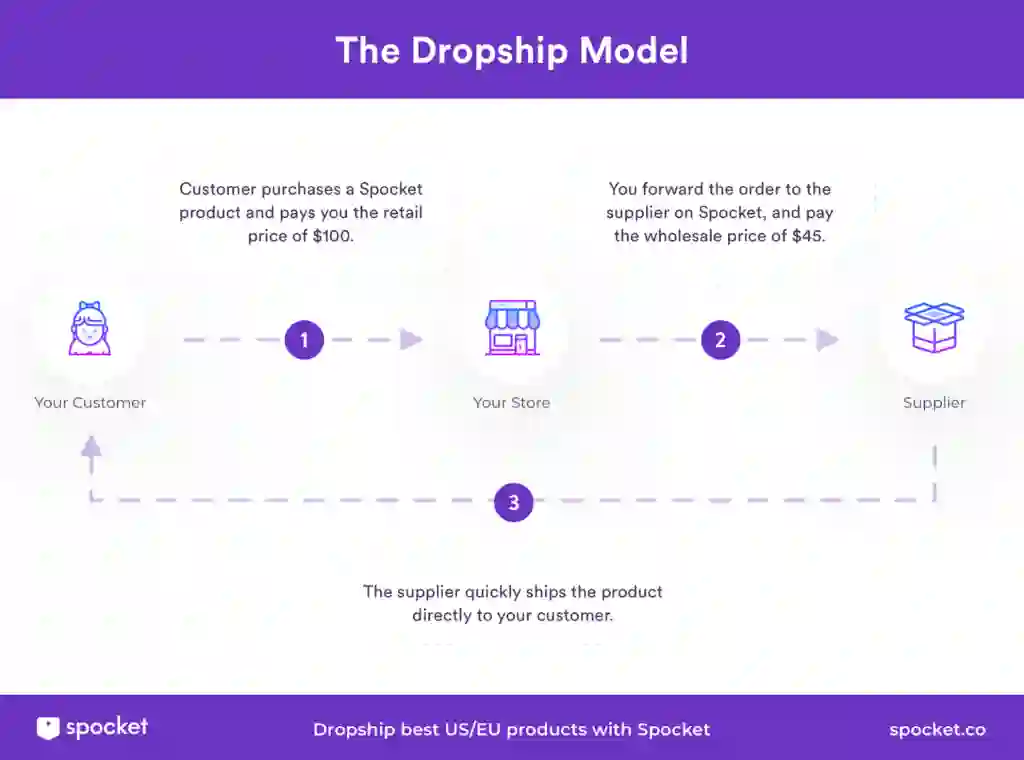
Spocket is a dropshipping app built for retailers who want to source products from suppliers in the US and EU. You connect your store, browse the product catalog, and import listings directly without any manual copy-pasting. Once a customer places an order, fulfillment runs automatically.
Beyond standard importing, Spocket offers Print-on-demand services, private labeling, white labeling, branded invoicing, and automated inventory sync, all through a single dashboard.
The platform integrates with major e-commerce channels including Shopify, Amazon, eBay, WooCommerce, Wix, and BigCommerce. You can also find suppliers from Australia, New Zealand, and South Africa on the platform, though the main focus is US and EU-based merchants.
Spocket has no MOQs, so you can order samples before committing to a product and scale up bulk orders as your store grows. You can ship anywhere worldwide after signing up.
You get access to a catalog of over 20M winning dropshipping products and over 100M trending dropshipping products across categories. The platform charges a 0% transaction fee on all paid plans.
What Is Importify?
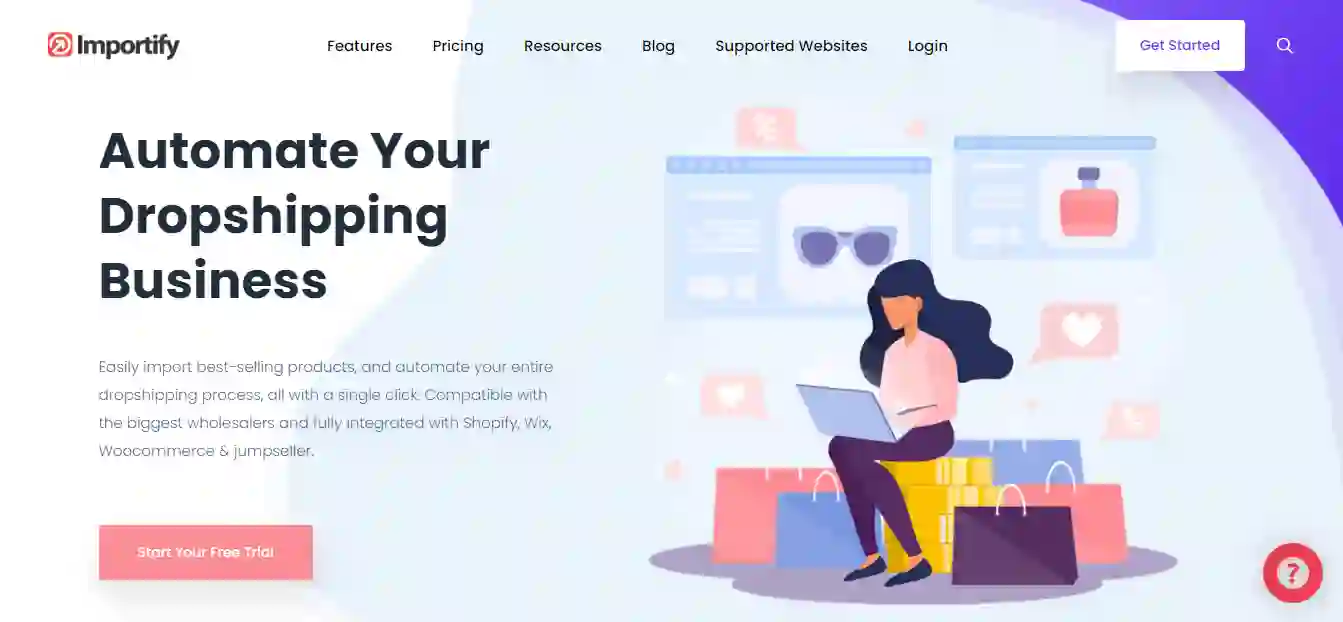
Importify is a product importing tool that lets you pull listings from multiple online marketplaces directly into your e-commerce store. If you've used Oberlo before, Importify works in a very similar way, but it connects to a wider range of sourcing platforms.
You can import products from AliExpress, Alibaba, Amazon, Etsy, Walmart, and Shein, among other supported sites. Once products are in your store, order fulfillment is automated. There's no manual copy-pasting involved.
Importify integrates with Shopify, WooCommerce/WordPress, Wix, and JumpSeller. It's designed for store owners who aren't comfortable with technical setups as well as those with more experience.
When you look at Importify vs Spocket features side by side, the clearest contrast is in sourcing: Spocket gives you a pre-vetted catalog while Importify gives you a tool to pull products from wherever you already buy.
Importify’s key features include:
- One-click imports: Pull listings from any supported marketplace with a single click.
- Built-in description editor: Edit titles, descriptions, images, and pricing inside Importify before pushing to your store.
- Pricing rules: Set profit margin targets upfront so every imported product gets priced automatically on import.
- Order automation: Customer orders route to the supplier without any manual input on your end.
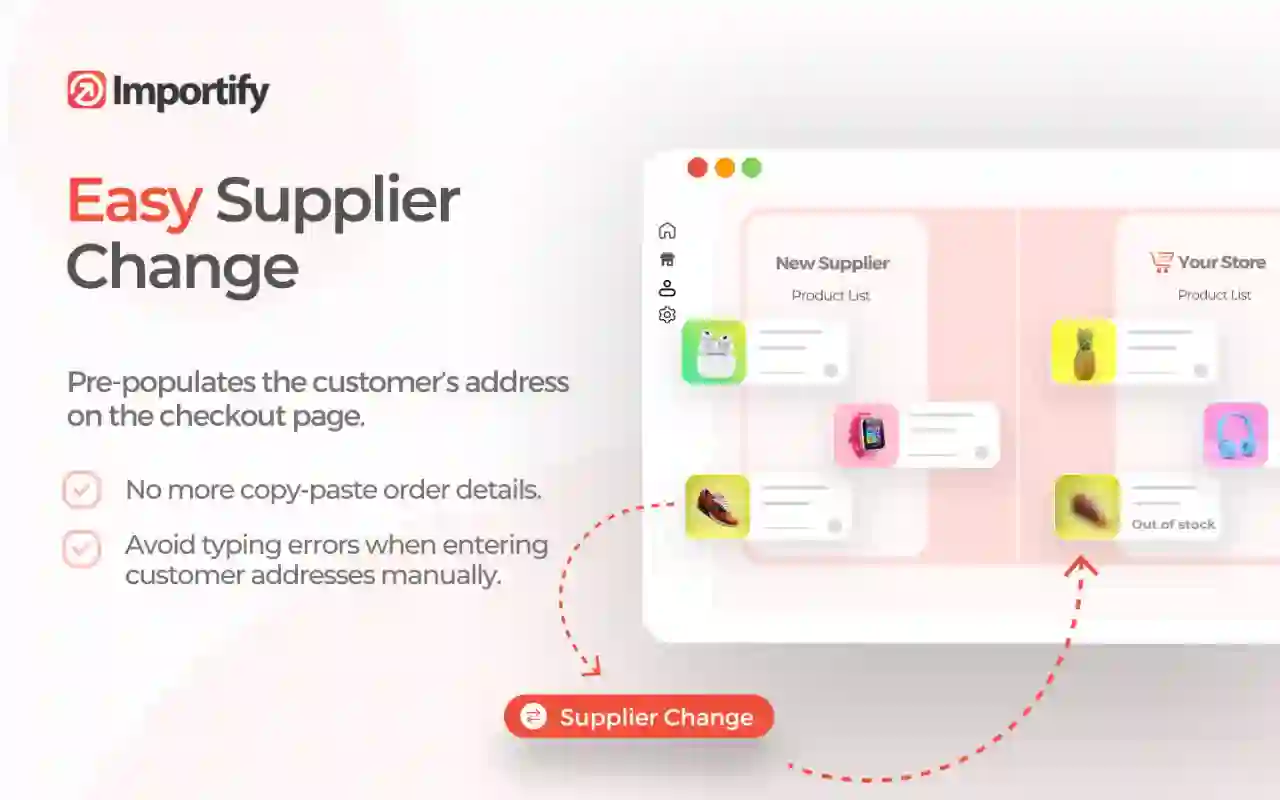
- Easy supplier change: If a product goes out of stock, swap to a new supplier and pre-populate the listing without starting from scratch.
- Split variants: Break up marketplace listings that bundle different products under one SKU into separate product pages. This is especially useful for AliExpress listings that group unrelated items under one product.
- Chrome extension: Use it to edit product titles, descriptions, images, and pricing, and to automate orders directly from your browser.
- Shopify-to-Shopify importer: Grab products from another Shopify dropshipping store using the Importify Firefox extension.
- Spy tools: Browse other Shopify stores to identify winning products and check potential profit margins.
- Product videos: Import videos from AliExpress, Amazon, and Etsy to support your product listings.
Spocket's Pricing Plans
Spocket gives you a 7-day free trial before you commit to any paid plan. All paid plans come with a 0% transaction fee, so the monthly price you see is your total cost.
- Start Plan ($39/month): The entry-level option, suited for stores just getting started.
- Professional Plan ($59/month): You get 250 unique products and 25 premium products per month.
- Empire Plan ($99/month): Spocket's most popular plan. This tier gives you up to 10,000 unique products and 10,000 premium products, multiple store support, AliExpress dropshipping services, 24/7 VIP chat, and unlimited orders.
- Unicorn Plan ($299/month): The top tier. It adds a bulk checkout feature and exclusive access to Spocket Academy.
Across all paid plans, you can ship anywhere worldwide. The Empire plan is where most growing stores land, given the jump in product limits and order volume it unlocks.
Importify's Pricing Plans
Importify keeps pricing straightforward with three tiers and a billing option that saves you money if you pay annually.
- Basic Plan ($14.95/month): Covers product importing from a core set of suppliers, along with customizable pricing rules.
- Premium Plan ($27.95/month): Unlocks more supplier access. Amazon, for example, is not available on Basic but opens up at this tier.
- Gold Plan ($37.95/month): The top tier. You get more order fulfillment automation and unlimited product imports, which matters most for higher-volume stores.
Importify offers a 1-day free trial. Some users report being approved for a longer trial period on request, but the default is one day. When you're comparing Importify vs Spocket pricing, Importify comes in cheaper at every tier. The gap reflects the difference in what each tool covers.
Top Dropshipping Products and Niches on Spocket
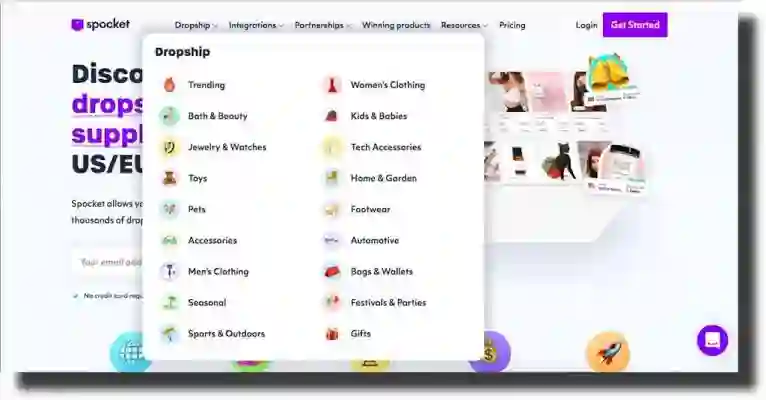
Spocket's supplier network covers a wide range of product categories. The most active niches on the platform include:
1. Tech Accessories
Tech accessories like phone cases, charging cables, and gadgets from US and EU suppliers. Fast shipping gives these listings an advantage over similar products sourced from overseas.
2. Women's Clothing
Spocket has a strong selection of women's fashion from domestic and European suppliers, with faster delivery windows than typical marketplace orders.
3. Bath and Beauty Items
Skincare, haircare, and personal care products from vetted suppliers. This category pairs well with Spocket's private labeling and white labeling features for stores building a branded identity.
4. Pet and Kids' Products
Pet supplies, toys, and children's items are consistently active on the platform across price points.
5. Home and Garden Decor
Home decor, planters, candles, and similar home goods from US and EU-based suppliers.
6. Perishable Goods and Organic Food
Spocket supports dropshipping for food products, organic goods, and perishables. This is less common among dropshipping platforms and sets Spocket apart for sellers in that space.
7. Seasonal Items
Halloween costumes and other seasonal products are available on the platform, giving stores a way to meet event-driven demand without putting together a new sourcing list each year.
Start your dropshipping business today
Push Products for Free with Spocket
Best Dropshipping Products and Niches on Importify
Importify doesn't curate its own supplier catalog. It connects your store to external marketplaces, so the products you can sell depend entirely on what those platforms carry.
You can source from AliExpress, Alibaba, Amazon, Etsy, Walmart, and Shein through Importify, among other supported sites. The range across all of them is broad.
Because Importify connects to these platforms rather than managing its own supplier network, the difference in Importify vs Spocket features in this area comes down to sourcing flexibility versus supplier curation. Importify lets you decide where to source and what to sell. Spocket has already pre-selected suppliers in the US and EU.
What Is Spocket Good For?
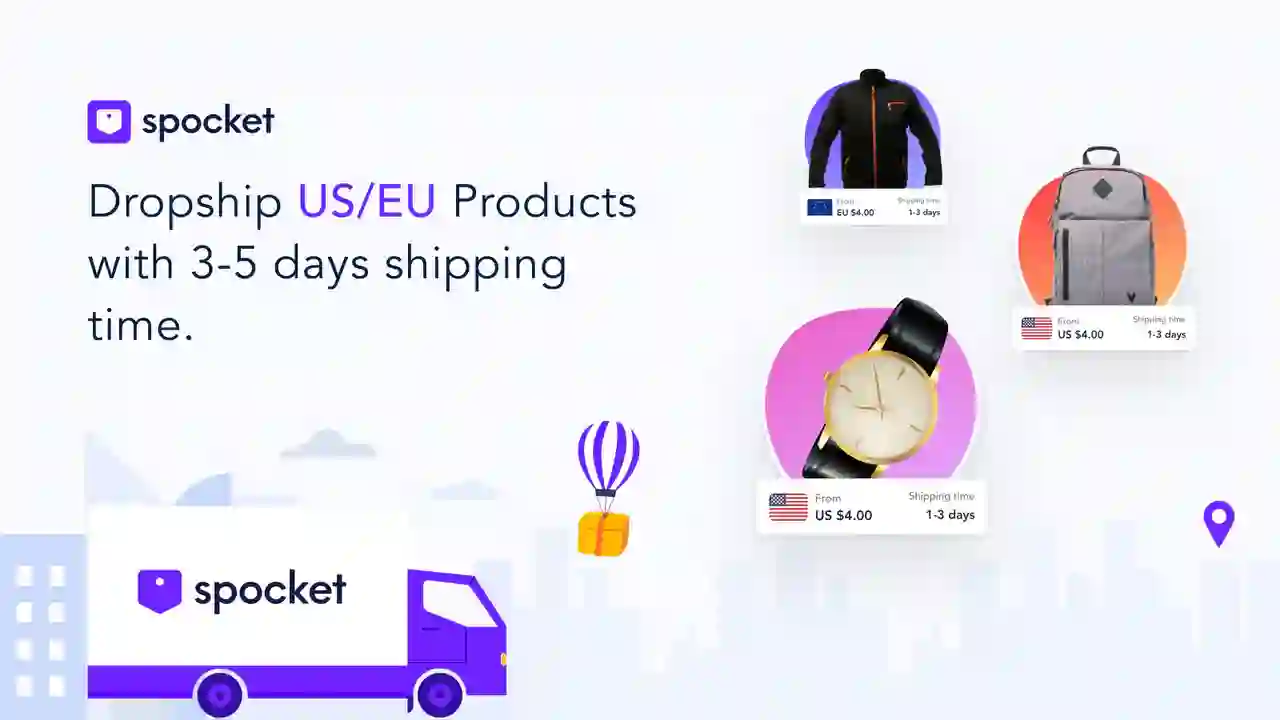
Spocket is the stronger fit in the Spocket vs Importify comparison if you're targeting customers in North America or Europe and want shipping speeds that can hold up against domestic retailers.
It's also a good option if you want:
- Branded fulfillment: Private labeling, white labeling, and branded invoicing let you present a consistent brand experience from purchase to unboxing.
- Print-on-demand capability: Useful for stores selling custom products without holding any inventory.
- Multiple store management: The Empire plan lets you run more than one store from the same dashboard.
- AliExpress access alongside US/EU sourcing: You're not locked out of AliExpress products when you upgrade to Empire.
- A pre-vetted supplier catalog: Spocket vets suppliers so you don't have to do that research yourself.
- No MOQ flexibility: You can order one unit at a time, which keeps risk low when testing new products.
What Is Importify Good For?
Importify works best if your sourcing strategy depends on marketplaces like AliExpress, Amazon, Etsy, or Walmart, and you want a single tool to handle importing and fulfillment across all of them.
It's also a good pick if you:
- Want to test products fast: One-click importing from multiple platforms means adding products to your store is fast, without requiring a separate sourcing workflow.
- Run a Shopify, Wix, WooCommerce, or JumpSeller store: These are the four platforms Importify supports.
- Prefer to choose your own suppliers: Rather than filtering to US/EU suppliers, Importify lets you source globally without platform restrictions.
- Want to import product videos: Pull videos from AliExpress, Amazon, and Etsy to use in your product listings.
- Need supplier flexibility: The easy supplier swap feature saves time when a product goes out of stock.
- Are a supplier yourself: Importify has a supplier program that puts your products in front of more buyers on the platform.
Product Importing: Spocket vs Importify
This is where the two tools differ most in day-to-day use.
Importing on Spocket
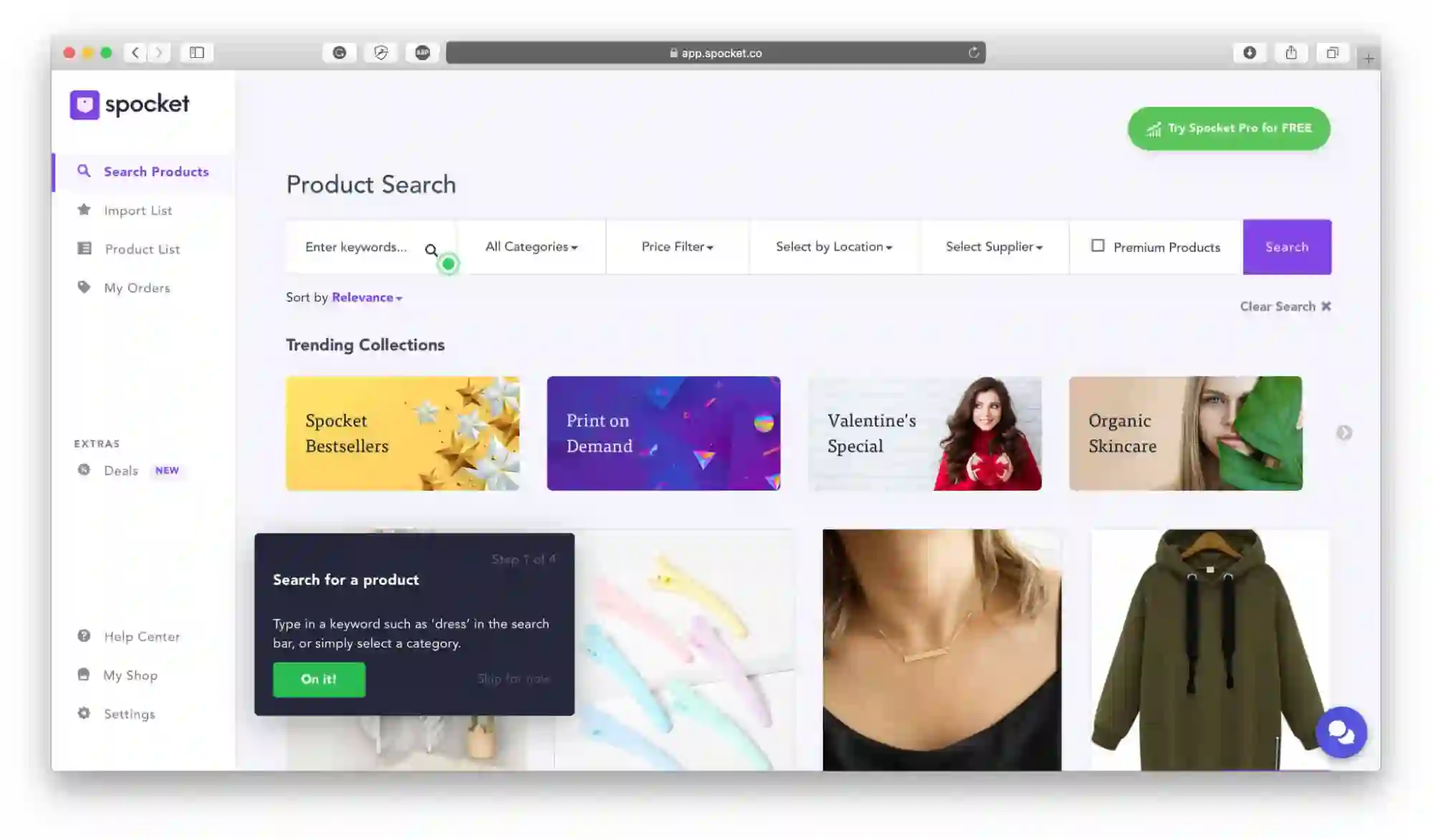
The import process on Spocket follows five steps:
- Hover over a product listing in the Spocket catalog and click Add to Import List.
- Go to the Import List page in the left-hand navigation.
- Customize the product listing (title, description, pricing) before it goes live.
- Click Push to Store to add the product to your store.
- Head to the Product List page and click View Listing to confirm the item is live.
The 1-click import feature moves products from the Spocket catalog to your store quickly. Customization happens between steps two and four, so you're editing a draft rather than a live listing.
Importing on Importify
Importify handles importing through a Chrome extension. You browse a supported marketplace such as AliExpress, Amazon, Etsy, Walmart, Shein, or Alibaba, and the extension lets you add products to your import queue directly from the marketplace page.
From there, you can edit the product inside Importify before pushing it to your store. Order fulfillment after import is fully automated. There's no need to copy order details manually or forward them to a supplier.
One practical difference: Importify lets you import from multiple marketplaces in the same workflow, whereas Spocket's catalog is pre-populated by the platform, so your sourcing stays within the Spocket ecosystem.
Spocket vs Importify: UI and Ease of Use
Both tools are designed for store owners who don't want to deal with complex technical setups.
Spocket's dashboard is clean and organized. You can filter products by category, price, location, and premium status. The left-hand navigation keeps Import List, Product List, and Orders easy to find. The flow from browsing a product to pushing it live is straightforward enough to learn in a single session.
Importify's interface has often been compared to Oberlo's layout. If you used Oberlo before it was discontinued, Importify will feel familiar. For new users, the interface is easy to navigate, and it's designed with non-technical users in mind.
Both tools offer Importify vs Spocket integrations with major e-commerce platforms, though their platform lists differ. Spocket covers Shopify, Amazon, eBay, WooCommerce, Wix, and BigCommerce. Importify covers Shopify, WooCommerce, Wix, and JumpSeller.
Spocket vs Importify: Verdict
After comparing Spocket vs Importify on pricing, features, and integrations, here's where each tool lands. The right choice depends on your sourcing preferences, your target market, and your store's platform.
Spocket is the right pick if:
- You're targeting customers in the US or EU and want fast shipping as a key selling point.
- You want private labeling, white labeling, or branded invoicing built into your workflow.
- You need Print-on-demand capability without adding a separate tool.
- You prefer a pre-vetted supplier catalog over creating your own sourcing list.
- You're running multiple stores and need them managed from one account.
- You want unlimited orders as your volume grows, available on the Empire plan.
Importify suits a different kind of store, one where sourcing flexibility matters more than supplier curation. If you want to pull from global marketplaces and keep costs lower, it covers that well.
Importify is the right pick if:
- Your sourcing strategy is built around AliExpress, Amazon, Etsy, Walmart, or Alibaba.
- You want to import from multiple marketplaces with a single tool.
- You're on JumpSeller, which Spocket doesn't support.
- You want more control over which suppliers you use rather than working from a curated catalog.
- You're watching costs closely and Importify's lower price points fit your budget better.
- You want to import product videos directly from marketplace listings.
Conclusion
Choosing between two product importing tools comes down to where you source from and who you're selling to. If you want a curated supplier network with fast domestic shipping and branding features baked in, one tool is the clear fit. If you need the freedom to pull products from multiple global marketplaces without supplier restrictions, the other wins on flexibility. Both handle the core job of importing and fulfillment well. Test whichever one aligns with your store's sourcing strategy before locking into a paid plan.
Start your free trial with Spocket and test it against Importify to work out which fits your catalog and sourcing workflow.
Spocket vs Importify: Head-to-Head Product Importing Comparison FAQs
What is the difference between Spocket and Importify?
Spocket has its own curated catalog of US and EU-based suppliers. You browse products, import them with one click, and ship fast to North American and European customers. Importify is a marketplace importer that connects to external platforms like AliExpress, Amazon, Etsy, and Walmart so you can pull products from those sources into your store. The two tools take different approaches to product sourcing.
Does Spocket have a free trial?
Spocket offers a 7-day free trial before you commit to a paid plan. After that, you can choose from four paid tiers: Start, Professional, Empire, and Unicorn. All plans charge a 0% transaction fee. The Empire plan is the most popular tier, covering unlimited orders, up to 10,000 unique products, 10,000 premium products, 24/7 VIP chat, and multiple store support.
What platforms does Importify integrate with?
Importify integrates with Shopify, WooCommerce (WordPress), Wix, and JumpSeller. For product sourcing, it connects to AliExpress, Alibaba, Amazon, Etsy, Walmart, and Shein, among other supported sites. If you're on any of those store platforms and want to import from those marketplaces, Importify handles both the importing and the automated order fulfillment without requiring manual input at any step.
Can you do print-on-demand with Spocket?
Yes. Spocket includes Print-on-demand services alongside its standard dropshipping catalog. It also offers private labeling and white labeling, which lets you sell products under your own brand without managing inventory. Branded invoicing is available too, so customers receive order documentation with your brand name rather than the supplier's. These features make Spocket a practical fit for stores building a branded product line.
Is Importify better than Spocket?
It depends on your sourcing strategy. Importify gives you more flexibility to pull from global marketplaces like AliExpress, Amazon, and Etsy. Spocket provides a pre-vetted catalog of US and EU suppliers with faster shipping and built-in branding features. Neither is objectively better. The right pick depends on which platforms your sourcing relies on and the shipping speeds your customers expect.
How do I import products with Spocket?
The process takes a few clicks. Hover over a product in the Spocket catalog and select Add to Import List. Head to the Import List page, customize the title, description, and pricing, then click Push to Store. Once pushed, visit the Product List page and click View Listing to confirm the item is live. The whole process takes a couple of minutes per product.


Launch your dropshipping business now!
Start free trial.avif)


Related blogs
Dropshipping Supplier Directory: Where to Find Vetted Suppliers
Browse our directory of vetted dropshipping suppliers across the US and EU, complete with niches, shipping speed, and pricing. Start your free trial today.

How to Negotiate With Dropshipping Suppliers: 9 Tactics That Actually Work
Learn how to negotiate with dropshipping suppliers on price, MOQs, and payment terms. Proven tactics and email scripts to boost your margins. Try Spocket free.

Best Clothing Dropshipping Suppliers: The 2026 Guide
Compare the best clothing dropshipping suppliers for 2026 — US/EU shipping speeds, pricing, and product quality — and find the right fit to launch your store.