Social Commerce in 2026: How Dropshippers Are Selling Directly Inside Social Apps
See how dropshippers are using TikTok Shop, Instagram, Facebook, Pinterest, creators, and shoppable content to sell products inside social apps.
.avif)

Social commerce has changed the way people discover and buy products online. Shoppers no longer move through a simple path of seeing an ad, visiting a website, and checking out later. In 2026, many buyers find products inside social apps, watch them in use, read comments, trust creator recommendations, and buy without leaving the platform.
For dropshippers, this shift is important. Social platforms are no longer just marketing channels. They are becoming storefronts, product discovery engines, customer review spaces, and checkout points all at once. TikTok Shop, Instagram shopping features, Facebook Shops, Pinterest product discovery, live shopping, and creator-led promotions are making it easier for sellers to turn content into sales.
This creates a major opportunity for dropshipping stores. Instead of depending only on paid ads or search traffic, sellers can reach customers through short videos, product tags, live demos, affiliate creators, and community-driven content. However, success depends on more than uploading products. You need products that look good in social content, suppliers you can trust, and a store experience that supports fast-moving social traffic.
What Is Social Commerce?
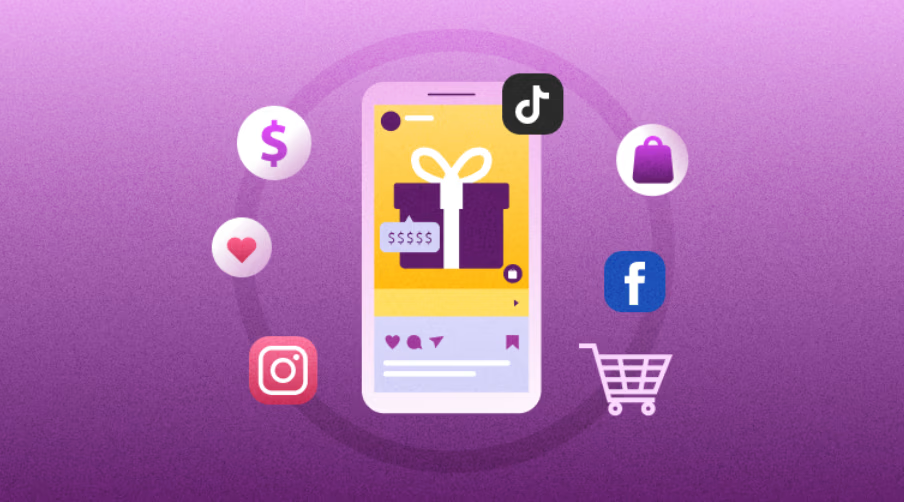
Social commerce is the process of selling products directly through social media platforms. Instead of only using social media to promote a website, sellers can now create shopping experiences inside apps where customers already spend time.
Social commerce can include:
- Product tags in videos and posts
- In-app checkout
- TikTok Shop listings
- Instagram product showcases
- Facebook Shops
- Pinterest product pins
- Live shopping events
- Creator and affiliate recommendations
- Shoppable short-form videos
The main difference between social commerce and traditional ecommerce is where the shopping journey happens. In traditional ecommerce, the customer usually visits a store website to browse and buy. In social commerce, the customer may discover, evaluate, and purchase the product inside the social app itself.
This makes shopping feel more natural and less interrupted. A customer can watch a creator use a product, check comments, click the tagged item, and buy within a few taps.
Why Social Commerce Matters in 2026
Social commerce matters because buying behavior has become more content-led. People often trust product demonstrations, creator opinions, comments, and community feedback more than polished brand ads. Social apps now influence not only what shoppers discover but also what they trust.
TikTok Shop has become especially important because it combines discovery, entertainment, creator influence, and checkout in one place.
For dropshippers, social commerce offers several advantages:
- Faster product discovery
- Lower friction between content and checkout
- More trust through creator-led content
- Better product education through videos
- Easier testing of trending products
- Stronger engagement through comments and shares
- More opportunities for organic visibility
This is especially useful for products that are visual, practical, affordable, and easy to demonstrate. Beauty tools, home organization products, pet accessories, kitchen gadgets, fashion items, and tech accessories can all work well when shown in real-life content.
How Dropshippers Are Selling Inside Social Apps
Dropshippers are using social commerce to shorten the path from product discovery to purchase. Instead of sending every shopper to a separate website first, they are meeting customers inside the apps where they already watch videos, follow creators, and search for product ideas.
The most successful sellers use social commerce as a full sales channel, not just an extra feature. They combine content, product listings, creator partnerships, comments, and customer support into one connected experience.
TikTok Shop for Product Discovery
TikTok Shop is one of the biggest social commerce opportunities for dropshippers in 2026. The platform is built around discovery, which makes it ideal for products people did not know they needed until they saw them in action.
TikTok Shop works well for:
- Problem-solving gadgets
- Beauty tools
- Pet products
- Kitchen items
- Home organization products
- Fitness accessories
- Affordable giftable products
Dropshippers can use short videos to show the product, tag the item, and guide viewers toward purchase. A strong video does not need to feel like an ad. It can show a problem, introduce the product, demonstrate the result, and let the product link do the selling.
TikTok comments also play an important role. Shoppers often read comments before buying, so answering questions and creating video replies can build trust.
Instagram Shopping for Visual Brands
Instagram remains valuable for visual product categories. Fashion, beauty, home decor, jewelry, wellness, and lifestyle products can perform well when presented through Reels, Stories, product tags, and profile shops.
Instagram works best when your brand has a clear look and niche. Dropshippers can use product photos, creator-style videos, styling ideas, and customer content to make products feel more desirable.
Effective Instagram social commerce content includes:
- Reels showing product use
- Story product stickers
- Product tags in posts
- Before-and-after videos
- Gift guides
- Styling videos
- UGC-style reviews
Unlike TikTok, Instagram often works better when the visual identity is consistent. A clean profile, strong product imagery, and clear niche positioning can help shoppers trust the store faster.
Facebook Shops for Community-Based Selling
Facebook is still useful for social commerce, especially for sellers targeting older buyers, local communities, hobby groups, and niche interest audiences. Facebook Shops, groups, pages, and Marketplace-style discovery can help dropshippers reach customers in a more community-driven way.
Facebook can work well for:
- Home products
- Pet products
- Family items
- Hobby accessories
- Outdoor products
- Practical gadgets
- Wellness products
Dropshippers can use Facebook groups and pages to educate customers, share product tips, answer questions, and promote relevant items. The key is to avoid spammy posting. Community-based selling works best when content feels helpful and relevant.
Pinterest for Product Search and Inspiration
Pinterest is different from TikTok and Instagram because people often use it to plan purchases. They search for ideas, save products, compare styles, and return later when they are ready to buy.
Pinterest social commerce works well for:
- Home decor
- Fashion
- Wedding products
- Beauty items
- Kitchen organization
- Gift ideas
- Seasonal products
- DIY-related items
Dropshippers can use product pins, idea pins, seasonal boards, and keyword-rich descriptions to reach shoppers with purchase intent. Pinterest is especially useful for evergreen products and seasonal collections.
For example, a dropshipper selling home organization products can create content around “small pantry organization,” “bathroom storage ideas,” or “holiday home refresh.” These search-friendly angles help products stay discoverable longer.
Live Shopping for Real-Time Selling
Live shopping allows sellers or creators to demonstrate products in real time while viewers ask questions and buy during the session. It is especially useful for products that need explanation, comparison, or trust-building.
Live shopping can work for:
- Beauty products
- Fashion accessories
- Kitchen gadgets
- Fitness items
- Tech accessories
- Home products
- Gift bundles
The biggest benefit is interaction. Customers can ask about size, usage, shipping, colors, or product details before buying. This can reduce hesitation and increase trust.
However, live shopping works best when it feels natural. Viewers do not want a long sales pitch. They want helpful demonstrations, honest explanations, and clear answers.
What Makes a Product Good for Social Commerce?
Not every dropshipping product is right for social commerce. Some products are too hard to explain, too generic, or not visual enough. The best products are easy to understand quickly and look interesting in content.
A strong social commerce product usually has:
- A clear problem-solving angle
- Strong visual appeal
- A quick demonstration
- Affordable pricing
- Everyday usefulness
- A satisfying before-and-after result
- Giftable or impulse-buy potential
- Reliable supplier support
For example, a pet hair remover can be shown on a couch, blanket, car seat, or sweater. A kitchen chopper can be shown saving time during meal prep. A makeup organizer can be shown transforming a messy counter.
If you cannot think of multiple content angles for a product, it may not be the best fit for social commerce.
How to Build a Social Commerce Strategy for Dropshipping
A good social commerce strategy connects your products, content, platform features, creators, and fulfillment process. The goal is not just to post more. The goal is to make it easy for shoppers to discover, trust, and buy your products.
Pick a Clear Niche
A focused niche makes your social commerce strategy easier. Instead of selling random products from multiple categories, choose a theme your audience can understand.
Strong niches include:
- Pet products
- Home organization
- Kitchen gadgets
- Beauty tools
- Fitness accessories
- Travel essentials
- Baby products
- Fashion accessories
A niche helps your content feel consistent. It also helps social algorithms understand who should see your posts.
Create Shoppable Content
Shoppable content should show the product naturally while making it easy to buy. Avoid posting only product images or sales-heavy captions.
Content ideas include:
- Product demos
- Before-and-after videos
- “Things I wish I bought sooner” videos
- Gift guides
- Routine videos
- Customer-style reviews
- Comparison clips
- Problem-solution videos
The best content shows the product in action. Customers should quickly understand why the item is useful and how it fits into their life.
Use Creators and Affiliates
Creators are central to social commerce because they already have audience trust. Dropshippers can work with micro-creators, affiliate creators, or niche influencers to promote products more naturally.
Creator content works well because it feels less like a brand ad and more like a recommendation. The creator can show the product, explain how they use it, and answer audience questions.
To get better creator results, provide:
- Clear product benefits
- Usage instructions
- Strong product samples
- Fair commission or payment
- Creative freedom
- Accurate shipping details
Do not over-script creator content. It should sound like the creator, not like a brand brochure.
Use Comments as Sales Support
In social commerce, comments are part of the buying journey. Shoppers often check comments to see if others are interested, confused, or satisfied.
Use comments to:
- Answer product questions
- Clarify shipping details
- Explain sizing or usage
- Create video replies
- Address objections
- Pin helpful responses
A well-managed comment section can build trust. Ignored questions can create doubt.
Optimize Product Pages Inside Social Apps
Your content may drive interest, but your product listing still needs to convert. Whether you are using TikTok Shop, Instagram shopping, Facebook Shops, or Pinterest product pins, your listing should be clear and trustworthy.
Include:
- Clear product title
- Accurate description
- High-quality images
- Correct variants
- Pricing
- Shipping information
- Return details
- Product benefits
- Usage details
Avoid exaggerated claims. Social commerce can move quickly, but customer trust still depends on accuracy.
Common Social Commerce Mistakes Dropshippers Should Avoid
Social commerce can drive sales quickly, but mistakes can damage your store just as fast. Dropshippers need to balance speed with reliability.
Avoid these common mistakes:
- Selling random products with no niche
- Using low-quality supplier images only
- Copying creator content directly
- Ignoring comments and questions
- Overpromising shipping times
- Promoting products without testing them
- Choosing items with poor supplier reviews
- Using misleading product claims
- Depending on one platform only
- Scaling before fulfillment is ready
The biggest mistake is treating social commerce like a shortcut. It can bring traffic quickly, but your product quality, shipping, and customer service still matter.
Conclusion
Social commerce in 2026 is reshaping how dropshippers sell online. Platforms like TikTok, Instagram, Facebook, and Pinterest are no longer just places to promote products. They are becoming shopping destinations where customers discover, evaluate, and buy directly inside the app.
For dropshippers, this creates a powerful opportunity. Short videos, creator recommendations, product tags, live shopping, comments, and in-app checkout can reduce friction and turn social attention into sales. But success depends on choosing the right products, building niche content, using creators wisely, managing comments, and keeping product listings clear.
Most importantly, social commerce needs reliable fulfillment. Spocket helps dropshippers source quality products from trusted suppliers, including US and EU options, so the customer experience can match the promise made in social content.
Start your dropshipping business today
FAQs About Social Commerce for Dropshippers in 2026
What is social commerce in dropshipping?
Social commerce in dropshipping means selling products directly through social media platforms such as TikTok, Instagram, Facebook, and Pinterest. Instead of only sending shoppers to a separate website, dropshippers can use product tags, in-app shops, creator content, live shopping, and shoppable posts to drive sales inside social apps.
Why is social commerce important for dropshippers in 2026?
Social commerce is important because shoppers now discover and evaluate products through videos, creators, comments, and social recommendations. It helps dropshippers shorten the buying journey, build trust through content, and reach customers where they already spend time.
Which social commerce platforms are best for dropshipping?
TikTok Shop is strong for product discovery and viral videos, Instagram works well for visual brands, Facebook is useful for community-based selling, and Pinterest is effective for search-driven product inspiration. The best platform depends on your niche, audience, and product type.
What products work best for social commerce?
Products that are visual, easy to demonstrate, affordable, useful, and problem-solving usually perform best. Popular options include beauty tools, pet products, home organization items, kitchen gadgets, fashion accessories, fitness products, tech accessories, and giftable products.
How can Spocket help with social commerce dropshipping?
Spocket helps dropshippers source quality products from reliable suppliers, including US and EU options. This supports social commerce by helping sellers promote products with better fulfillment confidence, clearer shipping expectations, and a stronger customer experience.


Launch your dropshipping business now!
Start free trial


Related blogs
How to Set Up Automated Order Fulfillment With Spocket and Shopify
Set up a smoother Shopify dropshipping workflow with Spocket by connecting your store, importing products, processing orders, syncing tracking, and reducing manual fulfillment tasks.


How to Open a Business Bank Account for Your Dropshipping Store
Set up your dropshipping finances the right way with a dedicated business bank account built for payouts, supplier payments, taxes, and long-term store growth.
Spocket vs Dropified: Which Tool Is Better for Multi-Store Scaling?
Compare Spocket and Dropified for multi-store dropshipping, supplier quality, automation, fulfillment, product sourcing, and scaling across ecommerce platforms.