How to Register a Dropshipping Business in Singapore
Step-by-step guide to registering a dropshipping business in Singapore including setup, requirements, taxes, and legal essentials.

.avif)

Starting a dropshipping business in Singapore is one of the smartest ways to enter eCommerce without heavy upfront investment. You don’t need to manage inventory, rent a warehouse, or deal with bulk purchases. Instead, you focus on selling while suppliers handle fulfillment.
But before you launch your store and start accepting orders, there’s one important step you cannot skip—registering your business properly.
Singapore is known for its transparent regulations and business-friendly policies, but it also expects entrepreneurs to operate within a clear legal framework. Whether you’re a local resident or a foreign entrepreneur, registering your dropshipping business ensures that you can operate smoothly, build trust, and scale without roadblocks.
This guide walks you through everything you need to know—from choosing the right structure to completing your registration and setting up your operations.
Is Dropshipping Legal in Singapore
Dropshipping is completely legal in Singapore, but like any business activity, it must follow certain rules.
Singapore does not treat dropshipping differently from other eCommerce businesses. If you are selling products for profit, you are considered a business owner, and you must register your business accordingly.
When registration becomes necessary
You need to register your dropshipping business if:
- You are selling products regularly for profit
- You operate under a business name
- You advertise or market your store
- You accept payments from customers
Even if you’re working from home or starting small, these conditions still apply.
Why legality matters from day one
Operating without registration can lead to:
- Difficulty opening payment gateways
- Challenges in scaling your business
- Legal risks and penalties
Registering early helps you avoid these issues and build a strong foundation.
Why You Should Register Your Dropshipping Business
Many beginners delay registration, thinking they can “test first and register later.” While that may seem practical, it often creates more problems than it solves.
It gives your business a legal identity
Once registered, your business receives a Unique Entity Number (UEN). This acts as your official identification for all transactions. With a UEN, you can:
- Operate legally
- Sign contracts
- Issue invoices
- Work with service providers
It builds trust with customers
Customers are more likely to buy from a legitimate business than from an anonymous store. Registration signals:
- Credibility
- Accountability
- Professionalism
This becomes especially important when scaling your store.
It enables financial operations
Without registration, you cannot:
- Open a business bank account
- Integrate payment gateways smoothly
- Separate personal and business finances
This separation is critical for long-term growth.
Launch Your Dropshipping Business in Singapore in 10 Steps
Once you understand the basics, the next step is turning your idea into a legally registered and fully operational business. From choosing the right structure to setting up payments and suppliers, each step plays a crucial role in building a compliant and scalable dropshipping setup in Singapore.
1. Choose the Right Business Structure
Before registering, you need to decide how your business will be structured. This decision affects your taxes, liability, and scalability.
Sole Proprietorship
This is the simplest structure and is often chosen by beginners. Key features:
- Easy and quick to set up
- Low cost
- Full control over the business
However, there’s a downside:
- You are personally liable for all debts and losses
This means your personal assets are not protected.
Private Limited Company (Pte Ltd)
This is the most recommended structure for serious entrepreneurs. Key benefits:
- Limited liability protection
- Separate legal entity
- Easier to scale and raise funds
- Better credibility
For dropshipping businesses aiming to grow, this structure offers more flexibility and protection.
Which one should you choose
If you’re just experimenting, a sole proprietorship may work initially. But if you plan to build a long-term brand, a Private Limited Company is the better option.
2. Register Your Dropshipping Business with ACRA
Once you’ve chosen your structure, the next step is official registration. In Singapore, all businesses are registered through ACRA (Accounting and Corporate Regulatory Authority).
Step-by-step registration process
The process is straightforward and can be completed online.
Reserve your business name
Choose a unique name that:
- Is not already taken
- Does not infringe on trademarks
- Reflects your business activity
Approval usually takes a short time if the name meets guidelines.
Submit your business details
You’ll need to provide:
- Business name
- Business structure
- Registered address
- Details of directors and shareholders
- Description of business activity
Make sure all information is accurate to avoid delays.
Pay the registration fee
A small fee is required to complete the process. Once payment is made and approved, your business becomes officially registered.
Receive your UEN
After approval, you’ll receive your Unique Entity Number. This confirms that your business is legally recognized.
3. Meet the Basic Requirements for Registration
To successfully register a business in Singapore, you must meet certain criteria.
Key requirements to keep in mind
- At least one local resident director
- A registered Singapore address
- At least one shareholder
- A company secretary (for companies, within six months)
These are standard requirements for most businesses.
For foreign entrepreneurs
If you are not a Singapore resident, you can still start a dropshipping business, but you may need:
- A local nominee director
- A registered business address
- Additional approvals or passes
Working with a local service provider can simplify this process.
4. Understand Taxes and GST Obligations
Taxes are an important part of running a business in Singapore, even for dropshipping.
When GST applies
You are required to register for GST if your annual turnover exceeds the threshold set by the government.
Once registered, you must:
- Charge GST on applicable sales
- File regular tax returns
- Maintain proper financial records
What dropshippers should consider
Even if you’re below the threshold, you should plan for:
- Import-related taxes
- Pricing strategies that include tax
- Accurate invoicing
Understanding taxes early helps you avoid surprises later.
5. Check If You Need Licenses or Permits
Not all products can be sold freely in Singapore.
Categories that may require approval
Depending on your niche, you may need permits for:
- Health and wellness products
- Food items
- Electronics
- Beauty and cosmetic products
Each category may have specific regulations.
Why this step is important
Selling restricted products without approval can result in:
- Fines or penalties
- Product seizures
- Business suspension
Always verify requirements before listing products.
6. Set Up Your Online Store
Once your business is registered, you can move on to building your store.
What you need to get started
Your store should include:
- A professional domain name
- A reliable eCommerce platform
- Secure payment gateways
- Well-structured product pages
These elements create the foundation of your business.
Essential legal pages
Your website must also include:
- Terms and conditions
- Privacy policy
- Refund and return policy
These are not just formalities—they are required for compliance and customer trust.
7. Find Reliable Dropshipping Suppliers
Your supplier is the backbone of your business.
What makes a good supplier
Look for suppliers who offer:
- Consistent product quality
- Fast and reliable shipping
- Clear communication
- Easy return handling
Choosing the wrong supplier can damage your reputation quickly.
Why supplier location matters
Working with suppliers closer to your target market can:
- Reduce delivery times
- Improve customer satisfaction
- Lower return rates
This is where Spocket plays a key role.
With Spocket, you gain access to vetted suppliers, including those based in the US and EU, making it easier to maintain quality and speed—two factors that directly impact your success.
8. Ensure Compliance with Consumer Protection Laws
Singapore has strong consumer protection regulations, and your business must follow them.
Key compliance areas
You must ensure:
- Accurate product descriptions
- Transparent pricing
- Honest marketing claims
- Clear return policies
Misleading customers can lead to complaints and legal action.
Building trust through transparency
Being upfront about your products and policies helps:
- Reduce disputes
- Improve customer experience
- Build long-term brand loyalty
9. Open a Business Bank Account
Once your business is registered, the next step is financial setup.
Why a business account is essential
A dedicated business account helps you:
- Manage finances efficiently
- Track income and expenses
- Maintain professionalism
It also simplifies accounting and tax filing.
What you’ll need
To open an account, you typically need:
- Your UEN
- Business registration documents
- Identification documents
10. Set Up Payments and Logistics
With your store ready, you need to handle transactions and delivery.
Payment setup
Choose reliable payment options such as:
- Credit and debit cards
- Digital wallets
- Multi-currency support (if selling globally)
Ensure payments are secure and seamless.
Shipping setup
Define your shipping strategy clearly:
- Delivery timelines
- Shipping costs
- Tracking options
Clear communication helps manage customer expectations.
How to Build a Scalable Dropshipping System
Building a dropshipping business is one thing—scaling it sustainably is another. To grow without chaos, you need systems that keep your operations consistent, efficient, and easy to manage. A scalable setup helps you handle more orders, maintain quality, and expand your business without constantly starting from scratch.
Standardize your operations
Create repeatable processes for:
- Product listing
- Order handling
- Customer support
This reduces errors and improves efficiency.
Track performance regularly
Monitor key metrics like:
- Conversion rates
- Order fulfillment times
- Customer satisfaction
Data helps you make better decisions.
Common Mistakes to Avoid When Registering
The registration process in Singapore is relatively straightforward, but small mistakes can lead to delays or complications later on. Understanding common pitfalls early helps you avoid unnecessary setbacks and ensures your business starts on the right footing from day one.
- Choosing the wrong structure: This can affect your taxes and liability long-term.
- Skipping compliance checks: Ignoring regulations can lead to penalties.
- Poor documentation: Incomplete records can create issues later.
- Rushing the process: Taking shortcuts often results in delays or rejections.
Conclusion
Registering a dropshipping business in Singapore is a straightforward process, but it’s also one of the most important steps you’ll take. From choosing the right structure to setting up your store and ensuring compliance, each step builds the foundation of your business.
The key is to treat dropshipping like a real business from day one. When you combine proper registration, smart sourcing, and strong systems, you position yourself for long-term success. Starting a dropshipping business involves many moving parts, but sourcing doesn’t have to be complicated. Spocket simplifies your journey by:
- Connecting you with trusted suppliers
- Offering faster shipping options
- Providing better product quality
- Reducing dependency on unreliable vendors
This allows you to focus on growth instead of operational issues. Singapore offers the perfect environment to start and scale—what matters now is how you take the first step.
Start your dropshipping business today
FAQs Registering a Dropshipping Business in Singapore
Do I need to register my dropshipping business in Singapore?
Yes, if you are selling products regularly for profit, you are required to register your business. Even if you operate online or from home, it is still considered a business activity. Registration ensures you can operate legally and access essential services like payment gateways and banking.
Can foreigners start a dropshipping business in Singapore?
Yes, foreigners can start a dropshipping business, but there are additional requirements. You may need a local resident director and a registered address in Singapore. Many entrepreneurs work with local service providers to simplify the setup process.
How long does it take to register a business in Singapore?
The process is usually quick and can often be completed within a day if all documents are in order. Business name approval and registration are done online. Delays may occur if additional approvals are required.
What is the best business structure for dropshipping?
A Private Limited Company is generally the best option for long-term growth. It offers limited liability, better credibility, and scalability. However, beginners may start with a sole proprietorship if they want a simpler setup.
Do I need to register for GST immediately?
You only need to register for GST if your annual turnover exceeds the required threshold. However, it’s important to monitor your revenue and prepare for GST compliance as your business grows.


Launch your dropshipping business now!
Start free trial


Related blogs
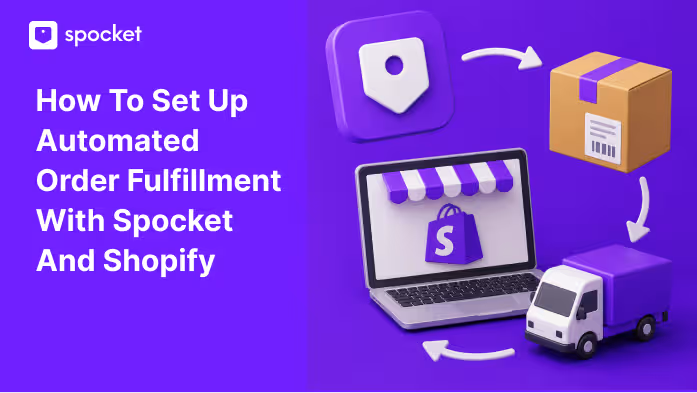
How to Set Up Automated Order Fulfillment With Spocket and Shopify
Set up a smoother Shopify dropshipping workflow with Spocket by connecting your store, importing products, processing orders, syncing tracking, and reducing manual fulfillment tasks.

How to Open a Business Bank Account for Your Dropshipping Store
Set up your dropshipping finances the right way with a dedicated business bank account built for payouts, supplier payments, taxes, and long-term store growth.
Spocket vs Dropified: Which Tool Is Better for Multi-Store Scaling?
Compare Spocket and Dropified for multi-store dropshipping, supplier quality, automation, fulfillment, product sourcing, and scaling across ecommerce platforms.