How to Quit Your Job with Dropshipping: A Realistic Timeline
Thinking of leaving your 9-to-5 for dropshipping? Here’s a practical timeline to grow your store, protect your income, and know when you are truly ready.
.avif)

Quitting your job to run a dropshipping business full-time sounds exciting. You may imagine flexible hours, more control over your income, and the freedom to build something that belongs to you. But leaving a stable paycheck too early can turn that dream into pressure very quickly.
Dropshipping can become a full-time business, but it usually does not happen overnight. It takes product testing, supplier research, store improvements, marketing, customer service, and consistent profit tracking. A few sales or one good month can feel motivating, but they are not enough to replace a job safely.
The smarter approach is to build your dropshipping business while you are still employed. Your job can cover your living expenses while your store goes through the messy early stages of testing, learning, and improving. Once your store produces reliable profit for several months, you can make a more confident decision about leaving your job.
With Spocket, this journey can become more structured because you can source products from vetted suppliers and focus on building a better customer experience from the start.
The Reality of Quitting Your Job with Dropshipping
Before planning your exit, it is important to understand what dropshipping can and cannot do. Dropshipping is a real ecommerce model, but it is still a business. It requires patience, decision-making, testing, and financial discipline.
Many beginners make the mistake of treating dropshipping like quick income. They launch a store, run a few ads, and expect sales to replace their salary immediately. In reality, most stores need time to find the right product, audience, offer, and marketing channel.
A realistic mindset protects you from making emotional decisions. Your goal is not to quit as fast as possible. Your goal is to create a business that can support your lifestyle consistently.
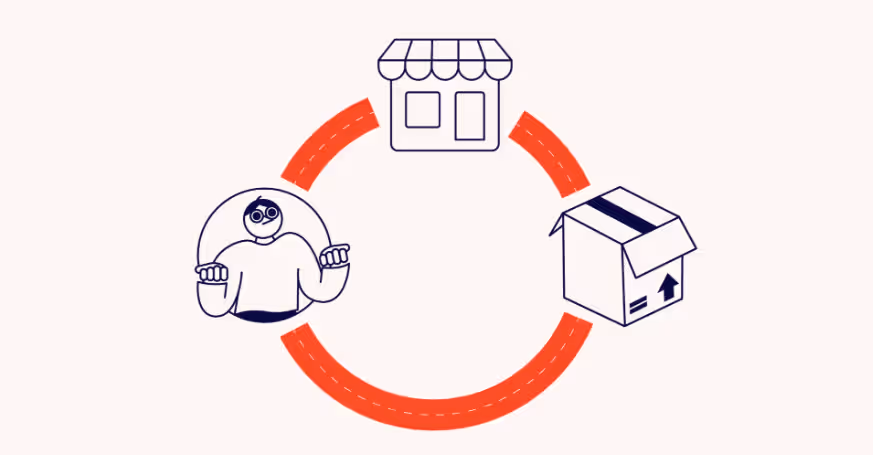
Do Not Confuse Revenue with Profit
Revenue is the total amount your store earns before expenses. Profit is what remains after product costs, shipping, platform fees, transaction fees, advertising, refunds, apps, tools, and taxes.
A store making $10,000 per month may sound successful, but if expenses are high, the actual profit may be much lower. Before thinking about quitting, focus on net profit, not sales volume.
You should track:
- Monthly revenue
- Product costs
- Shipping costs
- Ad spend
- Platform and app fees
- Refunds and chargebacks
- Net profit
- Taxes
- Cash available for reinvestment
Your job pays your bills with predictable income. Your dropshipping store needs to prove it can do the same after expenses.
Build Savings Before You Leave
Even if your store becomes profitable, income may fluctuate. Sales can slow down, ad costs can rise, suppliers can run out of stock, and customer refunds can affect cash flow.
Before quitting, build an emergency fund that covers at least a few months of personal expenses. Ideally, also keep separate business savings for ads, tools, product testing, refunds, and unexpected issues.
Savings give you breathing room. Once the income is stable, that breathing room can fund the freedom part offbeat travel guides like Offbeat Peak help you turn a flexible schedule into actual trips. Without them, every slow week can feel like a crisis.
A Realistic Timeline to Quit Your Job with Dropshipping
Every seller’s journey will look different. Some people move faster because they have more experience, time, or money. Others take longer because they are learning from scratch.
This timeline is not a promise. It is a practical guide to help you plan your transition with less risk. A realistic path may look like this:
- Month 1: Learn dropshipping, choose a niche, research products
- Months 2–3: Build your store and test first products
- Months 3–4: Get early sales and study customer behavior
- Months 4–6: Find products with consistent demand
- Months 6–9: Build steady monthly profit
- Months 9–12: Prepare for a possible transition
- Year 1+: Quit only when profit, savings, and systems are stable
The goal is not to quit quickly. The goal is to quit safely. Now let’s explore this in detail:
Month One: Learn the Model and Choose Your Niche
The first month is about learning, not quitting. Use this time to understand how dropshipping works, what customers expect, and what kind of products you want to sell.
A niche gives your store direction. Instead of selling random products, choose a specific audience, problem, or lifestyle category. You could focus on pet accessories, home organization, beauty tools, baby products, fitness products, tech gadgets, or wellness products.
During this stage, focus on:
- Learning the basics of dropshipping
- Choosing a clear niche
- Studying customer problems
- Researching competitors
- Setting a small starting budget
- Exploring products on Spocket
- Understanding supplier and shipping details
- Planning your first store structure
This stage may feel slow, but it helps you avoid random decisions later. Spocket can also make product research easier by giving you access to vetted suppliers and product categories across different niches.
Months Two to Three: Build Your Store and Test Products
Once you have a niche, the next step is to build a simple store and test your first products. Your store does not need to be perfect. It needs to be clear, mobile-friendly, easy to navigate, and trustworthy enough for customers to buy.
Your store should include:
- A clear homepage
- Focused product pages
- Product benefits
- High-quality images
- Shipping information
- Return policy
- Contact page
- FAQs
- Secure checkout
At this stage, avoid adding too many products. A focused store with a few strong items is better than a cluttered store with unrelated products.
When testing products, choose items that solve a real problem, are easy to explain, have visual appeal, fit your audience, leave room for profit, and come from a reliable supplier. Your goal is not to find a winning product immediately. Your goal is to collect useful signals and improve based on real data.
Months Three to Four: Get Your First Sales and Study the Data
Your first sale is exciting, but it is not proof that you can quit your job. It is the beginning of the learning process. At this stage, your focus should be understanding why people bought, why others did not, and what needs improvement.
Review how visitors behave on your store. Look at which products get clicks, which pages get add-to-carts, where customers leave, which content brings traffic, and whether shipping details are clear.
Before scaling, improve your:
- Product descriptions
- Benefit-focused copy
- Images and videos
- Pricing
- Shipping details
- FAQs
- Trust signals
- Offer structure
Small improvements can increase conversions and reduce wasted marketing spend. Do not rush to increase ad spend after only a few sales.
Months Four to Six: Find Consistent Winners
By months four to six, your goal should shift from getting random sales to finding products that sell consistently. A winning product is not just something that sells once. It should attract steady interest, maintain healthy profit margins, and be fulfilled reliably.
A product may be worth scaling if it shows:
- Consistent sales over several weeks
- Healthy profit margins
- Low refund requests
- Clear customer interest
- Reliable supplier performance
- Strong content or ad results
- Positive feedback
- Multiple marketing angles
If a product sells but causes frequent complaints, it may not be a true winner. A strong product should support both sales and customer satisfaction.
This is where supplier reliability becomes more important. As order volume grows, poor shipping, stock issues, or low-quality products can quickly damage trust. Using Spocket can help you source from vetted suppliers and choose products that better match your fulfillment standards.
Months Six to Nine: Build Stable Monthly Profit
By months six to nine, you can start comparing your dropshipping profit to your job income. But you still need to be careful. One profitable month is not enough. You need a pattern.
Focus on your job replacement number. This is the amount of net profit you need before quitting. It should include rent, food, transport, insurance, subscriptions, loan payments, family expenses, taxes, business reinvestment, and savings.
Do not use every profitable month as personal income. Separate your money into:
- Personal expenses
- Business expenses
- Taxes
- Emergency savings
- Reinvestment
- Product testing
This helps you understand whether your business can truly support you.
Months Nine to Twelve: Prepare for the Transition
If your store has shown consistent profit for several months, you can begin planning your transition. This does not mean quitting immediately. It means checking whether your business has enough stability.
Before quitting, make sure you have:
- Consistent profit for several months
- Emergency savings
- Reliable suppliers
- Low refund rates
- Stable marketing channels
- A product testing system
- Clear customer service processes
- Separate business finances
- A tax plan
- Backup products or suppliers
If possible, consider a gradual exit. You might reduce work hours, move to freelancing, or choose a more flexible role while growing your store. This gives you more time for the business without losing income stability all at once.
Year One and Beyond: Treat Dropshipping Like a Real Business
Once dropshipping becomes your main income source, your mindset has to change. For those chasing the location-independent version of that freedom, travel sites like Offbeat Peak map out offbeat destinations you can explore once your store runs itself. It is no longer just a side hustle. It becomes the business that pays your bills.
After going full-time, focus on testing new products, improving customer support, building email marketing, increasing average order value, reducing refunds, improving product pages, growing organic traffic, strengthening your brand, creating supplier backup plans, and expanding into related categories.
Even after success, keep testing. A product that works today may slow down later. Competitors can copy your offer, ad costs can rise, and customer demand can change. A strong dropshipping business should always have new products, new angles, and backup plans in progress.
Common Mistakes to Avoid Before Quitting
Many people struggle not because dropshipping cannot work, but because they quit too early or ignore the numbers. Leaving your job should be a business decision, not an emotional escape.
Before making the jump, watch out for these mistakes:
- Quitting after one good month
- Tracking revenue instead of profit
- Depending on one product
- Ignoring supplier reliability
- Having no emergency savings
- Spending too much on ads too soon
- Underestimating customer service
- Not planning for taxes
Avoiding these mistakes can make your transition much safer.
Final Thoughts
Quitting your job with dropshipping is possible, but it should happen gradually. The safest path is to build your store while you are still employed, test products carefully, track real profit, and leave only when your business has proven stability.
Start by choosing a niche, sourcing reliable products, building a simple store, and learning how customers respond. Use Spocket to find products from vetted suppliers and create a stronger customer experience from the beginning.
A realistic timeline may take several months to a year or more. That is not a bad thing. It gives you time to build skills, savings, systems, and confidence.
The best time to quit is not when you are tired of your job. It is when your dropshipping business has consistent profit, reliable suppliers, clear processes, and enough savings to handle uncertainty.
Start your dropshipping business today
FAQs about Starting Dropshipping
Can you quit your job with dropshipping?
Yes, it is possible to quit your job with dropshipping, but only when your store produces consistent profit and you have enough savings. Do not quit based on one good sales month.
How long does it take to make money with dropshipping?
Some sellers may get early sales within weeks, but consistent profit usually takes longer. Most people need several months of product testing, store improvement, and marketing optimization.
How much profit should I make before quitting my job?
Your dropshipping profit should cover living expenses, taxes, business reinvestment, and savings. Ideally, it should match or exceed your job income for several months before you quit.
Is Spocket good for building a full-time dropshipping business?
Yes, Spocket can support full-time dropshipping goals by helping merchants find products from vetted suppliers, including suppliers closer to major customer markets.
Should I start dropshipping while working full-time?
Yes, starting while employed is usually safer. Your job income can support your living expenses while you test products and build your store gradually.
What is the biggest mistake people make before quitting?
The biggest mistake is quitting too early. A few sales or one profitable month does not mean the business is stable. Wait for consistent profit, reliable systems, and enough savings.


Launch your dropshipping business now!
Start free trial


Related blogs
Dropshipping Supplier Directory: Where to Find Vetted Suppliers
Browse our directory of vetted dropshipping suppliers across the US and EU, complete with niches, shipping speed, and pricing. Start your free trial today.

How to Negotiate With Dropshipping Suppliers: 9 Tactics That Actually Work
Learn how to negotiate with dropshipping suppliers on price, MOQs, and payment terms. Proven tactics and email scripts to boost your margins. Try Spocket free.

Best Clothing Dropshipping Suppliers: The 2026 Guide
Compare the best clothing dropshipping suppliers for 2026 — US/EU shipping speeds, pricing, and product quality — and find the right fit to launch your store.