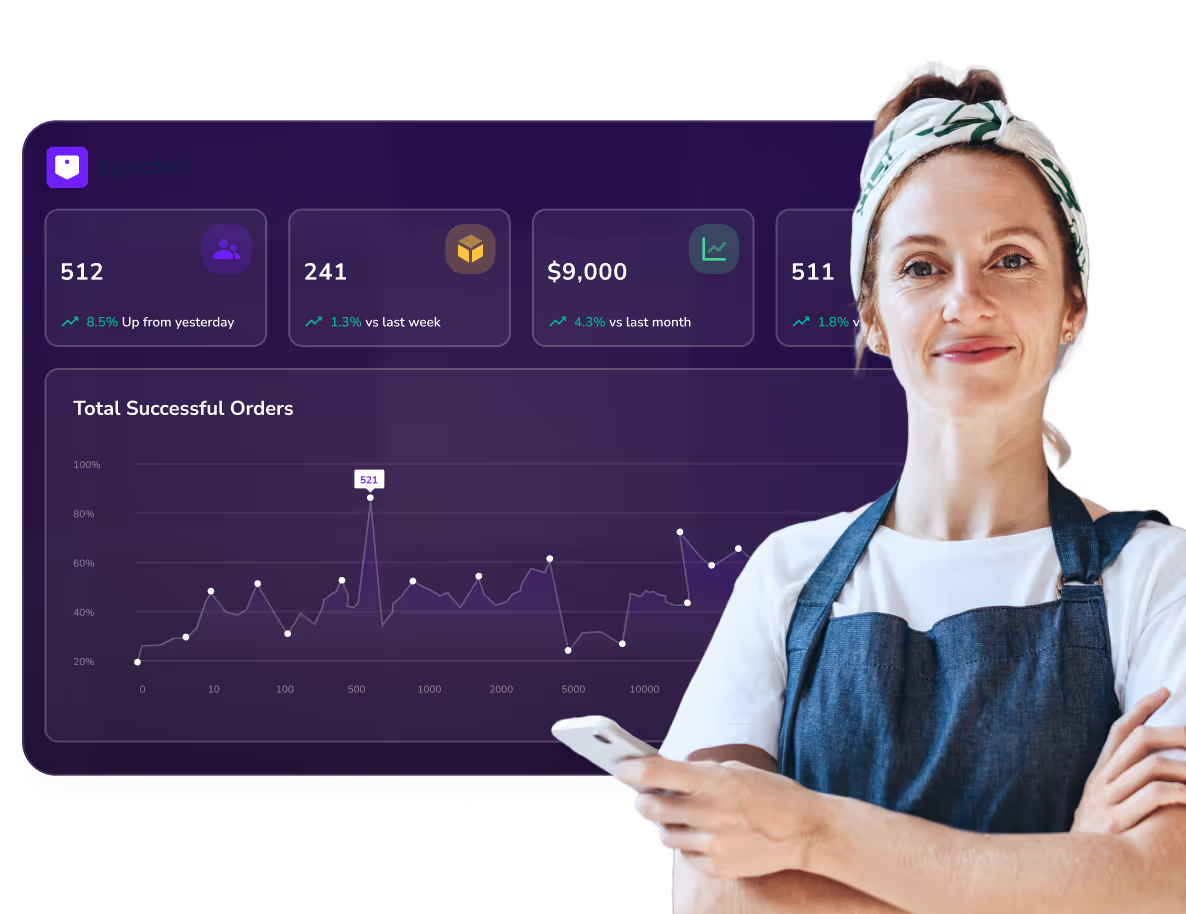
Como Pedir Demissão do Seu Emprego com Dropshipping: Um Cronograma Realista
Thinking of leaving your 9-to-5 for dropshipping? Here’s a practical timeline to grow your store, protect your income, and know when you are truly ready.
.avif)

Quitting your job to run a dropshipping business full-time sounds exciting. You may imagine flexible hours, more control over your income, and the freedom to build something that belongs to you. But leaving a stable paycheck too early can turn that dream into pressure very quickly.
Dropshipping can become a full-time business, but it usually does not happen overnight. It takes product testing, supplier research, store improvements, marketing, customer service, and consistent profit tracking. A few sales or one good month can feel motivating, but they are not enough to replace a job safely.
The smarter approach is to build your dropshipping business while you are still employed. Your job can cover your living expenses while your store goes through the messy early stages of testing, learning, and improving. Once your store produces reliable profit for several months, you can make a more confident decision about leaving your job.
With Spocket, this journey can become more structured because you can source products from vetted suppliers and focus on building a better customer experience from the start.
The Reality of Quitting Your Job with Dropshipping
Before planning your exit, it is important to understand what dropshipping can and cannot do. Dropshipping is a real ecommerce model, but it is still a business. It requires patience, decision-making, testing, and financial discipline.
Many beginners make the mistake of treating dropshipping like quick income. They launch a store, run a few ads, and expect sales to replace their salary immediately. In reality, most stores need time to find the right product, audience, offer, and marketing channel.
A realistic mindset protects you from making emotional decisions. Your goal is not to quit as fast as possible. Your goal is to create a business that can support your lifestyle consistently.
Do Not Confuse Revenue with Profit
Revenue is the total amount your store earns before expenses. Profit is what remains after product costs, shipping, platform fees, transaction fees, advertising, refunds, apps, tools, and taxes.
A store making $10,000 per month may sound successful, but if expenses are high, the actual profit may be much lower. Before thinking about quitting, focus on net profit, not sales volume.
You should track:
- Monthly revenue
- Product costs
- Shipping costs
- Ad spend
- Platform and app fees
- Refunds and chargebacks
- Net profit
- Taxes
- Cash available for reinvestment
Your job pays your bills with predictable income. Your dropshipping store needs to prove it can do the same after expenses.
Build Savings Before You Leave
Even if your store becomes profitable, income may fluctuate. Sales can slow down, ad costs can rise, suppliers can run out of stock, and customer refunds can affect cash flow.
Before quitting, build an emergency fund that covers at least a few months of personal expenses. Ideally, also keep separate business savings for ads, tools, product testing, refunds, and unexpected issues.
Savings give you breathing room. Without them, every slow week can feel like a crisis.
A Realistic Timeline to Quit Your Job with Dropshipping
Every seller’s journey will look different. Some people move faster because they have more experience, time, or money. Others take longer because they are learning from scratch.
This timeline is not a promise. It is a practical guide to help you plan your transition with less risk. A realistic path may look like this:
- Month 1: Learn dropshipping, choose a niche, research products
- Months 2–3: Build your store and test first products
- Months 3–4: Get early sales and study customer behavior
- Months 4–6: Find products with consistent demand
- Months 6–9: Build steady monthly profit
- Months 9–12: Prepare for a possible transition
- Year 1+: Quit only when profit, savings, and systems are stable
The goal is not to quit quickly. The goal is to quit safely. Now let’s explore this in detail:
Month One: Learn the Model and Choose Your Niche
The first month is about learning, not quitting. Use this time to understand how dropshipping works, what customers expect, and what kind of products you want to sell.
A niche gives your store direction. Instead of selling random products, choose a specific audience, problem, or lifestyle category. You could focus on pet accessories, home organization, beauty tools, baby products, fitness products, tech gadgets, or wellness products.
During this stage, focus on:
- Learning the basics of dropshipping
- Choosing a clear niche
- Studying customer problems
- Researching competitors
- Setting a small starting budget
- Exploring products on Spocket
- Understanding supplier and shipping details
- Planning your first store structure
This stage may feel slow, but it helps you avoid random decisions later. Spocket can also make product research easier by giving you access to vetted suppliers and product categories across different niches.
Months Two to Three: Build Your Store and Test Products
Once you have a niche, the next step is to build a simple store and test your first products. Your store does not need to be perfect. It needs to be clear, mobile-friendly, easy to navigate, and trustworthy enough for customers to buy.
Your store should include:
- A clear homepage
- Focused product pages
- Product benefits
- High-quality images
- Shipping information
- Return policy
- Contact page
- FAQs
- Secure checkout
At this stage, avoid adding too many products. A focused store with a few strong items is better than a cluttered store with unrelated products.
When testing products, choose items that solve a real problem, are easy to explain, have visual appeal, fit your audience, leave room for profit, and come from a reliable supplier. Your goal is not to find a winning product immediately. Your goal is to collect useful signals and improve based on real data.
Months Three to Four: Get Your First Sales and Study the Data
Your first sale is exciting, but it is not proof that you can quit your job. It is the beginning of the learning process. At this stage, your focus should be understanding why people bought, why others did not, and what needs improvement.
Review how visitors behave on your store. Look at which products get clicks, which pages get add-to-carts, where customers leave, which content brings traffic, and whether shipping details are clear.
Before scaling, improve your:
- Product descriptions
- Benefit-focused copy
- Images and videos
- Pricing
- Shipping details
- FAQs
- Trust signals
- Offer structure
Small improvements can increase conversions and reduce wasted marketing spend. Do not rush to increase ad spend after only a few sales.
Months Four to Six: Find Consistent Winners
By months four to six, your goal should shift from getting random sales to finding products that sell consistently. A winning product is not just something that sells once. It should attract steady interest, maintain healthy profit margins, and be fulfilled reliably.
A product may be worth scaling if it shows:
- Consistent sales over several weeks
- Healthy profit margins
- Low refund requests
- Clear customer interest
- Reliable supplier performance
- Strong content or ad results
- Positive feedback
- Multiple marketing angles
If a product sells but causes frequent complaints, it may not be a true winner. A strong product should support both sales and customer satisfaction.
This is where supplier reliability becomes more important. As order volume grows, poor shipping, stock issues, or low-quality products can quickly damage trust. Using Spocket can help you source from vetted suppliers and choose products that better match your fulfillment standards.
Months Six to Nine: Build Stable Monthly Profit
By months six to nine, you can start comparing your dropshipping profit to your job income. But you still need to be careful. One profitable month is not enough. You need a pattern.
Focus on your job replacement number. This is the amount of net profit you need before quitting. It should include rent, food, transport, insurance, subscriptions, loan payments, family expenses, taxes, business reinvestment, and savings.
Não use cada mês lucrativo como renda pessoal. Separe seu dinheiro em:
- Despesas pessoais
- Despesas do negócio
- Impostos
- Reserva de emergência
- Reinvestimento
- Teste de produto
Isso ajuda você a entender se o seu negócio pode realmente sustentá-lo.
Meses Nove a Doze: Prepare-se para a Transição
Se a sua loja tem demonstrado lucro consistente por vários meses, você pode começar a planejar sua transição. Isso não significa largar tudo imediatamente. Significa verificar se o seu negócio tem estabilidade suficiente.
Antes de largar tudo, certifique-se de ter:
- Lucro consistente por vários meses
- Reserva de emergência
- Fornecedores confiáveis
- Baixas taxas de reembolso
- Canais de marketing estáveis
- Um sistema de teste de produtos
- Processos claros de atendimento ao cliente
- Finanças do negócio separadas
- Um plano fiscal
- Produtos ou fornecedores alternativos
Se possível, considere uma saída gradual. Você pode reduzir as horas de trabalho, passar para o trabalho freelancer ou escolher uma função mais flexível enquanto expande sua loja. Isso lhe dá mais tempo para o negócio sem perder a estabilidade da renda de uma só vez.
Ano Um e Além: Trate o Dropshipping Como um Negócio Real
Assim que o dropshipping se tornar sua principal fonte de renda, sua mentalidade terá que mudar. Não é mais apenas uma atividade secundária. Torna-se o negócio que paga suas contas.
Depois de se dedicar em tempo integral, concentre-se em testar novos produtos, melhorar o suporte ao cliente, construir marketing por e-mail, aumentar o valor médio do pedido, reduzir reembolsos, aprimorar as páginas de produtos, aumentar o tráfego orgânico, fortalecer sua marca, criar planos de backup de fornecedores e expandir para categorias relacionadas.
Mesmo após o sucesso, continue testando. Um produto que funciona hoje pode desacelerar mais tarde. Concorrentes podem copiar sua oferta, os custos de anúncios podem aumentar e a demanda do cliente pode mudar. Um negócio de dropshipping forte deve sempre ter novos produtos, novas abordagens e planos de backup em andamento.
Erros Comuns a Evitar Antes de Pedir Demissão
Muitas pessoas enfrentam dificuldades não porque o dropshipping não possa funcionar, mas porque desistem muito cedo ou ignoram os números. Deixar seu emprego deve ser uma decisão de negócios, não uma fuga emocional.
Antes de dar o salto, fique atento a estes erros:
- Pedir demissão após um mês bom
- Acompanhar a receita em vez do lucro
- Depender de um único produto
- Ignorar a confiabilidade do fornecedor
- Não ter poupança de emergência
- Gastar demais em anúncios muito cedo
- Subestimar o atendimento ao cliente
- Não planejar os impostos
Evitar esses erros pode tornar sua transição muito mais segura.
Considerações Finais
Pedir demissão do seu emprego com dropshipping é possível, mas deve acontecer gradualmente. O caminho mais seguro é construir sua loja enquanto você ainda está empregado, testar produtos cuidadosamente, acompanhar o lucro real e sair apenas quando seu negócio tiver estabilidade comprovada.
Comece escolhendo um nicho, encontrando produtos confiáveis, construindo uma loja simples e aprendendo como os clientes respondem. Use Spocket para encontrar produtos de fornecedores verificados e criar uma experiência do cliente mais forte desde o início.
Um cronograma realista pode levar de vários meses a um ano ou mais. Isso não é ruim. Isso lhe dá tempo para desenvolver habilidades, economias, sistemas e confiança.
A melhor hora para pedir demissão não é quando você está cansado do seu emprego. É quando seu negócio de dropshipping tem lucro consistente, fornecedores confiáveis, processos claros e economias suficientes para lidar com incertezas.
Start your dropshipping business today
Perguntas Frequentes sobre Como Começar no Dropshipping
Você pode pedir demissão do seu emprego com dropshipping?
Sim, é possível pedir demissão do seu emprego com dropshipping, mas apenas quando sua loja gera lucro consistente e você tem economias suficientes. Não peça demissão com base em um único mês de boas vendas.
Quanto tempo leva para ganhar dinheiro com dropshipping?
Alguns vendedores podem ter vendas iniciais em semanas, mas o lucro consistente geralmente leva mais tempo. A maioria das pessoas precisa de vários meses de testes de produtos, melhorias na loja e otimização de marketing.
Quanto lucro devo ter antes de pedir demissão do meu emprego?
Seu lucro de dropshipping deve cobrir despesas de vida, impostos, reinvestimento no negócio e economias. Idealmente, ele deve igualar ou exceder sua renda do emprego por vários meses antes de você pedir demissão.
O Spocket é bom para construir um negócio de dropshipping em tempo integral?
Sim, o Spocket pode apoiar objetivos de dropshipping em tempo integral, ajudando os comerciantes a encontrar produtos de fornecedores verificados, incluindo fornecedores mais próximos dos principais mercados de clientes.
Devo começar dropshipping enquanto trabalho em tempo integral?
Sim, começar enquanto empregado é geralmente mais seguro. Sua renda do emprego pode cobrir suas despesas de vida enquanto você testa produtos e constrói sua loja gradualmente.
Qual é o maior erro que as pessoas cometem antes de pedir demissão?
O maior erro é pedir demissão muito cedo. Algumas vendas ou um mês lucrativo não significam que o negócio é estável. Espere por lucro consistente, sistemas confiáveis e economias suficientes.


Launch your dropshipping business now!
Start free trial


Blogs relacionados
Diretório de Fornecedores de Dropshipping: Onde Encontrar Fornecedores Verificados
Navegue pelo nosso diretório de fornecedores de dropshipping verificados nos EUA e na UE, com informações sobre nichos, velocidade de envio e preços. Comece seu teste gratuito hoje mesmo.

Como negociar com fornecedores de dropshipping: 9 táticas que realmente funcionam
Aprenda a negociar preços, pedidos mínimos (MOQs) e prazos de pagamento com fornecedores de dropshipping. Táticas comprovadas e modelos de e-mail para aumentar suas margens. Experimente o Spocket gratuitamente.

Melhores fornecedores de dropshipping de roupas: O guia de 2026
Compare os melhores fornecedores de dropshipping de roupas para 2026 — prazos de entrega nos EUA/UE, preços e qualidade dos produtos — e encontre a opção ideal para lançar sua loja.