


Procurement vs. Purchasing: Key Differences and Processes Explained
Understand the difference between procurement and purchasing, their processes, and how each impacts cost, supplier relationships, and business growth.
.avif)

If you’ve spent any time managing suppliers, sourcing products, or running an ecommerce store, you’ve likely come across the terms procurement and purchasing. While they’re often used interchangeably in casual conversations, they represent two very different functions within a business.
Understanding this distinction is not just about terminology—it directly impacts how efficiently your business operates, how well you manage costs, and how smoothly your supply chain scales. In this guide, we’ll break down both concepts in depth, explore their processes step by step, and show how they work together to build a strong, scalable business foundation.
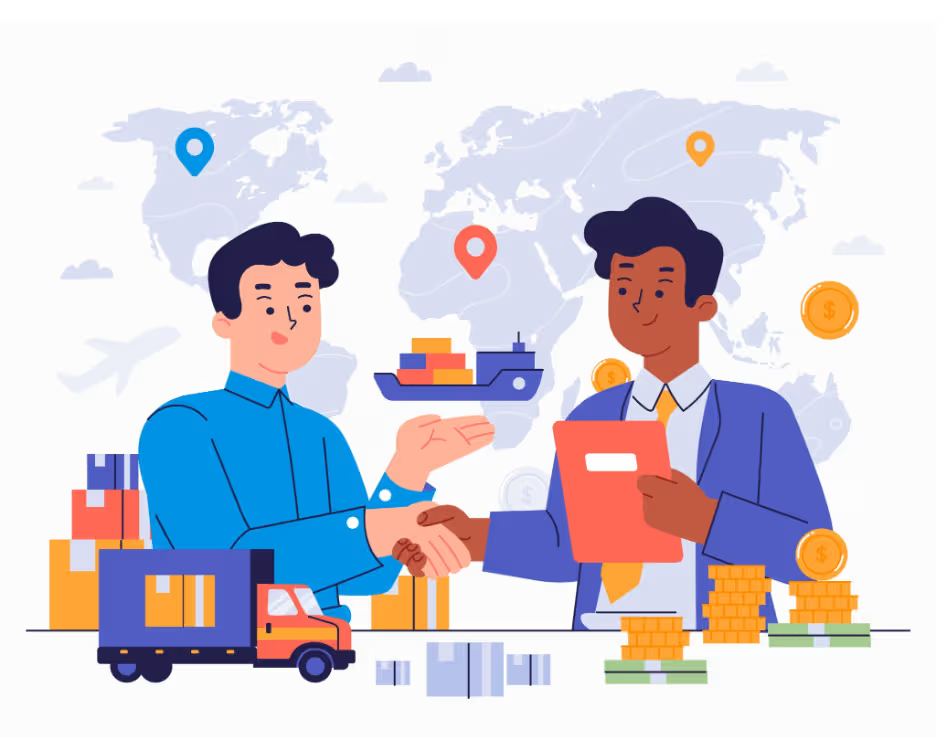
Understanding Procurement as a Strategic Business Function
Procurement is not just about buying products—it is a comprehensive process that involves planning, sourcing, negotiating, and managing suppliers over time. It plays a long-term role in shaping how a business acquires goods and services in a way that maximizes value and minimizes risk.
At its core, procurement is strategic. It focuses on aligning purchasing decisions with business goals, ensuring consistency in quality, and building relationships that can support long-term growth.
What Procurement Really Includes Beyond Buying
Procurement begins long before any purchase is made and continues even after goods are delivered. It involves a structured approach that ensures every sourcing decision contributes to the overall success of the business.
Some of the core components include:
- Identifying what the business actually needs based on demand trends
- Evaluating suppliers based on reliability, pricing, and quality
- Negotiating contracts that protect margins and reduce risks
- Monitoring supplier performance over time
- Building long-term partnerships instead of one-off transactions
This broader scope is what separates procurement from simple buying activities.
Why Procurement Plays a Long-Term Role in Business Growth
Procurement directly influences several key aspects of a business that are critical for scaling. When done well, procurement helps:
- Reduce costs through better negotiation and supplier selection
- Improve product quality and consistency
- Minimize risks such as delays, stock issues, or unreliable vendors
- Strengthen supplier relationships that can support future expansion
For ecommerce brands, this becomes even more important as product demand fluctuates and customer expectations increase.
Procurement in Modern Ecommerce and Dropshipping
In ecommerce, procurement often involves sourcing finished products rather than raw materials. This makes supplier selection even more critical because the supplier’s performance directly impacts the customer experience.
With platforms like Spocket, procurement becomes more structured and efficient because businesses can:
- Access pre-vetted suppliers
- Reduce time spent on research and verification
- Focus on selecting products that align with their brand
This allows entrepreneurs to shift their focus from operational chaos to strategic growth.
Understanding Purchasing as an Operational Execution Process
While procurement focuses on planning and strategy, purchasing is the function that executes those decisions. It is the operational side of acquiring goods and services, ensuring that everything ordered is delivered correctly and on time.
Purchasing is more transactional in nature. It deals with the day-to-day activities required to keep the business running smoothly.
What Purchasing Looks Like in Practice
Purchasing follows a structured workflow that ensures products are acquired efficiently. It involves:
- Receiving internal requests for products or inventory
- Creating purchase orders with detailed specifications
- Sending orders to suppliers
- Tracking shipments and deliveries
- Verifying goods upon arrival
- Processing invoices and payments
Each step is essential for maintaining operational stability.
Why Purchasing Is Critical Despite Being Transactional
Although purchasing does not involve strategic decision-making, it is still a vital function because it directly affects execution. Without efficient purchasing:
- Inventory levels can become inconsistent
- Orders may be delayed or incorrect
- Customer satisfaction can decline
- Internal workflows can become disorganized
In simple terms, purchasing ensures that procurement plans are actually implemented correctly.
Purchasing in an Ecommerce Workflow
In ecommerce, purchasing happens frequently and often at scale. Businesses need to manage multiple orders, suppliers, and delivery timelines simultaneously. Tools like Spocket simplify this process by:
- Automating order placement
- Syncing inventory levels
- Providing real-time tracking
This reduces manual effort and minimizes errors, making purchasing more efficient and reliable.
Procurement vs. Purchasing: Breaking Down the Core Differences
Although procurement and purchasing are closely linked, their differences are significant enough to impact how a business operates. Understanding these differences helps businesses assign the right priorities and build more efficient systems.
The Difference in Strategic Intent and Execution
The most fundamental difference lies in intent. Procurement is focused on long-term value creation. It answers questions like:
- Which suppliers should we work with?
- What terms are most beneficial for our business?
- How can we reduce risks and improve efficiency over time?
Purchasing, on the other hand, focuses on execution. It answers questions like:
- Has the order been placed correctly?
- Has the delivery been received?
- Has the payment been processed?
This difference defines how each function contributes to the business.
Differences in Scope and Responsibility
Procurement covers a wide range of activities, including planning, research, negotiation, and relationship management. Purchasing has a narrower scope and focuses primarily on:
- Order placement
- Delivery tracking
- Payment processing
This makes purchasing a subset within the broader procurement cycle.
Impact on Business Performance
Procurement impacts:
- Cost efficiency
- Supplier reliability
- Long-term scalability
Purchasing impacts:
- Operational efficiency
- Order accuracy
- Timely fulfillment
Both are essential, but they influence different aspects of the business.
The Procurement Process Explained Step-by-Step
Procurement follows a structured process that ensures businesses make informed and efficient sourcing decisions. Each step builds toward creating a reliable and cost-effective supply chain.
Identifying Needs and Defining Requirements
The process begins with understanding what the business actually needs. This involves analyzing demand, forecasting future requirements, and defining product specifications.
Clear requirements help avoid unnecessary purchases and ensure alignment with business goals.
Supplier Research and Evaluation
Once needs are defined, businesses begin evaluating potential suppliers. This involves comparing:
- Pricing models
- Product quality
- Delivery reliability
- Reputation and reviews
Choosing the right supplier is one of the most important decisions in procurement.
Negotiation and Contract Finalization
After selecting a supplier, businesses negotiate terms to ensure mutual benefit. This includes:
- Pricing agreements
- Delivery schedules
- Payment terms
- Return and quality policies
Contracts formalize these agreements and reduce potential risks.
Ongoing Supplier Management
Procurement does not end with a contract. Businesses must continuously monitor supplier performance to ensure consistency. This includes:
- Tracking delivery timelines
- Evaluating product quality
- Addressing issues proactively
Strong supplier relationships lead to better outcomes over time.
The Purchasing Process Explained Step-by-Step
While procurement focuses on high-level planning and long-term strategy, purchasing is the specific functional arm that executes those decisions. It involves the day-to-day operational structure required to ensure that goods and services are acquired, delivered, and paid for efficiently.
Essentially, if procurement is the "why" and "how" of sourcing, purchasing is the "now"—the tactical action of completing the transaction.
Initiating Purchase Requests
The process starts when a need is identified internally. A purchase request is created and approved before moving forward. This ensures accountability and proper documentation.
Creating and Issuing Purchase Orders
A purchase order is generated with all necessary details, including:
- Product specifications
- Quantity
- Price
- Delivery terms
This document acts as a formal agreement between the buyer and supplier.
Receiving and Verifying Goods
Once the order is delivered, businesses must verify:
- Quantity accuracy
- Product condition
- Compliance with order specifications
This step ensures that the business receives what it paid for.
Processing Invoices and Payments
The final step involves matching invoices with purchase orders and delivery records. Payments are processed only after verification. This ensures financial accuracy and prevents discrepancies.
How Procurement and Purchasing Work Together in Practice
Procurement and purchasing are not separate silos. They are interconnected functions that rely on each other to succeed. Procurement provides the strategy, and purchasing ensures that the strategy is executed correctly.
The Interdependence Between Strategy and Execution
Think of procurement as the planning phase and purchasing as the execution phase. Procurement defines:
- What to buy
- From whom to buy
- Under what terms
Purchasing ensures that these decisions are implemented effectively. Without procurement, purchasing becomes reactive. Without purchasing, procurement remains theoretical.
Benefits of Aligning Both Functions
When both functions are aligned, businesses benefit from:
- Better cost control
- Improved supplier reliability
- Faster operations
- Reduced risks
This alignment is essential for building a scalable and efficient business.
Why This Difference Matters for Ecommerce and Dropshipping Businesses
For ecommerce brands, the distinction between procurement and purchasing is not just theoretical—it has practical implications that affect growth and profitability.
- Impact on Profit Margins and Cost Efficiency: Procurement helps secure better deals and long-term savings, while purchasing ensures efficient order execution. Together, they help protect margins and improve profitability.
- Impact on Customer Experience: Reliable procurement ensures consistent product quality, while efficient purchasing ensures timely delivery. Both directly influence customer satisfaction and retention.
- Impact on Business Scalability: As businesses grow, supplier complexity increases. A clear distinction between procurement and purchasing helps manage this complexity effectively.
How Spocket Helps Simplify Procurement and Purchasing
Managing procurement and purchasing manually can become overwhelming, especially for growing ecommerce businesses. This is where Spocket provides significant value by simplifying both functions.
Simplifying Supplier Sourcing and Procurement
Spocket helps businesses streamline procurement by offering:
- Access to verified suppliers
- High-quality product options
- Reliable shipping timelines
This reduces the need for extensive supplier research.
Improving Purchasing Efficiency and Execution
On the purchasing side, Spocket simplifies operations by:
- Automating order placement
- Syncing inventory in real time
- Providing tracking and fulfillment updates
This ensures smoother execution with fewer errors.
Creating a More Reliable Supply Chain
By combining sourcing and execution, Spocket allows businesses to focus on growth while maintaining operational efficiency.
Common Mistakes Businesses Make When Managing Both Functions
Many businesses struggle with procurement and purchasing due to common misunderstandings. When these two distinct functions are blurred, companies often miss out on strategic cost-saving opportunities and suffer from operational bottlenecks.
Recognizing the nuances between them is the first step toward building a more resilient and profitable supply chain.
- Treating Procurement and Purchasing as the Same: This leads to poor planning and reactive decisions, which can increase costs and reduce efficiency.
- Focusing Only on Price Instead of Value: Choosing suppliers based solely on price can lead to quality issues and unreliable deliveries.
- Lack of Structured Processes: Without clear processes, businesses face delays, errors, and inefficiencies.
Best Practices to Optimize Procurement and Purchasing
To get the most out of both functions, businesses need structured and consistent practices; these are essential to overcome common mistakes and ensure that strategic procurement planning and efficient purchasing execution work together effectively.
Develop a Clear Procurement Strategy
Define:
- Supplier selection criteria
- Budget goals
- Risk management plans
This ensures long-term success.
Automate Purchasing Processes Where Possible
Use tools to:
- Track orders
- Manage invoices
- Reduce manual errors
Automation improves efficiency and accuracy.
Continuously Monitor and Improve Performance
Track:
- Supplier reliability
- Order accuracy
- Cost efficiency
Regular evaluation helps maintain high standards.
Conclusion
Procurement and purchasing may appear similar, but they serve very different roles in a business. Procurement is strategic, focusing on long-term value, supplier relationships, and planning. Purchasing is operational, ensuring that goods and services are acquired efficiently.
For ecommerce businesses, mastering both functions is essential for sustainable growth.
With platforms like Spocket, businesses can simplify both procurement and purchasing, allowing them to scale faster, reduce risks, and build a reliable supply chain that supports long-term success.
Start your dropshipping business today
FAQs About Procurement vs Purchasing
What is the main difference between procurement and purchasing?
Procurement is a strategic process that involves sourcing, negotiating, and managing suppliers for long-term value. Purchasing, on the other hand, focuses on the transactional aspect of buying goods and services. In simple terms, procurement plans the process, while purchasing executes it.
Is purchasing a part of procurement?
Yes, purchasing is a subset of procurement. Procurement includes the entire lifecycle from identifying needs to managing supplier relationships, while purchasing specifically handles ordering, receiving, and paying for goods. This makes purchasing one stage within the broader procurement process.
Why is procurement important for ecommerce businesses?
Procurement helps ecommerce businesses secure reliable suppliers, maintain product quality, and optimize costs over time. It also reduces risks like delays and stock issues. For growing stores, a strong procurement strategy ensures consistency and scalability.
How does purchasing impact daily business operations?
Purchasing ensures that products are ordered, delivered, and paid for on time. It directly affects inventory availability and order fulfillment. Efficient purchasing helps prevent delays, stockouts, and operational disruptions.
How can businesses improve procurement and purchasing processes?
Businesses can improve both functions by creating clear strategies, automating repetitive tasks, and regularly monitoring supplier performance. Using platforms like Spocket can also simplify sourcing and order execution. Continuous optimization helps improve efficiency and reduce costs over time.


Launch your dropshipping business now!
Start free trial


Related blogs
How to Set Up Automated Order Fulfillment With Spocket and Shopify
Set up a smoother Shopify dropshipping workflow with Spocket by connecting your store, importing products, processing orders, syncing tracking, and reducing manual fulfillment tasks.

How to Open a Business Bank Account for Your Dropshipping Store
Set up your dropshipping finances the right way with a dedicated business bank account built for payouts, supplier payments, taxes, and long-term store growth.
Spocket vs Dropified: Which Tool Is Better for Multi-Store Scaling?
Compare Spocket and Dropified for multi-store dropshipping, supplier quality, automation, fulfillment, product sourcing, and scaling across ecommerce platforms.
