Printful vs Printify (2026): Which Print-on-Demand Platform Actually Wins?
Printful vs Printify in 2026: compare pricing, print quality, shipping speed and the new Fyul merger, plus a smarter alternative that protects your margins.



If you've spent any time researching print on demand, you've landed on the same two names over and over: Printful and Printify. Both let you sell custom t-shirts, hoodies, mugs, and more without ever touching inventory. But they run their businesses in almost opposite ways, and since late 2024 they've technically shared an owner. That last part changes how you should be comparing them in 2026.
This guide breaks down pricing, print quality, shipping speed, and support using numbers pulled straight from each platform's own pages, not recycled 2023 screenshots. By the end, you'll know which one fits your store, or whether you'd rather not tie your margins to either.
Printful vs Printify: The Quick Answer
You don't need to read 3,000 words to get the gist, so here it is up front: Printful is the safer pick if you want consistent quality and clean branding on a smaller catalog. Printify wins if you want the biggest possible product range and more control over your cost per item. Neither one is fully independent anymore, which is worth knowing before you build a whole business around just one of them.
If you'd rather see a wider range of vetted, faster-shipping print-on-demand suppliers before you commit to either brand, you can browse Spocket's print-on-demand suppliers for free, no credit card required.
What is Printful and What is Printify?
Before you can compare pricing or quality, it helps to understand how each company actually fulfills an order, because that's the root of almost every difference on this page.
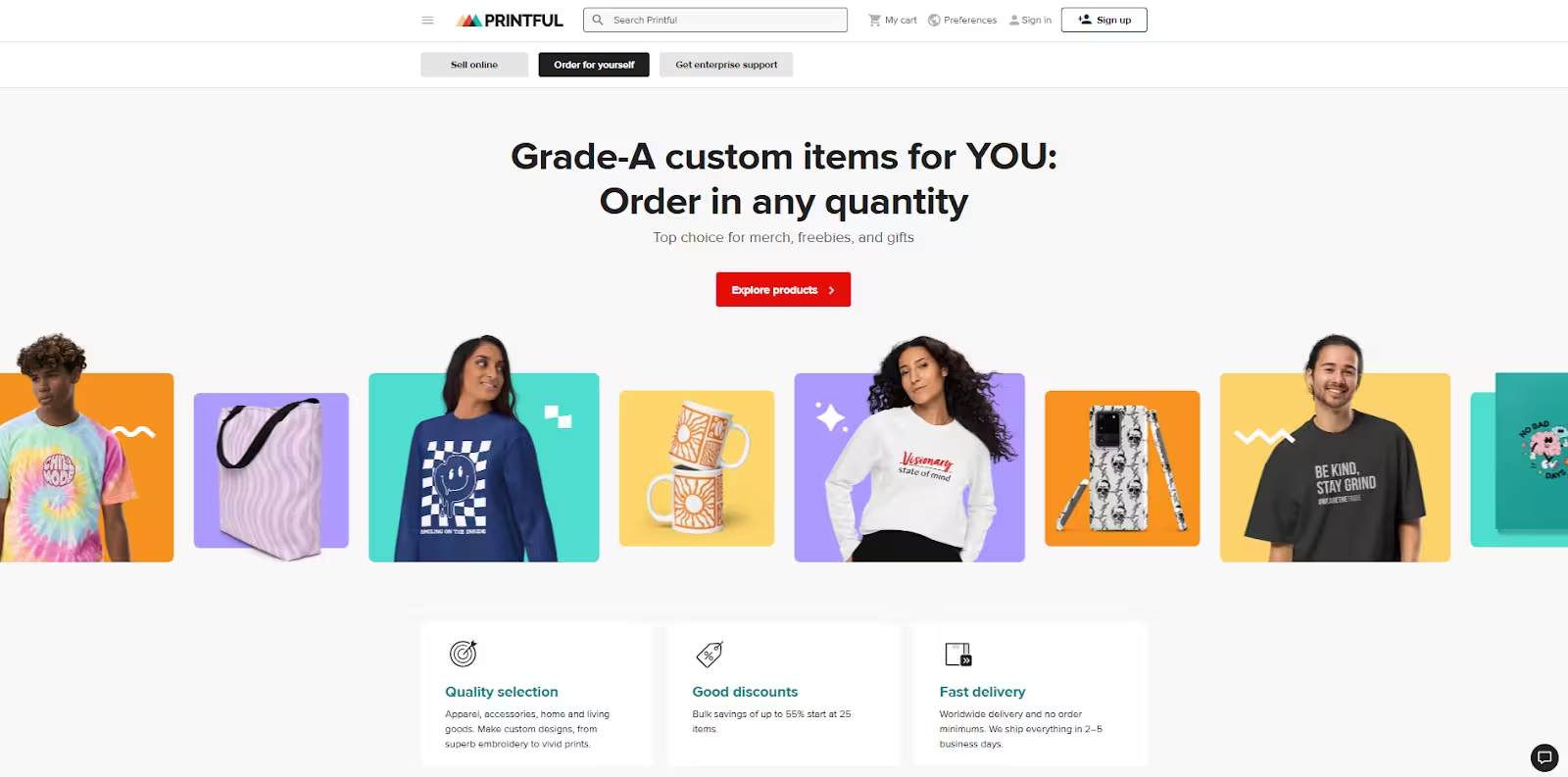
What is Printful?
Printful, founded in 2013, prints and fulfills orders in its own facilities. When someone buys your design, Printful's team handles the printing, packing, and shipping directly, using its own equipment for direct-to-garment (DTG) printing, embroidery, and UV printing. That in-house setup is why Printful is usually the more consistent option: one company controls the entire production line, so quality doesn't depend on which local partner happens to pick up your order that week.
What is Printify?
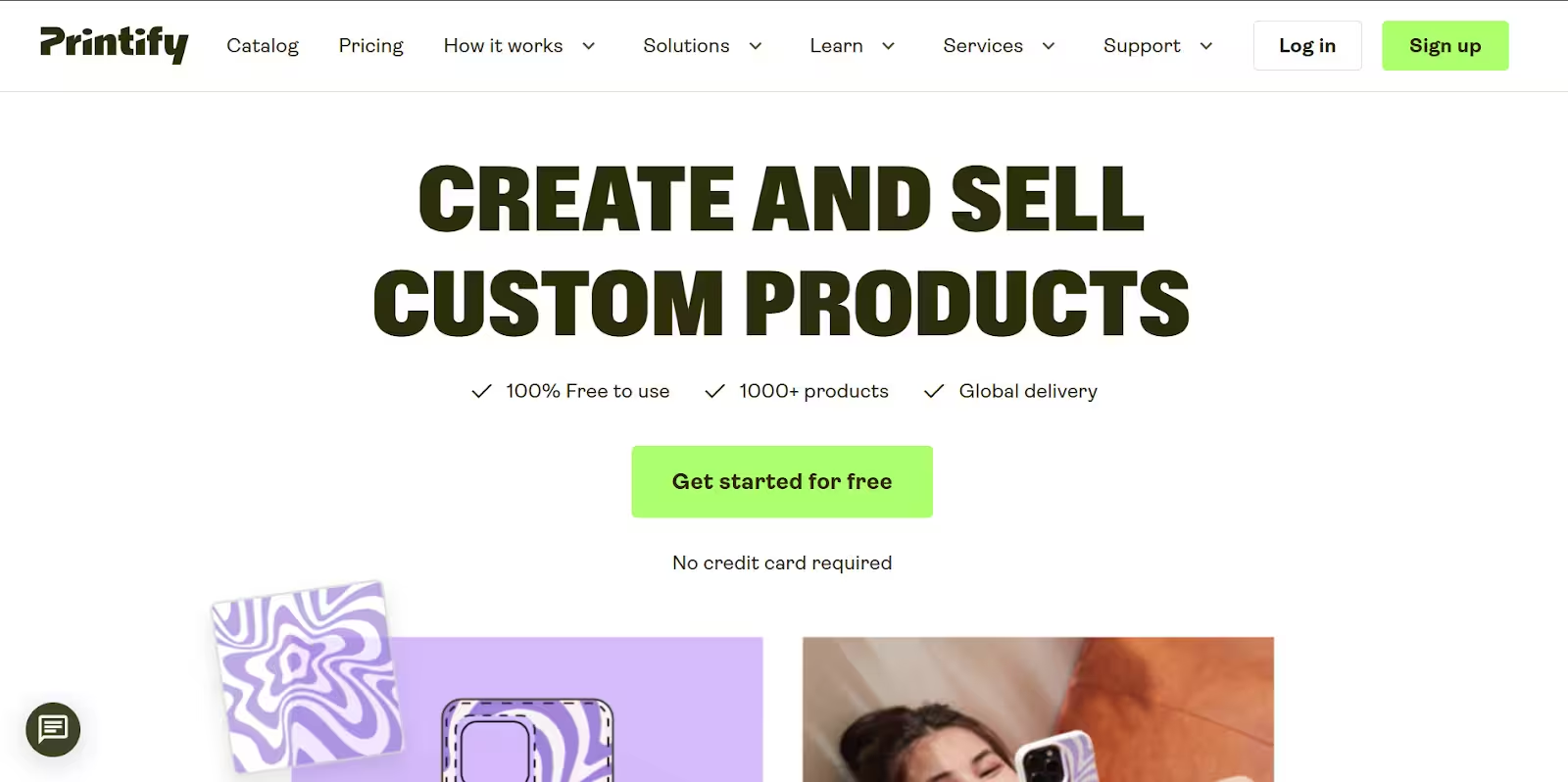
Printify, founded in 2015, works differently. Instead of printing anything itself, it connects you to a marketplace of independent print providers, each with its own pricing, location, and turnaround time. You choose which provider fulfills each product based on cost, speed, or where your customers are. That's what gives Printify its biggest advantage: a much larger product catalog, because it isn't limited to what one company's own printers can produce.
The Big 2026 Update: Printful and Printify Are Now Under the Same Roof
This is the part most "Printful vs Printify" guides still miss, and it's the single most important update for anyone comparing these two platforms in 2026.
On November 5, 2024, Printful and Printify announced they were merging as equal partners, combining Printful's in-house production with Printify's network of more than 85 third-party print providers. Both companies said the goal was "greater product selection, broader geographic reach, and improving fulfillment solutions" for sellers on both platforms. Leadership from both sides stayed on: Alex Saltonstall as CEO of Printful and Anastasija Oļeiņika as CEO of Printify, with Lauris Liberts and Jānis Berdigans continuing as chairman of their respective companies.
A few things worth knowing:
- Printful and Printify continue to operate as separate brands, with separate websites and product catalogs, "for the foreseeable future," according to the official announcement.
- By late 2025, industry trade press reported the joint holding company operating under the name Fyul.
- Nothing changes for your storefront on day one. Orders still ship the same way. But the two biggest names in print on demand no longer compete with each other on price the way they used to.
That last point matters more than it sounds. When the two biggest players in a market stop being rivals, there's less pressure on either one to keep prices low or push quality improvements to win your business. It's not a reason to panic, but it is a reason not to build your entire fulfillment strategy around a single, now-shared vendor. If you want to see what else is out there, our full list of Printful alternatives covers 13 options, including where Spocket fits in.
Printful vs Printify: Pricing and Real Profit Margins
Pricing is where most sellers actually make their decision, and it's also where a lot of comparison articles quote numbers that are a year out of date. Here's what each platform charges right now.
Printful Pricing (2026)
Printful's free plan gives you access to its full 545+ product catalog, unlimited stores, and a free design and mockup tool, with no monthly fee at all. The paid tier is where the real savings kick in:
- Free: $0/month, full catalog access, 24/7 support, up to 10 Quick Stores
- Growth: $24.99/month (waived automatically once your store hits $12,000 in annual sales), plus up to 33% off product costs, 9% off branding, 25% off sample orders, and free embroidery digitization on samples
- Enterprise: custom pricing, with a dedicated success manager and access to trend and market analysis
Printify Pricing (2026)
Printify's pricing changed this year, and it's worth knowing before you budget around an old number. As of February 17, 2026, the Premium plan moved from $29 to $39 per month, though the annual plan held steady:
- Free: $0/month
- Premium: $39/month, or $299/year (no increase on the annual plan), with up to 20% off the full catalog and up to 33% off new products as they launch
- Merch for Enterprise: a separate offering for high-volume sellers, rather than a fixed monthly tier
If you're comparing purely on sticker price, Printify's free plan is the cheaper way to start, but Printful's Growth plan becomes essentially free once you're doing real volume, since it's waived at $12K in annual sales.
What You Actually Keep Per Order
The plan price isn't your real cost. What matters is: sale price minus product cost minus shipping minus any platform fee equals your actual margin. Printful's discounts (up to 33% off products) and Printify's discounts (up to 20% to 33% off) both apply directly to your product cost, which is usually the biggest lever you have, bigger than the monthly subscription fee either way. Before you lock in a price, run this formula against your own top 2 to 3 products; our guide on how to actually make money with print on demand walks through a worked example with real margin math.
Print Quality Comparison
Quality is the one area where these two platforms genuinely diverge, and it comes straight back to how each one fulfills orders.
Because Printful prints everything in-house, using its own DTG, embroidery, and UV printing equipment, quality tends to be consistent from order to order. You're dealing with one production standard, not several. Printify's quality depends on which print provider fulfills the order: some are excellent, some are inconsistent, and the results vary by product and location. Printify does publish a Print Provider Performance Score in its catalog to help you pick reliable partners, which is a useful workaround if you stick with Printify and want to reduce that variability.
What Buyers and Sellers Actually Say
This is one of the few product comparisons where Reddit threads outrank both official brand pages on Google, and the pattern in those discussions is consistent: sellers who prioritize a predictable unboxing experience tend to prefer Printful, while sellers optimizing for margin and catalog breadth lean Printify and manage quality by hand-picking providers.
Product Range and Customization
Once quality and pricing make sense for your niche, catalog size is usually the tie-breaker, and this is where the two platforms look most different.
Printful's catalog is curated: apparel, accessories, and home decor, with an emphasis on getting fewer products right rather than offering everything. Printify's multi-provider model means a much larger catalog, since it isn't limited to what one company's printers can physically produce; that includes more niche categories like puzzles, stationery, and eco-friendly items. Both offer a free mockup generator and basic design tools, though Printful's design editor is generally considered the more polished of the two for beginners.
If your niche needs more variety than either platform's core catalog covers, Spocket's list of top print-on-demand suppliers and its roundup of the best POD sites for artists are worth a look before you settle on one platform's catalog as your ceiling.
Shipping and Fulfillment Speed
Shipping speed affects your customer reviews more than almost anything else on this page, so it's worth getting the real numbers instead of a vague "it depends."
Printful's fulfillment typically takes 2 to 5 business days, followed by 3 to 4 business days of standard US shipping (1 to 3 days with Express), and a standard t-shirt ships for $4.75 for the first item plus $2.20 for each additional item. Printify's own help center states that most orders ship within 2 to 7 business days of being submitted, though the exact timeline depends entirely on which print provider fulfills that specific order; Printify's Express option aims for 2 business days on eligible orders.
In practice, Printful's in-house model gives you one number to plan around. Printify can match or beat that speed with the right provider, but you're choosing that provider yourself, which means doing a bit more homework up front. If you're sourcing from suppliers outside the US, it's also worth reading up on the 2026 US import tariff changes for dropshippers before you lock in a fulfillment plan.
Store and Marketplace Integrations
Neither platform is much good if it doesn't plug into where you actually sell, so here's how they stack up on integrations.
- Shopify: both integrate natively, with real-time inventory sync and automated order fulfillment
- Etsy: both support direct shop connections and automatic order routing
- WooCommerce: both offer WordPress plugins for dashboard management
- TikTok Shop: supported on Printify's platform, useful if social commerce is a growing channel for your store
- Amazon: Printful's integration is generally considered the more streamlined of the two for marketplace sellers
If you're running (or planning to run) more than one sales channel, check which specific integrations matter to you before choosing, since this is one area where the "better" platform genuinely depends on where your customers already are.
Start your dropshipping business today
Start POD Business with Spocket
Printful vs Printify vs Spocket: The Independent Option
Here's the thing neither Printful nor Printify will tell you: they're both single-purpose print-on-demand tools, and as of the Fyul merger, they're both owned by the same company. That's not a dealbreaker, but it is a reason to at least know what else exists.
Spocket is built differently. It's a full dropshipping marketplace with its own vetted suppliers, not a single POD vendor, which means:
- US and EU-based suppliers with faster average delivery than a globally distributed print network
- No minimum order quantities, so you're not locked into bulk commitments to test a product
- Exclusive private-label print-on-demand products you won't find listed on either Printful or Printify
- A catalog that goes beyond POD, so a supplier issue or a price change in one category doesn't take down your whole store
You don't have to choose Spocket instead of Printful or Printify; plenty of sellers run Spocket's suppliers alongside either platform as a hedge, so no single vendor controls their entire fulfillment chain. If you want to see the full breakdown of vetted clothing suppliers Spocket offers alongside its POD catalog, check out this guide to clothing dropshipping suppliers.
Start browsing Spocket's print-on-demand suppliers, free →
Pros and Cons at a Glance
Sometimes the fastest way to decide is to see the trade-offs side by side.
Printful
- Pros: consistent, in-house quality; polished design tools; strong branding and packaging options; smooth ecommerce integrations
- Cons: smaller catalog; higher per-product pricing than Printify's base rate
Printify
- Pros: largest product catalog of the two; flexible provider-based pricing; free pop-up store feature
- Cons: quality varies by provider; picking the right provider takes extra research
Who Should Use Which Platform
There's no single "best" answer here, it depends on what stage your store is at and how much risk you're willing to carry.
- New to print on demand? Printful's zero monthly fee and simple interface make it easier to launch fast without a learning curve. Our step-by-step print-on-demand guide for beginners is a good next stop.
- Scaling an existing store? Printify's catalog size and provider flexibility give you more room to test new products and optimize margin as you grow.
- Watching every dollar? Printify's free plan and $299/year Premium option (versus $39/month) offer the lowest effective cost if you commit annually; see our guide on starting a print-on-demand business with low investment.
- Don't want one merged company deciding your margins? This is where a diversified supplier base, like the one on Spocket, makes sense as a complement to either platform.
Can You Use Printful and Printify Together?
Yes, and a fair number of sellers already do. Some split their catalog by strength: Printful for their core branded items where consistency matters most, Printify for niche or experimental products where catalog variety wins. Others run both simply as a hedge, so a price change or fulfillment delay on one platform doesn't stall the whole store. Adding a third, independent supplier network like Spocket to that mix is the same logic taken one step further: you're not betting your entire business on any single vendor's decisions.
Our Verdict
If quality and brand consistency matter most to you, go with Printful. If you want the widest possible catalog and more control over per-item cost, go with Printify. If you'd rather not have your margins depend on decisions made inside one merged company, add an independent supplier network like Spocket alongside whichever platform you choose. None of these are wrong answers, but knowing about the Fyul merger before you commit is the one piece of context most guides still leave out.
Related Reads
Printful vs Printify FAQs
Did Printful and Printify actually merge?
Yes. Printful and Printify announced they were merging as equal partners on November 5, 2024, combining Printful's in-house production with Printify's network of third-party print providers. Both brands still operate separately today, but they share ownership under a joint company that industry press has reported operating as Fyul.
What is the difference between Printful and Printify?
Printful prints and ships everything in-house, so quality is consistent but the catalog is smaller. Printify routes your orders to a network of over 85 third-party print providers, giving you a much larger catalog and more pricing options at the cost of some quality consistency.
Which one is best, Printful or Printify?
Neither is universally better. Printful suits sellers who want dependable quality and clean branding; Printify suits sellers optimizing for catalog size and per-item cost. If you don't want to choose, Spocket lets you access vetted POD suppliers alongside a much broader non-POD catalog in one store.
Is Printful or Printify cheaper?
Both have a $0/month free plan. Printify's Premium plan costs $39/month (or $299/year), while Printful's Growth plan costs $24.99/month and is waived once your store reaches $12,000 in annual sales. Which is actually cheaper depends more on your product discounts than the subscription fee itself.
Is Printify or Printful better for Etsy?
Both integrate directly with Etsy. Printful's in-house fulfillment tends to mean fewer quality-related returns, which matters more on Etsy where reviews are public. Printify's larger catalog makes it easier to find niche, low-competition product ideas for an Etsy shop.
Who ships faster, Printful or Printify?
Printful's fulfillment runs 2 to 5 business days plus 3 to 4 days standard shipping, which is predictable because it's all in-house. Printify states most orders ship within 2 to 7 business days, but the exact time depends on which of its print providers fulfills your specific order.
Can I use both platforms, or add a third supplier?
Yes. Many sellers run both Printful and Printify to split products by strength, and a growing number add an independent option like Spocket alongside either one, so no single (now co-owned) vendor controls their entire fulfillment chain.
Is there a good alternative to both Printful and Printify?
Spocket is the closest thing to a genuinely independent option: a full dropshipping marketplace with its own vetted, faster-shipping US and EU print-on-demand suppliers and exclusive private-label products, rather than a single POD-only vendor.
Does the Printful and Printify merger affect my current store?
Not immediately. Both platforms confirmed they'll keep operating as separate brands, with separate websites and catalogs, "for the foreseeable future." The bigger, longer-term consideration is that the two largest POD platforms no longer compete with each other on price the way independent companies would.
Is Printify legit, and is Printful worth it?
Both are established platforms used by hundreds of thousands of sellers worldwide, and both remain fully operational after the merger. Printful is worth it if you value consistency and branding; Printify is worth it if you're optimizing for catalog size and pricing flexibility.


Launch your dropshipping business now!
Start free trial


Related blogs
Dropshipping Supplier Directory: Where to Find Vetted Suppliers
Browse our directory of vetted dropshipping suppliers across the US and EU, complete with niches, shipping speed, and pricing. Start your free trial today.

How to Negotiate With Dropshipping Suppliers: 9 Tactics That Actually Work
Learn how to negotiate with dropshipping suppliers on price, MOQs, and payment terms. Proven tactics and email scripts to boost your margins. Try Spocket free.

Best Clothing Dropshipping Suppliers: The 2026 Guide
Compare the best clothing dropshipping suppliers for 2026 — US/EU shipping speeds, pricing, and product quality — and find the right fit to launch your store.