Top 10 Small Business Ideas in 2026 You Can’t Miss!
If you enjoy helping people or just want to start a small business and offer services for profits, then this is your guide. Check out the top 10 small business ideas in 2026!


Did you hear the news about the young man from Hubli who picked up knitting to cope with the loss of his mom? He built a successful small business in the process and it was featured on Small Businesses of India. Or how about the story of Alfredo Lugo and Jolly Jalapeno in the USA? That's another great small business idea in America.
It doesn't matter what your passion is. If you ever wanted to monetize it and gain great recognition, there is no better time than now. Today, we are going to give you more than just 12 unique business ideas.
If you need ideas of small businesses or just want to know how to start a small business that becomes successful, then we can help. By the end of this post, you’ll know exactly what you’re interested in and also be aware of the best business to start this year.
Top 10 Small Business Ideas for 2026 Entrepreneurs
We're not going to be limited to just company ideas here. We'll list top 10 business ideas you can explore and also tell you where to go from there. You can try out our business plan ideas, see if it works for you, and have a starting point. Keep in mind that these are all new ideas for business. So if you are looking for innovative business ideas or fresh entrepreneurship ideas in 2026, you're at the right place.
Now, let's check out the best startup ideas for your small business and go through the list.
1. Dropshipping

We know what you’re thinking: “Isn’t dropshipping a too overrated small business idea? Why are you mentioning it as one of the top small business ideas in 2026?!” That’s because it’s relevant!
Let’s face it, competition is tough.
New unique business ideas and products come out every where. But that won't stop new dropshippers from launching trending businesses. If you want a business to start from the comfort of your own home and dictate your work hours, then this is no better avenue.
Dropshipping is one of the top 10 business ideas because you can start a new business with $0 and gradually scale up. It's beginner-friendly, easy, and with all the AI tools coming out these days, it's damn easy to launch a dropshipping store and stock it up.
If you don't know which business is best or what niche to target, then Spocket can help. You can connect with small business owners who are dropshippers on the app. They will share with you profitable business ideas that revolve around selling trending dropshipping products. And Spocket gives you all the tools you need to start a top business in the dropshipping space. Try out the 7-day free trial to explore its features and get started.
2. Lawn Care Services
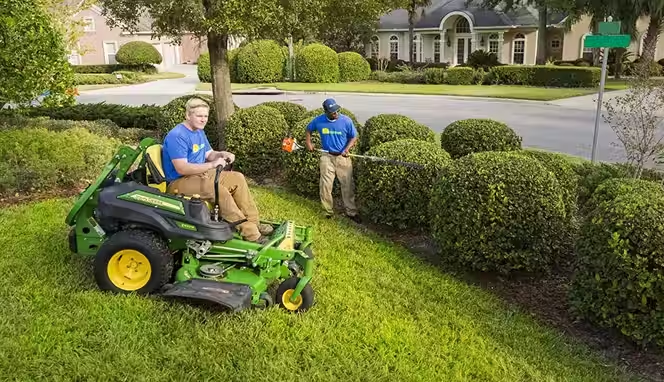
The garden landscaping market looks solid in 2026 and we can expect the industry to keep booming.
Lawn care pros agree that local markets are growing and are optimistic about the future. Caring for a lawn may seem like a chore, but it can be highly rewarding and be a peaceful job, if you get good at it. Which means, cha-ching! It's one of the most profitable small business ideas out there. You can start a small business in lawn care services and slowly evolve into a full landscaping company. Over time, as you build your reputation, go ahead and expand your offerings. Give your clients premium services, and enjoy the outdoors too!
What tools do we recommend? Check out our home and decor catalog to get started. We have some robot mowers you can check out. Everyone has a garden to mow or lawn to care for, which means business won’t die down anytime soon! There are many landscaping ideas that await you.
Note: Check your state's requirements to confirm if you need a specific small business license and go through permit rules.
3. Home Repair Business

Home repair service is one of the top 10 most successful businesses to start in 2026! A handyman business has massive potential because homeowners are always looking for reliable professionals to fix things. Whether it's plumbing leaks, electrical issues, drywall repairs, or door replacements, there's always someone who needs help.
Here's the beautiful part: you don't need a massive startup capital to launch a handyman small business. If you already have some tools lying around and basic skills, you're halfway there. Start by offering services in your local area and build your reputation through word-of-mouth and online reviews. As demand grows, you can expand your team and take on bigger home repair projects.
The handyman industry thrives because people are willing to pay premium rates for trusted professionals. According to recent trends, home repair services are seeing consistent growth, especially in suburban and urban areas. You can market a small business through social media platforms like Facebook and Instagram, targeting homeowners in your neighborhood. Consider creating a simple website or offering services on platforms like TaskRabbit to get your first clients. This is truly one of the best business ideas for those who enjoy working with their hands and solving problems.
4. Virtual Assistant Services

Want to know how to start a small business with minimal overhead? A virtual assistant business might be your answer. Companies and entrepreneurs are constantly drowning in administrative tasks—email management, scheduling, data entry, customer support, and social media management. If you're organized and detail-oriented, this is a gold mine. You can get paid to become a virtual assistant.
The beauty of a virtual assistant role is that you can work from home and scale your client base without any physical limitations. You can start with one or two clients and gradually expand as you build your reputation. This is perfect if you're looking for work from home small business ideas that don't require a ton of investment. Virtual assistants typically charge between $15 to $50 per hour, depending on their experience and the complexity of tasks.
To succeed, you'll need strong communication skills, reliability, and proficiency with tools like Google Workspace, Asana, and Slack. This is one of the trending business ideas for 2026 because remote work continues to dominate the professional landscape. You can market a small business by networking with entrepreneurs and small business owners on LinkedIn, or by joining freelance platforms like Upwork and Fiverr. This business model offers excellent financial small business ideas with low barriers to entry.
5. Social Media Management

In 2026, if you think social media is just for sharing vacation photos, you're missing out on one of the best business opportunities. Small business owners desperately need help managing their presence on platforms like Instagram, TikTok, Facebook, and LinkedIn. A social media management business is one of the most successful small business ideas because demand keeps growing.
What's beautiful about this business? You don't need expensive equipment or certifications. You just need creativity, knowledge of trending content, and the ability to engage audiences. Many small business owners are overwhelmed with content creation and engagement, so they're willing to hire someone to handle it for them. This creates a perfect opportunity for entrepreneurs who love social media.
You can offer services like content creation, social media marketing, scheduling posts, community management, hashtag research, and analytics reporting. The best part is that you can start with a few clients and charge anywhere from $500 to $2,000 per month, depending on the scope of work. Small business social media management is one of the top ideas trending right now because businesses understand that their online presence directly impacts their bottom line. This is a great way to launch a new business idea with minimal upfront investment while delivering real value to your clients.
6. Content Writing and Blogging

Are you a wordsmith? Do you love researching topics and crafting compelling narratives? Then content writing might be the perfect small business for you. Businesses across every industry need quality content for their blogs, websites, email campaigns, and social media. As an AI for small businesses becomes more prevalent, authentic human-written content is becoming increasingly valuable.
A content writing business falls under one of the good business ideas because it's scalable and doesn't require physical inventory. You can start by offering freelance writing services on platforms like Fiverr, Upwork, or Contently, then gradually build your own client base. Once you establish yourself, you can charge premium rates—some experienced content writers charge $50 to $200 per article.
The key to success in this business is developing expertise in specific niches and understanding how to write for different formats—blog posts, social media captions, email newsletters, product descriptions, and more. If you understand SEO and keyword optimization, you can position yourself as a specialized content strategist, which commands higher rates. This is genuinely one of the best new business ideas for people with strong writing skills. Creating content isn't just about words; it's about delivering innovative ideas for how businesses can connect with their audiences.
7. Pet Care Services

Pet owners are some of the most willing spenders when it comes to their furry friends. A pet care business—whether it's dog walking, pet sitting, pet grooming, or training—is consistently ranked among the most successful small business ideas. Pet owners need reliable, trustworthy people to care for their pets, and they're willing to pay well for peace of mind.
You can start small with just a few dogs in your neighborhood and expand from there. Dog walking typically brings in $15 to $30 per walk, while pet sitting can earn you $25 to $75 per day. If you offer specialized services like pet training or grooming, you can charge even more. The beautiful thing about this small business idea is that you're providing an essential service that people genuinely need and appreciate.
To get started, consider building a presence on social media, getting some initial clients through word-of-mouth, and potentially listing yourself on platforms like Rover or Care.com. This business idea works particularly well in urban and suburban areas where there's high concentration of pet owners. Pet care services represent one of the top small business ideas for ladies, students, or anyone looking to have a flexible schedule. This is also one of the best business to start if you love animals and want to turn that passion into income.
8. E-commerce with Niche Products

While dropshipping gets the spotlight, there's another e-commerce angle that's absolutely crushing it in 2026: finding a specific niche and becoming the expert. Rather than competing on every product imaginable, focus on a particular niche—handmade crafts, eco-friendly products, vintage items, or specialized equipment for specific hobbies.
This is one of the unique business ideas because you're building a brand around expertise rather than just being another generic online store. When you become known for one specific thing, you develop authority, loyalty, and the ability to charge premium prices. Customers will actively seek you out because they trust your curation and knowledge.
The startup costs are minimal if you source from suppliers like Spocket or AliExpress, and you can set up shop on Shopify, WooCommerce, or even Etsy. The key is identifying a profitable niche with enough demand but not so saturated that you can't compete. This is one of the best new business ideas for entrepreneurs who want more control over their product selection and brand identity compared to general dropshipping. By focusing on a specific niche, you're actually implementing innovative ideas for food business concepts or any specialized market that excites you.
9. Freelance Consulting

If you have expertise in a specific field—whether it's small business IT consulting, marketing, finance, or operations—starting a freelance consulting business is one of the easiest business to start and most lucrative options available. Companies and individuals are constantly seeking expert advice to navigate challenges and capitalize on opportunities.
Consulting businesses have incredible margins because you're selling your knowledge and experience, not physical products. You can charge $75 to $300+ per hour depending on your expertise and the complexity of the work. One of the coolest aspects of consulting is that you can serve clients globally from anywhere, meaning your local market limitations disappear completely.
To launch this, build a professional website showcasing your expertise, testimonials, and case studies. Network extensively through LinkedIn, industry events, and professional associations. Once you land your first few clients, they'll likely refer others, creating an expanding network of business opportunities. This business idea represents true passive income ideas for small business owners who want to leverage their professional experience. Consulting is definitely among the most profitable business ideas because you're solving real problems for clients willing to invest in solutions.
10. AI-Powered Service Business

Here's a business idea that's absolutely exploding in 2026: creating services powered by AI tools. This could be anything from AI-generated custom artwork, automated business process optimization, AI copywriting services, or data analysis automation. The key is identifying problems that AI can solve better, faster, or cheaper than traditional methods.
This falls under the newest business ideas for 2026 because AI technology is becoming increasingly accessible to regular entrepreneurs. You don't need to be a coding genius—platforms like ChatGPT, Jasper, Midjourney, and countless others do the heavy lifting. Your job is understanding which problems AI solves best and delivering solutions that clients actually want to pay for.
For example, you could offer AI-powered content creation, customer service chatbot setup, automated data analysis for small businesses, or personalized AI training for teams. The startup costs are incredibly low—often just a subscription to a few AI platforms—and the margins are fantastic. This represents one of the business startup ideas with genuinely innovative appeal. As AI for small businesses becomes more mainstream, early adopters who understand both the technology and business applications will have significant advantages. This is unquestionably among the top 10 most successful businesses to start right now.
What's Considered a Small Business?
Understanding what actually constitutes a small business is important before you dive into entrepreneurship. By definition, a small business is independently owned and operated, with a limited number of employees and relatively modest annual revenue compared to larger corporations. In the United States, the Small Business Administration (SBA) defines small businesses based on industry—ranging from businesses with fewer than 100 employees in some sectors to 1,500 employees in others, with annual revenue typically under $7.5 million.
However, the definition varies significantly depending on where you operate. If you're exploring small business ideas in the US versus small business ideas in Canada, Philippines, Europe, or India, the classification standards differ. What's considered a small business in India might be defined differently than in the UK or Australia. The common thread, though, is that small businesses are typically started by individuals or small groups of founders, require moderate startup capital, and operate within specific geographic or digital markets.
Why Go the Small Business Route?
The beauty of small business ideas in 2026 is that the barrier to entry has lowered dramatically. You no longer need massive capital to launch something legitimate. With dropshipping, virtual assistant services, or freelance consulting, you can start with under $100 and grow from there. This democratization of entrepreneurship means more people than ever can ask themselves "what type of business should I start?" and actually have viable answers.
Small business management requires understanding your local regulations, the skills you need to develop, and the market you're serving. Whether you're interested in small business ideas for women, students, or anyone else, the fundamentals remain the same: identify a market need, provide value, and scale gradually. Many of the best small business ideas come from recognizing small problems in everyday life and creating solutions. The logo for small business, branding, and professional image are important, but they come secondary to actually delivering results for your customers.
What Type of Business Should I Start?
Choosing the right business type from the hundreds of available small business ideas depends on several factors unique to your situation.
Assess your skills, interests, and capital
Are you more of a hands-on person who enjoys physical work, like a handyman small business, or do you prefer digital work like content creation or virtual assistance? This fundamental self-awareness eliminates half the options immediately.
Research market demand
Just because you're interested in something doesn't mean people will pay for it. Look at trending business ideas and understand why certain concepts are gaining traction while others fade. Use tools like Google Trends, keyword research platforms, and social media to gauge interest. For example, if you're considering mobile bar ideas or home food business ideas, research your local regulations carefully because these operate under specific licensing requirements.
Consider your location carefully too
Small business ideas in the US differ from small business ideas for women in emerging markets. If you're in an urban area, service-based businesses like cleaning, pet care, or handyman work thrive. In rural areas, agricultural products or niche online businesses might work better. Your geographic location either works for you or against you depending on the business type.
Think about how much time you can realistically dedicate
Some of the best business ideas for starting require significant upfront effort but minimal ongoing time—like creating a digital product or starting an e-commerce store. Others, like pet care or lawn care services, require consistent daily effort but generate immediate income. The concept of a plan matters immensely here; you need a realistic assessment of what you can actually execute given your current circumstances.
Don't overlook the financial angle either. How to start a small business free or with minimal investment is a legitimate consideration. Most of the top business ideas I've outlined require under $500 to launch. However, some require more investment—like starting a laundromat or beginning inventory-based e-commerce. Calculate your break-even point and ensure you can sustain yourself until profitability. Many small business owners make the mistake of expecting immediate returns when most viable businesses take 6-12 months to become profitable.
What Skills Do I Need to Start a Small Business?
The skills you need depend entirely on which business you choose, but certain foundational abilities apply across nearly every venture. Communication skills are non-negotiable—whether you're selling to customers, managing employees, or dealing with suppliers, your ability to clearly express ideas and listen to feedback directly impacts success. This is why so many successful entrepreneurs emphasize the importance of building relationships and networking.
Business fundamentals matter more than you might think. You don't need an MBA, but understanding basic accounting, pricing strategy, and cash flow management separates successful businesses from failures. Many new entrepreneurs underprice their services or fail to track expenses properly, which erodes profitability. Learning how to market a small business, even at a basic level, is essential because no matter how good your product or service is, people need to know it exists. Fortunately, how to promote a small business with no money is increasingly possible through social media and organic marketing.
Small Business Tips for Starting Up
If you're starting one of the service-based business ideas—handyman work, pet care, virtual assistance—you'll need both technical skills in your chosen field and business skills to manage the operation side. For e-commerce and dropshipping, you need product research abilities, basic marketing knowledge, and customer service skills. Content creators and freelance consultants need deep expertise in their chosen niche plus the ability to articulate value to potential clients.
The good news? You don't need to be an expert at everything from day one. Focus on being excellent at your core service, then gradually develop complementary skills. Many successful small business owners started with one strength and built everything else around it. How to grow a small business with no money largely comes down to strategic effort allocation and smart use of free tools available online. Consider that AI for small businesses is democratizing skills—you can now use AI tools to shore up weaknesses while you focus on strengths.
Also recognize that the skills needed vary by location and business type. If you're exploring small business ideas in Europe versus small business ideas for women in the Philippines, cultural norms and market conditions differ, which means the specific skill priorities shift. However, adaptability, learning agility, and resilience apply universally. The willingness to learn, test, fail, and iterate is perhaps the most important skill for any entrepreneur launching new business ideas.
How to Start a Small Business Successfully
Starting a small business requires more than just passion—it requires a structured approach.
Validate Your Small Business Idea
First, validate your business idea before you invest significant time or money. Talk to potential customers. Does your solution actually solve a real problem they face? Will they pay for it? This market validation step prevents you from building something nobody wants.
Make a Small Business Plan
Create a basic business plan outlining your target market, competitive advantages, revenue model, and financial projections. You don't need a 50-page document; even a simple one-page overview helps clarify your thinking. Include where you'll source products or deliver services, how you'll market your business, and your financial goals. Understanding the concepts of a plan, even at a basic level, dramatically increases your odds of success.
Handle Small Business Legal Issues
Handle the legal and financial setup properly, even when starting small. Register your business correctly for tax purposes, understand your liability exposure, and get appropriate insurance. This varies by location and business type, so research your specific requirements. For instance, if you're pursuing mini vending machine for home concepts or home food business ideas, food safety regulations are critical to understand before you start.
Get Your First Customers for Small Biz
Next, focus on getting your first customers. Most entrepreneurs overthink this and wait too long to launch. Instead, embrace the lean startup philosophy: start small, get feedback, and iterate. Your first version doesn't need to be perfect; it needs to be functional and solve a real problem. How to start a small business free or cheaply is completely feasible—you don't need a fancy office, expensive equipment, or a massive marketing budget. What you need is a product or service that works and the ability to reach people who need it.
Learn and Grow Your Small Business
Finally, commit to learning continuously. Read about your industry, study successful competitors, and learn from mistakes. The businesses that thrive are those where owners remain curious, adaptable, and willing to evolve their strategy based on results. This is especially important when navigating small business management and understanding trends like AI for small businesses that continuously reshape the landscape.
The Small Business Verdict
The opportunities for launching successful small business ideas in 2026 have never been more accessible. Whether you're drawn to service-based ventures like handyman work and pet care, digital businesses like content creation and virtual assistance, or online commerce through dropshipping and niche e-commerce, viable paths exist for nearly every skill level and investment capacity.
The key takeaway is this: the best business to start is one that aligns with your skills, matches real market demand, and fits your lifestyle. Don't get paralyzed by choice or intimidated by competition. Every successful entrepreneur started exactly where you are now—with an idea and determination. The difference between those who succeed and those who quit is often simply the willingness to start imperfectly and improve through action.
Conclusion
Your next step is choosing one idea that genuinely excites you, validating whether customers actually need it, and taking your first action this week. That action might be researching local regulations, talking to potential customers, setting up a simple website, or launching your first service offering. Whatever it is, movement matters more than perfection.
2026 is the year to stop thinking about starting a business and actually start building one. The barriers have fallen, the tools are available, and the market demand exists. What business can you start today? Use Spocket if you get into the small business product dropshipping space!
Start your dropshipping business today
Top 10 Small Business Ideas in 2026 FAQs
What are the easiest small business ideas to start with minimal capital?
The easiest businesses to start are service-based or digital ventures requiring no inventory. Virtual assistant services, freelance writing, social media management, and pet sitting all require minimal startup investment. Dropshipping and consulting are equally accessible. These best small business ideas let you begin with tools you already own. You can launch most from home and scale gradually as you gain clients.
Which small business ideas are most profitable for 2026?
Most profitable ideas for small business focus on solving expensive problems or serving underserved markets. Freelance consulting, AI-powered services, specialized e-commerce, and home repair work generate healthy margins. Pet care and virtual assistant services scale effectively with time management. E-commerce with niche products eliminates middleman costs. Financial small business ideas succeed when you identify problems customers desperately need solved and charge accordingly for solutions.
What small business ideas work best for students or people with limited time?
Best options for time-constrained entrepreneurs include virtual assistance, freelance writing, social media management, and online tutoring. These allow flexible scheduling and can be done part-time. Pet sitting and dog walking work if you have a few hours daily. Dropshipping requires minimal daily management once established. Content creation and consulting can scale to match your available hours as you gain experience and build clientele.
Are there specific small business ideas recommended for women entrepreneurs?
Women excel in service-based and digital businesses particularly well. Pet care, virtual assistance, content creation, social media management, and freelance consulting are trending options. Niche e-commerce appeals to many women entrepreneurs focusing on sustainable or handmade products. Home-based businesses like food or craft production work effectively. These ideas offer flexibility, lower startup costs, and communities of female entrepreneurs sharing resources and mentorship throughout their journey.
How to start a small business with no money or minimal investment?
Service-based businesses require zero inventory investment—freelancing, virtual assistance, consulting, and pet sitting need only time and skill. Dropshipping and e-commerce platforms charge minimal monthly fees. Social media management and content writing require computers you likely already own. Many require just a domain name and basic website. Focus on leveraging existing skills before investing in inventory, equipment, or professional services that drain limited capital quickly.
What are the top small business ideas trending this year?
AI-powered services represent explosive growth potential as technology democratizes. Specialized niche e-commerce outperforms general dropshipping. Sustainability-focused businesses appeal to modern consumers. Virtual services continue exploding as remote work dominates. Personal services like pet care and handyman work thrive in local markets. Digital content and consulting benefit from subscription economy trends. These trending business opportunities reflect broader economic shifts toward personalization, convenience, and digital-first solutions.


Launch your dropshipping business now!
Start free trial.avif)


Related blogs

Shopify App Developers: The Exit Option Nobody Talks About
If you have built a Shopify app or Amazon tool, an acquisition could be your best next move. Here is how the micro-acquisition market works and how to get started.


Is EPROLO Legit? 2026 Review
Wondering if Eprolo is legit in 2026? This review breaks down its free plan, branding tools, and shipping. Read before you register.

Top Single-Product Websites for Inspiration
Struggling to sell products? Single-product websites will be your ticket to big profits. Here is a list of some of the top single-product websites to take inspiration from this year.