Spocket vs Shopify Collective: Who Wins?
Let’s put the Spocket vs Shopify Collective debate to rest. We break down the pricing, product sourcing, safety, and features to help you decide.

Choosing the right way to source products can determine the success of your online store. For a long time, Spocket has been a favorite for dropshippers looking for fast shipping times and reliable suppliers. However, Shopify recently released its own solution called Shopify Collective, which takes a slightly different approach to helping you expand your catalog.
In this Spocket vs Shopify Collective guide, we will break down exactly how these two platforms work. We will look at their unique features, pricing structures, and the specific benefits they offer to merchants. By the end, you will have a clear understanding of which tool aligns with your business goals.
If you are trying to decide between using a traditional dropshipping supplier database or partnering with other brands, you are in the right place. We will extract the core insights from how these platforms operate so you can make an informed decision for your e-commerce store.
What is Spocket?
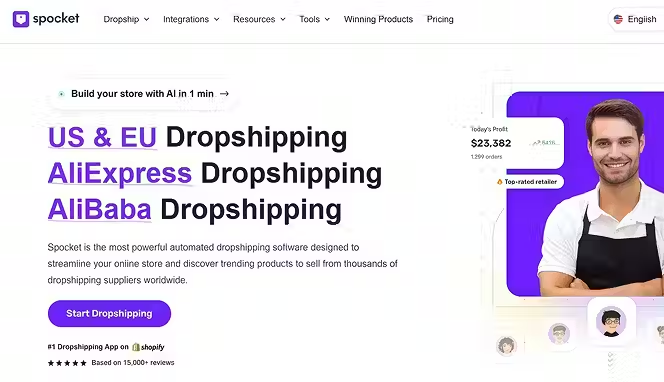
Spocket is a dropshipping platform that connects online retailers with suppliers primarily based in the United States and Europe. Unlike some other dropshipping directories that source heavily from Asia, Spocket focuses on offering products that can be shipped to customers much faster. This focus on speed and quality helps store owners provide a better customer experience.
The platform integrates directly with your Shopify store. When you find a product you like, you can import it to your store with just a few clicks. Spocket handles the connection between you and the supplier, ensuring that when an order comes in, the supplier is notified and ships the product directly to your customer. It simplifies the entire order fulfillment process.
One of the standout aspects of Spocket is its commitment to reducing the friction of starting a business. Many suppliers on the platform do not require high minimum order quantities, making it accessible for beginners. You can browse a vast catalog, order samples to check quality, and build a store without ever holding physical inventory. You can see the full range of options by checking out the dropshipping suppliers available on the platform.
What is Shopify Collective?
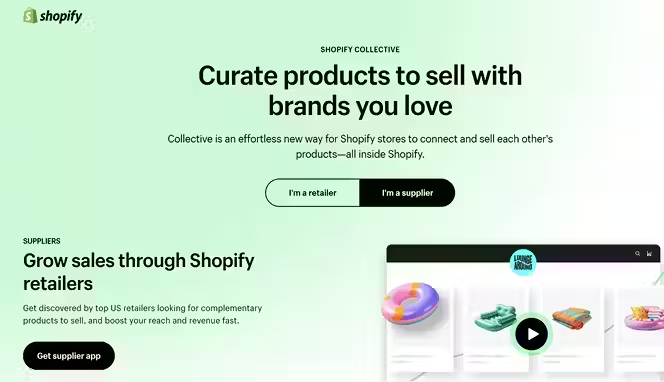
Shopify Collective is a different kind of sales channel created by Shopify. It allows existing Shopify store owners to partner with each other. Essentially, it lets you sell products from other Shopify brands directly on your website. This is not a traditional dropshipping directory; rather, it is a partnership tool for established businesses.
To use Shopify Collective, you must either be a "retailer" (looking to sell other people's products) or a "supplier" (looking to have your products sold by others). The goal is to help stores expand their product offerings without manufacturing new items or holding extra stock. It creates a network where brands can grow together. For a deeper look, you can read our dedicated post on Shopify Collective.
How Retailers Benefit from the Partnership
As a retailer, you can discover complementary products from other US-based brands to sell on your site. For example, if you sell coffee, you could partner with a brand that sells ceramic mugs. You set your own retail price, and when a customer buys the mug, the supplier ships it. You keep the margin between your price and the supplier's wholesale price. This is a powerful way to increase average order value.
How Suppliers Benefit from the Partnership
For suppliers, Shopify Collective acts as a wholesale distribution channel. You can get your products in front of other stores without doing any manual outreach. You set your wholesale prices and margins, and when a partner store sells your item, you fulfill the order. It allows you to scale your brand's reach by turning other Shopify stores into sales channels for your products.
Benefits of Using Spocket
Spocket provides a straightforward entry point into dropshipping with a focus on quality and speed. Here is how it helps you build your business:
- Faster Shipping Times. Because the supplier base is heavily concentrated in the US and Europe, shipping times are measured in days, not weeks. This leads to happier customers and fewer complaints about long wait times.
- Low Barriers to Entry. Many suppliers on Spocket have no minimum order quantities. You can read more about how Spocket has no MOQs, which means you are not forced to buy in bulk. You can test products by ordering single samples first.
- Access to Trending Products. The "win the market" section shows you what items are currently popular. Instead of guessing, you can use data to curate a catalog that has proven demand. You can start by browsing trending dropshipping products to see what is hot right now.
- Wide Range of Niches. Whether you are interested in tech accessories, toys, women's clothing, or jewelry, the platform has a dedicated category for you. This variety allows you to build a general store or a very specific niche store easily.
Benefits of Using Shopify Collective
Shopify Collective shines when it comes to building a brand experience through partnerships. Here is what makes it attractive for qualifying stores:
- Sell Alongside Established Brands. You are partnering with other successful Shopify merchants who already have a reputation. The product quality and branding are generally very high, which builds trust with your customers.
- Real Time Inventory Syncing. Product inventory syncs automatically between your store and the supplier's store. You will never sell a product that is out of stock, eliminating a major customer service headache.
- Capital Efficient Model. You do not pay upfront for inventory. You only pay the supplier their wholesale price after you make a sale. This frees up your cash to invest in marketing or other areas of your business.
- Combined Checkout Experience. Customers can buy your products and your partner's products in a single transaction. The checkout is seamless, and Shopify automatically splits the funds, sending the supplier their portion and you your margin.
Spocket vs Shopify Collective: Pricing
When comparing costs, the two platforms operate on entirely different financial models. Spocket follows a traditional software-as-a-service subscription model, while Shopify Collective is currently free but requires you to meet specific sales thresholds. Your choice will depend on your budget and your current sales volume. It is a classic Spocket vs Shopify Collective review point where your business stage dictates the better option.
Here is a breakdown of how the pricing structures differ:
- Spocket Subscription Tiers. Spocket offers multiple paid plans starting with a free 7-day trial. After the trial, you typically move to a monthly subscription which starts at $39. The higher-tier plans offer more product imports and access to exclusive deals. While there is a cost, it gives you access to thousands of products. You can compare this to building a full site in our Spocket vs Shopify breakdown.
- Shopify Collective Eligibility. Shopify Collective is free to use, but it is not available to everyone. Your store must be based in the US, sell in US dollars, and have Shopify Payments activated. Most importantly, you need to have generated at least $50,000 in sales over the last 12 months. This high barrier to entry means it is designed for established businesses.
- Cost Per Product. With Spocket, you pay for the platform access and then buy the products at wholesale prices when customers order them. With Shopify Collective, you do not pay a platform fee. Instead, you negotiate a margin with your supplier. You set the retail price, and the supplier gets their set price. You keep the difference.
Spocket vs Shopify Collective: Which is Safer?
Safety and reliability are critical when choosing a sourcing method. You need to know that your suppliers will deliver quality products on time. Spocket builds safety by vetting their suppliers. They ensure that the brands in their network are capable of handling order fulfillment. This reduces the risk of scams or poor-quality goods.
Shopify Collective offers a different kind of safety. Because you are partnering with other Shopify stores, you can vet them through the platform. You can see their storefront, assess their branding, and communicate directly. The requirement that suppliers be active on the Shop app adds a layer of trust.
However, the responsibility shifts slightly with Collective. While Shopify facilitates the connection, the relationship is between you and the partner brand. Spocket acts as a middleman, handling more of the supplier management. This can feel safer for those who do not want to manage direct brand relationships, as you are relying on Spocket's vetting process.
Spocket vs Shopify Collective: Pros and Cons
To make the best choice, it helps to see the strengths and weaknesses of each platform laid out side by side. Both offer unique ways to source products, but they cater to different types of sellers.
The Spocket Advantages and Drawbacks
- Pro: Massive Product Selection. Spocket gives you access to a huge catalog of items. For example, you can easily find products for the automotive niche or other specific categories.
- Pro: Low Barrier to Entry. Anyone with a Shopify store can sign up. There are no sales requirements. This makes it ideal for new entrepreneurs.
- Con: Supplier Vetting is Yours. While Spocket vets suppliers, you still need to do your own due diligence regarding product quality. Ordering samples is essential.
- Con: Subscription Cost. You have to pay a monthly fee to access the platform, which cuts into your profit margins, especially when starting out.
The Shopify Collective Advantages and Drawbacks
- Pro: High-Quality Brand Partnerships. You are selling products from existing, successful brands. The photography, branding, and product quality are usually top notch.
- Pro: Capital Efficient. Since you are not buying stock, you keep your cash for marketing. You only pay your partner when you make a sale.
- Con: Strict Eligibility Requirements. If your store hasn't made $50,000 in the last year, you cannot use it. This excludes the vast majority of new dropshippers.
- Con: Limited to US Suppliers. Currently, the focus is on US-based brands. If your customer base is elsewhere, this could be a logistical challenge for shipping times.
Best Niches: Spocket vs Shopify Collective
Your niche selection can dictate which platform serves you better. Spocket's diverse supplier base means you can enter almost any market. You have the freedom to test different products and categories until you find a winner.
Shopify Collective works best for complementary, lifestyle-oriented niches. It thrives on brand cohesion. If you are in the outdoor gear space, you can partner with a tent brand and a hiking apparel brand. The niche is defined by your store's identity, and you source products that fit that specific lifestyle.
If you are interested in custom goods, Spocket is the clear winner here. You can use its print-on-demand services directly with your store to sell custom apparel and accessories. Shopify Collective is not designed for custom-made goods; it is designed for pre-existing inventory from other brands.
Top Trending Products: Spocket vs Shopify Collective
Staying on top of trends is vital for e-commerce success. Spocket provides a dedicated "Trending Products" section. This feature uses real sales data to show you what is hot right now. If you are looking for the next big thing in fashion or home decor, Spocket's algorithm does the heavy lifting for you.
Shopify Collective does not have a "trending" feature in the same way. Instead, it offers a "Discovery" tab where you can search for products and brands. You need to know what products complement your existing bestsellers. For instance, if you sell facial creams, searching for a "cleansing brush" is a strategic way to find companion products.
The approach differs: Spocket pushes trends to you, while Shopify Collective requires you to pull in products based on your strategy. Spocket is better for trend hunters, while Collective is better for curators.
The Suppliers War: Spocket vs Shopify Collective
The core difference in this Spocket vs Shopify Collective debate lies in the suppliers themselves. Spocket acts as a middleman between you and independent suppliers, often manufacturers or dedicated dropshipping agents. You have less direct interaction with the brand, but you have more protection and a wider variety of sourcing options.
Shopify Collective removes the middleman. The "supplier" is just another Shopify store owner like you. This creates a peer-to-peer network. You can build genuine business relationships with other founders. You can collaborate on marketing or bundle deals. It turns a transactional relationship into a partnership.
However, the Spocket supplier network is massive and global. You can find suppliers for virtually any product. The Shopify Collective network is currently smaller and exclusive, focusing on quality over quantity. If you want variety, Spocket wins. If you want exclusive brand partnerships, Collective is the better route.
Spocket vs Shopify Collective: Other Tools and Features
Beyond the core sourcing capabilities, both platforms offer tools to help you run your business more efficiently. These features can save you time and help you scale. Understanding these extras is crucial for a complete Spocket vs Shopify Collective review.
Here are the additional tools and features you can expect from each platform:
- Spocket's One Click Ordering. Spocket allows you to fulfill orders with a single click directly from your store admin. The platform also provides branded invoicing, which makes your store look more professional to the end customer.
- Spocket's Platform Flexibility. You have full control to set your own retail prices. The platform supports WooCommerce integration and Wix integration, not just Shopify, giving you flexibility in where you build your store. For those looking to expand to marketplaces, Spocket integrates with Amazon as well.
- Shopify Collective's Automatic Syncing. This feature is a game-changer. Inventory levels, product details, and order information sync in real-time between you and your supplier. If a supplier sells their last item, it is automatically marked as out of stock on your site.
- Shopify Collective's Automated Payouts. When a customer buys a product from a partner store, the checkout experience is seamless. The customer gets one charge on their card, and Shopify automatically splits the funds, sending the supplier their portion and you your margin. You do not have to handle complex bookkeeping.
Conclusion
Deciding between Spocket vs Shopify Collective ultimately comes down to where you are in your business journey. Spocket is the accessible champion, perfect for entrepreneurs who want to test multiple niches, find trending products, and start selling quickly without a massive sales history. Its vast supplier network and platform integrations make it a versatile tool for growth.
Shopify Collective is the strategic partner for established stores. It offers a path to expand your catalog with premium, complementary products while building relationships with other brands. It requires you to have a proven track record, but it rewards you with high margins and a seamless fulfillment network. Consider your current sales volume and long-term brand vision to make the right choice.
If you are ready to start sourcing products today, you can explore the supplier network by signing up for Spocket here. For those interested in a deeper dive into the platform's native solution, you can read more about Shopify Collective on our blog.
Start your dropshipping business today
Spocket vs Shopify Collective FAQs
Is Shopify Collective considered dropshipping?
While Shopify Collective operates on a similar principle, the company avoids the term in their marketing. The process is identical: a retailer sells a product they do not hold in stock, and a third party ships it. However, the focus is on brand partnerships rather than generic supplier relationships. It positions itself as a collaborative tool for brands rather than a traditional dropshipping model.
Can I use Spocket and Shopify Collective together?
Yes, you can potentially use both. They serve different purposes and are not mutually exclusive. You might use Spocket to source trending items for a flash sale. Simultaneously, you could use Shopify Collective to establish long-term partnerships with brands that perfectly complement your core inventory. This hybrid approach can maximize your product offerings.
What happens if a Shopify Collective supplier runs out of stock?
The system handles this automatically. Shopify Collective features continuous inventory syncing between your store and the supplier's store. If the supplier sells their last unit or updates their inventory count, your store's product listing will update in real-time to reflect the "out of stock" status. This prevents you from overselling and disappointing customers.
Are there minimum order quantities on Spocket?
One of the biggest advantages for beginners is that many products on Spocket do not have minimum order quantities. This means you are not forced to buy in bulk. You can order a single unit to test the quality or fulfill a single customer order without having to commit to large inventory purchases upfront. This is detailed further on the Spocket has no MOQs page.
How do I get paid with Shopify Collective as a supplier?
When a retailer sells one of your products, the customer pays at checkout. Shopify then handles the payment splitting. The wholesale amount you set is sent directly to you, and the margin the retailer set goes to them. You do not have to chase retailers for payments; Shopify automates the entire process. You just focus on fulfillment.
Does Spocket work with website builders other than Shopify?
Yes, Spocket offers flexibility beyond just Shopify. It integrates with several major e-commerce platforms. You can use it with WooCommerce, Wix, and even list products on Amazon. This makes it a versatile choice for sellers who operate on multiple channels or are considering switching their store platform in the future.


Launch your dropshipping business now!
Start free trial.avif)


Related blogs
Shopify App Developers: The Exit Option Nobody Talks About
If you have built a Shopify app or Amazon tool, an acquisition could be your best next move. Here is how the micro-acquisition market works and how to get started.


Is EPROLO Legit? 2026 Review
Wondering if Eprolo is legit in 2026? This review breaks down its free plan, branding tools, and shipping. Read before you register.
Top Single-Product Websites for Inspiration
Struggling to sell products? Single-product websites will be your ticket to big profits. Here is a list of some of the top single-product websites to take inspiration from this year.