How to Start Dropshipping Women’s Clothing (2026 Guide)
A guide for anyone who wants to learn how to start dropshipping women's clothing. Find products, choose suppliers, and run profitable campaigns.

Selling fashion online can feel like a fast track to overwhelm. Returns, sizing headaches, and microtrends that shift overnight make many people hesitate. Yet women’s clothing remains one of the most reliable categories for anyone willing to build a system instead of guessing.
You do not need a warehouse full of inventory or a crystal ball for the next big style. You need a clear sequence: research what people actually want, source products from responsive suppliers, build a store that looks trustworthy, and run ads that pull in orders. The approach outlined here has turned a brand‑new store profitable in under a week, and it can do the same for you when you follow each step.
Why Dropship Women’s Clothing?
Shoppers actively look for women’s clothing online every single day, across every price point and style. When you zero in on a specific look you understand, whether that is western cocktail dress options, minimalist Scandinavian separates, or bold printed full sleeves shirts, you can build a brand that speaks to a clear audience. And because the dropshipping model removes bulk purchasing, you can use that flexibility to adapt when a new collection takes off.
How to Start Dropshipping Women’s Clothing?
Here is a guide on how to start dropshipping women’s clothing:
1. Do Market Research That Reveals Real Demand
Open a tool like ChatGPT and ask it to list the top 20 women’s clothing online stores in your target country. If you sell to the US, you might study online store Zara visitors browse, the curated feel of Anthropologie, the on‑trend edits from Edikted and PrettyLittleThing USA, or the bohemian leanings of Free People. If you want to reach Indian customers, look at top female clothing brands in India and what they stock, from western wear tops for women to ethnic salwar kameez sets. Also ask for a list of fashion influencers in that region. Their feeds show you which outfits get engagement and what styling language local buyers use.
Next, dig into search behavior. Look at what queries like “womens clothing near me” or “women’s clothing on sale” return, and note which items appear repeatedly. Checking Zara fashion pages, H&M clothing USA collections, and Yours Clothing or NorthStyle catalogs will surface common colors, fabrics, and silhouettes. You are not copying, you are building a picture of what buyers in that market expect.
2. Find Products That Match Your Research
With your research notes open, head to a supplier platform. If you use AliExpress, search terms that blend your market’s taste with the current season, like “spring dress Scandinavian style” or “western chic dresses for party.” As you open promising listings, the algorithm will show similar pieces, which helps you fill out a collection quickly.
3. Build a Store That Looks Like a Real Fashion Brand
Use a platform like Shopify and upgrade to a paid theme built for clothing. A theme like Debutify offers templates designed for fashion, with clean collection pages, a sticky add‑to‑cart button, and space for editorial‑style imagery. Pick a color palette that matches the season and your niche, soft pink and yellow work for spring, deeper tones suit a women’s boutique styles approach.
Translate every piece of text into the language of your target market. If you sell to Denmark, write product names and descriptions in Danish. Add a size chart to every product page. These small details cut return rates and build buyer confidence.
4. Make Product Pages Sell Harder
Import customer reviews from your supplier’s listings. Use a review app that lets you pull text and images directly from AliExpress or a marketplace, then display them under each item. Seeing photos of real people in the clothing reduces hesitation.
Add urgency signals without overdoing it. A “Low stock” tag on popular items or a “Selling fast” badge on a trending dress nudges visitors to buy. Cross‑sell complementary pieces in the upsell section. For example, a customer viewing a western mini dress might add a matching women’s top or a deconstructed tweed jacket if it appears as a suggestion.
5. Launch Ads That Actually Convert
Start with a small Facebook campaign. A product catalog ad can work, but in practice, carousel image ads with local‑language copy often perform better for clothing. Show multiple dresses, tops, or outfits in a single ad, each card highlighting one item of clothing in use.
Test different hooks. An image of a woman wearing the dress at a café will outperform a flat product shot. If a specific dress begins to sell, separate it into its own ad set. The moment you see consistent conversions, you know you have found a winning item.
Video creative lifts performance further. Use a service like Viral Ecom Adz to take a clip of someone wearing your top‑selling product and generate multiple variations with different opening hooks and text overlays. Running those variations inside one ad set forces the algorithm to allocate budget to the strongest performer.
6. Scale the Winner and Feed the Momentum
Once you identify the product bringing in the most revenue, do not get distracted by other experiments. Raise the daily budget on that ad set gradually, 15 to 20% every couple of days, and watch the results. Add similar styles to your store’s upsell sections and run a fresh campaign featuring only those complementary items. As volume builds, revisit your supplier pricing; sometimes you can negotiate better rates or switch to a provider with faster shipping on that specific SKU.
Types of Women’s Clothing Products to Dropship
A broad catalog increases the chance a visitor will find something they want. Here are the categories that perform well.
- Dresses: Start with dresses for women that match a clear occasion. This includes women’s dresses for casual daywear, western formal dresses for events, party wear western dress options, and western cocktail dress styles. Seasonal hits like floral day dresses or western chic dresses for nights out rotate predictably.
- Tops: Women’s tops and blouses keep basket values moving. Offer trendy women’s tops like a crop top with a statement sleeve, women’s shirts in cotton printed fabrics, a relaxed top with a mandarin collar, or a flared fit piece with a shoulder strap. Basics such as women’s tees also sell steadily.
- Bottoms: Women’s pants and women’s jeans round out full outfits. Consider tailoring angles, formal western wear for ladies pairs well with structured trousers, while western dresses for women call for denim or flared fits.
- Outerwear and Layering: A deconstructed tweed jacket or a tailored zipper shirt acts as a high‑margin addition.
- Western and Country Styles: Western dresses, western style dresses, dressy western wear for ladies, and even a cowboy dress attract shoppers searching for a specific aesthetic. Western wear tops for women tie into the same theme.
- Ethnic and Traditional Wear: In markets like India, salwar kameez, kurtas, pyjamas, saree, blouse, and petticoats form an evergreen segment. Pair these with cotton printed fabrics and seasonal colors.
- Workwear: Women’s clothing business casual and styles for work and play pull in professionals. Think tapered trousers and blouses that transition from desk to dinner.
- Boutique and Going‑Out Pieces: Buyers love women’s boutique clothing, going out outfits, and affordable trendy looks. Show women’s fashion clothing and dresses styled into complete women’s outfits.
Which Women’s Clothing Fashion Trends Should You Avoid?
Some trends drain ad budgets and frustrate customers. Steer clear of these.
- Ultra‑generic basics with zero differentiation: A plain white tee sold by hundreds of other stores leaves you competing only on price. Squeezed margins make profit nearly impossible.
- Runway fads with no real search demand: The latest western dresses from a viral show might look exciting, but if people are not already typing “latest western dresses in fashion” or similar phrases into Google, your ads will struggle to reach them.
- Garments known for extreme sizing inconsistency: Items like some bodycon silhouettes or structured blazers often produce high return rates when the fit does not match expectations. Each return eats into your margin.
- Heavily seasonal leftovers you cannot sell through: Buying into a winter coat trend in February means you will likely sit on the stock metaphorically while suppliers lag on shipping for a handful of late orders.
Who Are the Best Women’s Clothing Dropshipping Suppliers in 2026?
Reliable suppliers keep refund requests low and repeat customers coming back. The following five options each serve a different budget and style.
1. Spocket
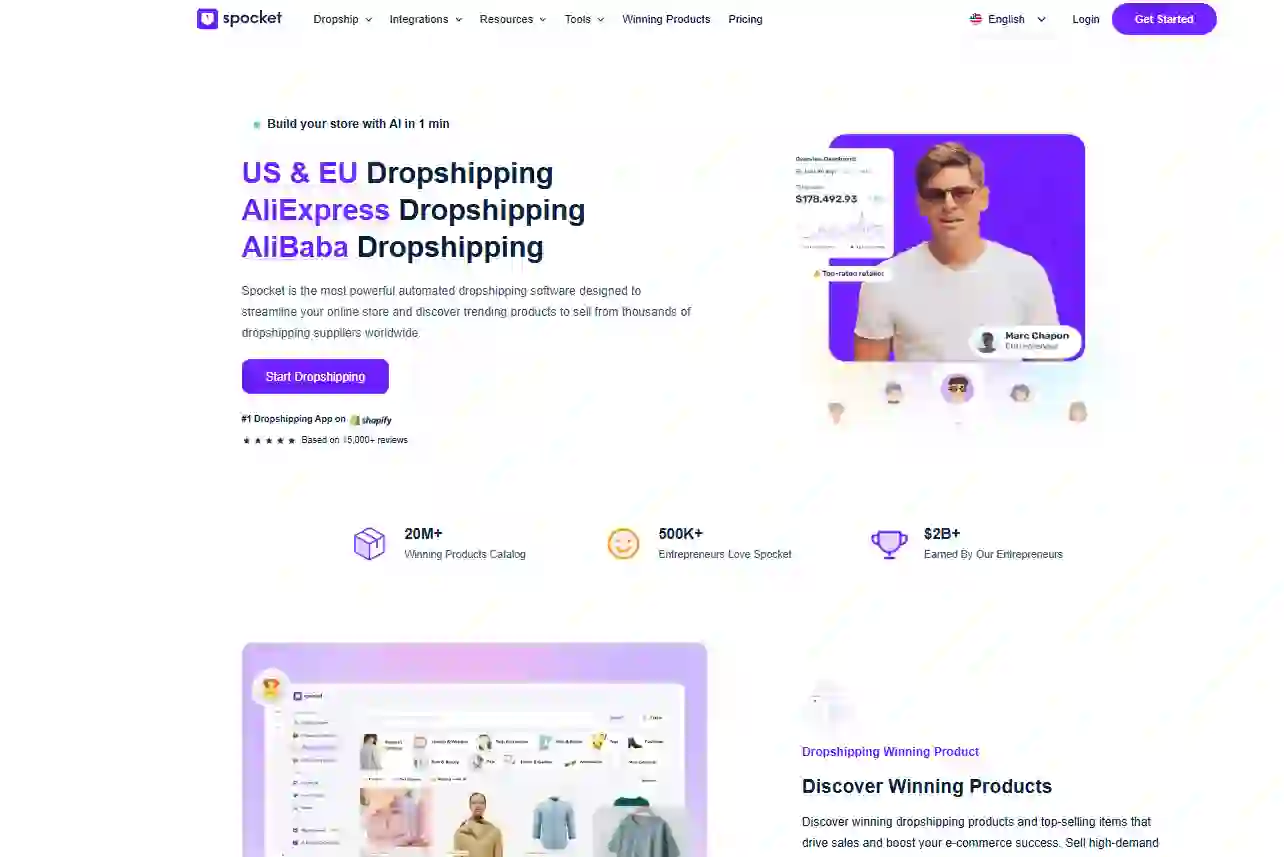
Spocket makes dropshipping women’s clothing manageable with a curated network of primarily US and EU suppliers. Shipping times stay within a week, and the catalog includes trendy women’s clothing that would sit at home in a contemporary boutique. You can also pull inspiration from the best clothing brands for women listed on the platform to refine your product mix. Because Spocket has no MOQs, you never risk dead stock. The platform integrates directly with Shopify, WooCommerce, BigCommerce, Wix, and eBay, so you can expand your sales channels without manual work.
2. Alidrop

Alidrop bridges multiple sourcing worlds. Through the Alidrop marketplace you connect with best US and EU suppliers for faster fulfillment, but you also get full access to AliExpress dropshipping, Alibaba suppliers, and Temu suppliers for wider variety. The AI Shopify store builder and AI product description writer slash setup time. If you aim to sell ethnic wear like salwar kameez or western formal looks in India, Alidrop helps you find reliable Indian dropshipping suppliers without guesswork.
3. Capella
.webp)
Capella stocks an affordable range of women's clothes that lean into fast‑fashion silhouettes. The quality sits closer to a Forever 21 or Shein level, good enough for social‑media styling but not luxury. Capella also carries plus‑size pieces, so you can list more inclusive woman dress options without hunting across multiple wholesalers.
4. Boswell Fashion
.webp)
Boswell Fashion mixes unique dresses and basics at price points usually under twenty dollars wholesale. The catalog covers everything from women’s tops and relaxed fits to statement woman dresses that photograph well. It is a solid choice for anyone who wants affordable wholesale dropshipping with enough style edge to avoid blending into pure commodity selling.
5. Melrose with Love
.webp)
Melrose with Love positions itself in the higher end of the dropshipping clothing supplier spectrum. The curation feels deliberate; the pieces resemble what you would find in an elevated women’s boutique clothing store. Most unit prices start around fifty dollars, but because you are not purchasing inventory upfront, you can test high‑ticket women’s fashion without the capital risk that a traditional boutique owner would face.
Mistakes to Avoid When Selling Women’s Clothing
Even small missteps can erase the slim margins clothing dropshipping often runs on. Watch for these in your store.
- Skipping the translation on ads and product pages: If you target Denmark, write in Danish. When you target India, consider the balance between English and Hindi. Untranslated text signals a lazy shop.
- Ignoring size charts: Clothing returns surge when buyers cannot confirm fit. A chart that matches the supplier’s actual measurements protects your ad spend.
- Relying only on catalog ads: Catalog‑type ads automatically pull product images and often use uninspiring shots. Manual carousels or video ads let you control the first impression.
- Not reviewing product images before a campaign: Spend an hour replacing supplier photos that look washed out. A few clean, bright lifestyle images raise trust.
- Scaling too many products at once: You dilute the budget that should go behind the one best‑selling dress. Focus wins.
- Ignoring post‑purchase anxiety: Send tracking updates quickly. Customers who feel in the loop are far less likely to file chargebacks.
Conclusion
Running a dropshipping women’s clothing business rewards patience and precision. Start by studying real demand in a narrow market, choose suppliers who ship quickly and consistently, style your store like a legitimate boutique, and let data drive your ad decisions. When a product starts selling, resist the urge to chase something else. Scale what works, tighten your operations, and your store will build momentum that compounds week after week.
Start your dropshipping business today
How to Start Dropshipping Women’s Clothing FAQs
Is dropshipping women’s clothing profitable?
Yes. With careful product selection and ad targeting, margins of 20% to 30% are achievable, even in the beginning. The key is to find a dress or top with steady demand, keep return rates low through accurate size charts and clear imagery, and scale only the winning items rather than spreading your budget thin.
Do I need to hold inventory when I dropship women’s clothing?
No. Your supplier stores the products and ships them directly to your customer after you forward the order. This lets you test a large catalog, from western dresses to casual tops, without bulk purchasing. You only pay the wholesale cost when a sale occurs.
How do I find trending women’s clothing to dropship?
Start by browsing top women’s clothing online stores like Zara, Free People, and Anthropologie, then cross‑reference those styles with supplier catalogs. Use supplier platforms that highlight trending dropshipping products and verify which items show strong search volume and social media traction before adding them.
What are the best women’s clothing dropshipping suppliers?
Spocket and Alidrop give you access to vetted US and EU suppliers and the larger AliExpress, Alibaba, and Temu networks. Independent wholesalers like Capella, Boswell Fashion, and Melrose with Love each serve different price points and style niches, from affordable fast fashion to high‑end boutique curation.
How can I reduce returns in a women’s clothing dropshipping store?
Add a size chart to every product page, import real customer reviews that mention fit, and use high‑quality lifestyle images that show the garment on a person. When the photos and measurements match what the buyer receives, refund requests drop noticeably.
Can I dropship plus‑size women’s clothing?
Yes. Suppliers like Capella include plus‑size options, and many Western and ethnic wear suppliers offer extended sizing. Simply filter your supplier search for plus‑size categories and build a collection that shows consistent sizing to earn trust with that often underserved audience.


Launch your dropshipping business now!
Start free trial.avif)


Related blogs

Dropshipping Supplier Directory: Where to Find Vetted Suppliers
Browse our directory of vetted dropshipping suppliers across the US and EU, complete with niches, shipping speed, and pricing. Start your free trial today.


How to Negotiate With Dropshipping Suppliers: 9 Tactics That Actually Work
Learn how to negotiate with dropshipping suppliers on price, MOQs, and payment terms. Proven tactics and email scripts to boost your margins. Try Spocket free.

Best Clothing Dropshipping Suppliers: The 2026 Guide
Compare the best clothing dropshipping suppliers for 2026 — US/EU shipping speeds, pricing, and product quality — and find the right fit to launch your store.