How to Start a Cleaning Business: Step by Step Guide
Learn how to start a cleaning business step by step, including licenses, pricing, supplies, marketing, and how to get your first clients fast.
.avif)

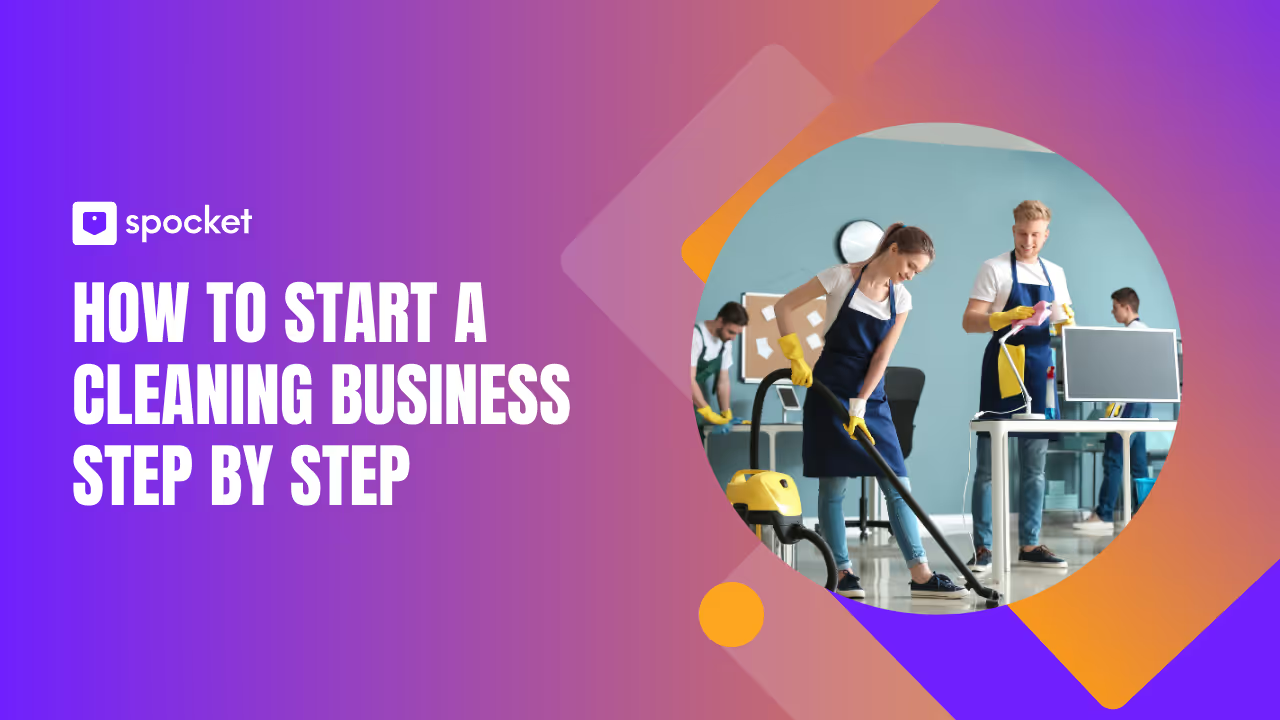
Starting a cleaning business is one of the simplest ways to launch a profitable service with low upfront cost and steady demand. If you’re wondering how to start a cleaning business, the good news is you can begin as a solo cleaner, a weekend side hustle, or even scale into a full cleaning company with a team and recurring clients.
The key is to start with the right plan—choose your services, understand your target customers, and set clear pricing from day one. You’ll also need to handle basics like business registration, insurance, and a simple system for delivering consistent quality.
In this step-by-step guide, you’ll learn how to set up your cleaning service legally, buy the right supplies, price your cleaning packages, market locally, and get your first paying clients quickly—without wasting time or money.
.avif)
What You Need to Know Before Starting a Cleaning Business
Before you jump into how to start a cleaning business, it’s important to understand that your success depends heavily on the type of cleaning service you choose. Your business model decides everything—from your startup costs and cleaning supplies to how you price jobs and where you market.
The opportunity is strong. The global cleaning services market size was estimated at USD 415.93 billion in 2024 and is projected to reach USD 616.98 billion by 2030, growing at a CAGR of 6.9% from 2025 to 2030. This growth is largely driven by the rising focus on hygiene after COVID-19, along with businesses adopting advanced cleaning technologies.
That’s exactly why choosing the right cleaning business type early matters—it helps you start smarter, attract the right clients faster, and build a more profitable cleaning company.
Choose Your Cleaning Business Type
Following are some types of cleaning businesses that you can choose from depending on your choice.
Residential Cleaning
Residential cleaning is the most common entry point for beginners. It includes routine house cleaning services like dusting, mopping, kitchen and bathroom cleaning, and organizing. It’s easier to start with, requires less equipment, and helps you build recurring clients through weekly or bi-weekly bookings. Many people start a cleaning business from home by offering residential cleaning to neighbors and local communities.
Best for: Solo starters, low-budget setup, repeat customers
Commercial Cleaning
Commercial cleaning focuses on offices, retail stores, warehouses, and clinics. These clients usually require more structured service agreements, consistent schedules, and higher professionalism. Commercial cleaning can pay more per contract, but it often needs liability insurance, a trained team, and specialized tools. If you're planning to scale and earn stable monthly income, this model can be a strong long-term path.
Best for: Higher earnings, recurring contracts, scalable growth
Deep Cleaning / Move-Out Cleaning
Deep cleaning services go beyond regular cleaning. They include detailed tasks like scrubbing grout, cleaning behind appliances, washing baseboards, and heavy-duty bathroom or kitchen cleaning. Move-out cleaning is especially in demand for rentals and real estate turnover. These jobs pay well, but they’re time-intensive and require stronger cleaning products and more labor.
Best for: Higher one-time revenue, strong demand, premium pricing
Specialized Options (Carpet, Post-Construction, Airbnb Turnover)
Specialized cleaning businesses focus on niche markets:
- Carpet and upholstery cleaning often needs machines like extractors and steam cleaners
- Post-construction cleaning pays more but requires safety handling, dust removal, and heavy-duty tools
- Airbnb turnover cleaning is fast-paced and recurring, ideal if you want consistent bookings and quick routines
These services allow you to charge premium rates because they solve more specific customer problems.
Best for: Higher pricing, less competition, strong referrals
Step by Step Guide on How to Start a Cleaning Business
If you’re researching how to start a cleaning business, this is the part you’ll want to follow closely. The goal is to make the setup simple, legal, and profitable from day one—without overcomplicating it. The steps below are designed to help you launch your cleaning service quickly, attract the right customers, and build a foundation you can scale.
Step 1: Decide Your Niche and Ideal Customers
One of the biggest mistakes beginners make is trying to offer “everything to everyone.” Instead, choose a niche and a clear customer type. This makes your cleaning business marketing, pricing, and service packages easier to build—and helps you stand out faster.
Here are the most profitable customer segments to choose from:
- Local households: Perfect if you want recurring weekly or bi-weekly home cleaning clients.
- Offices / retail / clinics: Great for consistent contracts and predictable monthly income.
- Property managers & Airbnb hosts: Ideal for repeat bookings, quick turnarounds, and long-term partnerships.
- Move-in/move-out clients: High-paying, one-time jobs with strong demand from renters and realtors.
Quick positioning examples (to instantly stand out):
- Eco-friendly cleaning (safe products + premium pricing)
- Same-day office cleaning (urgent business need + high value)
- Weekly recurring home cleaning (predictable income + customer loyalty)
Choosing a niche helps you define your service style, price confidently, and market to a specific audience instead of competing blindly.
Step 2: Create a Simple Cleaning Business Plan
You don’t need a long academic business plan. You only need a clear plan that answers: what you offer, who you serve, and how you’ll make money. A cleaning business plan as a structured roadmap that outlines your goals, target market, marketing, service offerings, and growth strategy—helping you stay focused and competitive.
Here’s what your cleaning business plan should include:
- Services offered: Residential, commercial, deep cleaning, or specialized cleaning
- Startup costs: Supplies, insurance, basic tools, transportation
- Pricing strategy: Hourly vs flat rate, add-ons, service packages
- Monthly income goal: A simple target (example: $3,000/month)
- Marketing plan: Google Business Profile, referrals, flyers, local SEO
- Growth strategy: Solo cleaner → recurring clients → hire help → scale
Even a one-page plan keeps you focused and prevents common mistakes like underpricing or buying unnecessary equipment.
Step 3: Register Your Business and Choose a Legal Structure
To start a cleaning company the right way, you need to make it legal and professional. Stripe recommends choosing your business structure early—most cleaning businesses begin as a sole proprietor or register as an LLC, depending on your liability needs and long-term goals.
Here’s what to do:
- Sole proprietorship vs LLC
- Sole proprietorship is easier and cheaper to start
- An LLC is common because it adds liability protection and builds trust with client
- Check business name availability
- Search your state’s business registry
- Secure a matching domain if possible
- Get an EIN (Employer Identification Number)
- Useful if you plan to hire cleaners or open a business bank account
- Helps keep taxes cleaner and more organized
- Follow local registration requirements
- Rules vary by city/state, but the process usually includes registering your business name and structure, plus local permits if required
This step matters because many clients—especially commercial ones—won’t hire you without proper registration, insurance, and paperwork.
Step 4: Get Licenses, Insurance, and Bonding
If you want to know how to start a cleaning business the right way, this step is non-negotiable—especially if you plan to offer commercial cleaning services. Licenses and protection build credibility, reduce risk, and make your business look professional from day one. Commercial clients, in particular, often require proof of coverage before signing a contract
Here’s what you typically need:
- Business license (city/state dependent): Many areas require a general business license to operate legally. Requirements vary based on your location, so check your city or state business portal.
- Liability insurance (essential for commercial): Protects you if you accidentally damage property or cause injury on a job. This is one of the first things commercial clients ask about.
- Worker’s comp (if hiring): If you hire employees or subcontractors, worker’s compensation is often required by law to cover injuries on the job.
- Bonding (helps win commercial contracts): A janitorial bond reassures clients that they’re protected if something goes wrong, like theft or an unfinished job. It’s a trust-builder for commercial deals.
Pro tip: If your goal is to win office or clinic contracts, having insurance + bonding early makes your cleaning company easier to say “yes” to.
Step 5: Open a Business Bank Account and Set Up Basic Accounting
Once you start getting clients, it’s tempting to keep everything in your personal bank account—but that quickly becomes messy. Separating business finances protects you legally (especially if you're an LLC), makes tax filing easier, and helps you track profit clearly.
Start with:
- A business checking account: Keeps client payments separate and looks more professional.
- Basic accounting tools: You can start with QuickBooks, Wave, or even a simple Excel sheet—whatever you can use consistently.
Track these essentials from day one:
- Expenses: supplies, equipment, gas, advertising, insurance
- Mileage: important for tax deductions if you travel to jobs
- Supplies: what you’re spending per job helps you price correctly
- Monthly profit: income minus all costs (this tells you if your pricing works)
When your numbers are clear, you can confidently scale your cleaning business without guessing.
Step 6: Buy Cleaning Supplies and Equipment (Start Lean, Upgrade Later)
One reason cleaning is such a great business to start is the low overhead. With minimal equipment and basic supplies, you can begin quickly and upgrade as you grow.
Basic Starter Kit (Beginner-Friendly Essentials)
These are enough to start a residential cleaning business:
- Vacuum
- Microfiber cloths
- Gloves
- All-purpose disinfectant
- Mop and bucket
- Scrub brushes and sponges
- Trash bags and paper towels
Optional Professional Upgrades (For Higher-Paying Jobs)
Once you start getting bigger jobs or commercial clients, upgrades help you work faster and charge more:
- Steam cleaner (great for deep cleaning and sanitizing)
- Commercial-grade vacuum (strong suction + durable)
- Floor buffer (ideal for offices, stores, and large surfaces)
Smart approach: start with the basics, reinvest your first profits into upgrades, and expand your service offerings gradually.
Step 7: Set Your Cleaning Prices and Packages
Pricing is where most beginners struggle—but it’s also what determines whether your cleaning business becomes profitable or stressful.
Here are the most common pricing formats:
Hourly Rate
Best for first-time clients or unpredictable jobs.
- Example: A 3-hour clean at $35/hour = $105
Flat Rate Per Job
Most popular for residential cleaning because it’s simple and predictable.
- Example: Standard clean = $120
- Deep clean = $220
Rate Per Square Foot (Commercial)
Ideal for offices, retail spaces, and clinics.
- Example: $0.08 per sq. ft. for a 5,000 sq. ft. space = $400
Quick Pricing Examples
- Standard Clean: dusting, vacuuming, mopping, kitchen + bathroom wipe-down
- Deep Clean: detailed scrubbing, baseboards, grout, behind appliances
- Add-ons (easy upsells):
- inside fridge
- oven cleaning
- windows
- inside cabinets
If you're serious about starting a cleaning company, packaging your services makes it easier to sell, easier to upsell, and easier for customers to choose you quickly.
Step 8: Create a Simple Brand and Online Presence
When people search how to start a cleaning business, they’re not just looking for legal steps—they want to know how to get customers. And the truth is, a strong brand and online presence makes you look trustworthy even if you’re just starting out.
You don’t need an expensive website or fancy branding. You just need a clean, professional setup that helps potential clients find you and feel confident booking your services.
Here’s what your cleaning business must-have online setup should include:
- Business name + logo: Keep it simple and easy to remember. A clean name builds instant credibility, and even a basic logo helps your cleaning company look professional on invoices, flyers, and Google.
- Google Business Profile: This is the fastest way to show up on Google Maps when people search “cleaning services near me.” Add your service list, hours, photos, and service area so clients can contact you quickly.
- Website landing page: A single-page website is enough at the beginning. Include your services, pricing starting point, service areas, contact form, and a clear “Book Now” button.
- Service area keywords: Add location-based terms naturally throughout your page (example: “house cleaning in Austin” or “office cleaning in Brooklyn”). This improves your local SEO and helps your business rank faster.
- Before/after photos: These build trust instantly. Even a few photos from early jobs make your cleaning services feel real and proven.
- Reviews strategy: Ask every happy client for a Google review. Reviews directly influence local ranking and conversion. A cleaning business with 10 strong reviews often beats one with a prettier website but no social proof.
Pro tip: Your goal here is simple—make it easy for someone to find your cleaning business, trust you, and contact you within 30 seconds.
Step 9: Get Your First Clients Fast
This is the section most people care about because the real question behind how to start a cleaning business is usually: “How do I get cleaning clients quickly?”
The fastest path is to combine quick local outreach with platforms where your ideal customers already spend time.
Here are the best quick-win methods to get your first clients fast:
1. Ask Friends & Family + Offer a Referral Deal
Start by offering discounted first cleanings to people you know. Then add a referral offer like:
- “Get $20 off your next clean when you refer a friend.”
Referrals are powerful because cleaning is trust-based—people prefer hiring someone recommended by someone they know.
2. Post in Facebook Local Groups
Search for:
- “Buy/Sell [your city]”
- “Moms group [your city]”
- “Community updates [your neighborhood]”
Post your services with:
- a friendly intro
- your service areas
- 2–3 before/after photos
- a limited-time offer (“2 slots open this week”)
This works especially well for residential cleaning and move-out cleaning.
3. Use Nextdoor
Nextdoor is a goldmine for local service businesses. People post daily looking for cleaners, deep cleaning, and move-out cleaning help. Respond quickly, be polite, and ask for a short phone call.
4. Google Maps Optimization (Reviews + Posts)
To rank on Google Maps, your cleaning business needs:
- accurate business info
- consistent service keywords
- reviews (the biggest ranking booster)
- weekly Google Posts (“Deep cleaning available this weekend”)
Even one new review per week can boost visibility over time.
5. Flyers + Door Hangers (Low Cost, High ROI)
Target neighborhoods where people are likely to pay for cleaning:
- apartments
- middle/high-income residential areas
- rental-heavy zones
Make your flyer simple:
- What you offer
- Starting price
- Phone number + QR code
- “New client special this week”
6. Partner With High-Referral Sources
This is how many cleaning businesses grow faster than competitors:
- Realtors: They need move-in/move-out cleaning before showings
- Property managers: They need reliable turnover cleaning for rentals
- Airbnb hosts: They need recurring cleaning with fast scheduling
These partnerships can bring consistent monthly work without you constantly chasing new clients.
Step 10: Deliver Great Service and Systemize Your Work
Getting clients is one part. Keeping them—and turning your cleaning service into a stable income stream—is where the real growth happens. Most successful cleaning businesses grow because their service stays consistent, reliable, and easy to repeat.
Here’s how to build a professional system:
1. Use a Cleaning Checklist System
Create a checklist for each service type:
- standard clean
- deep clean
- move-out clean
- Airbnb turnover
This ensures nothing gets missed and keeps quality consistent—especially if you hire help later.
2. Improve Communication Habits
Clients love cleaners who:
- confirm bookings
- arrive on time
- update if delayed
- send a “finished” message with photos
Simple communication builds trust—and trust leads to repeat bookings.
3. Upsell Add-Ons Without Being Pushy
Add-ons increase revenue without needing more clients. Offer options like:
- fridge cleaning
- oven cleaning
- windows
- laundry folding
- cabinet interiors
You can upsell during booking or after the first cleaning once the client is happy.
4. Build Recurring Clients (Weekly/Monthly Contracts)
Recurring clients are the backbone of a profitable cleaning business. Offer:
- weekly plans (best stability)
- bi-weekly plans
- monthly maintenance plans
When you focus on recurring customers, you create predictable income—and your cleaning business becomes easier to scale into a full-time company.
Common Mistakes to Avoid When Starting a Cleaning Business
Learning how to start a cleaning business is one thing—but avoiding beginner mistakes is what keeps your cleaning company profitable. Many new cleaning business owners lose money (or burn out) not because they lack clients, but because they skip the basics that protect their income and time.
Here are the most common mistakes—and how to avoid them:
1. Underpricing Your Services
This is the #1 mistake in the cleaning industry. If you price too low to “win clients,” you’ll attract bargain hunters, overwork yourself, and struggle to grow. Always price based on:
- time required
- supplies used
- job complexity (standard vs deep clean)
- travel distance
- local competition
Fix it: Start with a minimum rate and build packages. It’s easier to raise prices once you have reviews and recurring clients.
2. Skipping Insurance
It may feel like an “extra cost,” but liability insurance is what separates a hobby from a real business. One accident—like breaking a client’s item or damaging floors—can cost more than your monthly insurance premium.
Fix it: Get liability insurance early, especially if you offer commercial cleaning services or deep cleaning.
3. Trying to Offer “Everything”
Offering residential cleaning, deep cleaning, post-construction, carpets, and office contracts all at once makes your business unclear. When your services are too broad, your marketing becomes weak and you struggle to stand out.
Fix it: Start with one niche and one customer type. Once your system works, add specialized services later.
4. Not Collecting Deposits for Deep Cleans
Deep cleaning and move-out cleaning jobs take more time and often involve last-minute cancellations. If you don’t collect deposits, you risk losing hours of work and turning away other paying clients.
Fix it: Use a deposit policy for deep cleans—especially for first-time clients or large properties.
5. Not Tracking Expenses
Many cleaners don’t realize how much they spend on supplies, transportation, and time per job. Without tracking, you can’t know your true profit—or whether your prices are sustainable.
Fix it: Track your supplies, mileage, and monthly profit from day one using a basic spreadsheet or accounting app.
How Much Does It Cost to Start a Cleaning Business?
One reason so many people look up how to start a cleaning business is because it’s one of the most affordable businesses to launch. You can start small with basic cleaning supplies and upgrade as you earn—something a key advantage of this industry.
Here’s a clear breakdown of typical startup costs depending on how you plan to operate:
Low-Budget Solo Start (Residential Focus)
Best for: starting from home, side hustle, solo cleaner
Estimated cost: $150 – $800Includes:
- basic supplies (microfiber cloths, disinfectants, gloves)
- vacuum (if you don’t already have one)
- mop, bucket, brushes
- simple marketing (flyers, local posts)
This is the cheapest way to start a cleaning service and begin getting clients fast.
Mid-Range Setup (Professional Solo or Small Team)
Best for: consistent clients, recurring jobs, professional branding
Estimated cost: $800 – $3,000Includes:
- stronger vacuum + backup tools
- branded uniforms or shirts
- insurance (liability coverage)
- basic website + Google Business Profile setup
- professional cleaning products + storage bins
This setup helps you look more established and charge higher rates sooner.
Commercial Setup (Scaling into Office/Contract Cleaning)
Best for: office cleaning, clinics, recurring commercial contracts
Estimated cost: $3,000 – $10,000+Includes:
- commercial-grade vacuum and tools
- insurance + bonding
- worker’s comp (if hiring)
- floor buffer, steam cleaner (optional but valuable)
- transportation upgrades (if needed)
- licensing and compliance costs
Commercial cleaning businesses often require more paperwork and equipment—but they also offer bigger contracts and recurring revenue.
Smart approach: Start lean, reinvest profits, and upgrade only when your business needs it.
How to Grow a Cleaning Business
Once you’ve mastered the basics of starting a cleaning company, growth comes down to one thing: building systems and repeating what works. You don’t need a complicated strategy—just a few focused moves that increase your revenue without doubling your workload.
Here’s how to scale a cleaning business the smart way:
1. Hire Contractors vs Employees
- Contractors can help you scale faster with less responsibility (great for testing growth)
- Employees give you more control and consistency (better long-term if scaling big)
Tip: Start with contractors for overflow work, then switch to employees when your schedule is stable.
2. Expand Your Service Areas
Once you have consistent bookings and reviews, expand into nearby neighborhoods or cities where demand is high. Update your website and Google Business Profile to include these new service areas to improve local SEO.
3. Add Commercial Contracts
Commercial cleaning is one of the fastest ways to increase predictable monthly income. Offices, retail stores, and clinics often prefer recurring service agreements—which means steady revenue.
Tip: Use insurance + bonding to build trust and win contracts faster.
4. Upsell Premium Services
Increase revenue per client by offering high-margin add-ons like:
- deep cleaning upgrades
- inside fridge and oven cleaning
- window cleaning
- carpet and upholstery cleaning
- post-construction cleanup
This helps you grow without needing more customers.
5. Build Repeat Client Packages
Recurring clients are the backbone of a profitable cleaning business. Create packages like:
- weekly home cleaning
- bi-weekly maintenance plans
- monthly deep cleaning
- Airbnb turnover plans
Repeat bookings stabilize your income and reduce time spent constantly marketing.
Conclusion
Starting a cleaning business can be a smart, low-cost way to build steady income and long-term growth. Once you choose your niche, set your prices, and build a simple online presence, the key is staying consistent and delivering reliable service that turns first-time clients into repeat customers. As your bookings grow, you can scale with packages, add-ons, and even commercial contracts. If you’re ready to take the next step toward building a real business, Spocket can help you create a professional online presence, streamline your operations, and sell cleaning products or supplies alongside your services. Start small, stay focused, and grow with confidence.
Start your dropshipping business today
FAQs About Starting a Cleaning Business
Can I start a cleaning business with no money?
Yes, you can start with little to no money by using basic supplies you already have and offering residential cleaning first. Reinvest your first earnings into better tools, insurance, and branding to grow faster.
Do I need a license to start a cleaning business?
In many areas, you may need a local business license to operate legally, especially for commercial cleaning. Requirements vary by city and state, so check your local government website to confirm permits and registration rules.
How much can I make owning a cleaning business?
Your earnings depend on your pricing, niche, and client volume. Many solo cleaners earn a few thousand dollars monthly, while established cleaning businesses with recurring clients and commercial contracts can generate strong full-time income.
Is it better to do residential or commercial cleaning?
Residential cleaning is easier and cheaper to start, with faster client acquisition. Commercial cleaning usually pays more and offers recurring contracts, but requires insurance, professionalism, and sometimes a team—making it ideal for long-term scaling.
How do I get cleaning clients fast?
To get clients quickly, start with referrals, local Facebook groups, and Nextdoor. Set up a Google Business Profile, collect reviews, and offer a limited-time deal. Partnerships with realtors and Airbnb hosts can bring repeat work fast.
What cleaning supplies do I need to start?
Start with a basic kit: vacuum, microfiber cloths, gloves, disinfectant, mop, bucket, scrub brushes, and trash bags. As you grow, add upgrades like a steam cleaner or commercial vacuum for deep cleaning jobs.
How big is the cleaning business?
The cleaning industry is massive and growing fast. The global cleaning services market was valued at around USD 415.93 billion in 2024 and is projected to reach USD 616.98 billion by 2030, driven by hygiene demand.
Are cleaners in high demand?
Yes, cleaners are in high demand due to busy lifestyles, rental turnover, and increased hygiene expectations after COVID-19. Both residential and commercial clients look for reliable cleaning services, making it a strong business opportunity.


Launch your dropshipping business now!
Start free trial


Related blogs
How to Set Up Automated Order Fulfillment With Spocket and Shopify
Set up a smoother Shopify dropshipping workflow with Spocket by connecting your store, importing products, processing orders, syncing tracking, and reducing manual fulfillment tasks.

How to Open a Business Bank Account for Your Dropshipping Store
Set up your dropshipping finances the right way with a dedicated business bank account built for payouts, supplier payments, taxes, and long-term store growth.

Spocket vs Dropified: Which Tool Is Better for Multi-Store Scaling?
Compare Spocket and Dropified for multi-store dropshipping, supplier quality, automation, fulfillment, product sourcing, and scaling across ecommerce platforms.