A Beginner's Guide: How to Build Brand Equity and Keep It
Build brand equity with clear positioning, trust, and loyalty. Get step by step guidance to grow a brand customers consistently prefer.

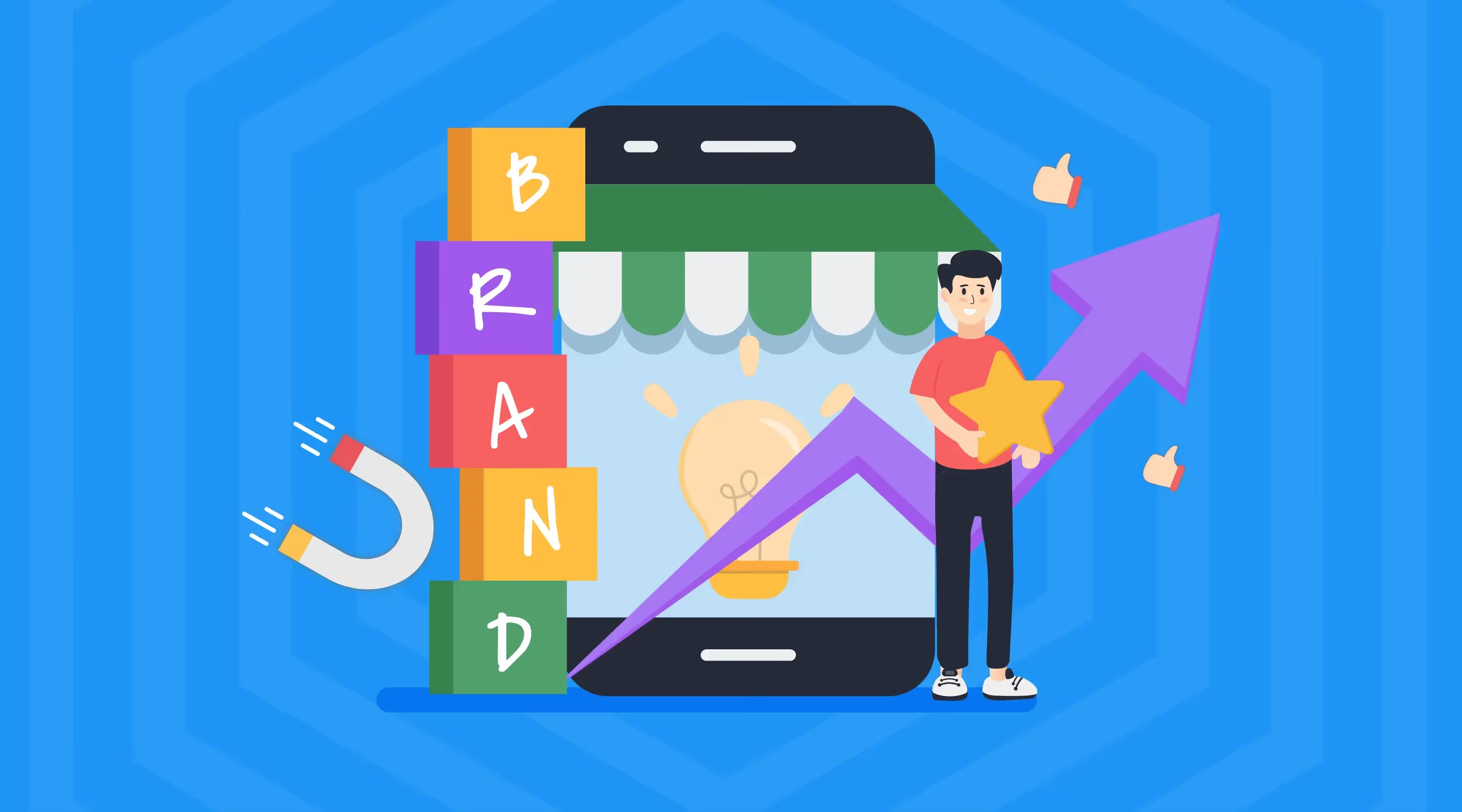
Brand equity is the extra value your brand name adds to your products in the minds of customers. When people trust, remember, and feel connected to your brand, they buy more often, stay longer, and recommend you to others. Positive brand equity lets you charge premium prices, launch new offers with less friction, and weather market ups and downs with more confidence.
In this guide, I will walk through the concept of brand equity in plain language, show how it works in daily business, and share practical ways to build and measure it. Think of it as brand equity for beginners, but with enough depth that you can immediately apply it to your own brand.
What is Building Brand Equity?
To understand building brand equity, you first need to be clear on what is brand equity and what the phrase brand equity meaning covers. At its core, brand equity represents the difference between how people value a generic product and how they value that same product when your brand name is attached to it. It is an intangible asset made of perceptions, memories, beliefs, and feelings that live in your customers’ minds.
Put another way, the concept of brand equity is the combined impact of brand awareness, brand associations, perceived quality, and loyalty on the choices people make. When those elements line up in your favor, you have positive brand equity. When they are damaged or missing, you may even slide into negative brand equity, where your name on a product can hurt its chances.
What best describes brand equity?
What best describes brand equity is the idea that customers are willing to cross the street, pay more, or wait longer just to get your brand instead of a very similar alternative. They trust that you will deliver a certain standard and experience, so the risk of choosing you feels lower.
In marketing terms, brand equity is the added value your name brings to your offers through recognition, positive associations, loyalty, and perceived quality. That is why brand equity in marketing is treated as a serious business asset, not just a “nice bonus” of branding.
How Does Building Brand Equity Work?
Brand equity does not appear overnight. It grows through a series of stages as people move from not knowing you at all to feeling that your brand fits who they are. One practical way to understand this is to look at a brand equity model such as Keller’s brand equity pyramid, which moves from identity to meaning, to response, and then to relationships.
Under the surface, four big forces shape your results: awareness, associations, judgments, and loyalty. You influence them through every touchpoint, from your logo and website to your emails, packaging, service, and community.
Awareness and Identity – The First Connection
The first step in the brand equity model is simple: people must know you exist. They should recognize your name, logo, colors, and core message when they see them, even if they are not ready to buy yet. At this stage you are building basic familiarity so that when a need arises, your brand is the one that springs to mind.
You build this early awareness with consistent visuals, a clear tagline, and repeated exposure in the right places. Search visibility, social content, events, and even old-school tactics such as a story in a brand equity newspaper column all contribute to this memory bank. The more often people have neutral or positive encounters with your brand, the stronger this layer becomes.
Meaning and Associations – What You Stand For
Once people recognize you, they start asking a deeper question: “What are you?” This is where you shape the meaning of your brand by showing how your product performs and what kind of image surrounds it. Customers watch whether you really solve the problem you claim to solve and what your brand seems to represent socially and emotionally.
Here you intentionally build associations: design, reliability, fun, status, safety, sustainability, or community. Over time, your brand becomes shorthand for a small set of ideas. If those ideas are aligned with what your audience wants from life, your brand equity climbs. If they are fuzzy or negative, your brand equity suffers.
Response – Judgments and Feelings
After repeated experiences, people form judgments about your competence, credibility, quality, and uniqueness. They also form feelings like trust, excitement, comfort, or disappointment. Both together create their overall response to your brand.
Thoughts and feelings are shaped by direct use of your product, content they consume, what friends say, and what they see online. Consistent quality, honest communication, and thoughtful service push their judgments and emotions in a positive direction. That is how you shift brand equity from neutral to positive.
Relationships and Resonance – When Your Brand Becomes “My Brand”
At the top level, people do not just buy your brand, they identify with it. They feel you “get” them and express something important about who they are. This is where brand loyalty becomes very strong and repeat purchases become almost automatic.
When you reach this level, customers join your communities, show up at your events, and proudly recommend you. They not only resist switching to competitors, they talk others out of switching as well. That resonance is where brand equity is at its strongest and most resilient.
Why is Building Brand Equity Important?
Positive brand equity lets you charge higher prices than similar competitors because people believe your brand is worth the extra money. That price premium translates into better margins and gives you more room to invest in better products, service, and marketing.
Strong brand equity also makes it easier to launch new products, extend product lines, and enter new markets because customers transfer their trust from existing offers to new ones. Investors and partners also tend to view brands with clear, positive equity as safer bets, since loyalty and recognition are hard to copy quickly.
Brand Equity vs Brand Value
Brand equity vs brand value is a common source of confusion. Brand equity lives in customer perception: awareness, associations, loyalty, and perceived quality. It is a marketing and behavioral idea, not a specific amount of money on a balance sheet.
Brand value, on the other hand, is the financial expression of that equity. It shows up when analysts or acquirers estimate how much your brand name itself is worth in currency. Brand equity creates the conditions that allow high brand value to exist, but the two are not identical.
Brand Strategy vs. Brand Equity
Brand strategy vs. brand equity is another important distinction. Brand strategy is your plan: the positioning, messages, audience choices, and experiences you design to shape how people see you.
Brand equity is the result of how that plan plays out in real life. You can design a thoughtful strategy, but if customers’ experiences do not match it, your equity will stay weak. Over time, you refine strategy based on what actually builds equity rather than what looks clever on paper.
Brand Equity Model and Brand Equity Formula
Many marketers use a brand equity model such as Keller’s pyramid or Aaker’s framework to organize their efforts. These models usually highlight elements such as brand awareness, brand associations, perceived quality, and loyalty as building blocks.
You will sometimes see a simple brand equity formula expressed as:
“Brand equity equals the value of a branded product minus the value of the same product without the brand name.”
This formula is a mental shortcut, not an exact calculation, but it helps remind you that equity lives in the gap between “any product” and “your product.”
Most Popular Brand Equity Examples
Looking at real brands makes the idea much clearer, so let us touch on a few classic brand equity examples. Apple is known for design, simplicity, and a seamless ecosystem, which allows it to charge premium prices on phones and laptops where hardware differences are often small.
Another example is Harley Davidson, where the motorcycle is only part of the story and the sense of identity and community does much of the heavy lifting. Luxury cosmetics brands, premium coffee chains, and sportswear brands like Nike all benefit from similar patterns where people buy into meaning, not just function. Business magazines and brand equity newspaper rankings love to highlight these leaders because their equity is visible even to casual observers.
If you run an ecommerce or dropshipping brand, the same principles apply. You may be sourcing from similar suppliers as others, yet by shaping a distinct identity, message, and experience, you can build equity far beyond the underlying products.
Elements of Building Brand Equity
Most frameworks agree on a few core brand equity elements. These usually include brand awareness, brand image or associations, perceived quality, and loyalty. Some models also add personality and customer perception as separate pieces, but they point toward the same foundation.
When you think about elements of brand equity, imagine them as four pillars:
- Awareness makes you easy to recall
- Associations make you meaningful
- Perceived quality makes you trustworthy
- Loyalty makes you durable.
Benefits of Building Brand Equity
Strong brand equity touches nearly every part of your business. It shapes how easily people notice you, how quickly they trust you, and how long they stay with you once they start buying. It also gives you more control over pricing and more freedom to experiment with new offers.
Here are some key benefits of brand equity:
- Price resilience and better margins
Customers with positive feelings toward your brand are more willing to pay a bit extra instead of chasing the lowest price. That margin gives you room to invest in quality, retention, and creative campaigns rather than racing to the bottom. - Higher loyalty and repeat purchases
When people feel connected to your brand, they come back more often and stay with you longer. That lines up with the Pareto principle idea that a small share of your customer base often delivers most of your future revenue. - Easier launches and extensions
A trusted brand can introduce new products or services under the same name with less friction. Customers assume that the new offer will live up to the standard they already know, so trials and word of mouth come faster. - More powerful word of mouth and community
Strong equity encourages people to recommend your brand to friends, family, and followers. Social media engagement, user-generated content, and communities all grow more naturally around brands people feel proud to be associated with. - Smoother partnerships and negotiations
Retailers, suppliers, and distributors prefer working with brands that already have pull with customers. Positive equity can improve your position in negotiations because partners know your label moves inventory.
How to Measure Building Brand Equity
Measuring brand equity can feel abstract, but you can track it with a mix of perception, behavior, and financial metrics. The goal is not to find one perfect number, but to watch trends across several signals.
Perception and Awareness Metrics
Start by tracking how many people recognize your brand and how they describe it. Surveys, brand recall studies, and prompted or unprompted awareness questions help you understand whether you come to mind in key buying moments. Sentiment analysis on reviews and social media comments adds another layer, revealing how people feel about your brand and why.
These perception metrics tell you whether your positioning is landing and which associations are strongest. If customers cannot easily say what you stand for or confuse you with others, you know awareness or meaning needs work.
Behavioral and Market Metrics
Next, look at what people actually do. Market share, repeat purchase rates, churn, and customer lifetime value all indicate how much pull your brand has against alternatives. High willingness to recommend and strong loyalty program engagement are also signs that equity is healthy.
On the digital side, direct traffic, branded search volume, and click rates on branded campaigns show whether people seek you out by name. Strong brand equity often appears as a steady base of direct demand that does not depend entirely on promotions.
Financial and Pricing Metrics
Finally, monitor financial measures that reflect brand equity. Can you maintain prices above category averages without losing volume? Are your marketing costs per acquired customer improving as brand recognition grows?
Over time, external brand valuations from analysts or acquirers can also give a sense of brand value as a financial asset. Combine these metrics with your qualitative understanding of the brand equity model to decide where to invest next.
Pros and Cons of Building Brand Equity
Building brand equity has clear advantages, but it also comes with responsibilities.
On the positive side, equity supports better margins, deeper customer relationships, and more stable revenue. It helps protect you from short-term shocks and gives you more influence over your category. You also attract better partners, talent, and opportunities because your brand is seen as credible.
On the downside, strong equity sets a high bar you must live up to every day. Customers expect consistency, and any missteps spread fast. Repositioning or changing direction becomes harder because people already have firm mental pictures of who you are. Investing in equity also requires patience; it is not a quick campaign but a long game.
Tips for Building Brand Equity
Here are some tips for building brand equity:
1. Know Your Audience Better Than Anyone
Brand equity starts with understanding the needs, desires, and frustrations of the people you serve. Speak to a clear group, not everyone, and build your story around what matters most to them. Detailed personas and direct conversations reveal language and themes that should show up across your brand.
2. Clarify Positioning and Promise
Decide what space you want to own in the market and commit to it. Your positioning should answer who you are for, what problem you solve, and why your way is meaningfully different. Consistent promises help people remember you and give them reasons to choose you even when cheaper options exist.
3. Design Every Touchpoint as Part of the Story
From your homepage to your packaging and onboarding emails, each touchpoint either strengthens or weakens your equity. Aim for a coherent feel: tone of voice, visual style, and customer experience should all reflect the same personality and values. Small details such as how you respond to messages or admit mistakes matter as much as big campaigns.
4. Build Communities, Not Just Campaigns
Long-term brand equity depends on shared identity. Invite customers into communities where they can meet each other, not just talk to you. Loyalty programs, clubs, social groups, or events create a sense of belonging that turns casual buyers into advocates.
If you run an online store, a platform such as Spocket can handle much of the operational work so you can invest more time into community, content, and service.
5. Choose Suppliers That Support Your Promise
If your brand stands for quality, sustainability, or fast delivery, your supplier choices need to match. Carefully selected partners make it easier to keep your customer promises and protect your equity over time.
6. Shape the Experience of Shopping With You
Think of the full journey from first impression to post-purchase and ask where you can add clarity, confidence, and delight. Simple navigation, clear product information, and transparent policies go a long way. If you run a Shopify store, an AI Shopify store builder can save you time setting up layouts so you can focus on the emotional and practical parts of the experience.
7. Tell Clear Product Stories
Product pages and descriptions are often the first close-up look people get at your brand. Use them to express your personality and to connect product features with real-life benefits.
Instead of generic descriptions, you can rely on AI writing tools to spark ideas, then refine the copy so it sounds like you. This is where tools for building brand equity support your consistency and voice across large catalogs.
8. Offer Real Value Before and After Purchase
People do not become loyal just because you ask. They keep coming back when they feel they receive real value: helpful content, reliable support, loyalty rewards, or community perks. Educational content and thoughtful emails that solve problems are strong examples of how to improve brand equity without pushing constant discounts.
If you use dropshipping, you can see how others approach this by looking at resources such as brand building dropshipping, then adapting the ideas to fit your own tone and audience.
Mistakes to Avoid When Building Brand Equity
Brand equity takes time to grow, but it can weaken quickly if you are careless. Many brands lose ground not because their product is bad, but because their actions confuse or disappoint customers. Keeping an eye on a few common traps will protect the equity you are working so hard to build.
Here are key mistakes to avoid when building brand equity:
- Inconsistent branding and mixed messages
When your visual identity, tone, or offers keep changing, people never get a clear sense of who you are. Confusion reduces trust, and trust is the foundation of loyalty. Commit to a recognizable style and refine it slowly instead of reinventing yourself every few months. - Treating customers as transactions, not relationships
If every interaction feels like a push to buy, people tune you out. Brand equity depends on long-term emotional connection, which comes from helpfulness, empathy, and genuine appreciation. Build routines for follow-ups, thank you messages, and listening to feedback. - Ignoring negative feedback or social complaints
Silence in the face of criticism sends a message that you do not care. Prompt, honest responses demonstrate respect and protect your reputation even when things go wrong. Over time, customers remember how you handled problems at least as much as the problems themselves. - Overpromising and underdelivering
Big claims may grab attention in the short term, but if the product or service cannot live up to them, your equity erodes. Align marketing claims with real capabilities and fix underlying issues instead of masking them with more promotion. Trust broken once is hard to win back. - Relying only on price promotions
Constant discounts train customers to see you as “the cheap option” rather than a brand with real meaning. That undermines your ability to build loyalty and charge fair prices later. Promotions should support your brand story, not replace it. - Neglecting existing customers while chasing new ones
It is tempting to put most of your energy into acquisition campaigns, but your current buyers are the real drivers of long-term brand equity. Give them reasons to stay, such as loyalty rewards, sneak peeks, or special content. Their stories and referrals become your strongest proof in the market.
Conclusion
Brand equity is not a logo, a campaign, or a one-time project. It is the sum of every promise you make and every promise you keep in the minds of your customers. When people know you, trust you, and feel that your brand fits who they are, your marketing becomes easier and your growth more sustainable.
Treat brand equity as a long-term asset worth protecting. Keep listening, keep improving, and keep aligning what you say with what you do. If you do that consistently, you will build a brand people choose even when they have many other options.
Start your dropshipping business today
Building Brand Equity FAQs
What is brand equity in simple terms?
Brand equity is the extra value your brand name adds to a product in customers’ minds. It shows up when people pick you over similar options, even at a higher price, because they trust you more. Over time, strong equity makes your marketing easier and your revenue more predictable.
How is brand equity different from brand value?
Brand equity is about perceptions: awareness, associations, and loyalty. Brand value is the financial worth that comes from those perceptions when someone calculates how much your brand name alone is worth. In short, brand equity shapes behavior, and brand value turns that behavior into a monetary estimate.
What are the main elements of brand equity?
Key elements of brand equity include brand awareness, perceived quality, associations, and loyalty. Awareness makes you easy to recall, quality and associations make you desirable, and loyalty keeps customers coming back. When all four work together, you build a strong, resilient brand that customers feel attached to.
How do I start building brand equity for a new business?
Begin by defining a clear audience and promise, then create a consistent identity around that promise. Deliver a great experience from first touch to repeat purchase, and listen carefully to feedback. Even small brands can grow strong equity by being reliable, honest, and memorable in a focused niche.
What metrics should I track to measure brand equity?
Track a blend of perception and behavior metrics: brand awareness, sentiment, and associations, plus repeat purchase rates, referrals, and market share. Add financial signals such as price resilience and customer lifetime value. Watching these over time gives a realistic view of how your brand equity is moving.
How can tools for building brand equity support my brand?
Tools for building brand equity can simplify tasks such as content creation, design, website setup, and customer relationship management. When you automate routine work, you can spend more energy on understanding customers, refining your message, and improving the experience. Those human touches are what make equity grow.


Launch your dropshipping business now!
Start free trial.avif)


Related blogs
How to Set Up Automated Order Fulfillment With Spocket and Shopify
Set up a smoother Shopify dropshipping workflow with Spocket by connecting your store, importing products, processing orders, syncing tracking, and reducing manual fulfillment tasks.

How to Open a Business Bank Account for Your Dropshipping Store
Set up your dropshipping finances the right way with a dedicated business bank account built for payouts, supplier payments, taxes, and long-term store growth.
Spocket vs Dropified: Which Tool Is Better for Multi-Store Scaling?
Compare Spocket and Dropified for multi-store dropshipping, supplier quality, automation, fulfillment, product sourcing, and scaling across ecommerce platforms.