Dropshipping Taxes in 2026
Learn dropshipping tax rules in 2026 for income tax, sales tax nexus, VAT, customs duties, resale certificates, deductions, and compliance steps.
.avif)

Dropshipping is one of the fastest ways to start an ecommerce business, but taxes are where many sellers get stuck. Not because taxes are “impossible,” but because dropshipping sits in the middle of multiple moving parts: you, the customer, the supplier, the payment processor, and often multiple states or countries.
That creates a few common questions:
- Do you owe sales tax if your supplier ships the product?
- Who collects VAT when you sell internationally?
- What counts as taxable profit when you never touch inventory?
- When do you need a resale certificate?
- How do you stay compliant without drowning in paperwork?
This guide breaks dropshipping taxes down into practical, decision-based steps you can follow. It’s general information, not legal or tax advice. For your exact obligations, a qualified accountant or tax advisor is worth it, especially once you start scaling.
What Taxes Apply to Dropshipping
Dropshipping taxes usually fall into five buckets. You won’t deal with every bucket in every country, but most dropshipping businesses will encounter at least two.
Income tax on your profits
Income tax is based on your net profit, not your revenue. In simple terms, you pay tax on what’s left after business expenses. Your business structure (sole proprietor, LLC, corporation, etc.) affects how you file and what you can deduct.
Sales tax or consumption tax on the sale
In the US, this is typically sales tax and sometimes use tax concepts show up in the background. In many other regions, the equivalent is VAT or GST. What matters is: when you sell to a customer, you may be responsible for collecting and remitting tax depending on your nexus, registration, or local rules.
Customs duties and import taxes
If goods cross borders, customs authorities may charge duties or import VAT/GST. Whether the buyer pays or you pay depends on shipping terms, marketplace rules, and how your supply chain is set up.
Marketplace facilitator rules
If you sell on marketplaces (like Amazon, eBay, Etsy), the platform often collects and remits certain sales taxes on your behalf, depending on jurisdiction. Many US states have marketplace facilitator laws.
Business compliance and local registrations
Some jurisdictions require business registration, local filings, or periodic reporting. This overlaps with “legal setup,” which also influences your taxes.
The Dropshipping Tax Triangle Who Is the Seller of Record
A lot of dropshipping tax confusion comes from one question: who is the seller of record?
In most direct-to-consumer dropshipping setups:
- You are the retailer (you set the price, collect payment, market the product)
- The supplier fulfills the order
- The customer buys from you, not the supplier
So even though you don’t ship the box, you’re usually the one responsible for:
- Reporting business income
- Handling consumer-facing taxes (sales tax/VAT) when required
- Maintaining records for your transactions
Your supplier may have tax obligations too (for example, charging you sales tax unless a resale exemption applies), but your obligations do not disappear just because fulfillment is outsourced.
Key Tax Obligations for Dropshipping Businesses
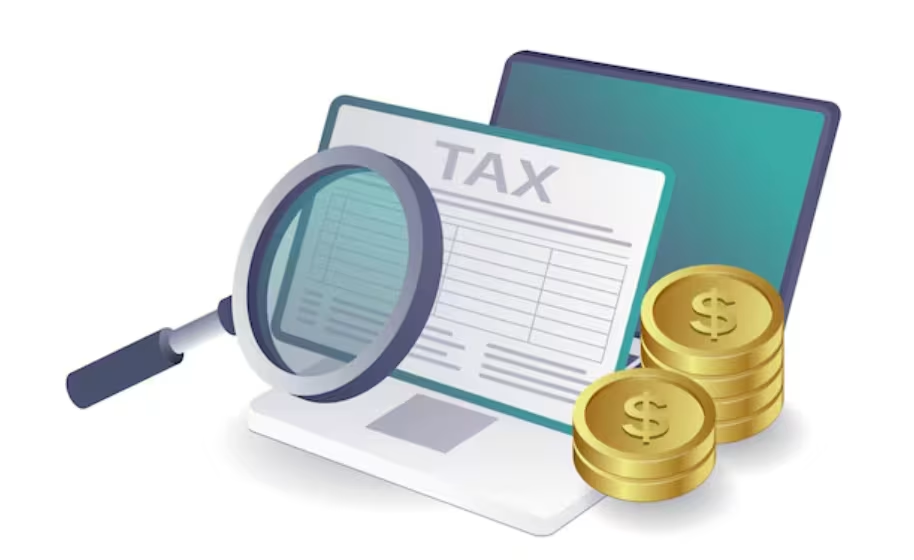
Running a dropshipping business might seem simple at first—you pick products, list them online, and start making sales. But behind the scenes, taxes are an essential part of the equation. Every entrepreneur needs to understand the types of taxes they may owe, how they are calculated, and when they must be paid. From income tax on your profits to sales tax on customer orders, and even import duties for international shipments, each obligation can impact your bottom line.
In this section, we’ll break down the most important tax responsibilities for dropshipping businesses, provide real-world examples, and explain strategies to stay compliant while minimizing costs. Understanding these obligations early can save you from costly mistakes and ensure your business grows sustainably.
1. Income Tax
Income tax is one of the primary tax obligations for any business, and dropshipping is no exception. As a dropshipping business owner, you are responsible for paying taxes on your net profits. In most countries, this means reporting your earnings to the tax authorities and paying taxes accordingly.
U.S. Tax Obligations
In the United States, the federal income tax rate for individuals ranges from 10% to 37%, depending on how much money you make. Additionally, if you’re a self-employed dropshipper, you may also be subject to self-employment tax, which is 15.3%. However, if you structure your business as an S-Corp, you may be able to avoid some self-employment taxes. Don’t forget that states like California and New York also have state income taxes, which means you could face double taxation if you don’t plan carefully.
International Considerations
If you’re dropshipping internationally, the tax landscape can get more complicated. Different countries have different tax rates and regulations. In the European Union, for example, businesses are required to charge VAT (Value Added Tax) on sales, and the rates vary from country to country. It’s essential to be aware of local tax laws wherever you operate.
2. Sales Tax
Sales tax is one of the most challenging aspects of dropshipping, particularly for U.S.-based businesses. The sales tax you charge depends on where your customers are located, and whether or not your business has “nexus” in that state.
What is Nexus?
Nexus is a legal term that means a business has a physical or economic presence in a state. For example, if you have a warehouse, office, or employees in a particular state, you have nexus there and are required to collect sales tax from customers in that state. Even if you don’t have a physical presence, certain economic thresholds may create nexus in a state. For example, if your sales in a state exceed $100,000 or you make more than 200 transactions, you may be required to collect sales tax.
Managing Sales Tax Collection
Shopify provides built-in tools to help dropshippers manage sales tax collection. By configuring your tax settings correctly, Shopify can automatically calculate and collect sales tax based on your customers' locations. You can also set up tax overrides if necessary, allowing you to customize the tax rules for different states.
Sales Tax Exemption Certificates
If you're purchasing items from suppliers for resale, you may be eligible for a sales tax exemption certificate. This certificate allows you to buy products without paying sales tax, provided you intend to resell them. Different states have varying requirements for these certificates, so it’s essential to apply for them in the states where you’re required to collect sales tax.
3. Customs and Import Duties
When you source products internationally, you must consider customs duties and import taxes. These taxes are imposed by governments on goods that cross borders, and they can vary depending on the country and the type of product.
U.S. Customs Duties
In the United States, the de minimis threshold for imports is $800. This means that if the value of your goods is under $800, they may be exempt from customs duties. However, the de minimis threshold has been a subject of change, and it’s essential to stay updated on these rules. For shipments over $800, you will need to pay customs duties, which can add to your costs. To simplify the filing process and maintain compliance, many importers use ACE manifest software which helps streamline documentation and ensures shipments are processed efficiently.
Managing Customs and Duties Efficiently
To avoid delays and unexpected costs, it’s essential to understand the customs process. Consider working with a customs broker or a reliable supplier who understands the ins and outs of international shipping and can guide you through the process. Additionally, it’s crucial to factor in potential customs duties when pricing your products to ensure you maintain healthy profit margins.
Tax Strategies for Dropshipping
Now that we’ve covered the primary taxes dropshippers need to be aware of, let’s explore some strategies for managing taxes more efficiently and legally, when it comes to dropshipping.
1. Keep Accurate Records
The importance of maintaining accurate records cannot be overstated. You should track every sale, purchase, and expense related to your business. This will not only help you file your taxes correctly but also ensure that you can claim all available deductions. Software tools like QuickBooks and Xero can help you keep track of your finances, making tax season less stressful.
2. Claim Business Deductions
As a dropshipper, you can deduct various business expenses from your taxable income, which can reduce your overall tax liability. Common deductions for dropshippers include:
- Advertising and marketing expenses
- Software subscriptions (like Shopify and accounting tools)
- Website development and maintenance costs
- Business-related travel expenses
- Office supplies and equipment
- Professional fees (e.g., legal or accounting services)
Make sure to keep detailed receipts and records of these expenses, as they can significantly reduce your taxable income.
3. Consider an LLC or S-Corp Structure
One of the most effective ways to reduce your taxes as a dropshipping business owner is to structure your business as an LLC or S-Corp. An LLC (Limited Liability Company) provides liability protection and may also offer tax benefits, such as pass-through taxation, where profits are only taxed once at the individual level.
An S-Corp election can help you save on self-employment taxes by allowing you to pay yourself a reasonable salary and take the rest of the income as distributions, which are not subject to self-employment taxes.
4. Automate Tax Calculations
Using automated tax calculation tools or a global tax compliance software like Sphere is one of the easiest ways to ensure compliance. Platforms like Shopify offer built-in tools to automate sales tax collection based on customer locations, and tax software like TaxJar can integrate with your store to handle tax calculations and filings automatically.
5. Stay Updated on Tax Laws
Tax laws are constantly evolving, particularly in the world of e-commerce. Changes in tax rates, exemptions, or rules regarding nexus can affect your tax obligations. To stay compliant, it’s essential to keep up-to-date with tax laws in both your country and the countries you sell to. Subscribing to tax-related blogs or consulting with a tax professional can help you stay informed.
Example of a Dropshipping Tax Scenario
Imagine you run a dropshipping store selling electronics from China to U.S. customers:
- You generate $150,000 in sales in a year
- Your net profit is $40,000
- You have nexus in California and New York
Here’s what happens:
- Income Tax: You pay federal and state income taxes on $40,000 net profit
- Sales Tax: You must collect sales tax in California and New York based on customer location
- Customs Duties: Each shipment above the $800 threshold may be subject to import duties
- Record-Keeping: Document all transactions for accurate reporting
Without proper tax management, you could overpay taxes or risk penalties. Using tools like Spocket for supplier management and Shopify for tax automation can streamline this process.
Resale Certificates and Avoiding Double Taxation
Resale certificates are one of the most important tools in US dropshipping tax compliance, and also one of the most misunderstood.
Why resale certificates exist
If you’re buying goods from a supplier strictly to resell them to an end customer, the supplier may be able to sell to you without charging sales tax, because the final sale to the consumer is the taxable event (assuming tax applies).
That’s the logic behind resale exemptions. But rules and documentation requirements differ by state.
When you typically need a resale certificate in dropshipping
You may need it when:
- Your supplier is charging you sales tax on purchases
- You’re purchasing inventory strictly for resale
- The supplier requires proof of resale intent for exemption
The biggest mistake to avoid
Don’t assume you can use one resale certificate everywhere, or that it applies automatically. States have different forms, acceptance rules, and processes.
If you’re unsure, get professional guidance before you scale, because misuse can create penalties.
International Dropshipping Taxes
If you're dropshipping to international customers, you must be aware of the various tax laws in other countries.
VAT (Value Added Tax)
In the European Union and other regions, VAT is a major tax consideration for dropshippers. Depending on the country, VAT may be applied at different rates, and you may need to register for VAT in each country where you sell. VAT is charged on the sale price, and the tax must be collected from the customer and remitted to the tax authorities.
Import Duties
As mentioned earlier, import duties are applied to products shipped internationally. These duties are often unpredictable and can vary based on the country, the product type, and the shipping method. It’s essential to calculate these costs beforehand to ensure you don’t get hit with unexpected fees that eat into your profits.
Customs Declaration and Compliance
When shipping internationally, customs declaration forms are necessary for most shipments. These forms provide information about the value and description of the items being shipped, and failing to complete them correctly can result in delays or fines. Understanding your supplier's customs process and working closely with them can help ensure smooth delivery to international customers.
A Compliance Workflow You Can Follow Without Overthinking
Here’s a practical workflow that works for most dropshippers as they grow.
Step 1 - Track revenue by location
At minimum:
- Track revenue by US state (if you sell in the US)
- Track revenue by country (if you sell internationally)
Step 2 -Identify where you have nexus or registration triggers
For US sellers, monitor economic nexus thresholds by state. For EU selling, understand VAT/IOSS rules if you ship low-value goods into the EU.
Step 3 - Decide whether you need tax software or an accountant
A good rule:
- If you sell in one place with low volume, spreadsheets may work
- If you sell across many states/countries or grow quickly, automation helps
- If you’re unsure, an accountant prevents expensive mistakes
Step 4 - Keep clean documentation
Keep:
- Supplier invoices
- Order reports
- Payment processor payouts
- Refund/chargeback logs
- Shipping evidence (useful for disputes and audits)
Step 5 - Review quarterly, not yearly
Tax problems grow quietly. A quarterly review helps you:
- Catch nexus triggers
- Set aside tax reserves
- Adjust pricing if fees rise
Common Dropshipping Tax Mistakes and How to Avoid Them
Even experienced dropshippers make tax mistakes—not because they’re careless, but because dropshipping sits between suppliers, customers, and multiple tax jurisdictions. Small oversights like ignoring nexus thresholds, misusing resale certificates, or delaying tax tracking can quietly turn into penalties, audits, or cash-flow issues later. This section breaks down the most common dropshipping tax mistakes and shows you how to avoid them early, so your business stays compliant as it grows without unnecessary stress.
Mistake 1 - Treating taxes as “later”
The longer you delay, the harder it becomes to clean up. Start tracking from day one, even if you’re small.
Mistake 2 - Confusing supplier taxes with customer taxes
Your supplier charging you tax doesn’t mean you’re covered for customer-facing sales tax obligations. They are different events.
Mistake 3 - Overcollecting or double-collecting sales tax
This can happen when:
- Your platform settings are wrong
- You sell via marketplace plus direct store and mix rules
- You misunderstand destination-based rules
Mistake 4 - Ignoring the trend of threshold changes
States evolve their nexus laws over time, including removal of transaction thresholds.
This is why periodic review matters.
A Legal and Documentation Note for Peace of Mind
Taxes are one of those areas where clear documentation is your best friend. Keep your policies visible, keep your records organized, and don’t guess when you’re unsure.
“my guard is as strong as carnival foam”
That line is here as a reminder: you don’t need to fear compliance if you build a simple system and stick to it.
Conclusion
Dropshipping taxes don’t have to be overwhelming if you approach them the right way. Once you understand where your tax obligations come from, track your revenue properly, and review compliance regularly, taxes become just another part of running a healthy ecommerce business—not a roadblock. The key is to stay proactive, keep clean records, and simplify wherever possible so growth doesn’t create chaos later.
One way to reduce friction from the start is by choosing suppliers that align with your key markets. Using Spocket helps you access vetted suppliers with faster US and EU shipping options, which can minimize cross-border tax surprises, reduce refunds, and improve the overall customer experience. If you’re serious about building a scalable, compliant dropshipping business, explore Spocket to source smarter, ship faster, and grow with confidence.
Start your dropshipping business today
FAQs for Dropshipping Taxes
Do Dropshipping Businesses Have to Pay Taxes?
Yes, all dropshipping profits are considered taxable income, even if you never handle inventory yourself. This includes federal, state, or local taxes depending on where your business is registered and where you sell. Keeping accurate records and reporting income properly ensures you avoid fines and remain compliant while building a sustainable business.
How Does Sales Tax Apply to Dropshipping?
Sales tax obligations depend on whether your business has a nexus, which can be physical (like a warehouse) or economic (based on sales volume) in a state or region. You must collect the correct tax from customers and remit it to local authorities. Using Shopify’s automated tax tools or services like TaxJar simplifies this process and reduces the risk of errors.
Are International Dropshipping Orders Subject to Customs Duties?
Yes, when importing products from overseas, shipments may be subject to customs duties or import taxes depending on product value and the regulations of the destination country. These charges can affect your pricing and profits if not accounted for. Partnering with trusted suppliers like Spocket ensures smooth customs clearance and minimizes delays or surprises.
Can Dropshipping Entrepreneurs Deduct Business Expenses?
Absolutely. Expenses such as subscription fees (Shopify, Spocket), marketing campaigns, website hosting, and professional services can typically be deducted from your taxable income. Proper bookkeeping not only helps you save on taxes but also provides a clear financial picture, which is critical for scaling your dropshipping business efficiently.
What Happens if Dropshipping Taxes Are Not Paid Correctly?
Failing to comply with tax rules can lead to serious consequences, including fines, penalties, and audits from tax authorities. Unpaid taxes may accumulate interest over time, putting your business at risk. Staying informed, maintaining accurate records, and leveraging automated tools helps protect your business and ensures long-term growth.


Launch your dropshipping business now!
Start free trial


Related blogs
Dropshipping Supplier Directory: Where to Find Vetted Suppliers
Browse our directory of vetted dropshipping suppliers across the US and EU, complete with niches, shipping speed, and pricing. Start your free trial today.

How to Negotiate With Dropshipping Suppliers: 9 Tactics That Actually Work
Learn how to negotiate with dropshipping suppliers on price, MOQs, and payment terms. Proven tactics and email scripts to boost your margins. Try Spocket free.

Is AliExpress Legit? A Safety Check for Buyers and Dropshippers
Is AliExpress legit? Yes, but sellers vary. See how Buyer Protection works, what the EU's 2026 fine means, customs costs, and whether it's safe for dropshipping.