What to Do When Your Dropshipping Store Is Not Getting Sales
Learn why your dropshipping store is not converting and how to fix product, traffic, pricing, trust, checkout, and marketing issues.
.avif)

Starting a dropshipping store can feel exciting at first. You choose a niche, add products, design your website, write product descriptions, connect payment methods, and finally launch. Then comes the part every seller waits for: the first sale.
But what happens when that sale does not come?
Maybe your store is getting visitors, but nobody is buying. Maybe people are clicking your ads, viewing product pages, or even adding items to cart, but your sales dashboard stays empty. This can feel confusing, especially when you have already spent time and money building your store.
A store usually does not stop making sales or fail to convert without a reason. Something in the buying journey is creating friction, confusion, or doubt. This guide explains what to do when your dropshipping store is not getting sales, how to diagnose the real issue, and how to fix the problems that often stop visitors from becoming customers.
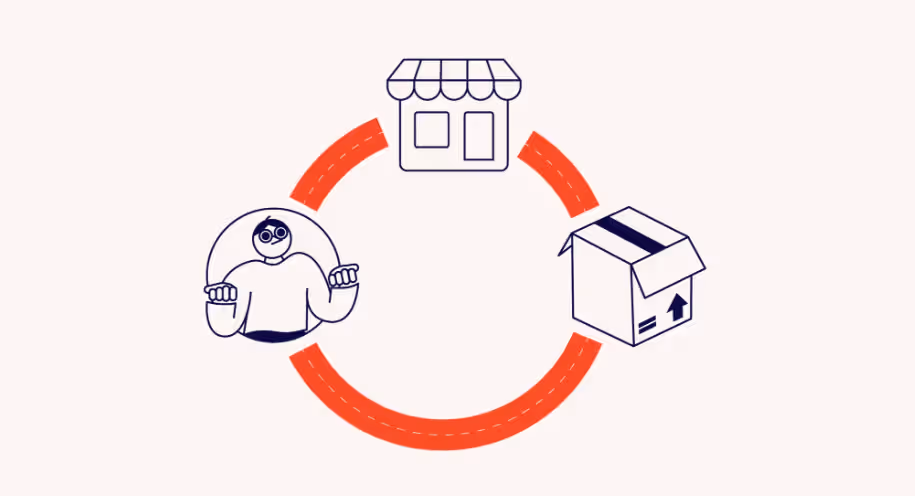
Steps to Follow to Increase Sales for your Dropshipping Store
Increasing dropshipping sales is not about changing everything at once. It starts with understanding where customers drop off, then improving the areas that affect buying decisions the most. From choosing better products and strengthening product pages to building trust, improving checkout, and retargeting visitors, these steps help you fix your sales funnel in a clear and practical way.
1. Start by Finding Where the Problem Is Happening
Before you change your products, redesign your store, or pause your marketing, identify where the sales problem starts. A dropshipping store can fail to sell for many reasons, and each one needs a different solution. This section helps you separate a traffic problem from a conversion problem so you can make smarter fixes.
Some stores have almost no traffic. Some get visitors but no add-to-carts. Some get add-to-carts but no checkout starts. Others get checkout starts but lose customers before payment. Each stage tells you something about what is not working.
Start by checking your analytics. Look at the full path from visitor to buyer instead of focusing only on revenue. Review:
- Total sessions
- Traffic sources
- Product page views
- Add-to-cart rate
- Checkout starts
- Completed purchases
- Bounce rate
- Average session duration
- Top landing pages
- Device type
- Returning visitor rate
If your store has very little traffic, your main issue is visibility. You need better marketing through SEO, paid ads, Pinterest, TikTok, Instagram, influencers, email, or content. But if your store has traffic and no sales, the issue is more likely conversion. That means people are arriving but not confident enough to buy.
Separate Traffic Problems From Conversion Problems
A store with no traffic needs more qualified visitors. A store with traffic but no sales needs better product pages, trust signals, offers, or checkout flow.
Ask yourself:
- Are visitors actually interested in this product?
- Did they come from buyer-intent content or casual browsing?
- Does your ad match your landing page?
- Are your keywords attracting the right shoppers?
- Are visitors leaving quickly?
- Are people viewing products but not adding to cart?
If the wrong people visit your store, even a great product page may not convert. Focus on attracting shoppers who already care about your niche, product category, or problem your product solves.
2. Check If Your Product Has Real Demand
A dropshipping store often fails because the product is weak. A product may look interesting to you, but that does not mean customers want it enough to buy. Product demand is the foundation of every sale, so this is one of the first areas to review.
Dropshipping is highly competitive. Customers can compare prices, shipping times, reviews, and alternatives within minutes. If your product is generic, overpriced, low-quality, or easy to find everywhere, shoppers may leave without taking action.
A strong dropshipping product usually has at least one clear reason for customers to care. It may:
- Solve a specific problem
- Save time
- Make life easier
- Look visually appealing
- Feel giftable
- Fit a passionate niche
- Have strong emotional appeal
- Be hard to find locally
- Offer good perceived value
- Work well in videos
- Encourage impulse buying
If your product does not create desire or solve a problem, your store may struggle even with good traffic.
Validate the Product Before Scaling
Do not assume a product is worth selling because another store has listed it. Validate it with real signals before spending more money on ads or content. Check:
- Search demand
- Competitor reviews
- Social media engagement
- TikTok comments
- Pinterest saves
- Marketplace questions
- Customer pain points
- Product page behavior
- Ad engagement
If people click your ad but do not add the product to cart, your product may not be strong enough, or your page may not explain its value clearly.
When using Spocket, look for products with clear benefits, strong visuals, reliable suppliers, and a niche fit. Better supplier quality can improve customer trust, reduce complaints, and support long-term growth.
Avoid Selling Random Products With No Store Identity
Many new dropshippers add too many unrelated products. A store selling pet toys, beauty tools, phone cases, kitchen gadgets, and gym accessories at the same time can feel confusing.
Customers trust stores that look intentional. A focused niche makes your brand easier to understand and easier to market.
Instead of building a random catalog, organize your store around a clear audience or theme, such as:
- Pet products for small dog owners
- Home organization for small apartments
- Beauty tools for simple skincare routines
- Travel accessories for frequent flyers
- Baby essentials for new parents
- Desk accessories for remote workers
A clear niche helps customers understand why your store exists and why they should buy from you.
3. Review Your Product Pages Carefully
Your product page is where interest turns into action. If visitors are viewing your products but not buying, your product page may not be doing enough to build trust, explain value, or remove doubts.
Many dropshipping product pages look rushed. They use copied supplier descriptions, weak images, vague benefits, missing shipping details, and no social proof. Customers do not get enough information to feel safe buying.
A strong product page should answer:
- What is the product?
- Who is it for?
- What problem does it solve?
- Why is it useful?
- What makes it different?
- How does it work?
- What size, material, or features does it have?
- How long does shipping take?
- Can customers return it?
- Why is this store trustworthy?
If your page does not answer these questions, visitors may leave even if they like the product.
Rewrite Supplier Descriptions
Supplier descriptions are usually not written to sell. They often sound robotic, technical, or incomplete. Copying them directly makes your store feel generic.
Rewrite descriptions in your own brand voice. Focus on benefits, use cases, and customer concerns.
Instead of: “Portable storage organizer made with durable material.”
Write: “Keep your bathroom, vanity, desk, or kitchen counter organized with a compact storage organizer that keeps everyday essentials easy to reach without taking up too much space.”
The second version helps the customer imagine using the product. That is what a good product description should do.
Use Better Product Images
Customers cannot touch or test dropshipping products before buying. Images carry most of the trust. Use:
- Clear product images
- Lifestyle images
- Close-up detail shots
- Size comparison images
- Product-in-use images
- Before-and-after visuals
- Short videos where possible
If possible, order samples and create your own photos or videos. Original visuals make your store look more trustworthy and help you stand out from competitors using the same supplier images.
4. Improve Trust Signals Across Your Store
Trust is one of the biggest reasons visitors do not buy from dropshipping stores. A customer may like your product but still hesitate if your store feels new, incomplete, or risky. This section focuses on making your store feel credible, transparent, and safe to buy from.
Many dropshipping stores lose sales because they look unfinished. They have no About page, no contact details, unclear shipping information, no return policy, and no real brand story. Customers may wonder:
- Will this store deliver my order?
- How long will shipping take?
- Can I return the product?
- Is payment secure?
- Is the product good quality?
- Can I contact support?
- Why should I buy from this store?
If your store does not answer these concerns, people may leave before checkout.
Add Essential Store Pages
Every dropshipping store should have basic trust pages. Add:
- About Us page
- Contact page
- Shipping policy
- Return and refund policy
- Privacy policy
- Terms of service
- FAQ page
- Track order page
These pages do not need to be long, but they should be clear and easy to find. Your About page should explain who your store helps, what products you offer, and why customers can trust you.
Be Clear About Shipping
Shipping uncertainty can stop a sale immediately. If customers do not know when their order will arrive, they may not take the risk.
Be honest about delivery times. If shipping takes 7–14 business days, say it clearly. Do not hide shipping details until checkout.
Show shipping information:
- On product pages
- In your FAQ
- In your shipping policy
- During checkout
- In confirmation emails
Add Reviews and Social Proof
Reviews help customers feel safer. If you have customer reviews, display them on product pages. If your store is new, use other trust signals such as clear policies, secure checkout icons, real product photos, helpful FAQs, and contact options.
Avoid fake reviews. They often look suspicious and can damage trust.
5. Review Your Pricing and Offer
Sometimes the product is not the issue. The offer is. A product can be interesting, but if the price feels too high, shipping feels expensive, or the value is unclear, customers may hesitate.
Dropshipping customers compare quickly. If they can find a similar item elsewhere for less, you need to give them a reason to buy from you. That reason could be better branding, faster shipping, a helpful bundle, stronger product information, or better customer support.
Calculate Your Real Margin
Before lowering prices, calculate your true costs. Include:
- Product cost
- Shipping cost
- Platform fees
- Payment processing fees
- App costs
- Ad spend
- Discounts
- Returns
- Taxes where applicable
A product that looks profitable at first may not be profitable after all costs. You need enough margin to cover marketing and still make money.
Improve the Offer Instead of Only Lowering the Price
Lowering the price is not always the best fix. Sometimes you need to increase perceived value. Test:
- Free shipping threshold
- First-order discount
- Bundle discount
- Buy more, save more offer
- Gift with purchase
- Product kits
- Limited-time offer
- Seasonal promotion
For example, instead of selling one kitchen organizer, create a “Small Kitchen Storage Set.” Instead of selling one pet grooming tool, create a “Pet Care Essentials Kit.” Bundles can make the offer feel more useful and increase average order value.
6. Check the Quality of Your Traffic
If your store gets traffic but no sales, traffic quality may be the issue. Not all visitors are equal. Some people click out of curiosity, some are not ready to buy, and some may not be the right audience at all.
A store can get thousands of visitors and still make no sales if the wrong people are visiting.
Review Your Traffic Sources
Check where visitors are coming from and how each source behaves. Review:
- TikTok ads
- Facebook ads
- Instagram Reels
- Google search
- Influencer campaigns
- Email campaigns
- Organic social
- Referral traffic
Compare bounce rate, time on site, add-to-cart rate, and purchases by source. One channel may bring many visitors but no buyers. Another may bring fewer visitors but better conversion.
Focus on qualified traffic, not vanity traffic.
Match the Ad to the Landing Page
Your ad, post, or pin creates an expectation. Your landing page must match it.
If your ad says “best gift for dog moms,” do not send people to your homepage. Send them to a product page or collection focused on dog mom gifts.
If your TikTok video shows a problem-solving product, send users directly to that product page with the same problem and benefit explained clearly.
Message mismatch kills conversions. Customers should feel like they landed in the right place immediately.
7. Simplify the Checkout Process
If visitors add products to cart but do not complete checkout, the issue may be friction at the final step. Checkout should feel simple, clear, and trustworthy. Common checkout issues include:
- Surprise shipping costs
- Forced account creation
- Limited payment options
- Slow checkout pages
- Discount code confusion
- Missing trust signals
- Currency mismatch
- Payment errors
- No clear return policy
- Too many form fields
Offer Trusted Payment Options
Make it easy for customers to pay. Depending on your market, useful payment options may include credit cards, debit cards, PayPal, Shop Pay, Apple Pay, Google Pay, or local payment methods.
The easier the payment process feels, the fewer chances customers have to abandon the purchase.
Avoid Surprise Costs
Do not hide shipping fees until the final step. Surprise costs are one of the fastest ways to lose customers.
If you offer free shipping, say it clearly. If shipping is paid, explain it before checkout. A free shipping threshold can also encourage customers to add more items while reducing hesitation.
8. Improve Store Speed and Mobile Experience
Most dropshipping traffic comes from mobile devices, especially from TikTok, Instagram, Facebook, and Pinterest. If your store is slow or hard to use on mobile, you will lose sales.
Check your store on a real phone, not only desktop preview. Review:
- Page speed
- Image loading
- Button size
- Add-to-cart visibility
- Font readability
- Product description layout
- Menu navigation
- Checkout process
- Popups
- Payment buttons
Avoid too many popups. A discount popup, chat popup, email popup, and spin wheel appearing together can make the store feel spammy.
Make the Add-to-Cart Button Easy to Find
Your product page should make the next step obvious. The add-to-cart button should be visible, especially on mobile.
Use clear CTA text such as:
- Add to Cart
- Buy Now
- Get Yours Today
- Shop the Set
Do not hide the button under long descriptions or unnecessary sections.
9. Build Email and SMS Recovery Flows
Many visitors will not buy on their first visit. That does not mean they are lost. Email and SMS can bring them back.
A strong dropshipping store should include follow-up marketing, not only ads. Email helps you recover abandoned carts, welcome new subscribers, promote offers, and encourage repeat purchases.
Set Up Essential Email Flows
Start with the basics:
- Welcome email
- Abandoned cart email
- Browse abandonment email
- Post-purchase email
- Product education email
- Review request email
- Win-back email
An abandoned cart sequence is especially important. If someone added a product to cart, they showed buying intent. A reminder can recover sales that would otherwise be lost.
Use Popups Carefully
Offer a first-order discount, free shipping code, or useful guide in exchange for an email address. Keep the popup simple and easy to close.
Do not show it immediately before users understand your store. Give visitors a little time to browse first.
10. Strengthen Your Marketing Strategy
A dropshipping store rarely gets sales just because products are listed online. You need marketing that creates interest and explains why the product matters. Good marketing shows:
- The problem
- The product in use
- The result
- Why it matters
- Why now is a good time to buy
Test Different Content Angles
One product can be marketed in several ways. Try angles such as:
- Problem-solution
- Before and after
- Gift idea
- Seasonal use
- Lifestyle inspiration
- Product demonstration
- Unboxing
- Comparison
- Tutorial
- Bundle offer
- Customer story
For example, a portable blender can be promoted as a fitness product, travel essential, office lunch tool, dorm room item, or gift for smoothie lovers.
Do Not Depend on One Channel
Many dropshippers rely on one traffic source. That is risky.
Use a mix of:
- TikTok
- Instagram Reels
- SEO blog posts
- Email marketing
- SMS marketing
- Influencer content
- Google Shopping
- Facebook ads
- Retargeting
If one channel slows down, your store should still have other ways to reach customers.
11. Test One Change at a Time
When a store is not getting sales, it is tempting to change everything at once. But if you redesign the page, change the price, switch the product, rewrite the ad, and add a discount at the same time, you will not know what worked.
Test one major thing at a time. You can test:
- Main product image
- Product title
- Price
- Offer
- Product description
- Call-to-action
- Landing page layout
- Ad creative
- Audience targeting
- Shipping offer
- Checkout settings
- Email subject line
Give each test enough traffic before judging. A few clicks are not enough data.
Know When to Replace the Product
Sometimes the product is simply not strong enough. If you have tested product page improvements, pricing, traffic quality, trust signals, and offers but still see no buying intent, it may be time to move on. Signs a product may need replacing include:
- Lots of views but no add-to-carts
- Poor ad engagement
- Low click-through rate
- Negative comments
- Weak perceived value
- Too many cheaper alternatives
- Poor supplier quality
- Limited product appeal
Using Spocket can make product testing easier because you can explore different supplier options and product categories without rebuilding your entire store.
Final Thoughts
A dropshipping store with no sales can feel discouraging, but it does not always mean the business is doomed. Most sales problems are fixable once you identify where the funnel is breaking.
If you use Spocket, choose products strategically. Look for reliable suppliers, strong visuals, clear customer value, and products that fit a focused niche. Then support those products with better product pages, stronger marketing, and a smoother customer experience.
Dropshipping sales do not happen just because a store exists. They happen when the right product reaches the right audience through the right offer. Fix that connection, and your store has a much better chance of turning traffic into sales.
Start your dropshipping business today
FAQs About Dropshipping Stores Not Getting Sales
Why is my dropshipping store not getting sales?
Your dropshipping store may not be getting sales because of weak product demand, poor traffic quality, unclear pricing, low trust, weak product pages, slow website speed, checkout friction, or lack of follow-up marketing. Start by checking analytics to see where visitors are dropping off.
What should I do first if my store has traffic but no sales?
Start by reviewing your product pages. Check your images, descriptions, pricing, shipping information, trust signals, and call-to-action. If visitors are viewing products but not adding to cart, the page or offer likely needs improvement.
How much traffic do I need before judging my store?
You need enough targeted traffic to make a fair decision. A few visits are not enough. Try to get at least 100–200 relevant visitors before drawing conclusions, then review add-to-cart rate, checkout starts, and purchases.
Why are people adding to cart but not buying?
People may abandon checkout because of surprise shipping costs, limited payment methods, unclear delivery times, lack of trust, discount code issues, slow checkout, or payment errors. Test the checkout process yourself on mobile and desktop.
Should I lower my prices to get sales?
Not always. Lowering prices can reduce profit margins. Instead, improve the offer with bundles, free shipping thresholds, first-order discounts, better product descriptions, stronger images, and more trust signals.


Launch your dropshipping business now!
Start free trial


Related blogs
Dropshipping Supplier Directory: Where to Find Vetted Suppliers
Browse our directory of vetted dropshipping suppliers across the US and EU, complete with niches, shipping speed, and pricing. Start your free trial today.

How to Negotiate With Dropshipping Suppliers: 9 Tactics That Actually Work
Learn how to negotiate with dropshipping suppliers on price, MOQs, and payment terms. Proven tactics and email scripts to boost your margins. Try Spocket free.

Best Clothing Dropshipping Suppliers: The 2026 Guide
Compare the best clothing dropshipping suppliers for 2026 — US/EU shipping speeds, pricing, and product quality — and find the right fit to launch your store.