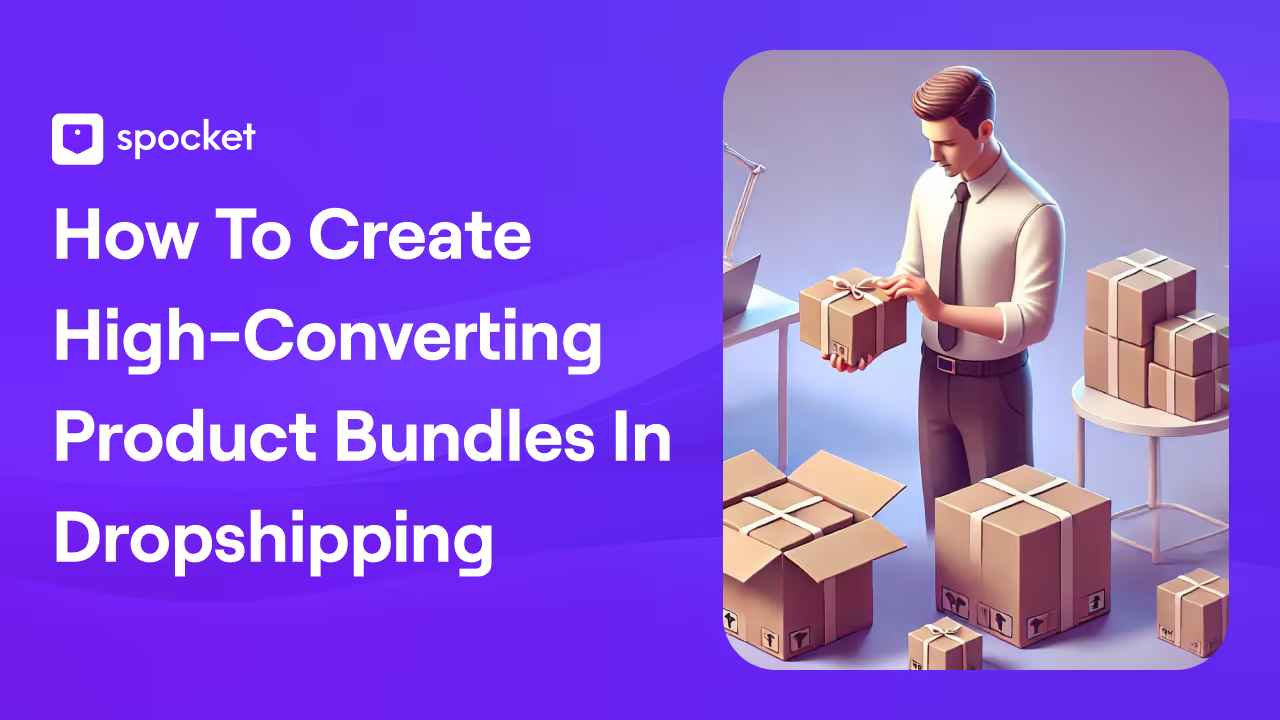
How to Create High-Converting Product Bundles in Dropshipping
Learn how to create high-converting dropshipping product bundles that increase AOV, boost conversions, and grow profits with proven bundle strategies.
.avif)

Dropshipping can be a profitable business model, but many store owners struggle with one common challenge—low profit margins. When customers purchase only one product per order, it becomes harder to cover advertising costs and grow revenue consistently. This is where dropshipping product bundles can make a significant difference.
Product bundling allows you to combine complementary items into a single offer, creating more value for customers while encouraging them to spend more per purchase. Instead of selling one item, you sell a complete solution that feels like a better deal.
The result? Higher average order value (AOV), better conversion rates, and stronger profitability for your store. Studies show that product bundling can increase average order value by up to 20% when implemented effectively.
In this guide, you’ll learn practical strategies to create high-converting dropshipping product bundles that increase sales and maximize revenue.
.avif)
What Are Dropshipping Product Bundles?
Dropshipping product bundles are curated sets of related items sold together as a single offer. Instead of relying on one low-margin product per order, bundles help you sell a complete “solution” that feels more valuable, easier to buy, and often more profitable—without changing your business model.
Product bundling is the practice of selling two or more related products together as one package, usually with a discounted or value-based price that makes the combined offer feel like a better deal than buying items separately.
In ecommerce, bundling typically looks like this:
- Multiple complementary products = one offer
- Value-driven pricing (discount, free add-on, or “save more” logic)
- A clear use-case or outcome (e.g., “complete routine,” “starter kit”)
Examples
- Skincare routine kit: cleanser + serum + moisturizer
- Phone accessory bundle: case + screen protector + charging cable
The goal is simple: increase the purchase size by packaging products the customer already needs (or will likely want next) into a single, easy decision.
Why Product Bundles Work So Well in Dropshipping
Bundles perform especially well in dropshipping because they improve profitability without requiring you to raise prices aggressively or depend on one “winning product.”
Key reasons dropshipping product bundles convert:
- Increase average order value (AOV): customers buy more items per checkout.
- Improve convenience: shoppers get everything they need in one click.
- Boost perceived value: bundles feel like a deal—even with modest discounts.
- Reduce decision fatigue: fewer choices, clearer “best option.”
- Move slow-selling inventory: add low-velocity items as supportive add-ons.
When bundles are built around a real customer outcome (“everything you need to get started”), they simplify shopping and make your offer harder to compare against competitors selling single items.
Benefits of Using Dropshipping Product Bundles
If you’re dealing with thin margins, bundles are one of the most reliable ways to improve profitability without changing traffic sources or doubling ad spend. Done well, bundling strengthens your offer and raises revenue per visitor—because each conversion is worth more.
Increase Average Order Value (AOV)
Bundles naturally raise cart size because customers purchase multiple items in one transaction. Even a small bump in AOV can materially improve margins when ad costs stay the same.
Practical example: Instead of selling a “yoga mat” alone, sell a “home workout starter kit” (mat + resistance bands + stretch strap).
Improve Conversion Rates
The “deal effect” is real in ecommerce: a well-presented bundle can feel like the smarter choice because it offers more value and reduces the risk of buying the “wrong” item.
To strengthen conversions:
- show the total savings
- position the bundle as best value
- highlight what problem it solves
Boost Customer Satisfaction
Customers often prefer ready-made solutions. Bundles help them avoid missing key add-ons and improve the unboxing experience because everything works together.
This can lead to:
- fewer “I forgot to buy X” regrets
- better reviews (especially for kits and routines)
- higher repeat purchase likelihood
Differentiate Your Store From Competitors
Single-product listings are easy to copy. Bundles are harder to replicate because they’re curated—and that curation is part of your brand value.
If you source complementary items through Spocket, you can create bundles that feel premium and intentional (not random), which helps your store stand out in crowded niches.
Reduce Marketing Costs
Bundles increase revenue per order, which improves your return on ad spend. When each customer purchase is larger, you can afford higher acquisition costs—or keep costs the same and grow profits faster.
Think of it like this:
- same traffic
- same ads
- more revenue per checkout
Types of Dropshipping Product Bundles That Convert
Not all bundles perform the same. High-converting dropshipping product bundles are built around a clear customer outcome—saving time, solving a problem, or delivering better value. The best bundle type depends on your product category, price point, and how your customers actually shop.
Complementary Product Bundles
These are products that naturally go together, so the bundle feels “complete” instead of forced. They work because customers already expect to buy the add-ons.
Examples
- Phone + case + screen protector
- Yoga mat + resistance bands
Best for: accessories, electronics, fitness, home essentials
Conversion tip: position as “everything you need” rather than “more items.”
.avif)
Routine or Starter Kit Bundles
These bundles include everything needed for a specific use case, making it easy for customers to start immediately—no extra browsing, no missing pieces.
Examples
- Skincare routine bundle (cleanser + serum + moisturizer)
- Home workout starter kit (bands + mat + ankle strap)
Best for: beauty, wellness, hobby niches, pets
Conversion tip: include a short “How to use this kit” line on the product page.
.avif)
Frequently Bought Together Bundles
These are data-driven bundles based on real buying behavior. If customers repeatedly purchase items A + B, bundling them reduces friction and increases checkout size.
How to find them
- your Shopify analytics / order history
- “customers also bought” patterns
- support tickets (“Do I need X with this?”)
Best for: stores with consistent order volume
Conversion tip: keep the bundle tight—2 to 3 items usually converts better than 5 random ones.
Buy More, Save More Bundles
Tiered bundles encourage customers to buy more units by offering escalating savings. It’s simple, familiar, and effective.
Example structure
- Buy 2 → save 10%
- Buy 3 → save 15%
- Buy 4 → save 20%
Best for: consumables, beauty, supplements, household items
Conversion tip: show the “best value” tier as preselected to guide decisions.
Seasonal or Gift Bundles
These bundles sell because they match a moment—holidays, back-to-school, travel season, gifting. They work especially well when the bundle removes the need to “think.”
Use cases
- Valentine’s gift set
- Summer travel essentials pack
- Holiday self-care bundle
Best for: gifting categories, lifestyle products
Conversion tip: add urgency honestly (limited season, limited stock) and keep visuals festive but clean.
Build-Your-Own Bundles
Customers choose items within a bundle (often from a set collection). This increases personalization and reduces the risk of “I don’t want that item.”
Best for: stores with multiple variants (scents, colors, flavors)
Conversion tip: set clear rules (e.g., “Pick any 3”) and keep the selection flow frictionless.
How to Create High-Converting Dropshipping Product Bundles
This is the practical, repeatable framework to build dropshipping product bundles that lift AOV and convert well—without guessing. The goal is to design bundles customers actually want, price them profitably, and present them clearly.
Identify Complementary Products
Start with items that logically belong together. The bundle should feel like the customer is getting a complete solution, not a random mix.
Ways to validate complementarity
- check product reviews (what customers wish they had)
- scan competitor “frequently bought together” sections
- map the customer journey (what they need before/after the main product)
Rule of thumb: If you can explain the bundle in one sentence, it’s probably good.
Choose a Hero Product
Pick one core item that anchors the bundle—usually your best-seller or highest-intent product. The rest should support it.
Why this matters
- makes marketing clearer (“Get the complete set for X”)
- keeps the bundle from becoming a discount trap
- improves perceived value because the hero product leads the story
Focus on Solving One Customer Problem
Bundles convert best when they solve a single, specific need.
Example
- “Complete Home Gym Kit”
Instead of: “Bands + mat + bottle + gloves + towel”
Make it: “Everything you need to start home workouts today.”
Quick check: Can the customer instantly picture using it?
Price the Bundle Strategically
Pricing decides whether your bundle feels irresistible and stays profitable. You don’t always need a big discount—often, a smaller discount plus clear value works better.
Common pricing methods
- Discounted bundle: bundle price < total of individual items
- Tiered pricing: buy more → save more (great for volume)
- Mixed bundle pricing: sell items individually and as a bundle
Practical tip: Protect margin by discounting the add-ons more than the hero product.
Create a Strong Bundle Name
Names should communicate outcome + value. Avoid vague names like “Combo Pack” unless your niche expects it.
Examples
- Starter Kit
- Pro Pack
- Ultimate Bundle
Better naming pattern
- Outcome + audience: “Clear Skin Starter Kit”
- Use case: “Travel Essentials Pack”
- Leveling: “Beginner / Pro / Ultimate”
Use High-Quality Bundle Images
Bundles need visuals that reduce doubt. Customers should instantly understand what’s included.
What works
- one “hero” image showing all items together
- simple “What’s inside” image (icons or labeled items)
- consistent lighting/background across products
If you’re sourcing items through Spocket, prioritize suppliers with clean product photography so your bundle looks premium and cohesive.
Highlight Bundle Savings Clearly
Don’t bury the value. Spell it out where customers make the decision.
Examples
- “You save $12”
- “Worth $79 individually—get the bundle for $65”
- “Free bonus item included”
Best placement
- near the price
- near the Add to Cart button
- in the first 2–3 lines of the description
Best Bundle Pricing Strategies for Dropshipping
Pricing is where most dropshipping product bundles win—or fail. Customers don’t just compare numbers; they compare value. A bundle price should feel like the “smart choice” while still protecting your margins (especially if you’re paying for traffic). The key is to price bundles so they’re easy to understand, clearly beneficial, and profitable at scale.
Discounted Bundle Pricing
This is the most common approach: the bundle costs less than buying each item separately.
When it works best
- Complementary bundles (phone + case + screen protector)
- Routine kits (skincare set)
- Add-on bundles (accessory pack)
Best practice
- Keep discounts modest (often 5–15%) and let clarity do the heavy lifting.
- Show savings near the price: “You save $X”.
Shopify itself defines bundles as sets of 2+ related products, commonly offered at a discount.
Pure Bundling Strategy
Products are only available as a bundle—customers can’t buy items individually.
Why it converts
- Removes decision fatigue
- Makes your offer harder to price-compare
- Builds a “complete solution” positioning
Use it when
- The items are only valuable together (starter kits, gift sets)
- You want to prevent cherry-picking the hero product
Caution
- Don’t force it in categories where customers want flexibility (sizes, colors, personal taste).
Mixed Bundling Strategy
You sell products individually and as a bundle. This is usually the safest, most scalable model for dropshipping.
Why it’s powerful
- Captures both buyer types: “just one item” and “give me the set”
- Improves conversions because the bundle becomes a clear upgrade
- Reduces customer resistance (“I’m not locked in”)
Shopify supports multiple ways to merchandise bundles and build bundle experiences using product and cart methods.
Tiered Bundle Pricing
This is “Buy More, Save More.” It’s simple, familiar, and increases cart value fast.
Example
- Buy 2 → 10% off
- Buy 3 → 20% off
Best for
- Consumables (skincare, supplements)
- Repeat-use items (pet supplies)
- Low-to-mid AOV categories where volume matters
Conversion tip
- Visually label the best option: “Best Value” on the highest tier.
Best Product Bundle Ideas for Dropshipping Stores
Bundle ideas are easier to execute when you think in outcomes, not products. The best dropshipping product bundles feel like curated kits: “Everything I need for X.” Use these ideas as templates and adapt them to your niche, pricing, and audience.
Skincare Routine Bundles
Examples
- Cleanser + serum + moisturizer
- Sunscreen + lip balm + face mist (travel-friendly)
Why it works: routine-based buying is natural, and customers hate forgetting a step.
Home Fitness Starter Kits
Examples
- Resistance bands + ankle straps + workout gloves
- Yoga mat + stretching strap + foam roller
Why it works: “starter kit” messaging increases confidence and reduces overwhelm.
Travel Essentials Bundles
Examples
- Packing cubes + toiletry bottles + luggage tag
- Neck pillow + sleep mask + travel pouch
Why it works: seasonal intent + high gifting potential.
Pet Care Bundles
Examples
- Grooming brush + nail clipper + pet wipes
- Leash + collar + poop bag holder
Why it works: pet owners love convenience and repurchase-friendly kits.
Phone Accessories Bundles
Examples
- Case + screen protector + charging cable
- Phone stand + car mount + magnetic holder
Why it works: high compatibility and clear “complete setup” logic.
Kitchen Starter Bundles
Examples
- Cutting board + knife sharpener + measuring spoons
- Spice rack + labeled jars + funnel kit
Why it works: functional, home-improvement mindset drives higher AOV.
Tools to Create Product Bundles for Your Shopify Dropshipping Store
To build bundles that scale, you need three things: bundle creation, inventory coordination, and pricing/discount control. Shopify supports bundles through native and app-based approaches, and the right tool depends on whether you’re creating fixed bundles, mix-and-match bundles, or “frequently bought together” offers.
Shopify Bundle Apps
If you want a native, admin-friendly starting point, Shopify Bundles lets you create fixed bundles and multipacks from the Shopify admin and includes real-time inventory updates to help prevent overselling.
If you want upsell-style bundles, “Frequently Bought Together” apps can generate bundle recommendations based on order history and display them on product pages.
Use bundle apps when you want
- Fixed bundles (starter kits, curated packs)
- Variant support (size/color inside bundles)
- Faster setup without custom development
Supplier Coordination
Bundling only works if your suppliers can support consistent stock, predictable shipping, and stable product quality. This is where sourcing matters.
If you’re building bundles with products sourced through Spocket, you can connect your Shopify store and manage syncing behavior—auto-sync can be adjusted so you can control what gets updated, while still syncing key operational data like inventory, orders, and tracking.
Inventory Syncing
Inventory sync is non-negotiable for bundles. If one item is out of stock, the bundle can’t fulfill properly. Shopify’s bundle tooling and apps commonly focus on inventory protection to reduce overselling risk.
Operational tip
- Prefer bundles that share suppliers or have reliable stock patterns.
- Start with 2–3 item bundles before expanding complexity.
Bundle Pricing Tools
To manage pricing cleanly at scale, use tools that support:
- percentage or fixed discounts per bundle
- tiered discounts (buy 2/3/4)
- “compare-at” and savings display logic
- reporting for AOV lift and conversion impact
(Your exact setup depends on your discount strategy—discounted bundles vs tiered vs mixed bundling.)
Common Mistakes to Avoid When Creating Product Bundles
Even well-intentioned dropshipping product bundles can underperform if they feel random, cut into profit, or overwhelm shoppers. Avoid these common mistakes to keep bundles conversion-friendly and margin-safe.
Bundling Unrelated Products
If items don’t naturally belong together, the bundle feels like a clearance tactic—not a value upgrade. Customers should instantly understand why those products are paired.
Fix: Bundle around one use case (“setup,” “starter kit,” “complete solution”) and keep it tight—usually 2–4 items.
Pricing Bundles Too Cheap
Heavy discounts can spike sales short term but destroy profitability—especially with paid ads. Many stores underprice bundles because they compare only to product cost, not the full cost of acquisition and operations.
Fix: Protect margin by keeping the hero product closer to full price and discounting add-ons modestly. Use “You save $X” to sell value without over-discounting.
Creating Too Many Bundle Options
More choices can reduce conversions. If shoppers have to think too hard, they leave.
Fix: Offer 1–3 clear options:
- Best Value (preselected)
- Standard
- Premium
Ignoring Customer Data
Bundling based on assumptions often leads to weak bundle relevance and lower conversion.
Fix: Use real signals:
- top-selling items
- repeat purchases
- “also bought” patterns
- product reviews (missing add-ons)
- support questions (“Does this work with…?”)
Not Testing Bundle Performance
A bundle isn’t “set and forget.” Without testing, you won’t know whether the bundle name, pricing, or composition is holding it back.
Fix: Treat bundles like ads—launch, measure, iterate.
How to Test and Optimize Your Product Bundles
The fastest way to improve bundle performance is to test one variable at a time and track a few core metrics. Your goal is simple: increase revenue per visitor without lowering profitability.
Run A/B Tests on Bundle Pricing
Pricing is the biggest lever. Test small changes before doing big discounts.
What to test
- $5–$10 price difference
- 10% off vs “Free bonus item”
- mixed bundling vs bundle-only pricing
- tier thresholds (buy 2 vs buy 3)
Tip: Keep the test window long enough to collect meaningful traffic—not just a handful of orders.
Track Average Order Value
AOV tells you if the bundle is actually increasing cart size.
Track
- AOV overall
- AOV for bundle purchasers
- % of orders that include a bundle
If AOV goes up but profit doesn’t, you may be over-discounting or bundling low-margin items.
Monitor Conversion Rate
Bundles should make the decision easier, not harder. Watch:
- product page conversion rate
- add-to-cart rate
- checkout completion
If conversion drops after adding bundles, simplify options and clarify what’s included.
Use Customer Feedback
Qualitative feedback is often the quickest optimization source.
Where to pull it from
- reviews (“wish it included…”)
- post-purchase surveys
- support tickets
- abandoned cart reasons
Small copy changes like “What’s inside” and “Who it’s for” can improve conversions quickly.
Conclusion
Dropshipping product bundles are one of the most scalable ways to grow revenue without relying on more traffic. By selling complementary items as a complete solution, bundles can lift average order value and improve conversions—especially when your store is fighting low margins and high ad costs.
The key is to treat bundling as a system: build around a hero product, price with margin in mind, keep choices simple, and keep testing. When you’re sourcing bundle-ready products from reliable suppliers—like the ones you can find through Spocket—it becomes easier to build consistent, high-quality offers that customers trust and buy again.
Start your dropshipping business today
Dropshipping Product Bundles FAQs
What are dropshipping product bundles?
Dropshipping product bundles are sets of related products sold together as a single offer to deliver better value to customers. These bundles usually include complementary items at a discounted or value-based price, helping increase conversions and average order value in dropshipping stores.
Do product bundles increase sales in dropshipping?
Yes, product bundles can significantly increase sales in dropshipping. By combining related products into one offer, bundles encourage customers to purchase more items in a single transaction, boosting average order value, improving perceived value, and increasing overall store revenue.
What products work best for dropshipping bundles?
Products that naturally complement each other work best for dropshipping bundles. Popular examples include skincare routine sets, phone accessory kits, fitness equipment packs, pet care bundles, and kitchen starter kits—items that customers typically use together or need for a complete solution.
How do you price dropshipping product bundles?
Dropshipping product bundles are typically priced using strategies like discounted bundle pricing, mixed bundling (selling items individually and as a bundle), or tiered pricing such as “buy more, save more.” The goal is to increase perceived value while maintaining healthy profit margins.
What is the difference between upselling and product bundling?
Upselling encourages customers to purchase a higher-priced or upgraded version of a product, while product bundling combines multiple related products into a single package offer, increasing convenience and encouraging customers to buy more items in one purchase.
Can you create product bundles on Shopify?
Yes, Shopify allows merchants to create product bundles using bundle apps or manual product setups. Store owners can group complementary products into bundle offers, helping increase average order value and improve conversions in dropshipping and ecommerce stores.


Launch your dropshipping business now!
Start free trial


Related blogs
Dropshipping Supplier Directory: Where to Find Vetted Suppliers
Browse our directory of vetted dropshipping suppliers across the US and EU, complete with niches, shipping speed, and pricing. Start your free trial today.

How to Negotiate With Dropshipping Suppliers: 9 Tactics That Actually Work
Learn how to negotiate with dropshipping suppliers on price, MOQs, and payment terms. Proven tactics and email scripts to boost your margins. Try Spocket free.

Best Clothing Dropshipping Suppliers: The 2026 Guide
Compare the best clothing dropshipping suppliers for 2026 — US/EU shipping speeds, pricing, and product quality — and find the right fit to launch your store.