Creative Sticker Ideas for Branding, Packaging & Promotion
Discover how print-on-demand stickers and custom stickers can boost your branding, packaging, and promotions. Learn creative ways to make your packaging stand out and enhance customer experience.

.avif)

In a world of digital advertising and endless scrolling, brands are rediscovering the charm of something tangible — stickers. Affordable, versatile, and visually engaging, stickers are no longer just for laptops or notebooks; they’ve become a clever marketing tool for businesses of all sizes.
Whether used for branding, packaging, or promotions, stickers have the power to turn an ordinary product into an unforgettable experience. And with print-on-demand stickers, brands can design, test, and scale creative ideas without managing inventory or upfront costs.
Let’s explore how your business can use stickers strategically to boost recognition, delight customers, and turn simple packaging into an engaging brand moment.
Why Stickers Still Matter in Modern Branding
Stickers might seem old-school, but their impact remains powerful. Unlike digital ads that disappear after a few seconds, stickers have permanence — they travel, stick, and stay visible for months or even years.
Here’s why custom stickers are still one of the most effective, low-cost marketing tools:
- Tangible Connection: Customers love physical interactions. Stickers give them something they can touch, keep, or share.
- Cost-Effective Branding: A single sticker can carry your logo, tagline, or message far beyond the point of sale.
- Endless Creativity: Stickers can be fun, minimal, informative, or artistic — whatever aligns with your brand identity.
- Sustainable & Flexible: With eco-friendly materials and print-on-demand models, businesses can reduce waste and avoid bulk printing.
From local bakeries to global eCommerce brands, stickers are being reimagined as micro marketing tools that deliver macro impact.
Promote Your Brand with Spocket’s Print-on-Demand Stickers
Looking for a simple yet powerful way to spread your brand message? Try Spocket’s Print-on-Demand Stickers — designed for creators, brands, and entrepreneurs who value quality and customization.
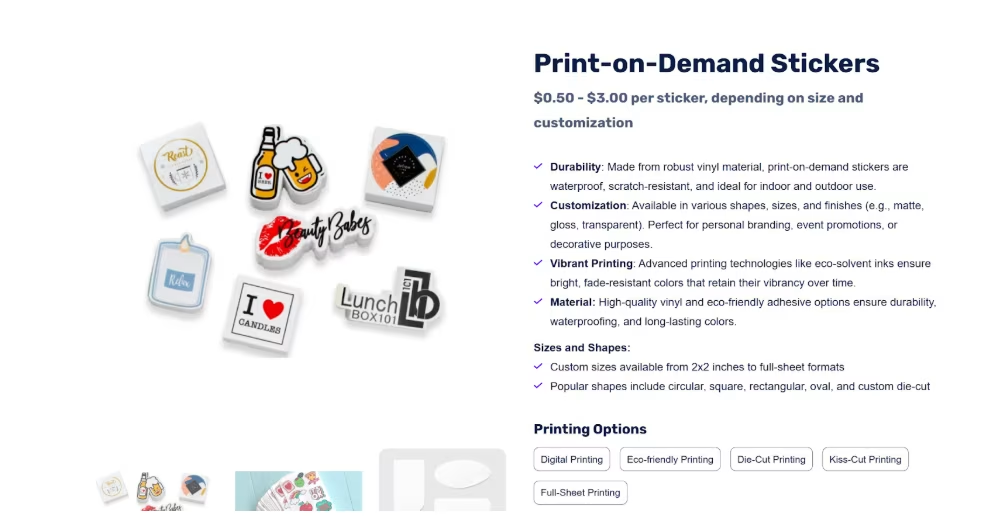
With Spocket, you can:
- Design and sell stickers featuring your logo, slogan, or artwork.
- Choose from premium materials and eco-conscious finishes.
- Offer fast, global shipping from trusted suppliers.
- Start selling immediately — no minimum orders or upfront investment.
Each sticker becomes a small yet mighty brand asset — perfect for packaging inserts, customer gifts, or giveaways that build recognition and loyalty.
What Makes a Great Sticker Design?
Before diving into creative ideas, it’s essential to understand what separates an average sticker from a truly memorable one.
1. Clear Purpose
Each sticker should serve a defined role — whether it’s sealing a package, promoting a sale, or encouraging social engagement.
2. Strong Branding
Your colors, typography, and tone should align with your overall brand. A sticker is often the first visual customers see, so it must feel cohesive.
3. Easy Readability
Less is more. Keep your design clean, with a clear focal point — typically your logo, message, or CTA.
4. Surface Compatibility
Design with the application in mind. A sticker for a glass bottle will need a different material than one for a cardboard box.
5. Production-Ready Design
High-quality vector files, bleed areas, and correct color profiles (CMYK) ensure crisp results every time.
Remember — the best print-on-demand stickers balance creativity with function. They should look good, stick well, and communicate instantly.
Creative Sticker Ideas for Branding, Packaging & Promotion
Now let’s explore some fresh, practical ideas you can implement right away to elevate your packaging and brand presence.
A. Brand Identity & Recognition
1. Logo Stickers as Signature Seals
Place logo stickers on packaging tissue, envelopes, or product boxes. They instantly reinforce your identity while keeping packaging sleek and professional.
2. Variant or Flavor Markers
Use color-coded custom stickers to distinguish product variants — perfect for candles, skincare, or snacks. This small detail makes your product lineup easier to navigate.
3. Micro Story Stickers
Share your brand’s origin, values, or craftsmanship through short storytelling stickers. A two-line narrative can make customers feel connected to your purpose.
4. Sustainability Badges
Highlight eco-friendly materials, vegan certifications, or fair-trade sourcing with simple icon stickers. They communicate ethics at a glance and add visual credibility.
5. Collaboration Patches
For limited-edition drops, swap logos or merge designs in a collaborative sticker pack. It’s a cost-effective way to promote partnerships and new launches.
B. Conversion & Retention Boosters
6. QR Code Stickers
Add QR codes that link to tutorials, unboxing guides, or exclusive discounts. They make packaging interactive and measurable — ideal for tracking customer engagement.
7. Loyalty Program Prompts
Encourage repeat purchases by placing “Earn Points on Your Next Order” stickers on receipts or packaging inserts. It’s a subtle nudge that drives retention.
8. Review & Social Stickers
Motivate buyers to tag your brand on social media or leave reviews using a catchy sticker like “Snap & Share Your Style @brandname.”
9. Freebie Stickers Inside Packages
Add two or three fun custom stickers as freebies. People often place them on laptops, water bottles, or notebooks — giving your brand ongoing exposure for free.
10. Personalized Thank-You Stickers
Instead of printed notes, use handwritten or predesigned thank-you stickers to add warmth and human touch to each order.
C. Information & Practical Use
11. Care & Instruction Stickers
Attach mini care guides directly to products — like wash instructions or assembly notes. It saves space while improving the customer experience.
12. Safety & Handling Labels
Use branded stickers that also carry messages like “Handle with Care” or “Fragile.” They combine practicality with a professional look.
13. Ingredient or Batch Labels
If you sell consumables or handmade goods, modular sticker systems let you easily update ingredients or batch numbers without reprinting packaging.
D. Seasonal & Promotional Ideas
14. Holiday Edition Stickers
Seasonal stickers instantly refresh your packaging without changing your core design. For instance, add festive icons during Christmas or heart motifs for Valentine’s.
15. Event or City-Themed Drops
If you run pop-ups or regional campaigns, use location-based sticker designs to make your product feel exclusive and collectible.
16. Limited Edition Numbering
Use sequentially numbered custom stickers (e.g., “1 of 500”) to add exclusivity to limited releases. This technique works beautifully for handmade or luxury items.
E. Aesthetic & Material Innovation
17. Die-Cut Shapes
Custom-cut stickers shaped like your logo or mascot make your branding instantly recognizable and share-worthy.
18. Material Experimentation
Try kraft paper for rustic brands, clear vinyl for minimal aesthetics, or holographic film for futuristic flair.
19. Metallic or Foil Accents
A touch of gold, silver, or holographic shine can elevate premium packaging while catching light beautifully.
20. Pattern & Texture Overlays
Create repeatable pattern stickers that transform plain boxes into gift-worthy packaging — a simple upgrade with high perceived value.
Design Tips: Making Stickers that Stick (and Sell)
Designing a sticker might seem simple, but the most effective ones are the result of strategic thinking. A well-designed sticker doesn’t just look good — it tells a story, reinforces your branding, and influences how customers perceive your product. Whether you’re creating custom stickers for packaging or print-on-demand stickers for sale, every design element matters.
Here’s how to design stickers that don’t just stick physically, but also emotionally — turning ordinary packaging into a brand experience customers remember.
1. Keep Copy Short and Impactful
When it comes to sticker design, less is more. You only have a few inches of space, so every word must count. Avoid long sentences or cluttered text that compete for attention.
Use short, powerful phrases like “Handmade with Love,” “Limited Edition,” or “Eco-Friendly Choice.” These concise messages instantly communicate value and personality, making your stickers easy to read and hard to forget.
A simple, focused message stands out far better than a busy design — especially when viewed from a distance or on small packaging.
2. Maximize Contrast for Visibility
Contrast is one of the most overlooked aspects of sticker design. High contrast between text and background ensures readability in all lighting conditions. A dark logo on a light background (or vice versa) creates immediate visual impact and makes your sticker more recognizable.
If you’re using intricate graphics or gradients, test how they look on different screens and surfaces. The goal is clarity — your logo, slogan, or QR code should be visible instantly, even at a glance.
3. Create Hierarchy in Design
Visual hierarchy guides the viewer’s eye. Decide what matters most — your logo, tagline, or call-to-action — and give it prominence.
For example, your logo might occupy the top center, while a short tagline sits below in a smaller font. Supporting details like URLs or QR codes should be less dominant but still noticeable. This layout helps the viewer absorb your message naturally, ensuring your custom sticker works both as a design element and a communication tool.
A clear hierarchy also enhances brand professionalism and visual harmony across different sticker types.
4. Adapt to Surfaces and Materials
Not every surface behaves the same. A sticker that looks great on cardboard might not adhere well to glass, metal, or fabric. Before finalizing your design, test it on the actual packaging materials you’ll use.
For instance:
- Matte paper stickers suit eco-friendly boxes.
- Glossy vinyl works well for bottles or beauty packaging
- Transparent stickers look best on glass jars and plastic containers.
If you’re offering print-on-demand stickers, testing across various surfaces helps ensure your customers get products that are not only visually appealing but durable and reliable.
5. Add a Call-to-Action (CTA)
A sticker isn’t just decoration — it’s a small but powerful marketing channel. Adding a simple CTA can encourage engagement and repeat sales.
Try messages like:
- “Scan Me for a Surprise” (linked to a QR code)
- “Tag Us @YourBrand”
- “Reuse This Box & Earn Rewards”
These interactive touches turn ordinary packaging into an experience. Customers feel involved, which increases brand recall and loyalty.
By incorporating CTAs into your custom sticker design, you transform a passive label into an active communication tool.
6. Test Small Runs Before Scaling
Even the best digital mockup can look different in print. Before placing a large order, start with a small batch of test stickers.
This step helps you evaluate:
- Adhesion quality
- Color accuracy
- Size and legibility
- Texture and finish
Testing prevents wasted inventory and ensures consistent quality. With print-on-demand stickers, it’s easy to experiment — you can print multiple versions, compare them, and then scale the design that performs best.
This approach saves money and guarantees your stickers meet real-world expectations before mass distribution.
7. Design as a System, Not a One-Off
A strong sticker strategy goes beyond individual designs. Think of your stickers as a coordinated visual system — a set that works together to tell your brand story.
For example:
- Use logo seals for packaging consistency.
- Add QR code stickers to encourage engagement.
- Include thank-you stickers for customer appreciation.
- Create limited edition stickers for seasonal campaigns.
When all these elements share consistent colors, typography, and tone, your packaging feels cohesive and premium. Customers recognize your brand instantly, no matter which product they receive.
This system-based design mindset ensures your brand visuals evolve strategically — not randomly — keeping every sticker purposeful and aligned with your overall marketing goals.
Choosing the Right Material and Finish
The material you choose affects both function and aesthetics. Here’s how to match stickers with your product type:
- Matte Paper: Great for eco-friendly, handmade, or organic brands.
- Glossy Vinyl: Durable and waterproof — ideal for beauty, drinks, and outdoor use.
- Kraft Paper: Natural, minimalistic, and perfect for sustainable packaging.
- Holographic or Metallic: Adds shimmer and luxury — great for tech or lifestyle products.
- Clear Stickers: Seamless and sleek — ideal for glass, plastic, or transparent packaging.
With print-on-demand stickers, you can test different materials affordably and see what best suits your brand aesthetic.
Campaigns You Can Launch Today
Here are a few creative sticker-driven campaigns that any brand can try — no big budget required:
- #StickerChallenge: Encourage customers to share where they placed your free sticker — create a hashtag and repost user photos.
- Mystery Sticker Packs: Send surprise designs with each order to build excitement and collectibility.
- QR-Driven Rewards: Let customers scan a code for exclusive content, discounts, or behind-the-scenes videos.
- Cause-Based Stickers: Design badges supporting social or environmental causes. For every purchase, donate a portion to charity.
- Pop-Up Collaborations: Partner with local cafés, events, or artists to distribute co-branded stickers and drive cross-traffic.
The Power of Print-on-Demand Stickers for Small Businesses
With print-on-demand stickers, small brands can compete with big ones — without worrying about bulk orders or stock management. Here’s how it helps:
- Zero Inventory Risk: Stickers are printed only when ordered.
- Unlimited Creativity: Test designs, slogans, and color palettes freely.
- Fast Turnaround: Quickly produce seasonal or limited editions.
- Scalable: Once you find a winning design, scaling is effortless.
- Eco-Friendly: Print only what’s needed, reducing waste.
Platforms like Spocket connect entrepreneurs with trusted suppliers, enabling them to launch sticker campaigns alongside other custom products quickly and efficiently.
Using Stickers for an Unforgettable Unboxing Experience
Unboxing is no longer just about opening a product — it’s part of your brand story. Stickers enhance that moment with small details that make it memorable.
A great unboxing flow might include:
- Exterior: Logo seal and “Fragile” or “Handle with Care” sticker.
- Interior Lid: A QR code leading to a thank-you video or brand story.
- Product Surface: Care instruction or sustainability badge.
- Insert: Freebie stickers for customers to keep or share.
Each element creates a consistent, layered experience that builds trust and strengthens emotional connection.
Common Mistakes to Avoid
Designing print-on-demand stickers may look easy, but small oversights can make even the most creative idea fall flat. A good sticker should combine design, function, and strategy — and neglecting any of these can weaken its impact. Below are the most common pitfalls brands make when designing custom stickers, along with why avoiding them can protect both quality and performance.
1. Overcomplicating the Design
It’s tempting to fit every idea into one sticker — logos, slogans, icons, and patterns. But too much text or imagery creates clutter and confusion. Stickers have limited space, and simplicity is key to quick recognition.
Keep your message clear and your visuals focused on one purpose: communicating your brand. A clean design not only looks more professional but also prints better and stays readable at smaller sizes.
2. Ignoring Surface Type
Not all stickers adhere equally across different materials. A sticker that works perfectly on paper packaging may peel off glass, fabric, or metal within hours. Each surface requires the right adhesive and finish.
For example:
- Matte paper suits cardboard boxes and kraft mailers.
- Vinyl stickers are waterproof and ideal for bottles or outdoor packaging.
- Transparent stickers work beautifully on smooth plastic or glass containers.
If you’re using print-on-demand stickers, always specify the intended surface when ordering so your supplier can choose the correct adhesive strength and coating.
3. Skipping Testing Before Bulk Orders
Printing hundreds of stickers before testing a sample can lead to expensive mistakes. Colors may print darker, text might be too small, or the finish could feel cheaper than expected.
Always order a small batch first. Apply stickers to real packaging, check adhesion, color consistency, and durability over time. With print-on-demand, you can test affordably, refine your design, and then scale confidently — saving money and ensuring top-tier quality.
4. Forgetting CTAs (Call-to-Actions)
Many brands treat stickers as decoration, missing a major marketing opportunity. A sticker can do more than look pretty — it can inspire action.
Use simple CTAs like:
- “Tag us @brandname”
- “Scan to unlock 10% off”
- “Follow for new drops”
These messages invite customers to engage, share, or revisit your store. Adding a CTA transforms your custom sticker from passive branding into active brand promotion — building loyalty and increasing conversions.
5. No Tracking or Performance Measurement
If you’re using QR code stickers, it’s crucial to track performance. Without analytics, you’ll never know which designs or placements are driving results.
Add UTM links or tracking URLs behind every QR code. This way, you can measure scans, engagement rates, and conversions for each campaign. These insights help you improve future sticker designs, CTAs, and even packaging strategies — ensuring your efforts are data-driven, not guesswork.
Final Thoughts
Print-on-demand stickers and custom stickers are more than decorative accessories — they’re miniature brand ambassadors. They transform packaging into experiences, turn first-time buyers into loyal fans, and give small brands a professional edge without big costs.
As consumer expectations evolve, creative packaging becomes a key differentiator. Stickers bridge that gap beautifully — versatile, personal, and full of storytelling potential.
So, whether you’re an eCommerce store, designer brand, or small maker, now is the perfect time to explore what a well-placed sticker can do. With Spocket handling fulfillment and suppliers, all you need to do is design — and watch your creativity stick.
Start your dropshipping business today
FAQs About POD Custom Stickers
Why are print-on-demand stickers great for small businesses?
Print-on-demand stickers let small brands design and sell without bulk orders or inventory costs. You can create unique sticker designs, test what performs best, and print only what sells — keeping your operations flexible, sustainable, and profitable.
How can custom stickers improve my product packaging?
Custom stickers add instant personality and professionalism to your packaging. They highlight your brand identity, share messages like “Handmade with Love,” or promote offers. When paired with quality materials, they transform plain boxes into memorable unboxing experiences.
What’s the difference between print-on-demand stickers and traditional printing?
Traditional printing requires large batches and storage space, while print-on-demand stickers are produced only when ordered. This approach reduces waste, lowers upfront costs, and allows faster updates for seasonal designs or special promotions.
Can I use stickers as part of my marketing campaigns?
Absolutely. Stickers make excellent marketing tools — from QR-driven promotions to freebies included with purchases. They travel with your customers, create brand exposure, and encourage engagement both online and offline.
What materials and finishes work best for custom stickers?
The best material depends on how and where your sticker will be used. Vinyl stickers are durable and waterproof—great for bottles, packaging, or outdoor use. Matte paper offers a natural, eco-friendly look, while holographic or metallic finishes add a premium feel. With print-on-demand stickers, you can easily test multiple finishes to find what fits your brand style and audience best.


Launch your dropshipping business now!
Start free trial


Related blogs

Conversion Rate Optimization Audit Checklist That Works
Run a powerful conversion rate optimization audit with this proven checklist. Improve UX, boost sales, and fix conversion leaks fast.


Social Media Giveaway Ideas and Contest Examples for 2026
Discover high-converting social media contests and giveaway ideas with real examples to boost engagement, followers, and sales.

Power of Micro-Influencers: How to Scale Your Store via Partnerships
Micro influencer marketing drives higher ROI than traditional ads. Learn where to find creators, what to pay them, and how to land deals that grow your store.