How to Create Schema Markup for Products
Learn how to structure product data for search engines using schema markup to improve visibility, enhance listings, and attract more relevant traffic.

.avif)

If you’ve ever searched for a product on Google and seen listings that include star ratings, pricing, or availability directly in the results, you’ve already experienced the impact of schema markup.
For eCommerce and dropshipping businesses, this isn’t just a technical enhancement—it’s a visibility advantage.
Product schema markup helps search engines clearly understand your product pages and display richer results. This improves how your products appear in search, increases click-through rates, and ultimately drives more qualified traffic to your store.
In this guide, you’ll learn what product schema markup is, why it matters, and exactly how to create and implement it—step by step.
What Is Product Schema Markup?
Product schema markup is a form of structured data that you add to your website to help search engines interpret your content more accurately. Instead of relying on guesswork, search engines can directly read specific details about your product.
This includes information like product name, price, availability, and reviews.
How does schema markup work?
When you add schema markup to your product pages, you are essentially labeling your content in a way that search engines understand. This allows search engines to:
- Identify your page as a product page
- Extract key product details
- Display enhanced results in search listings
What structured data means in simple terms?
Think of schema markup as a structured version of your product information. While your page shows content visually for users, schema provides a machine-readable version of that same information.
This structured approach helps search engines connect your product to relevant queries more effectively.
Why Product Schema Markup Is Important for SEO
Product schema markup plays a crucial role in helping your products stand out in search results. It allows search engines to better understand your product information and present it in a more detailed and engaging way. By adding structured data, you not only improve visibility but also increase the chances of attracting clicks from users who are ready to buy.
Improves visibility in search results
Schema markup enables rich results, which are enhanced search listings that include additional details. These may show:
- Product prices
- Star ratings
- Stock availability
These elements make your listing more noticeable.
Increases click-through rates
When users see more information directly in search results, they are more likely to click. For example:
- A product with visible ratings appears more trustworthy
- A listed price helps users decide faster
This leads to higher-quality traffic.
Helps search engines understand your content
Search engines rely on context to rank pages. Schema markup removes ambiguity by clearly defining your content. This improves:
- Relevance for search queries
- Indexing accuracy
- Ranking potential
Supports modern search features
Structured data is increasingly used in:
- AI-powered search systems
- Voice search
- Shopping integrations
This makes schema markup a long-term SEO investment.
Types of Schema Formats You Can Use
There are different ways to implement schema markup, but not all formats offer the same ease and flexibility. Understanding the available formats helps you choose the one that’s easier to manage, less prone to errors, and better supported by search engines. Selecting the right format from the start can save time and ensure smoother implementation across your product pages.
JSON-LD as the preferred format
JSON-LD is the most recommended format for schema markup. It works by adding a script to your page without altering the visible content.
Benefits include:
- Easier implementation
- Cleaner structure
- Lower risk of errors
- Better compatibility with search engines
Microdata and RDFa formats
These formats embed schema directly into HTML elements. However, they:
- Require more complex coding
- Are harder to maintain
- Increase the chance of errors
For most stores, JSON-LD is the best choice.
Key Elements of Product Schema Markup
To create effective product schema markup, you need to include specific elements that clearly describe your product to search engines. These elements form the foundation of your structured data and determine whether your page is eligible for rich results. By understanding what information to include, you can make your schema more complete, accurate, and impactful.
Essential fields you must include
At a minimum, your schema should contain:
- Product name
- Image
- Description
These provide the basic structure for search engines.
Important fields for rich results
To unlock enhanced listings, include:
- Price
- Currency
- Availability
- Ratings and reviews
These fields make your product more attractive in search results.
Additional fields for deeper optimization
You can also include:
- Brand information
- SKU or product identifiers
- Variants (size, color)
- Shipping details
Adding more details improves how search engines interpret your product.
Step-by-Step Guide to Creating Product Schema Markup
Creating product schema markup may sound technical at first, but the process becomes much easier when broken down into clear steps. From identifying the right product details to adding and testing the code, each stage helps ensure that your structured data is accurate and useful for search engines. A step-by-step approach makes implementation more manageable, even if you’re not highly technical.
1. Identify the Right Product Page
Before creating a schema, ensure you’re applying it to the correct pages. Schema should be used on:
- Individual product pages
- Pages with a single clear product
Avoid using it on:
- Category pages
- Blog posts
- Multi-product listings
Using schema incorrectly can reduce its effectiveness.
2. Gather All Product Information
Before writing your schema code, collect all necessary details. This includes:
- Product name
- Description
- Image URL
- Price
- Availability
- Brand
Having accurate data ensures your schema reflects the actual product.
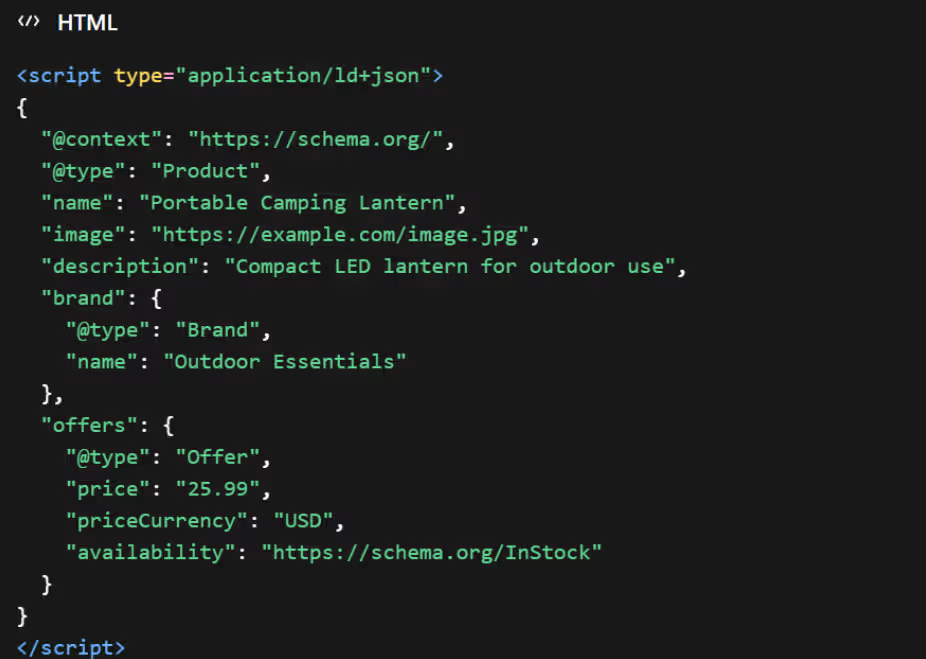
3. Create JSON-LD Schema Code
Once your data is ready, you can create your schema code. Here’s a simple example:
4. Add Schema Markup to Your Website
After creating the code, the next step is implementation.
Where to place the code
You can add the schema:
- In the <head> section
- Or within the page body
Both options work, but consistency is key.
Platform-specific implementation
Depending on your platform:
- Shopify allows custom code or apps
- WordPress supports plugins
- Custom sites allow manual insertion
Choose the method that fits your setup.
5. Test and Validate Your Schema
Testing ensures your schema works correctly.
Why validation is important
Errors in your schema can:
- Prevent rich results from appearing
- Cause indexing issues
- Reduce SEO benefits
What to check
Ensure:
- All required fields are present
- Data matches visible content
- No syntax errors exist
Testing helps you fix issues before they affect performance.
6. Monitor and Improve Performance
Schema markup is not a one-time task.
Track key metrics
Monitor:
- Click-through rates
- Search visibility
- Rich result appearance
Update schema regularly
Keep your schema accurate by updating:
- Prices
- Availability
- Product details
This ensures consistency and reliability.
Common Mistakes and Pitfalls to Avoid
Even with the best intentions, small errors in structured data can prevent search engines from displaying rich results. Proactively avoiding these common mistakes will ensure your technical SEO efforts translate into real-world performance gains and higher search visibility.
Using incomplete data
Leaving out required properties like "price," "availability," or "review" can disqualify your page from appearing as a rich result entirely. Search engines need a complete dataset to build the enhanced snippets users rely on.
Adding schema to the wrong pages
A frequent error is applying Product schema to category pages or blog posts that list multiple items. Schema should be reserved for specific, individual product pages where the intent is clearly transactional for a single item.
Mismatch between schema and content
Search engines cross-reference your structured data with the visible text on your page. If your schema says a product is $50 but your page shows $75, it creates a trust conflict that can lead to manual penalties or the loss of rich results.
Ignoring updates
Failing to update your schema when stock levels or prices change can frustrate potential customers and harm your site's credibility. Regular maintenance ensures that the information search engines "see" is always fresh and accurate.
Best Practices for Product Schema Markup
Following best practices ensures long-term success by maximizing eligibility for rich results and building search engine trust.
Keep your schema accurate
Keeping your schema accurate means ensuring that the details in your structured data (price, availability, description) precisely match what is displayed visually on the page for the user. Inaccurate data can lead to search engines penalizing your listing or removing the rich results entirely, frustrating customers and hurting your credibility.
Use high-quality images
High-quality images are crucial because they are often featured in rich results and Google Shopping integrations. Using clear, appropriately sized, and relevant product images not only increases the visual appeal of your listing but also meets the technical requirements for rich snippets, making your product more attractive to potential buyers.
Include reviews when possible
Including aggregate ratings and customer reviews directly within your schema markup is one of the most powerful ways to leverage structured data. Listings that display star ratings are perceived as more credible and trustworthy, leading to significantly higher click-through rates (CTR) compared to unrated competitors.
Apply schema across all products
While it can be tempting to apply schema only to your top-selling products, true SEO benefit comes from consistency. Applying accurate schema across your entire product catalog ensures maximum coverage for rich results and signals to search engines that your entire store is structured and reliable, which improves overall indexation and ranking potential.
How Schema Markup Helps Dropshipping Stores
Schema markup is especially valuable for dropshipping businesses because it levels the playing field against larger retailers. By providing structured data, smaller stores can achieve the same rich search presence as major brands, ensuring their unique value propositions are immediately visible to shoppers.
Enhances product visibility
With many similar products online, standing out is crucial. When multiple dropshipping stores sell the same item, rich results—such as those displaying "In Stock" labels or shipping costs—can be the deciding factor for a customer choosing where to click. Schema ensures your specific listing isn't just a plain link, but a detailed informative snippet.
Schema helps your listings:
- Appear more informative
- Look more credible
- Attract more clicks
Builds customer trust
Displaying ratings and pricing upfront improves confidence. For dropshipping stores, which may be less familiar to new customers than global brands, showing verified star ratings and transparent pricing directly in search results helps eliminate skepticism. It provides immediate social proof and price transparency before the user even lands on your site.
Supports scalable growth
Once implemented, schema can be applied across multiple products, making it easier to scale your store. As you import new products from suppliers, having a standardized schema template ensures that every new arrival is automatically optimized for search engines. This automation is vital for dropshippers who manage large, frequently updated catalogs with hundreds of items.
Conclusion
Product schema markup is one of the most effective ways to improve your store’s visibility and performance. It helps search engines understand your products, enhances your search listings, and drives more qualified traffic.
The best part is that once implemented, it continues to work in the background—supporting your SEO efforts without constant updates.
While schema improves visibility, accurate product data is equally important. Spocket helps ensure:
- Reliable product information
- Consistent pricing
- High-quality listings
This makes your schema more accurate and your store more trustworthy. If you want to stay competitive in eCommerce, adding schema markup to your product pages is not just helpful—it’s essential.
Start your dropshipping business today
FAQs About Product Schema Markup
What is product schema markup in simple terms?
Product schema markup is a way of adding structured information to your product pages so search engines can understand them better. It helps display details like price, availability, and ratings directly in search results. This makes your listings more informative and attractive to users.
Does schema markup directly improve rankings?
Schema markup does not directly boost rankings, but it improves how your listings appear in search results. By making your products more visible and informative, it can increase click-through rates. Over time, better engagement can positively impact your overall SEO performance.
Is product schema markup difficult to implement?
Not necessarily. While it involves adding code, tools and templates make the process much simpler. Once you understand the structure, you can apply it across multiple product pages with minimal effort.
What happens if my schema markup has errors?
If your schema contains errors, search engines may ignore it or fail to show rich results. This means you miss out on enhanced listings. That’s why testing and validating your schema before publishing is important.
Do I need schema markup for every product page?
Yes, ideally you should add schema markup to all individual product pages. This ensures consistency across your store and maximizes your chances of appearing in rich results. It also helps search engines better understand your entire product catalog.


Launch your dropshipping business now!
Start free trial


Related blogs

How to Set Up Automated Order Fulfillment With Spocket and Shopify
Set up a smoother Shopify dropshipping workflow with Spocket by connecting your store, importing products, processing orders, syncing tracking, and reducing manual fulfillment tasks.


How to Open a Business Bank Account for Your Dropshipping Store
Set up your dropshipping finances the right way with a dedicated business bank account built for payouts, supplier payments, taxes, and long-term store growth.

Spocket vs Dropified: Which Tool Is Better for Multi-Store Scaling?
Compare Spocket and Dropified for multi-store dropshipping, supplier quality, automation, fulfillment, product sourcing, and scaling across ecommerce platforms.