AR Try-On for Fashion Dropshipping: How to Boost Sales with Virtual Shopping Experiences
Discover how AR try-on transforms fashion dropshipping by improving conversions, reducing returns, and enhancing customer experience with immersive shopping.
.avif)

Fashion dropshipping has always been one of the most attractive niches in ecommerce. It’s visual, trend-driven, and highly scalable. But it also comes with one major limitation—customers cannot physically try products before purchasing.
This gap creates hesitation. Shoppers wonder how a dress will fit, whether a jacket suits their body type, or if a pair of sunglasses complements their face. These doubts often lead to abandoned carts or costly returns.
This is exactly where AR try-on technology changes the game.
Augmented Reality is no longer a futuristic concept reserved for big brands. Today, it’s becoming accessible to dropshippers who want to create more engaging, interactive, and trust-driven shopping experiences. By allowing customers to “try on” products virtually, AR bridges the gap between online and offline retail.
In this guide, we’ll explore how AR try-on works, why it matters for fashion dropshipping, how you can implement it, and how to use it strategically to increase conversions and build a competitive edge.
Understanding AR Try-On in Fashion Ecommerce
Before diving into strategies and tools, it’s important to understand what AR try-on actually means in a practical ecommerce context and how it applies specifically to dropshipping.
What AR Try-On Really Does
At its core, AR try-on allows users to visualize products on themselves using their smartphone camera or uploaded images. Instead of imagining how a product might look, customers get a simulated real-world preview.
This creates a more confident buying experience because:
- The product feels tangible
- The fit appears more realistic
- The decision-making process becomes faster
Unlike static images or even videos, AR adds an interactive layer that makes shopping feel personal.
The Technology Behind AR Try-On
AR try-on combines multiple advanced technologies working together seamlessly.
First, computer vision detects the user’s body, face, or environment. Then, machine learning models map key points like shoulders, hips, or facial features. Finally, 3D rendering engines overlay digital garments or accessories onto the user in real time.
This entire process happens within seconds, creating a smooth and immersive experience.
Why It Matters More in Dropshipping
Traditional ecommerce brands often have physical stores or strong branding to build trust. Dropshipping stores, however, rely heavily on digital presentation.
This means:
- Customers depend entirely on visuals
- There’s less perceived reliability
- Returns can be higher due to mismatched expectations
AR try-on directly addresses these issues by making product visualization more accurate and engaging.
Why AR Try-On Is Transforming Fashion Dropshipping
AR try-on isn’t just a cool feature—it’s a powerful business tool that solves real problems in fashion ecommerce. Let’s explore how it impacts your dropshipping store at a deeper level.
Builds Customer Confidence
One of the biggest barriers in online fashion shopping is uncertainty. Customers are unsure whether a product will suit them.
AR reduces this uncertainty by giving users a personalized preview. When shoppers can see themselves wearing a product:
- They feel more confident in their choice
- They are less likely to hesitate
- They make faster purchase decisions
This confidence translates directly into higher conversions.
Reduces Return Rates Significantly
Returns are a silent profit killer in dropshipping. Customers often return products because:
- The fit isn’t what they expected
- The style looks different in real life
- The size feels off
AR try-on minimizes these issues by aligning expectations with reality.
Industry insights suggest that immersive visualization technologies can reduce return rates by a noticeable margin, especially in categories like apparel and accessories.
For dropshippers, this means:
- Lower operational costs
- Fewer disputes
- Better customer satisfaction
Enhances Engagement and Time on Site
Modern ecommerce isn’t just about selling—it’s about creating experiences. AR transforms passive browsing into active interaction. Instead of scrolling through images, customers:
- Experiment with styles
- Try multiple variations
- Spend more time on your site
This increased engagement improves:
- Conversion rates
- Brand recall
- Customer loyalty
Differentiates Your Store from Competitors
The dropshipping market is highly saturated. Most stores still rely on:
- Basic product images
- Supplier descriptions
- Generic layouts
By integrating AR try-on, your store instantly feels:
- More advanced
- More premium
- More trustworthy
This differentiation is crucial when customers are comparing multiple stores selling similar products.
How AR Try-On Works Step by Step
To successfully implement AR try-on in your store, it helps to understand the underlying mechanics. This section breaks down the technology that makes virtual try-on possible, from the initial user input to the final 3D rendering.
Capturing the User’s Input
The process begins when a user opens the try-on feature using their device camera. Some systems also allow:
- Photo uploads
- Avatar creation
- Body scanning
This initial step gathers the data needed for visualization.
Detecting Body or Facial Landmarks
AI models analyze the user’s body or face to identify key points such as:
- Shoulders
- Waist
- Hips
- Jawline
This mapping ensures that the product aligns correctly with the user’s proportions.
Rendering the Product in 3D
The product is converted into a digital 3D model that includes:
- Texture
- Fabric movement
- Lighting effects
This step is critical for realism.
Overlaying the Product Using AR
The system places the product onto the user in real time. As the user moves:
- The product adjusts dynamically
- The fit appears natural
- The experience feels immersive
Allowing Interaction and Customization
Users can then interact with the product by:
- Changing colors
- Switching sizes
- Trying different styles
This interactive element is what makes AR so powerful in ecommerce.
Best Use Cases of AR Try-On in Fashion Dropshipping
While AR technology is versatile, certain fashion categories see a much higher return on investment by solving specific fit and style anxieties.
Apparel and Clothing
Clothing is one of the most impactful categories for AR try-on.
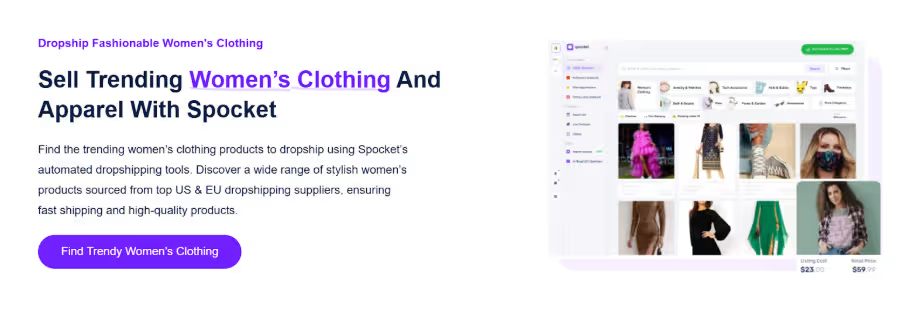
It helps customers understand:
- Fit and silhouette
- Length and proportions
- Overall styling
This is especially useful for items like:
- Dresses
- Jackets
- Activewear
Footwear
Shoes are another strong use case. Customers can:
- Visualize how shoes look on their feet
- Compare styles instantly
- Make quicker decisions
This reduces hesitation and improves conversions.
Accessories
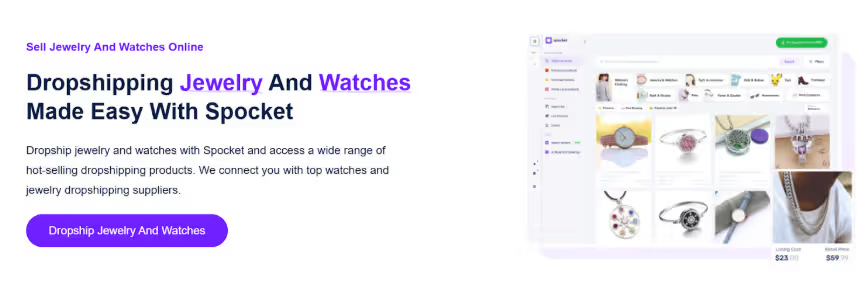
Accessories are easier to implement and often deliver quick wins. Examples include:
- Sunglasses
- Watches
- Jewelry
Since these items require less complex fitting, AR works very effectively.
Beauty Products
Although not traditional fashion, beauty products benefit heavily from AR.
Customers can test:
- Lipstick shades
- Foundation tones
- Makeup styles
This enhances personalization and increases purchase confidence.
How to Implement AR Try-On in Your Dropshipping Store
Implementing AR try-on doesn't require deep technical expertise, but it does require a strategic roadmap to ensure a seamless integration that actually drives sales.
Start with High-Impact Products
Instead of applying AR across your entire catalog, focus on:
- Best-selling items
- High-return products
- Visually driven categories
This ensures you get the highest return on investment.
Use Compatible Ecommerce Platforms
Most modern ecommerce platforms support AR integrations through apps or plugins. Look for solutions that:
- Are mobile-friendly
- Load quickly
- Offer realistic rendering
This ensures a smooth user experience.
Optimize Product Assets
AR quality depends heavily on your product data. Make sure you have:
- High-resolution images
- Multiple angles
- Accurate sizing information
Better inputs lead to better outputs.
Combine AR with Reliable Product Sourcing
AR can only set expectations—it cannot fix poor product quality. That’s why sourcing matters.
Working with high-quality suppliers ensures that the real product matches what customers see virtually. This alignment is crucial for building trust and reducing returns. Platforms like Spocket help connect you with reliable suppliers, making it easier to maintain consistency between digital experience and real-world delivery.
Challenges of AR Try-On and How to Overcome Them
While AR technology offers transformative benefits for fashion dropshipping, implementing it effectively requires navigating specific technical and operational hurdles to ensure a seamless shopping experience.
- High Initial Setup Effort: Start small by focusing on a few products and scaling gradually.
- Accuracy Limitations: Begin with structured products like accessories, footwear, or fitted clothing.
- Device Compatibility Issues: Choose lightweight solutions that work across most smartphones.
- User Adoption Curve: Encourage usage with clear instructions, on-page prompts, and visual cues.
Future of AR Try-On in Fashion Dropshipping
The trajectory of Augmented Reality is accelerating, promising revolutionary changes in how fashion dropshipping operates, moving toward hyper-personalized and seamless virtual shopping experiences.
Hyper-Realistic Simulations
Advancements in AI are making AR experiences more realistic than ever. Future improvements include:
- Better fabric physics
- Accurate size predictions
- Real-time lighting adjustments
Personalized Shopping Experiences
AR will become more personalized. Customers will receive:
- Style recommendations
- Fit suggestions
- Outfit combinations
Based on their preferences and body type.
Integration with Social Commerce
AR is expected to integrate deeply with social platforms. Users will be able to:
- Try products directly within apps
- Share looks instantly
- Shop seamlessly
AI-Generated Models and Avatars
Instead of using real-time cameras, customers may create digital avatars. These avatars will:
- Represent their body accurately
- Allow full wardrobe experimentation
- Enable virtual styling
Strategic Tips to Maximize Results with AR Try-On
To ensure your AR implementation translates into real business growth, it must be supported by a clear, measurable strategy focused on user experience and conversion tracking.
Focus on User Experience
Keep the interface simple and intuitive. Avoid:
- Complex steps
- Slow loading times
- Confusing instructions
Promote the Feature Clearly
Make sure customers know AR is available. Use:
- Call-to-action buttons
- Product page highlights
- Visual demonstrations
Track Performance Metrics
Measure how AR impacts your store. Track:
- Conversion rates
- Time on page
- Return rates
Use this data to optimize your strategy.
Combine with Strong Branding
AR enhances your store, but branding completes it. Ensure your store has:
- Consistent design
- Clear messaging
- Trust signals
Conclusion
AR try-on is redefining how customers shop for fashion online. It transforms uncertainty into confidence, passive browsing into interaction, and ordinary product pages into immersive experiences.
For fashion dropshipping businesses, this technology solves some of the biggest challenges—high return rates, low trust, and lack of product visualization. By integrating AR strategically, you can create a shopping experience that feels modern, engaging, and reliable.
When combined with high-quality sourcing through Spocket, AR try-on becomes even more powerful. It ensures that what customers see digitally matches what they receive, building long-term trust and customer satisfaction.
The future of ecommerce is immersive, and AR is leading that shift. The sooner you adopt it, the stronger your position in the market will be.
Start your dropshipping business today
FAQs About AR Try-On for Fashion Dropshipping
What is AR try-on in fashion dropshipping?
AR try-on is a technology that allows customers to virtually try clothing, accessories, or footwear using their smartphone camera or uploaded images. It overlays digital products onto the user in real time, helping them visualize fit and style. This reduces uncertainty and makes online shopping more interactive and confident.
Does AR try-on increase conversion rates in dropshipping?
Yes, AR try-on can significantly improve conversion rates because customers feel more confident in their purchase decisions. When shoppers can see how a product looks on them, they are less hesitant to buy. This leads to quicker decisions, higher engagement, and better overall sales performance.
Can AR try-on reduce product returns in fashion ecommerce?
AR try-on helps reduce returns by giving customers a clearer understanding of fit, size, and appearance before buying. This minimizes mismatched expectations, which is a common reason for returns in fashion dropshipping. As a result, businesses can save costs and improve customer satisfaction.
Is AR try-on difficult to implement in a dropshipping store?
No, AR try-on is becoming increasingly accessible through apps and integrations available on most ecommerce platforms. You don’t need advanced technical skills to get started. By focusing on a few key products and using the right tools, you can implement AR gradually and effectively.
What products work best with AR try-on in dropshipping?
AR try-on works best for visually driven products like clothing, footwear, sunglasses, jewelry, and beauty items. These categories benefit the most because customers want to see how they look before purchasing. Starting with these products ensures higher impact and better results from AR integration.


Launch your dropshipping business now!
Start free trial


Related blogs

Dropshipping Supplier Directory: Where to Find Vetted Suppliers
Browse our directory of vetted dropshipping suppliers across the US and EU, complete with niches, shipping speed, and pricing. Start your free trial today.


How to Negotiate With Dropshipping Suppliers: 9 Tactics That Actually Work
Learn how to negotiate with dropshipping suppliers on price, MOQs, and payment terms. Proven tactics and email scripts to boost your margins. Try Spocket free.

Best Clothing Dropshipping Suppliers: The 2026 Guide
Compare the best clothing dropshipping suppliers for 2026 — US/EU shipping speeds, pricing, and product quality — and find the right fit to launch your store.