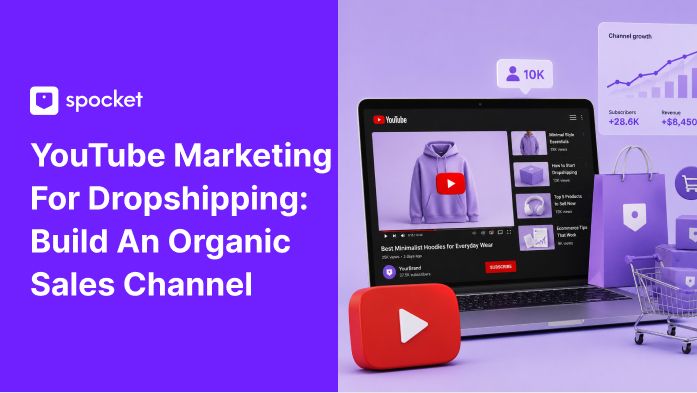
YouTube Marketing for Dropshipping: How to Build an Organic Sales Channel for Beginners?
Learn how to build an organic sales channel with YouTube marketing for dropshipping. This guide covers YouTube SEO, product video formats, organic strategies, and more.

Paid ads are a faucet. Turn them on, traffic flows. Turn them off, everything stops. That's fine when you've got the budget. What about when you don't? Or when you want something that compounds instead of resetting every morning? YouTube sits right in that gap. It's a search engine, not just a social feed. People type questions into it, look for product reviews, hunt for solutions. If your videos show up when they search, you get traffic. Not for a day. For years.
.webp)
Running a dropshipping store and not using YouTube is leaving free shelf space on the internet's biggest library. The ads side gets all the attention because it's faster. But the organic side builds something that keeps working without a credit card attached. Let's walk through what actually matters: what kind of videos to make, how to get them seen, and how to connect them back to your store so views turn into orders.
YouTube Isn't TikTok. Treat It Different.
TikTok and Shorts reward entertainment. YouTube rewards answers. The search bar isn't just for music videos. People type stuff like "best neck fan for hot weather" or "how to get rid of dog hair on couch." Those are buying signals. If your video answers that exact question and shows a product that solves it, you're not interrupting someone's scrolling. You're showing up right when they need you.
That's the core difference. Paid ads for dropshipping interrupt. Organic YouTube videos answer. One feels like an ad, the other feels like help. And help converts better over time. When someone finds your video useful, they subscribe. They watch more. They check your channel. They click the link in your description. You've just built trust without spending anything except time.
The tricky part is that YouTube rewards watch time and session duration. If your video keeps people on the platform, the algorithm pushes it to more viewers. So your content can't just be a product pitch. It has to be genuinely useful or interesting first, with the product woven in naturally.
What Kind of YouTube Videos Sell Your Dropshipping Products?
There's a handful of formats that work for dropshipping. You don't need to invent anything new.
- How-to and tutorial videos. Someone's trying to solve a problem. Your product is the solution. If you sell a posture corrector, make a video called "How to Fix Desk Worker Posture in 5 Minutes." Show the problem, demonstrate the product, explain how it helps. These rank for search terms and stay relevant for a long time.
- Product reviews and unboxings. This is the classic. Someone searches "[product name] review" before buying. If your video shows up, you control the narrative. Be honest about the product. Don't oversell. People can smell a fake review from the thumbnail. If you're selling items from dropshipping suppliers that ship fast and look good, the unboxing itself becomes social proof.
- Best-of lists and roundups. "Top 5 Gadgets Under $30 That Actually Work." These are search magnets. You feature your product alongside a few others, and since you're the one making the video, your product gets the spotlight. These also work well for affiliate commissions on the side.
- Comparison videos. "Product A vs Product B." People love these when they're close to buying but unsure. If you sell both or one, you win either way. Just make sure the comparison feels real, not rigged.
- Behind-the-scenes and founder content. Less about the product, more about you. Why you started the store. How you find products. What mistakes you made. This builds a personal brand that makes people want to support whatever you sell. It's slower, but it creates die-hard customers.
The format you pick depends on your product. A visually boring product needs a strong how-to angle. A visually impressive product can carry a simple unboxing. A product with clear competitors benefits from comparisons.
Start your dropshipping business today
Join Spocket for Free!
How to Get People to Actually Watch Your YouTube Dropshipping Videos?
Making the video is 20%. Getting it seen is the rest. YouTube SEO isn't complicated, but most people skip it entirely.
- The title needs to be what someone would actually type into the search bar. Not clever. Not branded. Useful. "Best Portable Blender for Travel (Tested)" beats "My New Favorite Gadget." Use the exact keywords people search for.
- The thumbnail matters more than the video. A good thumbnail stops the scroll. Bright colors, a clear subject, maybe text that adds curiosity. If you're not spending time on thumbnails, you're invisible.
- The first 30 seconds determine whether someone stays or leaves. Don't waste it with logos or long intros. Start with the problem or the result immediately. Show the before and after. Ask the question you're about to answer. Hook them.
- Tags and descriptions still matter for search. Put your main keyword in the title, the first sentence of the description, and the tags. Link to your store in the first line of the description so it shows above the fold.
- Playlists group similar videos together. A playlist called "Best Home Office Gadgets" with 10 videos keeps people watching your content instead of clicking away. Session watch time signals to YouTube that your channel is worth recommending. For consistent uploads, consider structuring your channel around a few core topics and batching content.
If you're curious about building a channel that generates income without showing your face, here’s a solid read on faceless YouTube automation that applies directly to dropshipping product channels. And if you need a broader primer, the breakdown on how to make money on YouTube covers monetization angles beyond just product sales.
Zero Budget? Here's What You Can Do Today
Not everyone has cash for cameras, editors, or paid tools. Fine. You can still make decent content with what's in your pocket.
Your phone camera is good enough. Most modern phones shoot in 4K. Good lighting matters more than an expensive camera. Shoot near a window during daylight. Use a stack of books as a tripod. Record in a quiet room. That's it.
For editing, CapCut is free and works on desktop and mobile. It's where a lot of successful dropshipping video ads get made without any budget. You can cut clips, add text overlays, adjust color, and export in under 30 minutes once you learn the basics.
For AI voiceovers or faceless videos, tools like Kling AI and Higgsfield can generate video clips from text prompts. You describe a scene, it creates it. This is useful for product demos where you can't film the actual item yourself. Just make sure the final output feels natural, not robotic.
For sourcing content ideas without paying for SEO tools, use YouTube's own search bar. Start typing a keyword and see what auto-completes. Those are real searches. Then look at the top results. What are they doing well? Where are they weak? Make something better. If you want to dig deeper into keyword research without spending, GroupBuy SEO tools gives access to premium tools at a fraction of the cost, which can help you find exactly what people are searching for before you commit to a video topic.
Free Ways to Get Your First Views
Uploading and hoping doesn't work. You need to kickstart the views. Start with these ways:
- Share your video in relevant online communities. Reddit has subreddits for almost every niche. Facebook groups too. Don't just drop a link and leave. Actually participate. Answer questions. Then share your video when it genuinely helps someone. People can tell the difference between a helpful post and spam.
- Embed the video on your store's product pages. Someone browsing your site can watch a product demo right there. That increases time on site, which helps SEO, and it gives YouTube more views, which helps ranking.
- Post a Shorts version of your long-form video. Shorts get pushed to a different feed and can pull in viewers who then check out your full content. Take the best 30 seconds of your main video, make it vertical, and post it as a Short with a link to the full video.
- Collaborate with other small channels. Find channels in adjacent niches and offer to do a video swap or a mention. It's free cross-promotion. Most creators are open to it if you approach them genuinely.
If you have a small budget later, YouTube channel shoutout services on Fiverr can get your channel in front of an existing audience. This is one of the faster ways to break past the initial zero-view hump. Even a $20 shoutout on a relevant channel can bring in a few hundred targeted viewers.
Your YouTube Organic Sales Funnel: Turn Viewers Into Buyers
Views are nice, but sales are better. Your video needs a clear path from watching to buying. Here’s what we suggest:
- The description link is your storefront. Make it the first thing people see. Don't bury it under paragraphs of text. A simple line like "Get the product here: [link]" right at the top. If the video is a tutorial or review, mention the link in the video itself. "I'll put a link in the description if you want to check it out." People follow instructions.
- Use pinned comments to reinforce the offer. Pin a comment that says something like "Link to the product is in the description. Use code YOUTUBE10 for 10% off." That code also helps you track exactly which sales came from YouTube.
- Create a landing page on your store specifically for YouTube traffic. It can be as simple as a product page with a welcome message and a discount code. This makes the experience feel connected and lets you measure YouTube's impact separately from other channels.
- Build an email list from YouTube viewers. Offer a free guide or a discount code in exchange for an email. Now you can follow up with them outside of YouTube. Email sequences convert way higher than one-off video views.
This is where organic YouTube and paid ads overlap. Once you have a library of videos that convert, you can turn your best performers into video ads for dropshipping. You already know the content works because the organic data proves it. Running it as a paid dropshipping ad just scales what's already working. That's the smartest way to approach paid advertising: validate organically first, then amplify.
When Organic Growth Feels Too Slow? (But Keep Doing It Anyway)
Organic YouTube is a grind at first. You upload a video. It gets 47 views. You upload another. It gets 62. This is normal. Most people quit at this stage. The ones who don't are the ones who win.
If you need faster results while the organic engine warms up, layer in a small amount of paid promotion. Not to replace organic, but to feed it. A few dollars behind your best-performing video can give it enough momentum to catch the algorithm's attention. Once YouTube sees that people watch and engage, it starts recommending the video on its own. Then you can pull the ad spend.
This is also where understanding how to run YouTube ads for dropshipping comes in handy, even if you're mostly organic. Running a small campaign to test which video titles and thumbnails get clicks can inform your organic content strategy. The data you get from paid advertising for dropshipping on YouTube feeds directly back into your organic decisions.
If you're also running ads on other platforms, knowing how to run ads for dropshipping across the board keeps you flexible. But don't spread yourself thin. A lot of dropshippers get caught up trying to master Facebook advertising dropshipping and dropshipping FB ads at the same time as YouTube. Pick one platform for paid, go deep, and let the others run organic until you have the budget to expand.
The Product-Supplier Connection Nobody Talks About
Your YouTube content is only as good as the product you're showing. If someone watches your glowing review, clicks through, orders, and waits three weeks for a flimsy item to arrive, you've lost them forever. And they might leave a comment on your video warning others. That content asset just turned into a liability.
This is why supplier choice matters more for organic YouTube than for paid ads. With ads, you can always kill a campaign and move on. With organic, your video lives forever.
Every comment, every view, every future customer who finds it will judge your credibility based on the product experience you sent the last person. If you're reviewing products sourced from reliable dropshipping suppliers that ship in 2-5 days and deliver decent quality, your reviews will hold up. If you're sourcing the cheapest possible version from overseas, the comments section will eventually fill with complaints. Also, fun fact, Spocket has no MOQs, and you can order samples (plus place orders in bulk!)
Before you film anything, order a sample. Actually use the product. If it's good, make the video. If it's not, don't. Protecting your reputation is worth more than rushing out content.
Challenges You'll Hit (and How to Fix Them!)
The algorithm changes. What worked last year might not work now. Shorter content is getting pushed more. Mobile-first vertical video is eating horizontal content's lunch. You need to stay flexible. Watch what formats your niche is using. Follow creators who are growing and keep up. Here is what to keep an eye on and how to fix issues:.
- Content production gets tiring. Filming, editing, uploading every week burns people out. Batch your content. Record three or four videos in one day, edit them over the next few days, and schedule them out. That way you're not scrambling every time a deadline approaches.
- Imposter syndrome hits everyone. You'll think your content isn't good enough, that nobody cares, that you should quit. Ignore that voice. Your first 50 videos will be mediocre. That's fine. You're learning. By video 100, you'll be unrecognizable from where you started. The only way to get there is through.
- Cash flow mismatch is real. You're spending time making content that might pay off months later. If you need income sooner, pair YouTube with something more immediate like a part-time job or freelance work. Don't put yourself in a position where you need YouTube to pay the bills by next month. It won't. That pressure will make you quit.
- Getting stuck on equipment is another trap. You don't need a $500 microphone or a professional lighting kit. Your phone is fine. A quiet room is fine. Natural light is fine. Start with what you have. Upgrade only when a specific piece of gear is the clear bottleneck between you and better content.
How to Scale the Whole Thing?
Once you've got a few videos bringing consistent views, the game shifts from creation to optimization. You're not just uploading and hoping. You're looking at analytics. Which videos have the highest click-through rate? Which ones keep people watching the longest? Which search terms are driving traffic? Double down on what works. Cut what doesn't.
You can also start repurposing your YouTube content. That how-to video becomes a blog post. That blog post becomes an email. That email becomes a series of social posts. One piece of content can feed your entire marketing engine.
If you've built an audience, you can start reaching out to suppliers or brands for sponsorships. Now you're making money from the content itself, not just the dropshipping sales it generates. That's the point where your YouTube channel becomes a standalone asset.
Conclusion
YouTube organic marketing for dropshipping works because it plays a different game than paid ads. Instead of renting attention, you earn it. Instead of resetting your traffic every month, you build a library that keeps working. Pick the right video formats, optimize for search, connect your videos to your store with clear links and offers, and show up consistently. The first few months are slow. That's the price of entry. After that, you've got an asset that pays out views and sales for years.
For those ready to stock their store with products worth filming about, start your free trial with Spocket and browse US and EU suppliers that won't embarrass you when the unboxing happens.
YouTube Marketing for Dropshipping: Building an Organic Sales Channel FAQs
Can I really get dropshipping sales from YouTube without paying for ads?
Yes. YouTube is the second largest search engine. People search for product reviews, how-to guides, and comparisons every day. If your videos answer those searches and link to your store, you get free traffic that converts. It takes time to build, but once videos rank, they bring consistent views and sales.
What type of YouTube videos work best for selling dropshipping products?
How-to tutorials, product reviews, unboxings, and "best of" list videos work best. These formats match what people search for when they're close to buying. The video should help the viewer first, with the product woven in naturally rather than feeling like a commercial.
How do I get my YouTube videos to rank in search?
Use the exact search phrase as your title. Put the keyword in the first sentence of your description. Tag relevant terms. Create custom thumbnails that stand out. Keep viewers watching past the first 30 seconds. The algorithm rewards watch time and session duration. Videos that keep people on YouTube get pushed to more viewers.
Do I need expensive equipment to start a YouTube channel for my store?
No. A modern smartphone shoots high-quality video. Natural light from a window is free. CapCut is a free editing app. The content matters more than the gear. Start with what you have and upgrade only when something specific is holding you back.
How long does it take for organic YouTube to generate sales?
Most channels take three to six months of consistent uploading before they gain meaningful traction. The first videos might get very few views. That's normal. Every video builds on the last. After a year of consistent content, a channel can become a reliable source of daily traffic and sales without any ad spend.
Should I make Shorts or long-form videos?
Both. Long-form videos rank in search and build deep trust. Shorts get pushed to a discovery feed and can pull in new viewers quickly. Use Shorts to attract attention and long-form videos to convert that attention into customers. Take the best 30 seconds of your main video and post it as a Short.


Launch your dropshipping business now!
Start free trial.avif)


Related blogs
Dropshipping Supplier Directory: Where to Find Vetted Suppliers
Browse our directory of vetted dropshipping suppliers across the US and EU, complete with niches, shipping speed, and pricing. Start your free trial today.

How to Negotiate With Dropshipping Suppliers: 9 Tactics That Actually Work
Learn how to negotiate with dropshipping suppliers on price, MOQs, and payment terms. Proven tactics and email scripts to boost your margins. Try Spocket free.

Best Clothing Dropshipping Suppliers: The 2026 Guide
Compare the best clothing dropshipping suppliers for 2026 — US/EU shipping speeds, pricing, and product quality — and find the right fit to launch your store.