How to Write a Business Plan: Complete 2026 Guide for Entrepreneurs
Learn how to write a business plan in 2026 with this step-by-step guide. Includes structure, examples, templates, and tips for ecommerce, startups, and small businesses.

.avif)

A business plan is one of the most important documents you can create when starting or scaling a business. It acts as a blueprint for your company’s goals, structure, finances, operations, and growth strategy. Whether you're opening a storefront, launching a service-based business, or building an ecommerce brand, a clear business plan helps you make informed decisions, secure funding, communicate your vision, and stay aligned as you grow.
In 2026, the business world is more dynamic than ever. Investors expect real data, lean strategies, and proof that your business can adapt. Customers expect personalization, speed, and strong digital experiences. And entrepreneurs need clarity to navigate competitive environments. A strong business plan helps you build that foundation.
This detailed guide walks you through exactly how to write a business plan step-by-step. You’ll also learn how ecommerce brands and dropshipping businesses can incorporate platforms like Spocket to build efficient, scalable operations.
What Is a Business Plan?
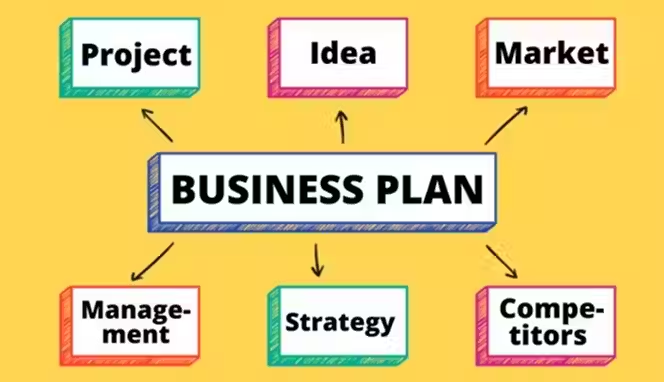
A business plan is a written document that outlines your business idea, goals, target market, competitive advantages, financial projections, and strategies for growth. It answers essential questions like:
- What problem does your business solve?
- Who are your customers?
- How will you make money?
- What resources do you need?
- How will you operate efficiently?
- What does your long-term vision look like?
Business plans are not just for investors — they are for you. They act as a roadmap that keeps your team focused and your decisions grounded in strategy.
Why You Need a Business Plan in 2026
The business landscape in 2026 is more competitive, technology-driven, and customer-focused than ever before. Markets shift quickly, industries evolve faster, and customer expectations continue to rise. In this environment, having a business plan isn’t just helpful — it’s essential for clarity, growth, and long-term stability. A well-structured plan gives you direction, helps you stay organized, and supports decision-making across every stage of your business.
Below are the key reasons why a business plan matters in 2026:
1. Clarify Your Vision
A business plan forces you to clearly define your mission, value proposition, and the core problem your business solves. When this vision is documented, it becomes easier to communicate with teams, pitch to investors, and stay aligned with long-term goals. Leveraging strategic frameworks like strategy mapping helps translate high-level strategy into measurable objectives, improving strategy execution and organizational alignment as the business grows.
2. Improve Decision-Making
With detailed financial projections, operational plans, and market insights, a business plan gives you the data you need to make smart choices. Instead of guessing, you can compare potential opportunities, evaluate risks, and prioritize actions based on accurate information. This leads to more strategic and confident leadership.
3. Secure Funding
Investors, banks, and grant providers require a formal business plan before offering financial support. They want evidence that your idea is viable, profitable, and well-structured. A strong plan shows:
- Your market understanding
- Your financial stability
- Your business model
- Your potential for growth
Without a plan, funding opportunities become nearly impossible.
4. Build Confidence
A well-crafted business plan demonstrates that you are serious, prepared, and committed. It builds trust among employees, partners, suppliers, and stakeholders. When everyone understands your goals and strategy, they are more willing to support your vision — and more confident in the company’s future.
5. Create a Scalable Business Model
Scaling isn’t about growth alone — it’s about sustainable, controlled growth. A business plan outlines the systems, processes, and resources needed to expand without losing quality. Whether you’re building a service-based company, an ecommerce brand, or a dropshipping business, having a plan ensures your operations, marketing, logistics, and finances can grow together.
Components of a Strong Business Plan (2026 Edition)
A complete business plan includes the following sections. Each one serves a specific purpose and provides structure for your strategy.
1. Executive Summary
This is the first section of the business plan but is usually written last. It gives a brief overview of your entire business.
What to Include
- Business name and type
- Mission statement
- Description of your products/services
- Target audience
- Competitive advantage
- Brief financial outlook
- Vision and goals
Your executive summary should be concise—usually 1 page—but compelling enough to make investors want to read more.
2. Company Description
This section provides more detail about your business. It explains what you do, why you do it, and what sets you apart.
Include
- Your industry
- Legal structure (sole proprietorship, LLC, corporation, etc.)
- Business history (if applicable)
- Location
- Your team or founding members
- Unique value proposition
A strong company description makes it clear why your business should exist.
3. Market Research and Analysis
Market analysis shows that you understand your industry, customer behavior, and competitive landscape. This section is essential for proving the viability of your idea.
Your Market Research Should Cover
a. Industry Overview
Describe trends, growth rates, and opportunities.
b. Target Audience
Identify your ideal customer. Include:
- Age
- Location
- Income
- Behavior
- Needs
- Pain points
c. Competitor Analysis
Study your top competitors and identify gaps your business can fill.
d. Market Opportunity
Highlight underserved areas or customer demands not being met. A clear market analysis proves you have a place in the industry and know how to reach your audience.
4. Business Model
This section explains exactly how your business will make money.
Questions to Answer
- What do you sell?
- How do customers buy from you?
- What is your pricing strategy?
- What are your profit margins?
- What is your customer acquisition plan?
For ecommerce or dropshipping businesses, this section includes product sourcing, logistics, and order fulfillment.
If your business involves online retail or dropshipping, using platforms like Spocket allows you to source high-quality products from reliable US/EU suppliers. This improves shipping times, customer satisfaction, and profit potential—key elements of a strong business model.
5. Products and Services
Describe what you offer and why customers need it.
Include
- Product features
- Benefits
- Pricing
- How your product solves a customer problem
- Product development plans (new designs, new features, upgrades)
- Intellectual property (if any)
For ecommerce: Explain your product categories, niche, and sourcing strategy.
For dropshipping: Highlight supplier partnerships, fulfillment tools, and catalog size.
6. Marketing and Sales Strategy
A business plan must explain how you will attract and convert customers. Marketing strategy is one of the most critical sections.
Include
a. Marketing Strategy
- Branding
- Social media
- SEO
- Paid ads
- Influencer collaborations
- Email marketing
- Content marketing
b. Sales Strategy
Explain your customer journey:
- How will customers find you?
- How will you convert them?
- How will you retain them?
c. Sales Forecast
Share your estimated customer volume and projected income.
7. Operations Plan
Your business operations outline how your company functions day to day.
Include
- Production and delivery
- Suppliers and partnerships
- Inventory management
- Order fulfillment
- Tools and software
- Customer service process
- Staffing and hiring plans
If you operate an ecommerce or dropshipping business, Spocket can streamline operations with:
- Fast US/EU supplier sourcing
- Automated order fulfillment
- High-quality product catalogs
- Real-time inventory syncing
This helps maintain smooth workflows and consistent customer experiences.
8. Management and Organization
This section explains who runs the business and how the organizational structure works.
Include
- Founders
- Leadership team
- Advisory board
- Key roles and responsibilities
- Staffing plan
Investors want to know who is steering the business and whether they have the skills to succeed.
9. Financial Plan and Projections
A realistic financial plan demonstrates sustainability and growth potential.
Include
- Startup costs
- Operating expenses
- Revenue projections
- Profit-and-loss forecast
- Cash flow statement
- Break-even analysis
- Funding requirements
Investors use this section to determine whether your business is financially feasible.
10. Appendix
Use this optional section to include supporting documents such as:
- Charts
- Research papers
- Licenses
- Branding materials
- Product photos
- Legal documents
- Resumes
This helps validate your business plan with additional data.
Step-by-Step Guide to Writing a Business Plan (2026)
Writing a business plan can feel overwhelming, but following a structured process makes it easier. The steps below guide you through research, strategy, operations, financial planning, and execution—ensuring you create a complete and effective business plan for 2026. Now let’s break down the process into simple steps you can follow.
Step 1: Start With Clear Research
Gather information about your market, competitors, customers, and industry growth. Strong research helps you build strategies based on data, not assumptions.
Step 2: Define Your Business Purpose
Clarify what problem you’re solving and why your business matters. This becomes the foundation of your mission and branding.
Step 3: Outline Your Business Structure
Decide whether your business is an LLC, corporation, partnership, or sole proprietorship. Each has different tax and legal implications.
Step 4: Describe Your Offerings
List your products or services clearly. Explain how they're priced and what makes them valuable.
Step 5: Build Your Marketing Strategy
Decide how you’ll reach customers. Will you use organic marketing, ads, social media, SEO, influencer marketing, or email campaigns? A combination works best.
Step 6: Map Your Sales Funnel
Explain how customers discover, evaluate, and purchase your product. Include retention strategies such as loyalty programs, email sequences, or community building.
Step 7: Build Your Operations Plan
Define how your business runs behind the scenes. For ecommerce and dropshipping, emphasize product sourcing and fulfillment.
Tip: Sourcing through Spocket ensures faster delivery, high-quality products, and strong supplier partnerships.
Step 8: Prepare Financial Projections
Estimate your income, expenses, and growth trajectory. Use templates or accounting software to build charts and models.
Step 9: Write the Executive Summary Last
Summarize the most important parts of your plan. Make it strong, concise, and convincing.
Common Mistakes to Avoid When Writing a Business Plan
Even the best business ideas can fall apart if the business plan lacks clarity, structure, or realistic insight. Many entrepreneurs unknowingly make mistakes that weaken their plan and reduce their chances of securing funding or building a sustainable business. Understanding these pitfalls will help you create a strong, credible, and actionable plan.
1. Being Too Vague
General statements like “We plan to grow quickly” or “We will target everyone” make your business plan weak and unconvincing. Investors want specifics: who your customers are, how you’ll reach them, and what makes your offering unique. Clear details show you understand your market deeply.
2. Ignoring Competitors
No business exists without competition, even if your idea feels unique. Competitors can be direct or indirect, and failing to analyze them makes your plan appear unrealistic. A strong business plan acknowledges competitors, highlights gaps in the market, and explains how your business will stand out.
3. Overestimating Revenue
Overly optimistic revenue projections can damage your credibility. Your financial forecasts should be grounded in real data, industry benchmarks, and market research. Realistic projections show that you understand your business’s financial challenges and opportunities.
4. Forgetting Operational Details
Strategy alone is not enough. A business needs clear operations to function smoothly — including sourcing, logistics, staffing, customer support, and technology. Without operational clarity, businesses struggle to scale and deliver consistent quality.
5. Neglecting Marketing
Even the best product will not succeed if no one knows it exists. A business plan must include a detailed marketing strategy outlining how you will attract, convert, and retain customers. Without visibility, growth becomes nearly impossible.
6. Skipping Proof of Demand
Investors and stakeholders want evidence that customers actually want your product or service. Proof of demand can include surveys, preorders, competitor performance, or early sales data. Showing real interest validates your business idea and builds trust.
Business Plan Template (2026)
A well-structured business plan helps you organize your ideas clearly and logically, making your vision easy to understand. To get started with confidence, reviewing real business plan examples from successful startups can give you a practical framework and inspiration for structuring your own plan effectively. Below is a simple, modern template designed for startups, ecommerce businesses, service companies, and dropshipping brands. It includes every section needed to present a complete and investor-ready business plan.
1. Executive Summary
A brief overview of your business, including your mission, vision, value proposition, and key financial highlights. Although it appears first, write this section last.
2. Company Description
Explain what your business does, your legal structure, your industry, your location, and the problem you’re solving. This section sets the stage for the rest of your plan.
3. Market Analysis
Present your research on industry trends, customer segments, competitor insights, and market opportunities. This section shows you understand the landscape you’re entering.
4. Business Model
Describe how your business will earn revenue. Include your pricing strategy, revenue streams, and how you plan to acquire customers. For ecommerce, this also includes sourcing and fulfillment strategies.
5. Products/Services
Detail the products or services you offer, including features, benefits, pricing, and future development plans. Explain how your offerings solve customer problems.
6. Marketing Strategy
Outline how you plan to build awareness, attract customers, and position your brand. Include your SEO plan, social media strategy, advertising channels, and email marketing approach.
7. Sales Plan
Explain how leads turn into paying customers. Describe the customer journey, conversion tactics, sales channels, and retention strategies.
8. Operations Plan
Describe how your business runs daily. Cover production, suppliers, inventory, shipping, tools, and customer service.
9. Management
Introduce the founders, key team members, and organizational structure. Explain the skills each person brings to the business.
10. Financial Plan
Provide realistic projections, including startup costs, revenue forecasts, cash flow statements, break-even analysis, and funding requirements. This section is critical for investors.
11. Appendix
Include supporting documents such as charts, market research, legal paperwork, product images, resumes, and brand assets. These materials strengthen your plan with additional evidence.
Why This Template Works
This structure is clean, easy to follow, and aligned with what investors and lenders expect in 2026. It works effectively for:
- Startups
- Small businesses
- Ecommerce stores
- Dropshipping brands
- Service-based companies
Using this template ensures your business plan is complete, strategic, and ready for funding or execution.
How Business Plans Differ for Ecommerce and Dropshipping
Ecommerce businesses often require unique considerations:
1. Supplier Strategy
How will you source products? Dropshippers often rely on platforms like Spocket for high-quality US/EU products and fast shipping.
2. Fulfillment and Logistics
You must explain your delivery times, inventory sync, and return policy.
3. Customer Experience
Online stores need strong branding, fast support, and reliable order tracking.
4. Marketing and Traffic
SEO, email marketing, TikTok ads, and influencer collaborations are essential.
Conclusion
Writing a business plan may feel overwhelming, but once you break it down into simple sections, it becomes a powerful tool for your business’s future. A well-structured plan clarifies your goals, helps you secure funding, guides your decisions, and brings your vision to life.
For ecommerce businesses and dropshipping entrepreneurs, using tools like Spocket strengthens your plan by providing a reliable sourcing strategy built on quality and speed—two essential factors for customer satisfaction.
Whether you're launching a startup, opening an online store, or expanding your existing business, a thoughtful business plan is your blueprint for growth in 2026 and beyond.
Start your dropshipping business today
FAQs About Writing a Business Plan
Do I really need a business plan to start a business?
While not legally required, a business plan is highly recommended. It gives you clarity, outlines your strategy, and helps you anticipate challenges. Investors, lenders, and partners often require one before providing support or funding.
How long should a business plan be?
Most business plans range between 10–20 pages, depending on complexity. What matters most is clarity—not length. Each section should be detailed enough to explain your strategy without overwhelming the reader.
Can a business plan help me secure funding?
Yes. A strong business plan is one of the most important tools for attracting investors or securing loans. It demonstrates financial understanding, market opportunity, and operational readiness—all crucial for building investor confidence.
How often should I update my business plan?
You should review and update your business plan every 6–12 months or whenever a major change occurs, such as entering a new market, adjusting your pricing, or scaling operations. Regular updates keep your business strategy aligned with real-world shifts.
What’s the biggest mistake people make when writing a business plan?
The most common mistake is being too vague—especially about the target audience, financial projections, and marketing strategy. A successful business plan requires clear, data-backed details that show you understand your market and have a sustainable plan for growth.


Launch your dropshipping business now!
Start free trial


Related blogs
How to Set Up Automated Order Fulfillment With Spocket and Shopify
Set up a smoother Shopify dropshipping workflow with Spocket by connecting your store, importing products, processing orders, syncing tracking, and reducing manual fulfillment tasks.


How to Open a Business Bank Account for Your Dropshipping Store
Set up your dropshipping finances the right way with a dedicated business bank account built for payouts, supplier payments, taxes, and long-term store growth.
Spocket vs Dropified: Which Tool Is Better for Multi-Store Scaling?
Compare Spocket and Dropified for multi-store dropshipping, supplier quality, automation, fulfillment, product sourcing, and scaling across ecommerce platforms.