


Why Storytelling Is Your Secret Weapon in E-commerce Marketing?
Bring your online store to life with storytelling. Build trust, loyalty, and boost sales in your e-commerce marketing—see how to use narratives to win.

Storytelling is not an optional marketing extra for online stores—it's a must-have tool that sets brands apart and builds deep trust with shoppers. E-commerce storytelling shapes the way customers connect with products, remember your brand, and make decisions.
In this blog, you'll learn exactly why storytelling matters so much, see what works (and what doesn’t), and walk away with clear strategies you can use to make your store’s story unforgettable.
What Is Storytelling in E-Commerce?

Storytelling in e-commerce goes well beyond catchy taglines or product descriptions. At its core, it means sharing your brand’s values, personality, and customer experiences through narratives that feel human, relevant, and memorable. This approach shifts the store from being just a place to buy things to being a brand that customers want to engage with again and again.
E-commerce storytelling is about using real stories—about your origins, your customers, or even how your products are made—to give context and meaning to what you sell. This helps shoppers connect on a level that pure facts and features can’t achieve.
Why Storytelling in E-Commerce Works?

Neurological studies show stories activate more of our brains than lists of facts alone. Customers remember information packaged in stories up to 22 times better than plain data or product specs. Stories create imagery, arouse emotion, and are processed in the same areas of the brain as memories or personal experiences. When you make stories central to your e-commerce marketing strategies for online stores, you build a brand presence that sticks.
Stories lead to oxytocin release in our brains, which boosts feelings of trust and empathy. Using storytelling in e-commerce marketing strategies for online stores means you become more memorable and “human” in shoppers’ eyes. Several business leaders agree how storytelling can motivate employees in organizations. It gives them a reason to work harder, be productive, and puts everyone on the same page.
Elements of a Good Story
Here are the key elements of a good story for e-commerce businesses:
- Relatable characters (such as your founder, real customers, or the buyer themselves)
- Emotion and conflict (what challenge did you or your customers face before finding a solution?)
- Satisfying resolution (how did your product or service make things better?)
Benefits of Storytelling in E-Commerce
Storytelling isn’t just a nice-to-have. The benefits are proven and tangible, making it an essential part of smart e-commerce marketing strategies for online stores.
Brand Differentiation and Customer Loyalty
Most products are easy to copy. Stories are not. When you share authentic narratives, your store stands out in a crowded marketplace. Customers are drawn to brands that reflect their own values and ambitions. Storytelling strengthens emotional bonds, which lead to repeat purchases and long-term loyalty.
Improved Recall and Recognition
A good story stays with shoppers far longer than any sales pitch ever could. This means more direct traffic, word-of-mouth referrals, and better brand recognition.
Higher Conversions and Sales
Storytelling encourages action. By putting customers at the center of your brand’s story, you nudge them closer to purchase with every engaging narrative—boosting your bottom line in the process.
Different Ways to Tell Stories in E-Commerce
Good e-commerce storytelling strategies can be expressed in multiple formats. It’s not always about having a big “About Us” page; stories can live all over your brand experience.
Your Origin and Brand Story
How did your store start? What problem inspired you to launch your brand? Sharing your beginnings—including your struggles—builds relatability and trust with your audience.
Founder Stories
Letting shoppers see the human faces behind the site or store builds authenticity and breaks down barriers. Customers connect more with a real founder than a faceless brand.
Product Stories
Explain why a product exists: who it’s for, the journey from idea to shelf, and the impact on users. Storytelling in product descriptions lets the product become the hero of its own tale and addresses pain points in a more memorable way. Storytelling tells your customers what they are paying for, not just a product, but the whole experience. It gets them more involved with your brand.
Customer Stories and Testimonials
Social proof is powerful but works best when framed as a mini-narrative instead of a short review. Share before-and-after transformations, customer journeys, or “aha” moments to inspire trust.
Visual Storytelling
Photos, illustrations, and video breathe life into your written narratives. Unboxing videos, behind-the-scenes glimpses, and lifestyle shots can convey more about your brand values than words alone.
Content Marketing
Blog posts, social media and PR campaigns, and even email newsletters are vehicles for micro-stories. By highlighting case studies, testimonials, or founder updates, you keep your brand story alive everywhere you show up.
Storytelling Mistakes to Avoid for E-Commerce Businesses
Not all stories are created equal. Some common mistakes can dilute your efforts or even put off potential buyers.
Not Focusing on Tension or Conflict
Great stories need a problem, a challenge, or a moment of uncertainty. Avoid “happy talk” that skips over the actual struggles faced by you or your customers.
Focus on not just selling but connecting and plot out your content calendar through their eyes. Are your products interesting, relevant and authentic?
Making the Brand the Only Star
Resist the urge to always talk about yourself. Instead, center your stories around your customers—let them be the protagonists, and make your product the supporting guide or solution.
Your customers will have stories that they can relate to, maybe something from their childhood which they wanted to fulfill as an adult after growing up. If you listen carefully to your customers' fears, aspirations and motivations and align those emotions with your branding, you're most likely going to get sales.
Staying Too General or Abstract
Specifics stick. If your brand’s stories are vague or full of clichés, you’ll lose attention. Use real details, names, and actual events. The Devil is in the details. Your story becomes much stronger when you can verify key information and trace it back.
Customers know when brands are trying to sell too hard to them and easily ignore those kinds of businesses. If you offer real value in exchange for a moment of your customer's attention, then you give them a reason to be genuinely interested and come back.
Treating Storytelling as a Silo
Storytelling should run through all your marketing strategies for online stores, not live as a one-off campaign separate from your regular content efforts. Look at how you paint your products all over your pages, not just through words but via visuals, promotions, and via every other angle.
Telling Stories in Chronological (Boring) Order
Strategically order your story to build suspense, highlight “aha” moments, and direct readers toward your call to action—not just a dry timeline of events. Also, you don’t want to misinform your readers or exaggerate too much. Don’t make stuff up, because they hate lies.
Examples of Storytelling in E-Commerce
Learning from brands large and small can help you find your own storytelling voice. Here are a few good examples of storytelling in e-commerce:
Nike: Just Do It
Nike’s storytelling centers on real athletes overcoming adversity, not just product features. The relatable struggle is what makes the brand memorable and trusted. Good brands don’t just share their struggles, they solve problems, and that’s exactly what Nike did.
Corona: “Find Your Beach”

Corona creates a vivid association—drinking their beer feels like a beach escape. Their storytelling leverages aspiration, not just product attributes. It gives a laid back vibe and takes you into that state of mind. The gist is, by having a drink, you transform your everyday life into a mini vacation which everyone loves.
Whirlpool: The Care Counts Program
Whirlpool’s campaign about keeping kids in school by providing washers & dryers went viral because it showed real-world impact, not just products. It helped kids stay in school and played a big role in reducing rates of absenteeism. Dirty clothes would lead to dropouts, and Whirlpool fixed it. Whirlpool collaborated with Tech America and ended up installing many washers and dryers in school, making their campaign a massive success.
Harley-Davidson: Enough with the Flowers

By focusing on real female riders and breaking down stereotypes, Harley-Davidson deepened emotional bonds and opened up to a broader audience. Sometimes you have to get to places, be it to your job or a funeral. Fast.
Spocket: Building Trust in Dropshipping
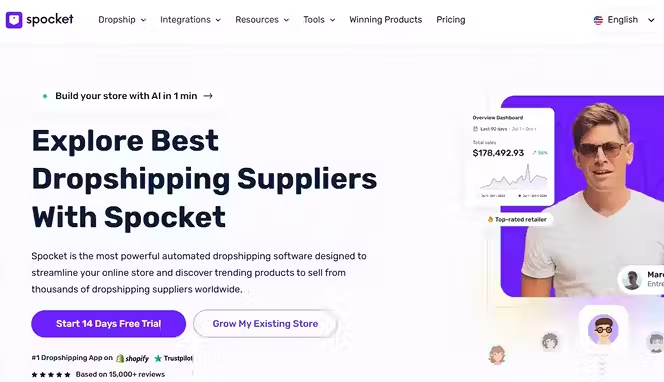
When we think of Spocket, we think of Marc Chapon and how he went from his humble beginnings to now the owner of 6-figure dropshipping businesses.
Spocket’s narrative is built on trust, reliability, and customer-centered features. By highlighting verified US and EU suppliers, 24/7 support, and winning product selections, Spocket actively showcases the emotional benefits of security and opportunity for e-commerce entrepreneurs. Their story resonates with those seeking reliability, brand credibility, and scalable growth—with over 500,000+ users worldwide trusting Spocket for automated inventory, sample orders, and branded invoicing. The promise: your business, your way—no minimum orders required.
How to Start Storytelling in E-Commerce
Not sure where to begin? Use these practical steps to shape your e-commerce storytelling strategies for online stores:
Understand Your Audience
Know your shoppers’ aspirations, values, and struggles. Speak their language, and tailor your stories to what matters to them. Get to know your target age groups, demographics, and understand their wants, pain points, and demands.
Share the Origin Story
Be transparent about where your brand comes from, what problem you solve, and why you care. This forms the backbone of your narrative. Go deep into your origins, right from the barebone beginnings. Don’t be scared to show the messy stuff. It doesn’t have to be perfect.
Showcase Customer Experiences
Regularly share customer journeys, positive impacts, and even the occasional “win against the odds.” Testimonials, case studies, and social proof are your building blocks for memorable stories. Good customer reviews will be your best friend. Don’t post fake reviews because your audiences will verify.
Use Visuals Effectively
Integrate photos, behind-the-scenes content, illustrations, and video. Visuals turn stories into real, relatable moments. There are many AI image generation tools available these days that make it easy to produce visual content at scale. Try Leonardo.ai, and if you want an affordable AI video generator, Kling 3 is worth a look for turning product shots into short, scroll-stopping clips.
Add Testimonials and Reviews
Highlight transformations, before-and-after moments, or stories that show your brand’s impact, not just star ratings or generic praise.
Add Storytelling to Product Descriptions
Move beyond bullet points and plain specs. Let the product’s unique features, development story, or user benefits come alive through vivid narrative techniques. Storytelling in SaaS products can increase the chances of your products being remembered by over 2200%!
6 Tips for Telling Great E-Commerce Stories
The difference between a story that falls flat and one that sticks is in the details and the delivery. Here are six practical tips to tell e-commerce stories that actually work—with real examples showing what to do and what not to do.
Tip 1: Start With a Real Problem, Not a Happy Ending
The biggest mistake is jumping straight to how great your product is. Readers don't care yet. They care about the problem.
The wrong way: "We make the best travel pillows. Customers love them. Order now!"
The right way: "Sarah couldn't sleep on planes. She'd arrive at her destination exhausted, and a week of vacation was wasted just recovering. Then she found a pillow designed for side sleepers—and suddenly, red-eye flights didn't ruin her trips anymore."
See the difference? The second example puts you in Sarah's shoes first. You feel the frustration before you hear about the solution. This is what pulls readers in.
Tip 2: Use Names and Specific Details
Generic stories sound fake. Specific details sound real.
The wrong way: "A customer was unhappy with their old headphones."
The right way: "Marcus, a podcast host from Austin, spent $300 on wireless headphones. After three months, the left ear stopped working. He wasted hours getting a refund and buying replacements. By his fourth pair, he was done."
Notice: names, locations, timeframes, and actual dollar amounts. These details make the story believable. They also make your store feel trustworthy because you're not hiding behind vague language.
Tip 3: Show Struggle Before the Win
Stories need tension. Without it, they're just announcements.
The wrong way: "Our skincare line is made with natural ingredients and works great for sensitive skin."
The right way: "Jenna had tried six different skincare brands. Her dermatologist said her eczema was triggered by common chemicals, but everything labeled 'natural' either did nothing or burned her skin. When she found a cream with zero synthetic additives and saw real results in two weeks, she actually cried. For the first time in years, her skin didn't itch at night."
The first feels like marketing speak. The second feels like a real person's relief. The struggle makes the win feel earned and real.
Tip 4: Make It About the Customer, Not Your Process
Don't talk about how hard you worked or how unique your factory is. Talk about what the customer gets.
The wrong way: "We hand-source all materials and have a proprietary 12-step production process to ensure quality."
The right way: "Tom needed a durable gym bag. Most bags fell apart after a year. He bought ours, and after three years of heavy use—sweaty clothes, gym equipment, road trips—the seams are still holding strong. He stopped looking for new bags."
The first talks about your effort. The second shows the actual benefit: durability that saves money and time over years. Customers care about outcomes, not your process.
Tip 5: Be Honest About Limitations
Real stories include bumps. Perfection isn't believable.
The wrong way: "Everyone loves our product. 5 stars. Buy it now."
The right way: "Lisa loved our productivity planner but admitted it took two weeks to get into the habit of using it daily. For the first week, she forgot about it. But once she committed, her productivity jumped. Worth the adjustment period."
Admitting the two-week ramp-up time actually makes the story stronger. It shows you're not exaggerating, and it sets realistic expectations. People trust honesty more than hype.
Tip 6: End With a Clear Takeaway, Not a Sales Pitch
Tell readers what they should know or feel after your story. Don't scream "Buy now!"
The wrong way: "Don't miss out! Limited time offer! Order your travel pillow today!"
The right way: "If you fly more than twice a year and wake up sore, a good pillow isn't a luxury—it's protection for your vacation time. That's why we designed ours."
The first is pushy and forgettable. The second gives permission and context. You're not begging for the sale; you're inviting the right customer to see if it's for them.
Good e-commerce stories don't need flowery language or dramatic music. They need real people, real problems, real solutions, and honest details. When you tell stories this way, your customers don't just buy once—they remember you and come back.
Conclusion
Storytelling isn’t just a trend—it’s your secret weapon for standing out in e-commerce. Strong stories help customers remember your brand and keep them coming back. When you put e-commerce storytelling at the heart of your marketing strategies for online stores, you get more than traffic: you get trust, loyalty, and real growth.
Start your dropshipping business today
E-Commerce Storytelling FAQs
What is e-commerce storytelling?
E-commerce storytelling is the art of using authentic stories about your brand, products, and customers to create emotional connections and guide shoppers toward a purchase. This approach is central to effective marketing strategies for online stores.
How does storytelling boost online sales?
Storytelling helps customers relate to your products, builds trust, and forms emotional connections. These deeper ties translate into better brand recall, increased loyalty, and ultimately, more purchases for online stores.
What are the benefits of storytelling for online stores?
Storytelling highlights what makes your brand unique, creates a strong brand identity, and builds emotional loyalty. It also supports word-of-mouth referrals and makes marketing strategies for online stores more memorable and persuasive.
How can I start storytelling for my store?
Begin by learning about your audience and sharing your brand's origin, customer stories, and positive impacts. Add personal touches to product pages, use visual content, and regularly feature testimonials to strengthen your e-commerce storytelling.
What are some common storytelling mistakes in e-commerce?
Avoid making your story too generic, focusing only on your brand, or neglecting the emotional journey of your customers. Ensure your stories are authentic, specific, and woven throughout your entire marketing strategies for online stores.
Should I use customer stories in marketing?
Yes! Customer stories are one of the most impactful ways to build trust, demonstrate results, and create relatable narratives within your e-commerce storytelling. They can be used on your website, social channels, and email campaigns.


Launch your dropshipping business now!
Start free trial.avif)


Related blogs

What Is Ecommerce? Definition, Types and Models
What is ecommerce? Learn the definition, types (B2C, B2B, D2C), business models, and 2026 US Census data, plus how to work out profit on a single order.

eBay Seller Hub: Every Tab Explained
eBay Seller Hub explained tab by tab, with fees worked through, a weekly routine and how dropshippers use it to track orders, seller level and payouts.

Top WordPress eCommerce Themes for 2026
Explore the best WordPress eCommerce themes for 2026. Compare WooCommerce themes by speed, design, features, and dropshipping potential.
