What Can You Do in Spocket's Free Trial? (An Honest Walkthrough)
Explore what Spocket’s free trial includes, what you can test, limits to expect, and how to decide if it fits your dropshipping store.
.avif)
.avif)

A free trial sounds exciting, but the real question is simple: can you use it to decide whether a dropshipping platform is actually worth paying for? That is exactly what the Spocket free trial helps you figure out. Instead of treating it like a quick product browse, use it like a validation sprint. You can explore dropshipping suppliers, check US and EU products, review shipping expectations, connect your store, import products, and understand how the order workflow feels before choosing a paid plan. The honest part? Your access, product limits, trial length, and available features may depend on the plan or signup offer you choose. So, in this walkthrough, we will break down what you can do during Spocket’s free trial and what to check before upgrading.
What is the Spocket Free Trial?
The Spocket free trial gives new users a practical way to explore the platform before choosing a paid plan. Instead of guessing whether Spocket fits your store, you can use the trial to browse products, check dropshipping suppliers, review shipping times, connect your ecommerce store, import products, and understand how order fulfillment works.
It is useful for:
- Beginners who want to test dropshipping without committing too early
- Shopify store owners looking for better US, EU, and global suppliers
- Niche sellers who want to validate product quality, pricing, and delivery speed
- Brand-focused dropshippers who care about customer experience, packaging, and supplier reliability
The honest part is that trial access, duration, product limits, and available features may vary depending on the plan, promotion, or signup page. So before you start, check the current terms inside your Spocket dashboard.
Think of the Spocket trial as a product validation window. You are not just browsing products. You are checking whether the platform can actually support your store idea.
What Can You Actually Do During Spocket’s Free Trial?
Here is a detail of what you can actually do with the Spocket’s free trial
1. Browse Spocket’s Product Catalog
During the Spocket free trial, you can explore products across popular dropshipping niches such as fashion, beauty, home decor, pet products, accessories, tech items, print-on-demand products, and more.
But do not browse randomly. Use the trial to shortlist products that make sense for your audience.
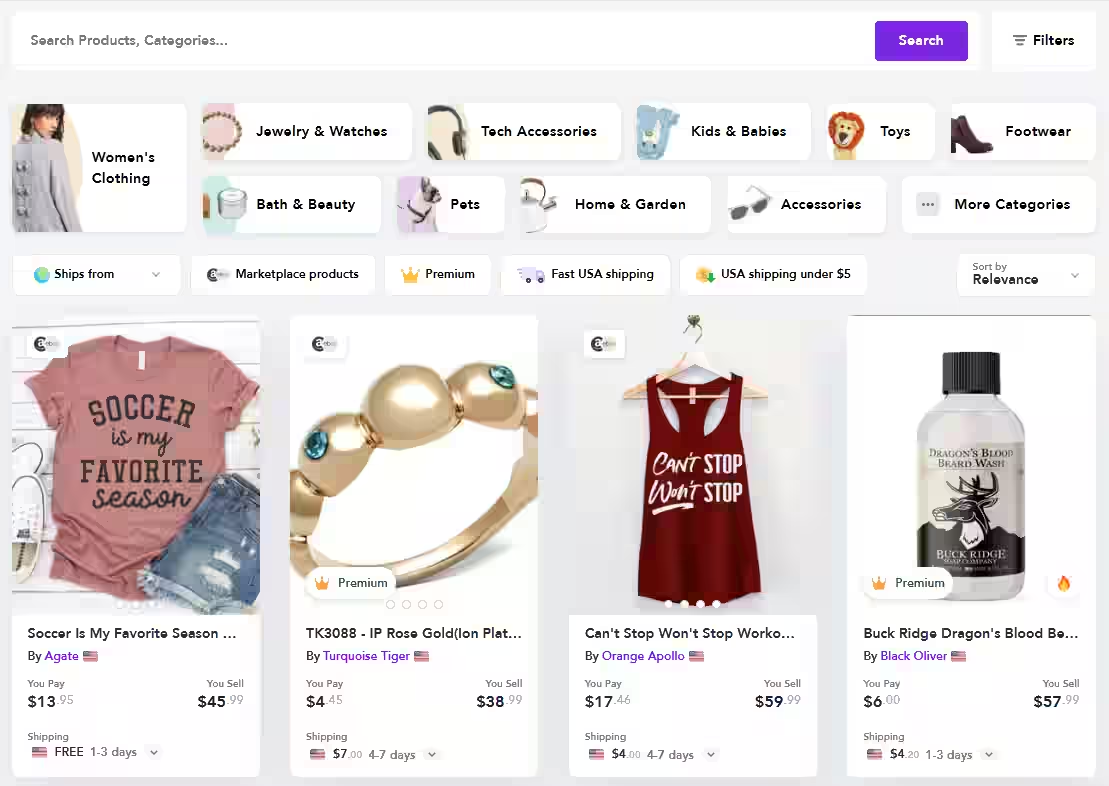
Look at:
- Product cost
- Retail price potential
- Shipping location
- Estimated delivery time
- Product photos
- Variants and sizing
- Niche fit
- Profit margin
This helps you answer a real business question: “Does Spocket have products I can confidently sell in my store?”
2. Check US, EU, and Global Suppliers
One reason many sellers try Spocket is supplier discovery. The platform focuses strongly on US and EU dropshipping suppliers, which can help merchants offer faster delivery compared with many traditional overseas-only sourcing options.
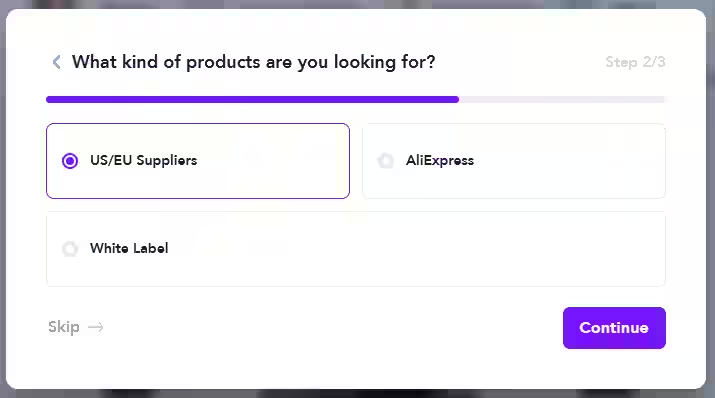
During the trial, compare suppliers carefully. Check:
- Supplier location
- Processing time
- Estimated shipping time
- Product cost
- Product variants
- Return expectations
- Product quality signals
- Whether the product fits your target market
This is especially important if you want to build a store around faster shipping, better customer experience, and fewer delivery-related complaints.
3. Import Products to Your Store
The Spocket trial also helps you test the product import workflow. If you use Shopify or another supported ecommerce platform, you can connect your store and see how easy it is to move products from Spocket into your store.
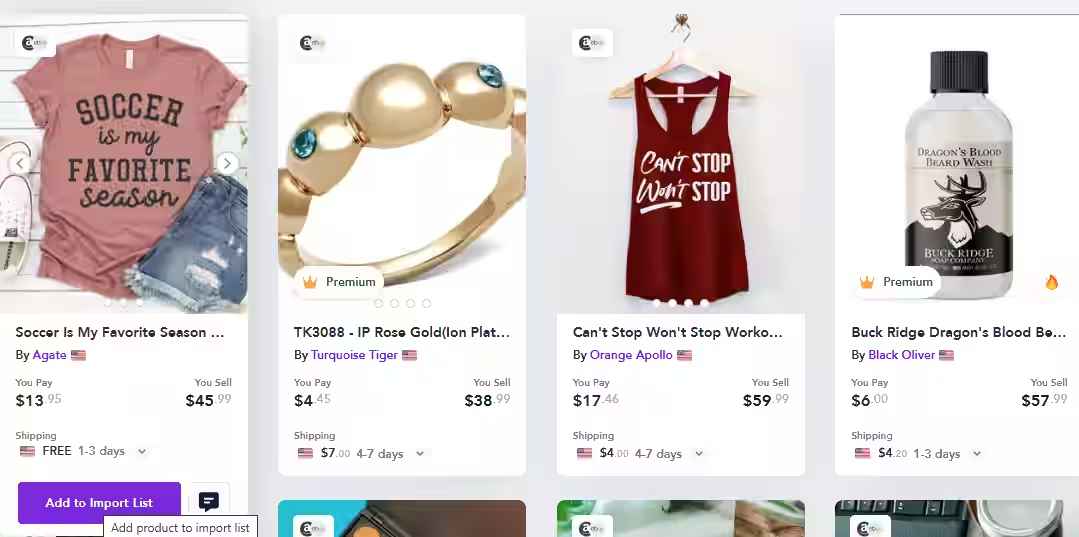
Before publishing anything, review:
- Product title
- Product description
- Images
- Variants
- Pricing
- Shipping details
- Tags and collections
- Compare-at price
Importing products is not just about clicking a button. It shows you whether Spocket fits your daily store management workflow. If the process feels simple during the trial, it can save time once you start adding more products.
4. Edit Product Details Before Publishing
Do not publish imported products exactly as they appear. The free trial is the right time to test how easily you can customize listings for your brand.
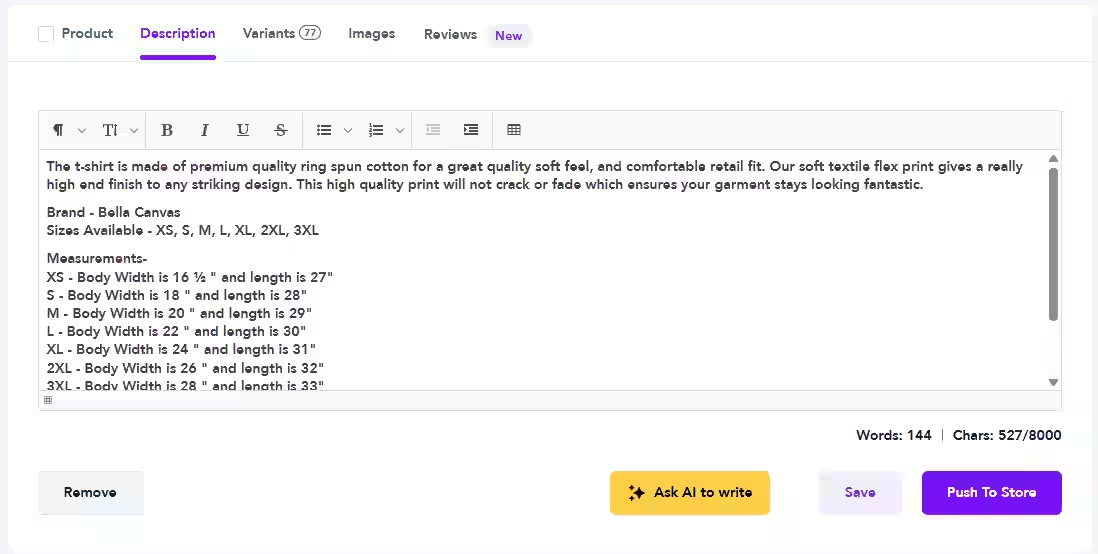
Edit the following before making products live:
- SEO title
- Product description
- Benefit-focused bullet points
- Product images
- Pricing and discounts
- Shipping information
- Product page FAQs
This step matters because many dropshipping stores fail by using generic product pages. A better product description, clearer shipping details, and stronger benefits can improve trust and conversions.
5. Test Product Pricing and Profit Margins
A product may look good, but that does not always mean it is profitable. Use the Spocket free trial to calculate whether your shortlisted products can actually make money.
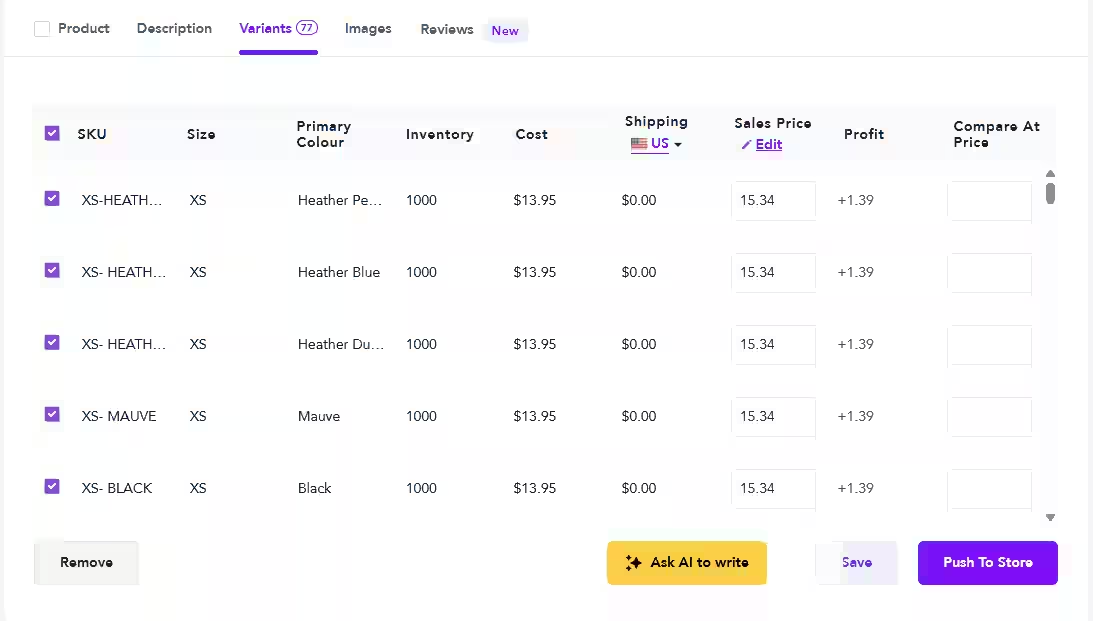
Check:
- Product cost
- Shipping cost
- Store platform fee
- Payment processing fee
- Estimated ad cost
- Discount buffer
- Target profit margin
A simple formula to use:
Retail price – product cost – shipping – platform/payment costs – ad cost = estimated profit
For example, if a product costs $12, shipping is $4, and you sell it for $35, you still need to account for ads, payment fees, discounts, and returns. The trial helps you catch weak-margin products before adding them to your store.
6. Order Product Samples
Sample orders are one of the smartest ways to test supplier reliability before selling to real customers. Spocket allows users to order samples, which helps you review the actual product experience instead of relying only on listing photos.
When your sample arrives, check:
- Product quality
- Packaging
- Delivery speed
- Tracking updates
- Product accuracy
- Customer experience
If you want to build a real brand, sample orders are not optional. They help you avoid selling products you have never touched, tested, or seen in person.
7. Review Shipping Times Before Selling
Shipping time can directly affect conversions, refunds, reviews, and repeat purchases. That is why you should use the Spocket trial to compare delivery expectations before publishing products.
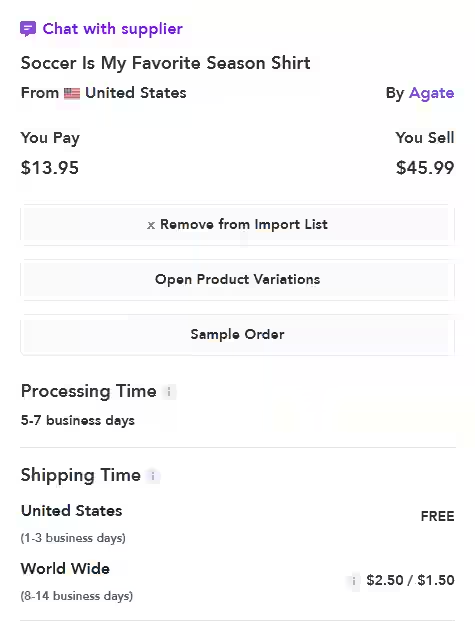
Review:
- Domestic vs international shipping
- Estimated delivery window
- Processing time
- Supplier location
- Customer expectations
- Product urgency
For example, a beauty tool, gift item, or impulse-buy accessory usually needs faster delivery than a niche hobby product where buyers may be more patient.
The goal is simple: choose products your customers will not regret waiting for.
8. Explore Automated Order Fulfillment
Once your store starts getting orders, manual work can become stressful. Spocket helps streamline the order fulfillment process, so the trial is a good time to understand how the workflow works before you scale.
Use this stage to learn:
- How orders are processed
- What the supplier handles
- What you still control as the store owner
- How tracking updates work
- Why automation matters as order volume grows
Even if you are not processing dozens of live orders yet, understanding fulfillment early helps you avoid confusion later.
9. Check Inventory and Price Monitoring
Out-of-stock products and sudden price changes can hurt a dropshipping store fast. During the Spocket free trial, check how easy it is to monitor product availability and pricing.
This matters because you do not want to sell a product that is no longer available or lose profit because supplier pricing changed.
Before choosing products, ask:
- Is the product consistently available?
- Can I see inventory details?
- Does the product have stable pricing?
- Will this product still be profitable after fees and discounts?
Good product research is not only about finding what looks trendy. It is about finding products you can sell reliably.
10. Use Support and Help Resources
A free trial should help you test more than the product catalog. It should also help you understand the support experience.
During your trial, ask practical questions like:
- Which plan is right for my store?
- How does fulfillment work?
- Can I order samples before selling?
- How do shipping times work?
- What happens if a supplier has an issue?
- Can I switch plans later?
This helps you evaluate Spocket as a full dropshipping platform, not just a supplier directory. If the products, workflow, and support feel right, you will have a much stronger reason to continue after the trial.
What You Should Test First Inside the Spocket Free Trial?
The Spocket free trial is most useful when you treat it like a short product validation sprint. Whether your trial shows 7 days, do not spend the whole time browsing randomly. Use it to check if Spocket has the right products, suppliers, shipping options, and workflow for your store.
Here is a simple testing plan you can follow.
Day One: Connect Your Store and Set Your Niche
Start by connecting your ecommerce store and choosing one clear niche. This keeps your product research focused and helps you avoid adding random items that do not belong together.
Good beginner-friendly niches include:
- Beauty tools
- Pet products
- Home decor
- Fitness accessories
- Baby products
- Fashion accessories
- Print-on-demand basics
For example, instead of searching for “trending products,” search for “pet travel accessories” or “home office decor.” A tighter niche makes it easier to compare suppliers, pricing, product quality, and shipping times.
Day Two: Shortlist 15 to 20 Products
Once your niche is clear, use the Spocket trial to shortlist 15 to 20 products. This gives you enough options to compare without feeling overwhelmed.
Prioritize products with:
- Clear demand
- Good product images
- Strong profit margin potential
- Reasonable shipping times
- Simple use case
- Useful variants
- Supplier location that matches your target market
Spocket highlights access to US and EU suppliers, which can be helpful if faster shipping is part of your brand promise. This matters because delivery speed directly affects customer expectations, reviews, and repeat purchases.
Day Three: Import 5 to 10 Products
Next, import a small batch of 5 to 10 products into your store. Do not import everything you like. The goal is to test the workflow, not build a huge catalog overnight.
Check how each product imports:
- Are the images clean?
- Are variants easy to manage?
- Is pricing clear?
- Are shipping details visible?
- Can you organize products into collections?
- Does the process feel simple enough to repeat?
This step helps you understand whether Spocket fits your daily product sourcing and store management process.
Day Four: Edit Product Pages
Imported product pages should always be improved before publishing. Use this day to make your listings more useful, search-friendly, and conversion-focused.
Update:
- Product titles
- SEO titles
- Meta descriptions
- Product descriptions
- Benefit-led bullet points
- Pricing and compare-at pricing
- Product images
- Shipping details
- FAQs
Keep descriptions simple and specific. Tell shoppers what the product does, who it is for, why it is useful, and when they can expect delivery. This is where many dropshipping stores lose trust, so do not skip it.
Day Five: Order Samples or Review Supplier Details
If you are serious about selling a product, order a sample when possible. Spocket’s Help Center says users can order sample products, with up to 5 samples per item per order. This lets you check product quality, packaging, delivery speed, and the real customer experience before selling at scale.
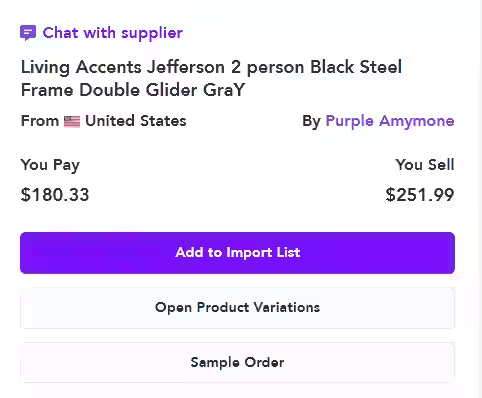
If you are not ready to order samples yet, review supplier details carefully:
- Processing time
- Shipping estimate
- Product reviews or quality signals
- Product variants
- Return expectations
- Supplier location
- Inventory availability
A product may look great online, but your customer will judge the real item they receive.
Day Six: Build a Small Test Collection
Now turn your best products into a small collection page. Aim for 5 to 10 products that belong together and solve a similar need.
For example:
- “Pet Travel Essentials”
- “Minimal Home Office Decor”
- “Everyday Beauty Tools”
- “Baby Care Must-Haves”
- “Fitness Accessories for Home Workouts”
A focused collection makes your store easier to shop and helps you test how well Spocket products fit a real storefront experience.
Day Seven: Decide Whether to Continue
By the end of your Spocket free trial, you should know whether the platform fits your store idea. Do not decide based on product count alone. Decide based on business fit.
Review:
- Product fit
- Supplier quality
- Shipping times
- Store workflow
- Profit margins
- Sample order experience
- Support experience
- Plan value
If the products match your niche, the margins make sense, and the workflow feels easy, upgrading becomes a practical business decision instead of a guess.
What the Spocket Free Trial May Not Include?
The Spocket free trial gives you room to explore the platform, but it is not the same as running a fully scaled dropshipping store for free. This is important to understand before you start.
Trial access can vary depending on the plan, promotion, signup page, and account setup. Spocket official pages mention a 7-day trial, so always check the current terms before starting.
The trial may have limits around:
- Trial duration
- Number of product imports
- Premium product access
- Advanced automation features
- Supplier or product availability
- Plan-specific features
Also remember that some costs are separate from Spocket, including:
- Shopify or ecommerce platform fees
- Domain costs
- Paid ads
- Sample product orders
- Payment processing fees
- App subscriptions outside Spocket
Before publishing products or placing orders, check the current plan details in your Spocket dashboard. That way, you know exactly what is included before you build your store around a feature.
This honest check protects you from surprises and helps you choose the right plan based on your actual store needs.
Is the Spocket Free Trial Enough to Start Dropshipping?
Yes, the Spocket free trial is enough to start testing a dropshipping business idea. You can explore products, connect your store, import listings, review suppliers, estimate margins, check shipping expectations, and understand how the order workflow works before choosing a paid plan.
But it is not a shortcut to instant sales.
To get real value from the trial, you need to actively test the platform. That means shortlisting products, reviewing supplier details, editing product pages, checking profit margins, and validating shipping times before you sell.
The trial is best used for validation, not passive browsing.
If you finish the trial with a focused niche, a small product collection, realistic margins, and suppliers you trust, you will have a much clearer reason to continue with Spocket. And if the products or workflow do not fit your goals, you will know that before spending more time building the wrong store.
Who Should Try the Spocket Free Trial?
The Spocket free trial is useful for anyone who wants to test product sourcing, supplier quality, and store workflow before paying for a dropshipping platform. It is especially helpful if you want to make a decision based on real product research instead of assumptions.
Beginners Testing Dropshipping for the First Time
If you are new to dropshipping, the trial helps you understand how product sourcing actually works. You can browse products, compare suppliers, check shipping times, import products, and see how listings move into your store.
This gives beginners a clearer picture of what it takes to build a dropshipping store beyond just choosing “winning products.”
Shopify Store Owners Looking for Better Suppliers
If you already run a Shopify store, the Spocket trial can help you test whether its products improve your current catalog.
Use it to compare:
- Product quality
- Supplier location
- Shipping speed
- Product cost
- Profit margins
- Store import workflow
This is useful if your current suppliers have slow delivery, weak product photos, unstable inventory, or low-quality items.
Niche Store Builders
Niche sellers can use the Spocket free trial to check whether the platform has enough relevant products for their audience.
For example, if your store focuses on pet travel products, minimalist home decor, baby essentials, or beauty tools, you can use the trial to see whether there are enough products to build a focused collection.
A strong niche store needs product consistency, not just random trending items.
Brand-Focused Dropshippers
The trial is also useful for sellers who care about building a real brand experience. If you want better product quality, sample testing, reliable shipping, and branded invoicing where available, Spocket gives you a way to evaluate those details before upgrading.
This matters because customers do not judge your store by the supplier. They judge your store by the product they receive, how fast it arrives, and whether the experience feels trustworthy.
Who Might Not Need the Spocket Free Trial?
The Spocket free trial is helpful, but it may not be the right fit for everyone. It works best when you are ready to test products seriously and compare suppliers with a clear goal.
It may not be ideal for:
- Users who do not have any niche idea yet
- Sellers who only want the cheapest possible products
- People unwilling to review samples or compare margins
- Store owners who want to scale without checking supplier quality
- Users expecting to build a profitable store with no setup work
- Sellers who do not want to edit product pages before publishing
This does not mean Spocket is not useful. It simply means the trial works best when you use it actively. If you want better results, start with a niche, shortlist products, check shipping times, calculate margins, and test the workflow properly.
Spocket Free Trial Checklist Before You Upgrade
Before moving from the Spocket free trial to a paid plan, use this checklist to make sure the platform fits your store.
Confirm that:
- I found products that match my niche
- I checked supplier locations and shipping times
- I calculated realistic profit margins
- I imported products into my store
- I edited product descriptions and pricing
- I reviewed sample order options
- I checked product images and variants
- I understood trial and plan limits
- I tested the store workflow
- I checked support quality
- I know which paid plan fits my store size
If most of these boxes are checked, you are not upgrading blindly. You are upgrading with a clearer idea of what Spocket can do for your dropshipping business.
Final Verdict: Is Spocket’s Free Trial Worth It?
The Spocket free trial is worth using if you treat it as a product and supplier validation period, not just a browsing session. It gives you room to explore products, review supplier quality, test store importing, compare shipping times, and calculate margins before choosing a paid plan. For beginners, it simplifies the first step into dropshipping. For existing sellers, it helps compare suppliers before switching or scaling. Start with a small product collection, review supplier details, and calculate your margins. If the workflow feels smooth and the products fit your niche, continuing with Spocket becomes a clearer decision.
Start your dropshipping business today
Spocket's Free Trial Features FAQs
Is Spocket’s free trial really free?
Yes, Spocket offers free trial access for new users, but the exact duration and access level may vary by plan, promotion, or signup flow. Always check the current terms on the pricing page or inside your dashboard before starting.
How long is the Spocket free trial?
The Spocket free trial is available for 7 days. After that you need to pay the price of the plan which you select.
What can I do during the Spocket free trial?
During the Spocket free trial, you can explore products, review suppliers, connect your ecommerce store, import products, check shipping times, estimate profit margins, and understand how the dropshipping workflow works.
Can I import products during the Spocket free trial?
Yes, Spocket allows users to test the product import process. Import limits may depend on the plan or trial tier, so check your account details before building a large product catalog.
Can I sell products during the Spocket free trial?
You may be able to set up products and prepare your store during the trial, but live selling depends on your ecommerce store setup, payment settings, product availability, and the specific Spocket plan or trial access you have.
Can I order samples during the Spocket free trial?
Spocket users can review sample order options to test product quality, packaging, and delivery experience. Ordering samples is recommended before promoting products heavily.
Does Spocket’s free trial include premium products?
Access to premium products may depend on the plan or trial tier selected. If premium catalog access is important to your store, check your trial dashboard or pricing page before choosing a plan.
Do I need a Shopify store to use Spocket’s free trial?
Spocket works well with Shopify and other ecommerce integrations. You can browse products without a fully built store, but connecting a store helps you test the real import and publishing workflow.
What happens after the Spocket free trial ends?
After the trial ends, you can choose a paid plan that fits your store needs. If you do not want to continue, check the cancellation settings before the trial expires.
Is Spocket’s free trial good for beginners?
Yes. The Spocket free trial is useful for beginners because it lets them explore product sourcing, supplier details, product importing, pricing, and fulfillment workflow before committing to a paid plan.
Can I cancel Spocket before the trial ends?
Spocket states that users can cancel anytime. Still, it is best to review your billing settings and cancellation terms inside your account before the trial period ends.
Is Spocket worth paying for after the free trial?
Spocket may be worth paying for if you find products that fit your niche, suppliers with acceptable shipping times, good margin potential, and a workflow that saves time compared with manual sourcing.


Launch your dropshipping business now!
Start free trial