Using Web3 Wallets for Payments
Explore how Web3 wallets work for payments, their benefits, setup process, and how businesses can accept crypto payments securely and efficiently.
.avif)

Digital payments have evolved rapidly over the past decade. From cash to cards, from cards to mobile wallets, and now from centralized systems to decentralized finance—each shift has aimed to make transactions faster, cheaper, and more accessible. Web3 wallets represent the next major step in this evolution.
Unlike traditional payment systems that rely on banks or intermediaries, Web3 wallets allow users to transact directly on blockchain networks. This means payments can happen instantly, globally, and without the friction that often comes with conventional systems.
For ecommerce businesses, especially those operating globally, this opens up a completely new way to accept payments. You’re no longer limited by currency barriers, payment gateway restrictions, or high transaction fees.
However, while the concept is promising, many businesses are still unclear about how Web3 wallets actually work in real-world payment scenarios. This guide is designed to simplify that. We’ll break down everything—from the basics to practical use cases—so you can understand how to use Web3 wallets for payments effectively.
What Are Web3 Wallets?
Before you start accepting payments through Web3 wallets, it’s important to understand what they are and how they differ from traditional digital wallets.
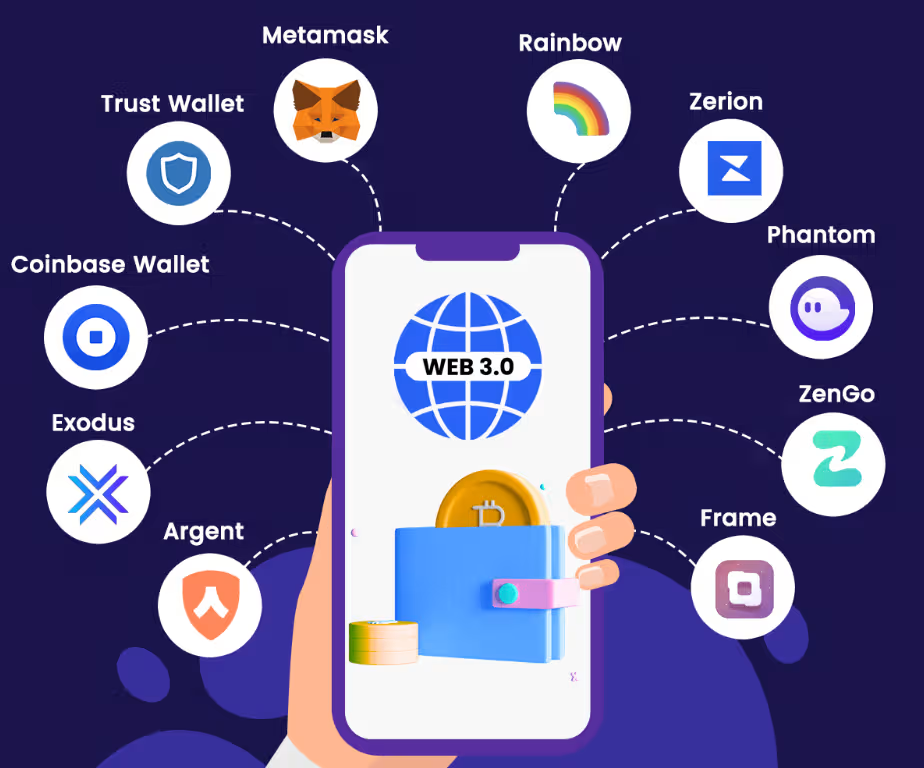
A Web3 wallet is a digital application that allows users to store, send, and receive cryptocurrencies while interacting directly with blockchain-based systems. Consequently, specialized Web3 wallet development focuses on creating decentralized, secure architectures that give users full autonomy over their assets. Unlike traditional wallets, Web3 wallets do not rely on centralized institutions to manage funds.
How Web3 Wallets Work
At the core of every Web3 wallet is a cryptographic system that ensures secure transactions. Here’s how it works:
- Each wallet has a public address, which acts like an account number
- It also has a private key, which acts like a password
- Transactions are signed using the private key
- Once verified, they are recorded on a blockchain
This system ensures that only the wallet owner can authorize transactions, removing the need for third-party validation.
Types of Web3 Wallets
Not all Web3 wallets are the same. Understanding the different types can help you choose the right one for your business.
- Non-custodial wallets – You control your funds and private keys
- Custodial wallets – A third party manages your keys
- Hardware wallets – Physical devices offering enhanced security
- Mobile and browser wallets – Easy-to-use options for everyday transactions
Each type offers a different balance between convenience and security.
Why Web3 Wallets Are Changing Online Payments
Web3 wallets are not just another payment method—they represent a shift in how financial systems operate.
Traditional payments depend on banks, payment processors, and intermediaries. Each layer adds cost, delay, and complexity. Web3 wallets remove these layers by enabling peer-to-peer transactions.
Decentralization at the Core
With Web3 payments:
- There is no central authority controlling transactions
- Payments are validated by blockchain networks
- Users have full control over their funds
This creates a more open and transparent system.
Borderless Transactions
One of the biggest advantages is global accessibility. With Web3 wallets:
- Payments can be made across countries instantly
- There’s no need for currency conversion delays
- Businesses can accept payments from anywhere
This is especially valuable for ecommerce businesses looking to scale internationally.
How Web3 Wallet Payments Work
Web3 wallet payments operate differently from traditional payment systems, and understanding this flow is essential before you start accepting them. Instead of relying on banks or payment gateways, transactions happen directly between the customer and the business using blockchain technology.
This removes intermediaries, speeds up the process, and gives both parties more control over the transaction. In this section, we’ll break down how Web3 payments actually work step by step, so you can see how funds move from a customer’s wallet to your business seamlessly and securely.
Step-by-Step Payment Process
Here’s how a typical Web3 payment works:
- A customer selects crypto as a payment method
- They connect their Web3 wallet
- The payment amount is displayed
- The transaction is signed and confirmed
- Funds are transferred to the merchant’s wallet
The process is simple but powerful, as it removes intermediaries entirely.
Role of Blockchain in Payments
Every transaction is recorded on a blockchain, which ensures:
- Transparency
- Security
- Immutability
Once a transaction is confirmed, it cannot be altered, reducing the risk of fraud.
Smart Contracts in Payments
Smart contracts add another layer of functionality. They can:
- Automate payments
- Execute conditions automatically
- Reduce manual processes
For example, a payment can be released only after a product is delivered.
Benefits of Using Web3 Wallets for Payments
Web3 wallets offer several advantages that make them appealing for modern businesses. They introduce core benefits like lower transaction costs, faster processing, and full financial control, positioning them as essential tools for the future of commerce.
Lower Transaction Costs
Traditional payment systems involve multiple intermediaries, each charging fees. With Web3 wallets:
- Fewer intermediaries mean lower fees
- Transactions are more cost-efficient
- Businesses can improve margins
Faster Transactions
Speed is a major advantage. Web3 payments:
- Are processed in minutes
- Don’t depend on banking hours
- Reduce delays in international payments
Enhanced Security
Security is built into the system.
- Transactions are encrypted
- Blockchain records are immutable
- Fraud risks are minimized
Full Financial Control
Businesses have direct control over funds. There’s no reliance on:
- Banks
- Payment processors
- Third-party approvals
Access to a Global Audience
Accepting Web3 payments allows businesses to:
- Reach international customers
- Expand into new markets
- Operate without geographical limitations
Challenges of Web3 Wallet Payments
While Web3 wallet payments offer speed, transparency, and global accessibility, they also come with a set of challenges that businesses need to understand before adopting them.
From price volatility and user adoption barriers to security responsibilities and evolving regulations, these factors can impact how smoothly Web3 payments work in real-world scenarios. Being aware of these challenges early on allows you to plan better, reduce risks, and create a more reliable payment experience for your customers while still benefiting from the advantages of decentralized finance.
Cryptocurrency Volatility
Crypto prices can fluctuate significantly. This can impact:
- Revenue consistency
- Pricing strategies
Using stablecoins can help mitigate this issue.
Learning Curve for Users
Not all customers are familiar with Web3 wallets. This can:
- Create confusion
- Reduce adoption rates
Businesses may need to educate customers.
Security Responsibility
With full control comes responsibility. Users must:
- Protect private keys
- Avoid phishing scams
- Use secure wallets
Loss of keys can result in permanent loss of funds.
Regulatory Uncertainty
Crypto regulations vary by region. Businesses must stay informed about:
- Compliance requirements
- Legal considerations
How to Set Up Web3 Wallet Payments
Setting up Web3 wallet payments may seem complex at first, but once broken down into clear steps, it becomes much more manageable. From choosing the right wallet and securing it properly to integrating payment options into your business, each step plays a crucial role in ensuring smooth and secure transactions.
A well-structured setup not only improves the payment experience for your customers but also helps you avoid common mistakes related to security and usability. In this section, we’ll walk through the process in a practical way so you can start accepting Web3 payments with confidence.
Choose the Right Wallet
Select a wallet based on:
- Security
- Ease of use
- Supported cryptocurrencies
Secure Your Wallet
Take security seriously:
- Backup recovery phrases
- Enable authentication features
- Store keys safely
Integrate Payment Options
Businesses can:
- Accept direct wallet payments
- Use crypto payment gateways
- Integrate APIs
Provide Clear Payment Instructions
Make the process easy for customers:
- Display wallet addresses
- Use QR codes
- Offer step-by-step guidance
Monitor Transactions
Actively monitor all incoming payments using your wallet's built-in dashboard or a public blockchain explorer to confirm transaction status, ensuring real-time accuracy and security.
Use Cases of Web3 Wallet Payments in Ecommerce
Web3 wallet payments are no longer just a concept—they’re already being used across various ecommerce scenarios to enable faster, more flexible transactions. From accepting global payments to selling digital products and streamlining dropshipping operations, these wallets are opening up new ways for businesses to operate without traditional limitations.
Understanding these real-world use cases helps you see where Web3 fits into your business model and how you can leverage it to improve efficiency, expand your reach, and offer a more modern payment experience to your customers.
Ecommerce Stores
Online businesses can accept crypto payments for:
- Physical products
- Digital goods
- Subscriptions
Dropshipping Businesses
Dropshipping businesses benefit from:
- Faster global payments
- Reduced transaction costs
- Flexible payment options
When combined with supplier ecosystems like Spocket, Web3 payments can help create a smoother and more scalable ecommerce operation.
Digital Products and Services
Web3 wallets are ideal for:
- NFTs
- Online courses
- Memberships
Web3 Wallets vs Traditional Payment Systems
Understanding the difference between Web3 wallets and traditional payment systems is key to seeing why this shift is gaining momentum. While traditional methods rely on banks, payment gateways, and multiple intermediaries, Web3 wallets operate on decentralized networks that enable direct, peer-to-peer transactions.
This fundamental difference impacts everything from transaction speed and fees to security and control over funds. In this section, we’ll compare both approaches to help you clearly understand how Web3 payments stand apart and where they offer a practical advantage for modern businesses.
Key Differences
Traditional systems:
- Rely on intermediaries
- Have higher fees
- Are slower for global transactions
Web3 systems:
- Are decentralized
- Offer faster payments
- Provide greater transparency
Best Practices for Using Web3 Wallet Payments
To maximize the benefits of Web3 payments and ensure a seamless experience for both your business and your customers, consider following these industry best practices:
Use Stablecoins
Stablecoins help:
- Reduce volatility
- Maintain consistent pricing
Educate Customers
Develop comprehensive onboarding materials, video tutorials, and step-by-step documentation that demystify the wallet connection and transaction confirmation process for first-time crypto users.
Start Small
Introduce Web3 payments as a secondary option for a specific product line or region to gather data and refine the user experience before rolling it out across your entire ecommerce platform.
Focus on Security
Adopt institutional-grade multisig wallets, enforce hardware security modules (HSM) for key storage, and regularly audit smart contracts to ensure that business capital and customer data remain protected against evolving cyber threats.
Monitor Performance
Utilize analytics tools to monitor conversion rates for crypto payments versus traditional methods, allowing you to optimize transaction flows and better understand the financial impact on your bottom line.
Future of Web3 Wallet Payments
Web3 payments are still evolving, but adoption is increasing. Future trends include:
- Better user interfaces
- Integration with traditional systems
- Increased use of stablecoins
- Wider adoption across industries
Businesses that adopt early can gain a competitive edge.
Conclusion
Using Web3 wallets for payments is not just about adopting new technology—it’s about preparing for the future of commerce. With faster transactions, lower costs, and global accessibility, Web3 payments offer a clear advantage.
Web3 wallets are transforming how payments work in the digital world. They offer a decentralized, secure, and efficient alternative to traditional systems, making them especially valuable for global ecommerce businesses.
However, success depends on understanding how to use them effectively. By combining the right tools, strategies, and security practices, businesses can unlock new opportunities.
As ecommerce continues to evolve, integrating Web3 wallets can help businesses stay ahead. And when paired with reliable ecosystems like Spocket, you can build a more flexible, scalable, and future-ready business.
Start your dropshipping business today
FAQs About Web3 Wallet Payments
What is a Web3 wallet used for in payments?
A Web3 wallet is a digital application used to send and receive cryptocurrency payments directly on blockchain networks. This tool enables peer-to-peer transactions by removing centralized intermediaries, resulting in payments that are faster, cheaper, and more secure. It is essential for decentralized finance, allowing businesses to interact directly with blockchain-based commerce systems.
Are Web3 wallet payments safe for businesses?
Yes, Web3 wallet payments are highly secure for businesses because every transaction is protected by cryptographic encryption and verified by the immutable blockchain record. This system inherently minimizes fraud risks compared to traditional systems. However, security is a shared responsibility, meaning businesses must vigilantly protect their private keys and adhere to best practices to mitigate potential risk and prevent permanent loss of funds.
Can ecommerce stores accept Web3 wallet payments?
Yes, ecommerce stores can accept Web3 payments either through direct wallet integrations or by utilizing specialized crypto payment gateways. This capability is highly beneficial as it allows online businesses to reach international customers and expand into new markets without geographical limitations. It also helps them serve a global customer base more efficiently by reducing currency conversion barriers and traditional payment gateway restrictions.
What are the benefits of Web3 payments over traditional methods?
Web3 payments offer key advantages over traditional systems by enabling decentralized, peer-to-peer transactions on the blockchain. Primary benefits include significantly lower transaction fees and much faster processing times, as payments do not rely on banking hours or multiple costly intermediaries. These systems also provide greater financial control for the business and immediate access to a global audience without geographical restraints.
Do customers need technical knowledge to use Web3 wallets?
While a basic, foundational understanding of Web3 concepts is helpful, the latest generation of wallets is increasingly designed to be highly user-friendly and simplify the complex transaction process. As the adoption of decentralized finance continues to rapidly grow, the overall payment process for everyday users is becoming substantially simpler, more intuitive, and accessible.


Launch your dropshipping business now!
Start free trial


Related blogs

Dripshipper Reviews: Is This Coffee Dropshipping Platform Worth It?
Read this detailed Dripshipper review covering features, pros, cons, pricing, customer feedback, profitability, and better dropshipping alternatives.

Is BigBuy Legit? Honest Review for Dropshipping Businesses
Find out if BigBuy is a reliable dropshipping supplier, including its features, pros, cons, pricing concerns, reviews, and alternatives for ecommerce sellers.

What is Micromarketing and How to Use it Effectively
Learn what micromarketing is, how it works, its benefits, examples, and how ecommerce businesses can use it to target niche customers effectively.