Top 15 Unique Business Ideas to Start in 2026
15 unique business ideas for 2026, ranked by startup cost and difficulty — including dropshipping niches you can launch this month with Spocket.
.avif)

Most "business idea" lists give you 50+ generic entries and no way to tell which ones are actually worth your time. This one doesn't. Below are 15 unique business ideas for 2026 — including several built specifically around dropshipping and niche ecommerce — each with a real startup cost range, a difficulty rating, and what kind of person it actually suits.
If you want products and suppliers lined up before you finish reading, Spocket connects you to vetted US and EU suppliers so you can launch without holding inventory. More on that below — first, the ideas.
What Makes a Business Idea "Unique" (and Why it Matters More than the Idea Itself)
A unique business idea isn't necessarily a brand-new invention — it's usually a known model applied to an underserved audience, a better price point, or a more specific niche than your competitors bother targeting. "I sell candles" is not unique. "I sell soy candles scented to match specific fantasy novels, sold through a fan Discord" is.
Three things determine whether an idea is worth pursuing over another shiny option you saw on TikTok:
- It solves a problem people already know they have. You shouldn't need to convince anyone the problem exists — only that your solution is better.
- It has a repeatable acquisition channel. If you can't describe, in one sentence, how your first 100 customers will find you, the idea isn't ready yet.
- It fits your actual constraints — time, capital, and risk tolerance — not the constraints of the founder in the case study you read.
Quick Comparison: 15 Business Ideas at a Glance
Start Your Business with Spocket
15 Unique Business Ideas for 2026
Here are top 15 unique business ideas that you can try that will give you a high income opportunities
1. AI-Assisted Niche Content Agency
Content demand hasn't dropped — it's shifted toward speed and specificity. Instead of competing as a generalist copywriter, build an agency serving one narrow industry (say, veterinary clinics or SaaS onboarding docs) and use AI tools to draft first passes while you handle strategy, fact-checking, and brand voice. Clients pay for judgment and consistency, not typing speed — that's what you're actually selling. For outreach specifically, tools like SalesRobot can automate LinkedIn connection requests and follow-ups to your target audience, so you're not manually messaging every prospect one by one.
2. Subscription Box for Curated Experiences
The subscription box model didn't die with the 2015 boom — it matured. The winners now build around a specific lifestyle (low-waste kitchens, solo self-care, working-dog enrichment) rather than a generic product category. Sourcing is the hard part; platforms like Spocket let you pull curated, quality-vetted items from US and EU suppliers instead of negotiating with a dozen individual vendors yourself.
3. Eco-Friendly Packaging Solutions
As more DTC brands face pressure over packaging waste, there's steady B2B demand for compostable mailers, biodegradable fill, and reusable shipping containers. This is a slower-moving, more capital-intensive idea than most on this list, but it has real recurring-revenue potential once you land a handful of ecommerce brands as regular accounts.
4. Niche Dropshipping Store (the fastest way onto this list)
Dropshipping is the most direct entry point into ecommerce, and it's still underrated because "dropshipping" got a reputation for oversaturated, low-quality stores in the late 2010s. The fix isn't avoiding dropshipping — it's picking a specific dropshipping niche instead of a broad one. "Home goods" is oversaturated; "ergonomic accessories for small home offices" is not.
To do this well:
- Pick a niche with a clear, searchable problem (not just an aesthetic)
- Source from vetted suppliers with US/EU fulfillment — shipping speed is what kills most dropshipping stores, not product choice
- Start with 15–20 SKUs, not 200 — a tight catalog is easier to market and easier to trust
Spocket's supplier network is built around exactly this: fast US/EU shipping and pre-vetted product quality, so the products themselves aren't the reason customers bounce.
5. Drone Delivery and Hyperlocal Logistics
Instant-delivery expectations keep climbing, and hyperlocal logistics — same-area delivery for food, pharmacy items, or small essentials — is still underbuilt outside major metros. This is the most operationally demanding idea here (regulatory hurdles, equipment cost, insurance), so it suits someone with a logistics or operations background more than a first-time founder.
6. Micro-Learning Platforms
Long, expensive courses are losing ground to 15–30 minute focused lessons people can finish during a commute. Pick a narrow subject you can speak to with real authority — not "marketing," but "cold email for freelance consultants" — and partner with one or two other practitioners to round out the catalog before you try to scale content production.
7. Upcycled and Circular Economy Store
Resale and upcycled goods keep growing as shoppers weigh cost and sustainability together. The differentiator here is sourcing consistency: customers forgive a higher price for a repurposed item, but not inconsistent quality. Building relationships with a small number of reliable upcycled-goods suppliers matters more than catalog size.
8. Personalized Wellness and Micro-Branding
Generic wellness products are a race to the bottom on price. Personalization — a quiz-based skincare match, a mood-based tea blend, a supplement stack based on a short intake form — lets you charge more and build repeat purchase behavior, because the customer feels the product was chosen for them, not just bought by them.
9. Smart Home Installation and Consulting
If you already have an electronics or IT background, this is one of the more capital-light service businesses on this list. You're not manufacturing anything — you're charging for the setup, integration, and troubleshooting most homeowners don't want to do themselves. Recurring revenue comes from maintenance contracts and system upgrades, not one-off installs.
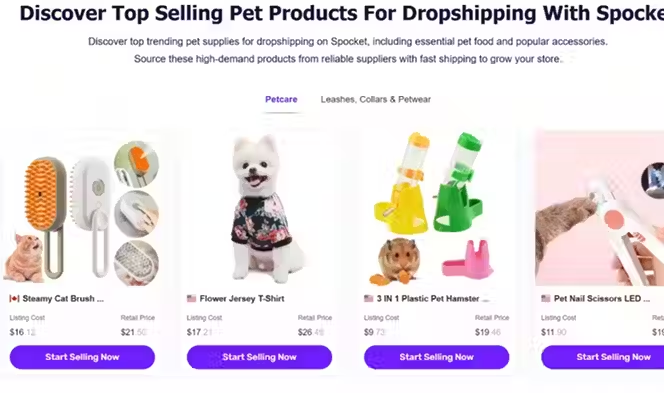
10. Niche Pet Products and Services
Pet spend keeps rising, but "pet products" as a category is crowded. The businesses doing well right now are narrow: subscription treat boxes for dogs with specific dietary restrictions, mobile grooming for senior pets, tech accessories for working dogs. Pick the narrow version.
Start your dropshipping business today
Launch Your Business with Spocket
11. Regional-Language Digital Content Platforms
English-language content is saturated; regional-language content, especially in fast-growing internet markets, often isn't. If you're bilingual or multilingual, a blog, YouTube channel, or course platform in an underserved language gives you a genuine moat competitors can't easily copy — they'd need your language skills, not just your idea.
12. Remote and Hybrid Work Support Products
Hybrid work is no longer a pandemic-era exception — it's a permanent fixture for a large share of knowledge workers, and the products supporting it (ergonomic setups, focus-friendly desk accessories, hybrid-meeting equipment) are a steady, if not explosive, category. This suits someone comfortable with both product curation and light B2B sales to companies outfitting remote teams.
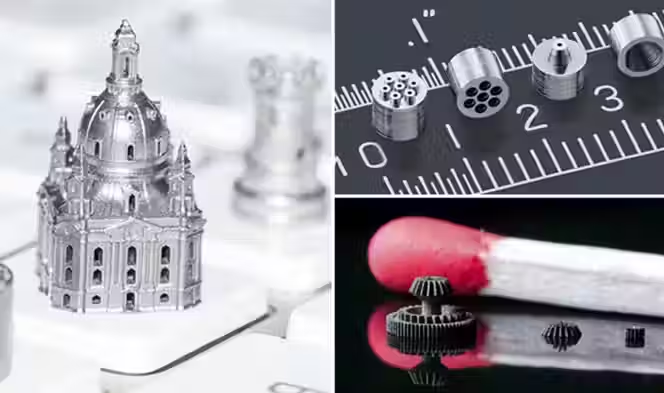
13. Micro-Manufacturing with 3D Printing
On-demand 3D printing removes the inventory risk of traditional manufacturing, which makes it one of the more accessible ways into physical-product entrepreneurship if you have design skills. Jewelry, replacement parts, and personalized home decor are the most proven categories right now. If you're building electronics or smart products, working with a trusted multi layer PCB manufacturer can enhance product performance and accelerate your prototyping process.
14. Print-on-Demand Micro-Brand
If you can design but don't want to touch inventory or fulfillment at all, print-on-demand is close to a zero-inventory business model: you upload designs, a supplier prints and ships per order, and your only real job is building an audience that wants what you make. Margins are thinner than dropshipping physical goods, but so is the risk.
15. Vetted-Supplier Ecommerce Niche Brand
This is the general version of idea #4, for anyone who wants to build a brand — not just a store — around a specific product category (say, minimalist desk organization, or plant-based skincare). The mechanics are the same as dropshipping, but the emphasis shifts to brand identity: custom packaging, a consistent visual language, and a supplier relationship reliable enough to protect that reputation. Spocket's supplier vetting exists specifically for this — so a bad fulfillment experience doesn't undo the brand work you put in.
How to Validate and Launch Your Business Idea
Picking an idea is the easy part. Validating it before you spend real money is what separates businesses that survive their first year from the ones that don't.
1. Research your actual market, not your assumed one. Look at what competitors in your specific niche charge, what they're missing, and where customers complain in reviews. That complaint list is your product roadmap.
2. Launch an MVP before you build the "real" version. A single landing page, a 10-SKU store, or a five-lesson course tests demand without the cost of a finished product line.
3. Get feedback from your first real customers, not friends and family. Friends are polite. Paying customers tell you what's actually wrong.
4. Build a minimum viable online presence before launch — one working website and one active social channel is enough to start. You can add more once you know the first one is working.
5. Lock in reliable suppliers before you scale, not after. If your model involves physical products, your supplier's shipping speed and product quality are your customer experience. Spocket connects you with vetted US and EU suppliers so a fulfillment problem doesn't undo your marketing work.
6. Test small, then scale what's working. Only put real budget behind the version of your offer, price, and audience that's already showing signs of traction.
Why Spocket Fits Whichever Idea You Pick
If your idea from this list involves selling a physical product — dropshipping, a subscription box, an upcycled goods store, a print-on-demand brand — sourcing and fulfillment are usually the part that kills momentum, not the idea itself. Spocket handles that layer:

- No inventory risk — you sell first, suppliers fulfill.
- Vetted US and EU suppliers — for faster shipping than typical overseas dropshipping.
- Direct integration with Shopify and WooCommerce.
- Custom branding options on many supplier products.
Start your 7-day free trial and browse the supplier catalog before you commit to a niche — it's often easier to spot a good idea once you can see what's actually available to sell.
Final Thoughts: Pick One, Then Prove It
Fifteen ideas is enough to get overwhelmed by — it's not enough to act on all at once. The businesses that actually launch aren't run by the person with the most unique idea on this list; they're run by the person who picked one, tested it cheaply, and adjusted based on what real customers did instead of what a business plan predicted.
If a physical product is part of your idea — dropshipping, a subscription box, print-on-demand, or a niche ecommerce brand — the fastest way to find out if it works is to see what you'd actually be selling. Browse Spocket's supplier catalog and start a 7-day free trial before you finalize a niche; it's a lot easier to commit to an idea once you can see the products, pricing, and shipping times behind it.
Unique Business Ideas FAQs
What makes a business idea unique?
It solves a known problem in a narrower or better way than existing options — usually by targeting a more specific audience, price point, or delivery method than competitors bother with. Genuinely novel product categories are rare; most "unique" ideas are familiar models applied precisely.
How do I know if my business idea will succeed?
Validate before you scale: confirm real demand through competitor research, launch a minimum viable version, and get feedback from paying customers — not just people close to you. Early sales, even small ones, are a stronger signal than positive opinions.
What's the difference between a dropshipping business idea and a regular ecommerce idea?
Dropshipping means a supplier holds inventory and ships directly to your customer, so you never handle physical stock. A traditional ecommerce store may hold its own inventory. Dropshipping lowers upfront cost and risk but puts more weight on supplier reliability, since you don't control fulfillment directly.
Which business idea requires the least investment?
Print-on-demand, niche dropshipping, and content-based businesses (agencies, courses, blogs) typically require the least upfront capital, since none require holding inventory or physical premises.
Can I start a unique business idea while working full-time?
Yes — most of the ideas on this list, especially dropshipping, print-on-demand, and content businesses, can start as a few hours a week on evenings and weekends. Physical-inventory or service-heavy ideas (logistics, smart home installs) usually need more upfront time.
What are the best dropshipping niches for 2026?
The strongest dropshipping niches right now are specific rather than broad: ergonomic home-office accessories, pet products for specific breeds or conditions, sustainable/upcycled home goods, and personalized wellness items. Niches with an active online community (Discord servers, subreddits, niche Facebook groups) tend to convert better than purely aesthetic categories.
How can Spocket help me start my business?
Spocket connects you to vetted suppliers in the US and EU, so you can add products to your store, set your own pricing, and rely on faster shipping than typical dropshipping — without holding any inventory yourself.


Launch your dropshipping business now!
Start free trial


Related blogs
How to Set Up Automated Order Fulfillment With Spocket and Shopify
Set up a smoother Shopify dropshipping workflow with Spocket by connecting your store, importing products, processing orders, syncing tracking, and reducing manual fulfillment tasks.

How to Open a Business Bank Account for Your Dropshipping Store
Set up your dropshipping finances the right way with a dedicated business bank account built for payouts, supplier payments, taxes, and long-term store growth.
Spocket vs Dropified: Which Tool Is Better for Multi-Store Scaling?
Compare Spocket and Dropified for multi-store dropshipping, supplier quality, automation, fulfillment, product sourcing, and scaling across ecommerce platforms.