


Top Product Packaging Trends That Will Shape 2026
Discover the top product packaging trends for 2026—from sustainable materials and AI personalization to smart QR codes and retro nostalgia. Learn what's next.

Product packaging has evolved far beyond simple containment. In 2026, product packaging trends are driving significant shifts in how brands connect with consumers, meet regulatory demands, and reduce environmental impact. The most significant 2026 product packaging trends center on three core movements: sustainability through circular materials, personalization powered by artificial intelligence, and interactive digital experiences that merge physical and online worlds.
This guide breaks down the key product packaging innovations that will dominate retail shelves and influence purchasing decisions throughout 2026.
What are Companies Doing for Their Product Packaging?
Companies like Cadbury and innovative startups are already leading the charge by adopting these product packaging trends for 2026, from compostable bio-materials to smart QR codes embedded in design. Understanding these emerging product packaging trends isn't optional—it's essential for brands wanting to remain competitive. Whether you're sourcing products for your dropshipping store or developing your own line, these shifts reshape what consumers expect when they unbox a product. All these product packaging trends in 2026 will also impact custom packaging for branding.
Product Packaging Trends Coming Up in 2026
Looking for the latest product packaging trends for 2026? Here’s what coming up soon and in the works:
1. The Rise of Sustainable and Circular Packaging Materials
Sustainability has become non-negotiable in packaging. The global eco-friendly packaging market hit $239.53 billion in 2025 and is projected to reach $498.29 billion by 2034, with a compound annual growth rate of 7.6%. This explosive growth reflects a fundamental truth: consumers no longer view eco-friendly packaging as a bonus—they consider it a baseline expectation.
a. Bio-Based and Alternative Fiber Solutions
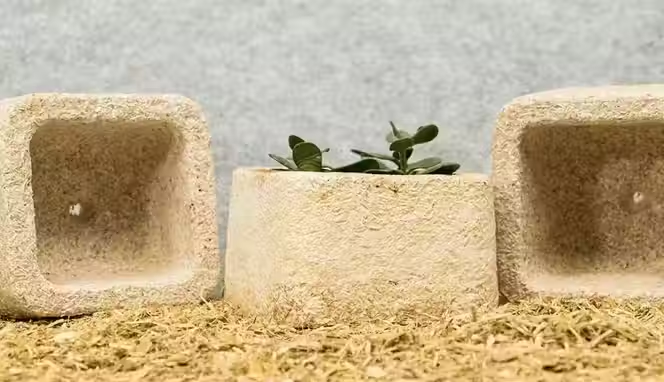
One of the most transformative product packaging trends is the shift from traditional plastics to bio-based alternatives. Polylactic acid (PLA), derived from renewable resources like corn starch, can decompose in composting conditions within just a few months. Beyond PLA, companies are exploring mushroom-based packaging grown from mycelium and seaweed films that actually decompose in marine environments without leaving microplastics behind.
Thermapet Technologies unveiled patented technology for producing fully circular APET containers using pure or recycled PET without additives. These containers withstand temperatures up to 220°C, slash recycling costs by 70%, and fit perfectly into circular bottle-to-bottle systems. Brands are recognizing that material innovation isn't just environmental responsibility—it's a business advantage.
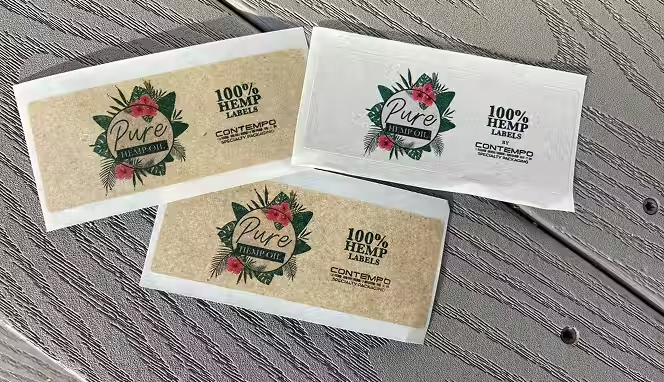
Alternative fibers like bamboo and hemp grow significantly faster than traditional wood sources, require less water and pesticides, and carry lower carbon footprints than virgin paperboard. The alternate fiber packaging segment currently leads the global eco-friendly packaging market. Companies are moving away from multi-layered materials that trap waste and embracing mono-material designs (all PE, all PP, or all paper) that simplify recycling.
b. Lightweight and Efficient Designs
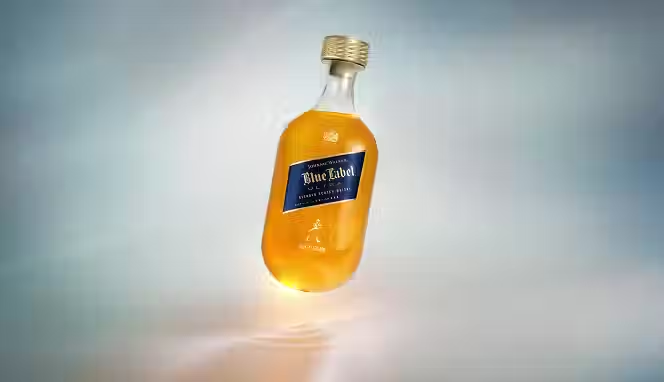
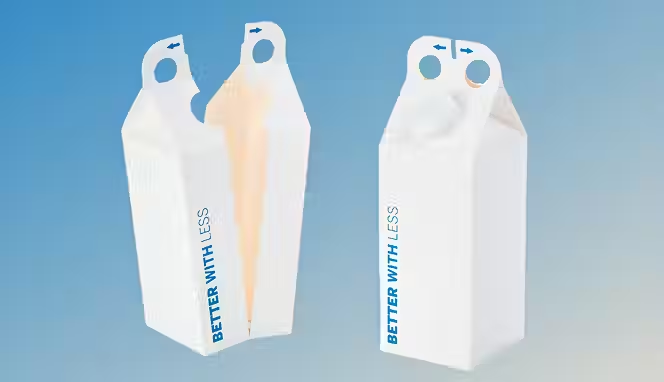
Johnnie Walker Blue Label Ultra exemplifies how product packaging innovation delivers both elegance and environmental benefits. The limited-edition Scotch whisky uses a hand-blown teardrop bottle weighing just 180 grams—less than half the weight of a traditional 700ml glass bottle. Each bottle saves approximately 670 grams of material and cuts carbon emissions by 335 grams. This shift proves that "lightweighting" isn't about cutting corners; it's about intelligent design that maintains luxury while reducing waste.
Verve Coffee's Dwell Dripper packaging combines 100% BPA-free silicone with compostable materials, creating sustainable travel-friendly products that don't compromise on experience. These examples show how 2026 product packaging trends merge functionality with environmental consciousness, making sustainability feel premium rather than punitive. Successful beverage packaging design balances shelf impact, compliance, sustainability, and retail performance across cans, PET, and glass. Expert teams unite engineering, materials, and brand storytelling to create primary, secondary, and e-commerce systems that cut cost and carbon, boost conversion, and prepare brands for GS1 2D barcodes and refill models.
2. AI-Powered Personalization and Dynamic Design
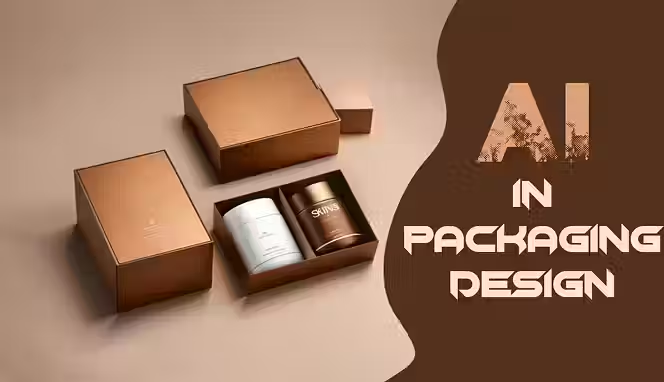
Artificial intelligence is revolutionizing how brands approach product packaging design and production. The global market for AI in packaging is projected to reach $23 billion by 2034, with 72% of packaging companies currently using AI reporting higher customer satisfaction.
a. Personalization at Scale
AI enables mass customization that was previously impossible. Brands now generate region-specific visuals and messaging, create short-run SKUs tailored to events or demographics, and automate layout decisions for greater speed and accuracy. Variable printing technology allows companies to produce unique packaging designs at scale, featuring personalized names, messages, or designs that make consumers feel individually valued.
Digital printing technology has transformed the personalized packaging landscape by enabling production of small batches with faster turnaround times and lower costs. This democratizes custom packaging—smaller brands and dropshippers can now compete with larger players by offering personalized touches that drive customer loyalty.
b. Machine Learning for Design Optimization
AI-powered tools help designers quickly generate multiple concepts, iterate on ideas, and create photorealistic 3D models before committing to final designs. This accelerates the creative process while allowing for more exploration and optimization. Additionally, AI analyzes consumer behavior and preferences to predict which product packaging designs will resonate most with specific demographics, suggesting personalized options for individual markets.
Companies like Kayali (Huda Beauty's fragrance line) are prototyping packaging that adapts based on viewing context—adjusting typography thickness, contrast, and tracking whether it's displayed in-store, online, or through an AR overlay. This responsiveness represents the future of intelligent product packaging trends for 2026.
3. Smart and Interactive Packaging with Digital Integration
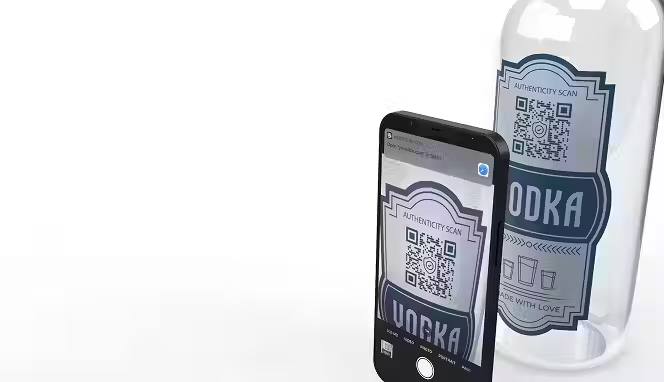
Technology isn't replacing physical packaging—it's enhancing it. Smart packaging powered by QR codes, NFC tags, and augmented reality creates immersive brand experiences that bridge the physical and digital worlds. You can even include a QR code on packaging that leads directly to your digital business card, giving customers instant access to detailed contact info, social media profiles, and other resources.
a. QR Codes and Digital Connectivity
By 2027, 2D barcodes powered by GS1 Digital Link technology will replace traditional UPCs in most global retail environments. This shift is being driven by GS1 Sunrise 2027, a global initiative encouraging retailers and manufacturers to support 2D barcode scanning by that date. Unlike standard QR codes, GS1 Digital Link 2D barcodes enable real-time connectivity, allowing brands to update content without changing packaging.
Smart barcodes serve multiple purposes: they authenticate high-value goods with a simple scan, provide Digital Product Passports (DPPs) eliminating the need for extra leaflets, and enable supply chain traceability. Consumers can learn where products were made, what they contain, and how they reached store shelves. This transparency is especially valuable in food, pharmaceuticals, and cosmetics where compliance and safety matter.
b. Augmented Reality and Immersive Experiences
AR overlays digital content directly onto packaging when viewed through a smartphone, transforming static designs into dynamic experiences. Johnnie Walker's smart bottle integrates NFC technology to deliver cocktail recipes, promotions, and sustainability information directly to customers' phones. Heineken's AR packaging unlocks interactive content like music videos and event information, elevating the unboxing moment from transaction to experience.
WebAR technology now allows users to experience augmented content directly through a mobile browser without downloading apps, reducing friction and improving accessibility. Studies show that AR-readable packaging with optimized typography increases interaction rates and brand memorability.
4. Minimalism, Bold Typography, and Visual Impact
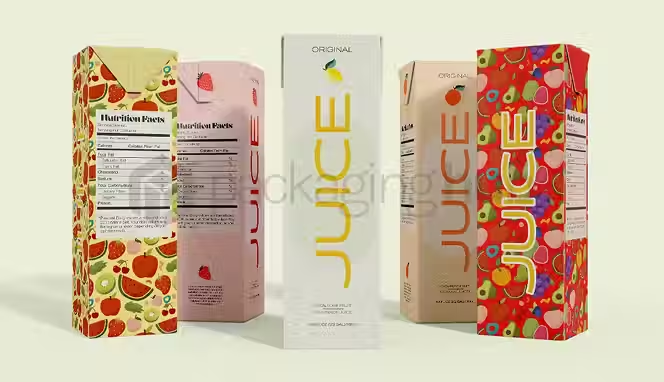
Product packaging trends are moving in two seemingly opposite directions simultaneously: ultra-minimalism and bold statement-making. Both reflect intentional design philosophy rather than accident.
a. Ultra-Clean Industrial and Minimalist Aesthetics
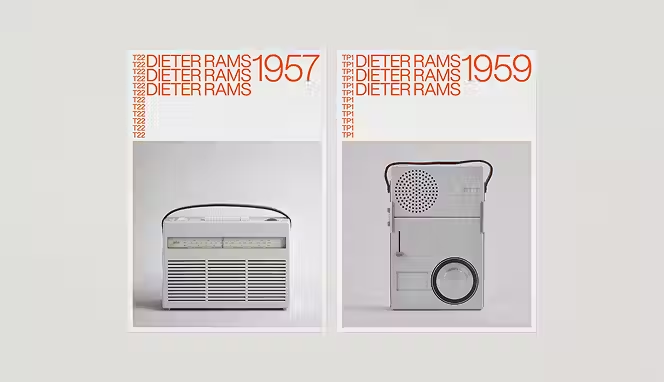
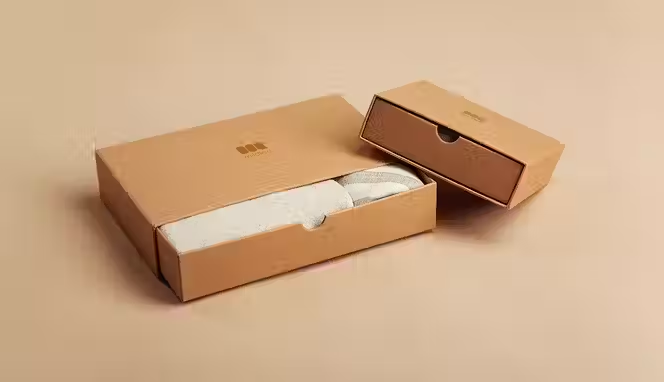
Inspired by Dieter Rams' "less but better" philosophy, ultra-clean industrial packaging brings stripped-down geometry, sharp lines, and typography built for clarity. Blocky forms, subdued palettes, and layouts that resemble tools rather than decoration define this trend. Monochromatic palettes featuring neutral or single-color designs offer sleek, modern looks perfect for branding without clutter.
Functional minimalism goes beyond aesthetics. By reducing text and design elements, brands communicate effectively while improving resource efficiency. Clean fonts and straightforward messaging create visual hierarchy where every element earns its place. Negative space, 40-60% of a package surface left empty—creates the premium feeling consumers associate with high-end products. This approach also proves cost-effective, using less ink and simpler production processes.
b. Typography as Design Hero
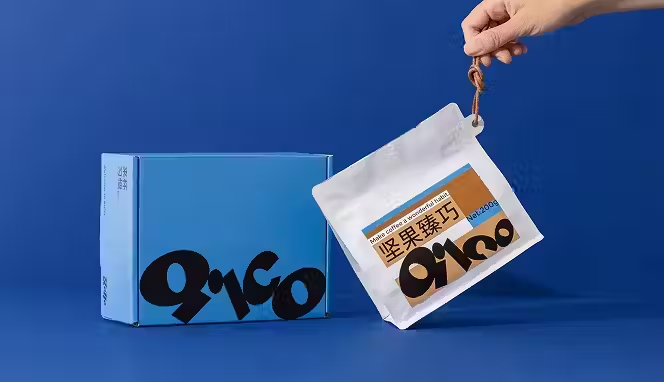
Bold typography has become the visual signature of modern packaging. Products with bold, clean fonts achieve faster recognition time than those using light or script fonts. Consumer recall improves when bold type is used for product names. In an era of swipe-speed decision-making, bold fonts act as design anchors cutting through visual noise.
High-end brands pair clean lines with tactile elements like embossing, soft-touch laminate, spot UV, and metallic finishes. Le Labo mastered this formula with industrial courier-style bold fonts printed directly onto clinical-style labels with minimal embellishment, creating packaging that feels utilitarian yet luxurious. This proves that product packaging can be both minimalist and impactful.
Bold fonts align surprisingly well with sustainability goals. When printed in a single color or etched directly onto glass, they deliver legibility and branding power without the environmental cost of multiple decorative treatments. Single-ink packaging with bold font design reduces production waste by up to 37% compared to multi-layered, label-heavy alternatives.
c. Retro Nostalgia and Cultural Storytelling
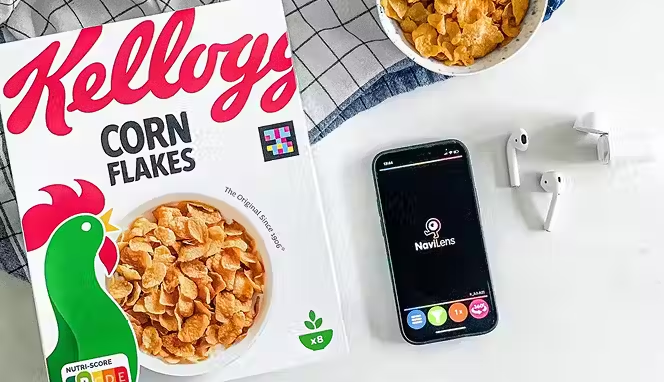
Nostalgia is one of the most unexpected yet powerful 2026 product packaging trends. Brands like Kellogg's and Bazooka Candy Brands are tapping into old-school memories by reimagining vintage designs for contemporary audiences.
5. Heritage-Inspired Design with Modern Twists
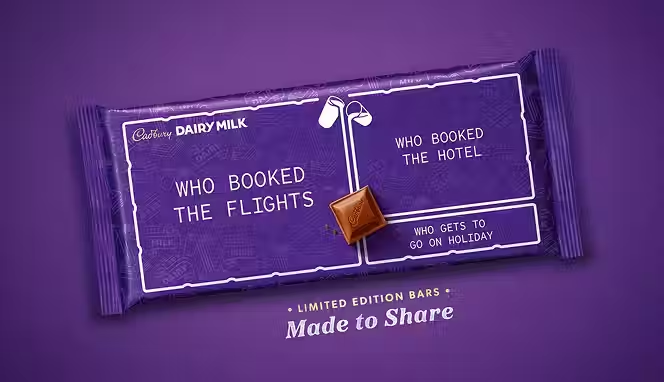
Cadbury released Dairy Milk bars in six classic designs celebrating the brand's 200th anniversary. Kellogg's brought back retro boxes for Frosted Flakes and Froot Loops featuring original mascots. Jell-O refreshed its look to match packaging from the '70s through '90s. Pepsi updated its logo to echo its iconic '80s and '90s globe design. Bazooka Bubble Gum celebrated 75 years using 1980s-style wrappers.
This trend blends archival graphics, traditional motifs, and vintage typography with modern layouts, bold color touches, and playful design elements. The result feels familiar yet unexpected—a bridge between history and contemporary appeal. Natural textures and matte finishes anchor the design, giving it substance and authenticity.
What makes this trend powerful: nostalgia works even for consumers who didn't live through the original era. People connect through imagined memories, especially when design feels warm and reassuring. Limited-edition retro releases create urgency and collectibility without requiring permanent redesigns.
a. Storytelling Through Design
Packaging is becoming a canvas for cultural expression. By weaving nostalgia and culture into design, product packaging transforms into more than branding—it becomes storytelling. This approach creates emotional connections that outlast the product consumption.
For dropshippers and brand builders, this means opportunity. Testing a retro version of packaging as a limited edition requires minimal additional investment while potentially driving significant engagement. Using vintage fonts, classic color palettes, or reimagined mascots creates visual links to brand heritage or taps into broader cultural moments.
6. Reusable, Refillable, and Circular Economy Systems
The circular economy is moving from aspiration to reality. The global market for reusable and refillable packaging is valued at $46.59 billion in 2025 and projected to reach $64.25 billion by 2034.
a. Refill and Reuse Models
Regulatory frameworks like the European Union's Packaging and Packaging Waste Regulation (PPWR) mandate specific reuse targets: at least 10% of beverage products available in reusable packaging by 2030, increasing to 40% by 2040. France is implementing laws mandating 10% reusable packaging by 2026. These regulations create strong market pull for innovative packaging solutions.
Consumer behavior supports this shift. NielsenIQ reports that 56% of consumers prioritize reusable or refillable packaging when making purchases, and 69% of Gen Z shoppers actively seek sustainable brands. Transitioning just 20% of single-use packaging to reusable systems globally could unlock a $10 billion economic opportunity, according to the United Nations Environment Programme.
b. Practical Innovation in Reusable Systems
Amika's Forever Friend refillable bottles reduce carbon footprint by 69% compared to using two single-use plastic bottles over a year. The bottles withstand frequent use without degradation. Abel & Cole's reusable polypropylene bottles can be refilled up to 16 times before recycling. These aren't sacrificing quality for sustainability—they're delivering better products.
Brands are introducing refill pouches, returnable containers, and deposit-return systems extending beyond traditional bottles. Smart technology integration includes IoT-enabled tracking systems that monitor return rates, optimize logistics, and provide valuable consumer insights.
c. Supply Chain and Operational Considerations
Reusable and refillable systems demand different logistics. Reverse logistics processes handle returns, cleaning, and refilling instead of one-way disposal. Businesses need infrastructure or partnerships to facilitate these circular flows. Standardization across industries helps streamline adoption—uniform designs for reusable containers work across multiple retailers and product types.

Brands like Spocket connect entrepreneurs with verified US and EU dropshipping suppliers who understand these evolving packaging demands. With over 100 million winning dropshipping products and 24/7 VIP customer support, Spocket helps merchants source products aligned with current product packaging trends. Their platform offers automated inventory management, Print-on-demand services, and one-click product imports, making it easier to scale businesses built around sustainable packaging innovations.
7. Battery-Free Smart Packaging and Active Technologies
Beyond passive QR codes, a new generation of smart packaging actively monitors product conditions and releases preservation agents as needed.
a. Active and Intelligent Packaging
Battery-free, autonomous smart packaging can monitor food freshness and adjust internal atmosphere, extending shelf-life up to 14 days without external power sources. This innovation particularly addresses food waste—a significant environmental concern alongside packaging materials.
Intelligent gas control systems are being developed to dynamically adjust the internal atmosphere based on product needs. Modified atmosphere packaging (MAP) plays a crucial role in maintaining freshness and extending shelf life. Active packaging technologies incorporating sensors and antimicrobial agents monitor and control the internal environment. Personalized MAP solutions tailor parameters to specific food types and storage conditions for optimal shelf life.
UPM Specialty Papers and Eastman collaborated to create paper-based packaging combining enhanced barrier properties with compostability. Beeswax-based packaging provides enhanced shelf-life for health bars, while the Eat-Pack Project aims to create edible food films using citrus and orange peel powder from juice industry waste—expected ready by 2028.
Nestlé developed patent-pending paper-based multi-layer flexible packaging for dry food products using nano clay barriers that fully recycle and degrade in marine environments, removing traditional plastics like PE or PP.
The Integration Challenge: Making It All Work Together
Understanding individual product packaging trends is one thing; integrating them into coherent strategy is another.
Design-Production Collaboration
Sustainability, digital integration, and clear compliance can't be bolted on last-minute. When design teams collaborate with packaging suppliers from the start, brand identity becomes secured and creative originality optimizes sustainable solutions.
Luxury brands demonstrate this integration effectively. Cartier maintains vibrant reds, Tiffany keeps aquas crisp, and Veuve Clicquot signature yellows stay recognizable—all while using FSC-certified stock, vegetable-based inks, and carbon-neutral printing. These brands prove that sustainability enhances rather than compromises brand positioning.
Consumer Communication and Clarity
Transparency is increasingly important. Consumers and regulators expect clear labeling regarding recyclability, compostability, and refill instructions. Digital Product Passports provide verified sustainable credentials without requiring extra physical materials.
Accuracy matters. While 81% of consumers feel companies should help improve the environment, greenwashing—making unsubstantiated claims—erodes trust. Brands must base packaging strategy on established frameworks instead of vague "eco-friendly" claims, ensuring goals and metrics are specific and measurable.
Conclusion
The packaging landscape of 2026 reflects three fundamental consumer truths: people care about environmental impact, they value personalized experiences, and they connect emotionally with brands through storytelling.
Product packaging trends are no longer purely aesthetic, they're strategic business tools driving loyalty, differentiation, and regulatory compliance. Whether you're building a dropshipping store, developing a product line, or consulting on brand strategy, understanding these product packaging trends determines competitive positioning.
For meeting your custom packaging needs, try Spocket today!
Start your dropshipping business today
Product Packaging Trends FAQs
What makes minimalist packaging an effective strategy beyond aesthetics?
Minimalist packaging reduces material waste, ink usage, and production costs while creating premium perception through intentional restraint. By limiting colors to 1-3 and leaving 40-60% of surface empty, brands communicate confidence and quality. This approach works across price points—from budget-conscious consumers appreciating efficiency to luxury buyers associating white space with exclusivity. Clean typography and functional hierarchy guide customer attention without clutter, improving readability on both shelves and digital platforms. For dropshippers, minimalist design offers cost advantages while trending with consumer preferences.
How do QR codes and NFC technology create business value beyond consumer novelty?
Smart barcodes provide real-time traceability, enabling consumers to verify product origin, contents, and authenticity. For brands, they reduce waste by eliminating physical inserts and booklets—Digital Product Passports replace entire instruction manuals. Retailers adopt them for supply chain management and compliance tracking. Data collection informs marketing strategies and customer preferences. Unlike static barcodes, GS1 Digital Link technology allows brands to update content without changing packaging, supporting dynamic campaigns and recalls.
Why is personalization at scale possible now when it wasn't before?
Digital printing technology enables production of small batches with fast turnarounds and lower costs, democratizing custom packaging. Variable printing allows unique designs at commercial scale. AI analyzes consumer data to predict effective designs for specific demographics, automating recommendations. Machine learning optimizes layouts before production, reducing iterations. These technologies combined mean brands from all sizes can offer personalized experiences previously reserved for high-volume manufacturers.
How do refillable packaging systems actually reduce environmental impact measurably?
Refillable packaging can reduce carbon footprints by up to 70% compared to single-use alternatives while cutting material consumption by 80% or more over multiple cycles. IoT-enabled tracking optimizes return logistics and monitors refill cycles. Brands produce durable containers designed for repeated use rather than disposal. Regulatory frameworks globally mandate reuse targets, creating market momentum. Consumer adoption confirms measurable shift: 56% of purchasers prioritize reusable packaging. When transitioning 20% of global single-use packaging to reusable systems, the UN estimates unlocking $10 billion in economic opportunity while reducing plastic leakage into environments by over 20% by 2040.
What's the difference between nostalgia packaging and simple retro design?
True nostalgia packaging blends authentic vintage elements with intentional modern design choices, creating emotional resonance without feeling dated. Cadbury, Kellogg's, and Pepsi succeeded by updating heritage designs with contemporary aesthetics, typography, and color approaches—not copying originals exactly. This bridges generational appeal: older consumers connect through memories while younger shoppers engage through imagined heritage. Retro design used as limited editions creates collectibility and urgency. For ongoing strategy, nostalgia works best as seasonal or special release, not permanent identity. The difference: strategic storytelling versus surface-level aesthetic borrowing.
How should dropshippers and brand builders prioritize these packaging trends for their products?
Start with sustainability and regulatory compliance—these are non-negotiable foundations. Next, assess your target demographic: Gen Z prioritizes eco-conscious choices and personalization, while other segments may value different features. For dropshippers sourcing existing products, emphasize how suppliers align with product packaging trends—highlight eco-friendly materials, refillable options, and smart packaging capabilities. For custom packaging, invest in digital integration (QR codes) and minimalist design first as cost-effective improvements. Test limited-edition nostalgia packaging before full commitment. Use AI-powered design tools to optimize faster and cheaper. Spocket's verified suppliers and automated inventory management help scale as packaging strategies evolve.


Launch your dropshipping business now!
Start free trial.avif)


Related blogs

Dropshipping Supplier Directory: Where to Find Vetted Suppliers
Browse our directory of vetted dropshipping suppliers across the US and EU, complete with niches, shipping speed, and pricing. Start your free trial today.

How to Negotiate With Dropshipping Suppliers: 9 Tactics That Actually Work
Learn how to negotiate with dropshipping suppliers on price, MOQs, and payment terms. Proven tactics and email scripts to boost your margins. Try Spocket free.

Best Clothing Dropshipping Suppliers: The 2026 Guide
Compare the best clothing dropshipping suppliers for 2026 — US/EU shipping speeds, pricing, and product quality — and find the right fit to launch your store.
