


The Real Costs of Dropshipping: What Beginners Miss
Dropshipping isn't free to start. See the actual costs beginners miss: platform fees, ads, samples, cash flow gaps, and what you need saved before launch.
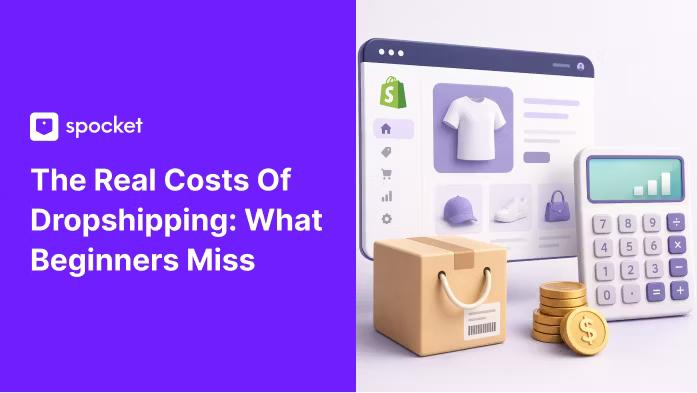

Go on YouTube or TikTok right now and you'll see a dozen people claiming dropshipping is "zero inventory" and "zero risk." They'll tell you all you need is a laptop and some ambition. That sells courses. It isn't the truth. Dropshipping does remove the warehouse and the inventory risk. It does not remove the need for money. The costs just look different. They're spread across apps, ads, samples, transaction fees, and the awkward gap between paying your supplier and getting paid by your customer. Ignore them and your store dies before it ever gets traction.
This blog is a full unpacking of where your money actually goes. Not to scare you off. To make sure you're ready. When you know the real numbers, you can plan around them. When you don't, you're just guessing. And guessing burns cash fast.
Before you commit to any supplier or platform, browse what's actually selling so you don't waste your ad budget on products nobody wants. Trending dropshipping products on Spocket are updated based on real demand, which helps you pick winners before you spend money testing.
The Setup Costs That Look Small but Add Up
Most beginners think Shopify is "free to try" and then they're done spending. Not even close.
- Your store platform. Shopify's starter plan is $29 per month after any promo ends. You can get the first three months for a dollar sometimes, which helps. WooCommerce is free as a plugin but you still pay for hosting, usually $5 to $20 per month, plus a domain. Shopify dropshipping is the most popular route because the integration with supplier apps is seamless, but the monthly cost is real. You can also sell on eBay, Wix, or BigCommerce. Each has its own pricing.
- A custom domain. Roughly $12 to $16 per year. You can start with a free myshopify subdomain but it looks amateur. Buy the domain.
- Sourcing and automation apps. You need something that connects your store to suppliers, auto-syncs inventory, and pushes tracking numbers. Spocket has a free plan that lets you browse the catalog and import a few products. It's a solid way to start with zero app cost, but you'll be limited on product count and features. The paid plans start at $39 per month for Starter, going up to $99 per month for Empire (which gives you up to 10,000 products and multi-store support). Check Spocket's pricing plans to see what each tier includes. If you're serious, you'll probably need at least the Starter or Pro plan to access premium products and faster shipping.
You can also run without automation and manually place orders with suppliers, but that gets old after about 10 orders a day. Time is money too.
Marketing Is Where the Real Budget Goes
This is the part those YouTube videos conveniently skip. You can try to get organic traffic from TikTok or Instagram. It's possible. It's also unpredictable and slow. Most stores that actually make money are running paid ads.
- Cost per acquisition (CPA). Expect to spend $10 to $30 to get one customer through Facebook, Instagram, or TikTok ads. That's not a one-time thing. You pay that for every single order. So if your profit margin per product is $15 and your CPA is $20, you're losing $5 on every sale. You need to know this number before you scale.
- Testing budget. Finding a product that converts usually means testing multiple products and multiple ad creatives. Budget $100 to $300 to test a single product properly. That might mean $20 per day over five days with different audiences and videos. If the product flops, you lose that money. You need enough saved to test several products before one sticks. Some people get lucky on the first try. Most don't.
If you're going organic only, you're trading money for time. Expect to spend hours every day making content, engaging with comments, building trust. It can work. Plenty of stores built audiences through TikTok without spending on ads. But it's not faster or easier. It's just a different kind of investment.
Products, Shipping, and the Sample Trap
The product cost you see on a supplier's page is never the full cost.
- Supplier price. This is what you pay per item. If you're browsing dropshipping suppliers, you'll see listing prices clearly. A phone case might be $4. A hoodie might be $15. You set your retail price above that. But supplier prices can change, and shipping often gets added separately. Always check the shipping cost to the customer's location before you list anything.
- Shipping fees. Some suppliers offer free shipping, but it's usually baked into a higher product price. Others charge separately. Domestic US shipping through Spocket suppliers often runs $3 to $7 per item. Heavier products cost more. Factor this into your cost of goods. The customer might pay for shipping or you might offer it free, but either way it comes out of your revenue.
- Samples. Before you sell a product to real customers, order a sample. You need to see the quality, check the packaging, and time how long delivery takes. Testing 1-2 products per supplier will run you $50 to $200 total. Skip this and you'll get bad reviews and return requests later, which cost way more.
The Hidden Drainers: Returns, Fees, and Chargebacks
These are the costs nobody mentions in the "start dropshipping today" videos.
- Payment processing fees. Every time a customer pays, Stripe or Shopify Payments takes about 2.9% plus 30 cents. On a $30 order, that's about $1.17 gone. Over 100 orders, that's $117. It sounds small but it chews into thin margins.
- Returns and refunds. Even with a solid return policy, some percentage of orders will come back. The customer ordered the wrong size. The product arrived damaged. They changed their mind. Some suppliers cover return shipping. Many don't. You might end up eating the cost of the product and the return postage just to keep the customer happy. Chargebacks are worse. If a customer disputes a charge, you'll pay a $15 to $25 chargeback fee and lose the product and the sale.
- Cash flow gap. This one burns beginners the most. Payment gateways don't transfer money instantly. They hold funds for up to 14 days to protect against chargebacks. Meanwhile, your supplier needs to be paid right away to ship the order. So you need money upfront to cover the supplier cost while you wait for the customer's payment to hit your bank. That buffer should be at least $500 to $1,500. If you're doing $100 in sales a day, you need enough cash to float 7 to 14 days of supplier payments before you see a dime.
Use the profit margin calculator before you list anything. Plug in the supplier cost, the shipping, the transaction fee estimate, and your expected ad cost per order. See what's left. That leftover amount is your actual profit. Not the difference between retail and supplier price. Reality is a lot thinner than the big number on your store dashboard.
Taxes and Legal Stuff You Should Know About
Depending on where you live, you might need to register your business. In the US, most states want you to collect sales tax if you have a nexus there. That could mean registering for a sales tax permit, filing returns, maybe using software like TaxJar. Budget $50 to $300 for one-time legal registration costs or compliance software.
If you sell internationally, customs duties might apply depending on the destination country. Most dropshipping beginners avoid cross-border selling for exactly this reason. Stick to domestic markets first.
So What's the Realistic Minimum to Start?
Here's the honest truth. If you're starting from zero, you can scrape by with about $200 to $300.
You use the free Spocket plan or a free trial. You get Shopify at the $1 promo for the first three months. You buy a domain for $12. You order one sample for $30. You run zero paid ads and go all-in on organic TikTok content. You handle customer service yourself. You manually forward orders instead of paying for automation.
Will this make you rich? Probably not quickly. But it's a real path. You'll learn the operations without debt. If a product gains traction organically, you can reinvest profits into ads later. That's the no-risk way to test the water.
If you want to speed things up, you need about $500 to $1,000 ready.
That covers the first few months of Shopify and Spocket, a proper domain, samples for a couple products, plus $300 to $500 for ad testing. You'll also have a small cash flow buffer so you're not panicking when supplier invoices come due before customer payouts clear. With this setup, you can test products properly and have a real shot at finding something that works within your first few attempts.
For anyone wanting to go full-time from the jump, having $2,000 to $3,000 set aside changes everything. You can test multiple products simultaneously, run higher ad budgets, and weather the losing tests without stress. You can afford a virtual assistant for repetitive tasks. That's the budget where momentum actually builds.
How to Keep Costs Down When You're Starting?
If you're working with a small budget, these are the ways to stretch it.
- Start with a free trial of everything. Start your free trial with Spocket to browse the catalog without spending. Use Shopify's $1 promo period. Don't pay for any app you can live without for the first 30 days.
- Do organic outreach. Post on TikTok, join Facebook groups, post in relevant subreddits. It costs nothing but your time. The conversion rate is lower and the work is harder, but it builds a foundation that paid ads can't buy.
- Pick products with decent margins naturally. Avoid anything where the supplier cost plus shipping eats more than 60% of your planned retail price. Use Spocket to filter by price and shipping speed so you only look at products that leave room for profit even after fees.
- Don't buy courses. Everything you need to learn is free on YouTube, in forums, and in blog posts like this one. People who charge $997 for a "winning product formula" are usually making their money from the course, not from dropshipping.
- Track every expense from day one. Use a simple spreadsheet or a free accounting tool like Wave. If you don't know where your money is going, you can't fix leaks.
- Order samples strategically. Pick one product you have the most confidence in. Test it. If it fails, learn why before you buy another sample. Don't order five samples at once unless you have the budget for it.
Conclusion
Dropshipping isn't zero-cost, and anyone who says it is probably wants your money for something else. The real costs are spread across platforms, marketing, product testing, transaction fees, and the awkward cash flow gap between paying suppliers and getting paid yourself. You can start lean with a few hundred dollars and a lot of patience.
Or you can invest more upfront to speed things up. Either way, go in knowing the numbers, not just the hype. When you price your products based on real costs rather than wishful thinking, you've already beaten half the people who quit in month one. Try Spocket today!
Start your dropshipping business today
The Real Costs of Dropshipping FAQs
What is the minimum amount of money needed to start dropshipping?
You can start with roughly $200 to $300 if you use free trials, stick to organic marketing, and order only one sample. A more realistic budget that includes some ad testing is $500 to $1,000. Anything lower requires a lot of patience and free traffic generation.
Can I dropship with zero dollars?
Not really. Even if you avoid ads and use free app plans, you still need a domain and a platform like Shopify which costs money after a short promo. You also need to buy samples to check quality. Starting with zero dollars means you won't have a real working store.
Why do I need money for cash flow if I get paid immediately?
Payment processors hold funds for up to 14 days to guard against chargebacks. Your supplier expects payment right away to ship the product. You need a cash buffer to pay the supplier during that waiting period. Without it, orders will stall and customers will cancel.
How much should I budget for advertising per product?
Plan on $100 to $300 to test a single product properly across a few different ad creatives. Some products test well and become profitable quickly, others flop. Having enough budget to test several products before finding one that works is the difference between quitting early and building a real store.
What are the most common hidden costs beginners forget?
Payment processing fees (2.9% + 30 cents per order), return shipping costs when a product comes back, chargeback fees from disputed transactions, and monthly subscription costs for apps that you signed up for on free trials and forgot to cancel. These small expenses add up and quietly erase thin margins.


Launch your dropshipping business now!
Start free trial.avif)


Related blogs
Dropshipping Supplier Directory: Where to Find Vetted Suppliers
Browse our directory of vetted dropshipping suppliers across the US and EU, complete with niches, shipping speed, and pricing. Start your free trial today.

How to Negotiate With Dropshipping Suppliers: 9 Tactics That Actually Work
Learn how to negotiate with dropshipping suppliers on price, MOQs, and payment terms. Proven tactics and email scripts to boost your margins. Try Spocket free.

Best Clothing Dropshipping Suppliers: The 2026 Guide
Compare the best clothing dropshipping suppliers for 2026 — US/EU shipping speeds, pricing, and product quality — and find the right fit to launch your store.
