


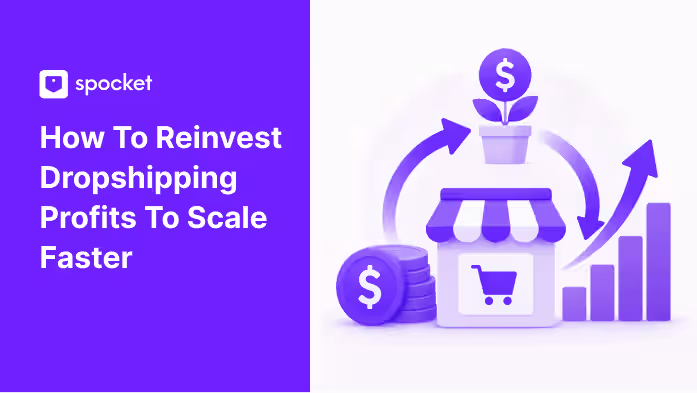
How to Reinvest Dropshipping Profits to Scale Faster
Turn early dropshipping profits into long-term growth by investing in better products, stronger marketing, smoother operations, and repeat customers.
.avif)

Making a profit from dropshipping is exciting, but keeping that profit is not always the smartest move in the early stages. When your store is still growing, every dollar you earn can either become short-term income or fuel for bigger sales, better systems, and stronger customer trust.
Many new dropshippers make the mistake of withdrawing profits too quickly. They see a few profitable weeks and start treating the business like a finished income stream. But dropshipping growth is rarely built that way. To scale faster, you need to put money back into the parts of your business that create better results.
Reinvesting profits helps you improve product selection, marketing, supplier quality, customer retention, branding, store experience, and automation. These areas make your store more profitable and easier to manage as order volume increases.
Why Reinvesting Dropshipping Profits Matters
Reinvesting dropshipping profits helps turn small wins into steady growth. A few sales prove that your store has potential, but reinvestment helps you build the systems needed to repeat and increase those sales.
Dropshipping may not require large upfront inventory costs, but scaling still needs capital. You need money to test new products, improve your website, create better ads, upgrade tools, improve customer support, and build trust. Without reinvestment, your store may stay stuck at the same level.
Reinvestment also helps you compete in a crowded market. Many dropshipping stores sell similar products, so customers often choose the store that feels more reliable, professional, and convenient. Better product pages, clearer shipping information, faster support, and stronger branding can all influence buying decisions.
The real benefit is compounding growth. Better creatives can improve ad performance. A better store experience can raise conversions. Better suppliers can reduce refunds. Better retention can increase customer lifetime value. Each improvement supports the next one.
Instead of seeing profit only as money to withdraw, treat it as business fuel. The goal is to make each reinvested dollar help your store become easier to scale.
How Much Profit Should You Reinvest?
There is no fixed rule for how much profit every dropshipper should reinvest. The right amount depends on your stage, margins, expenses, and personal financial needs. However, if your store is still young, reinvesting a large portion of profit is usually more useful than taking most of it out.
A growing store often needs money for product testing, marketing, apps, supplier upgrades, content creation, customer support, and store improvements. If you withdraw too much, you may not have enough left to keep momentum going.
A simple way to manage profit is to divide it into clear categories. This keeps your decisions planned instead of emotional.
You can divide profits into:
- Product testing
- Marketing and creatives
- Store improvements
- Supplier upgrades
- Customer retention
- Automation tools
- Emergency reserve
- Personal withdrawal
This does not mean you need to spend equally in every area. If your biggest issue is low traffic, marketing may need more budget. If visitors are coming but not buying, your store experience may need attention first.
Before reinvesting, ask one question: will this help the business make more sales, improve profit, reduce problems, or save time? If the answer is yes, it may be a smart reinvestment.
Best Ways to Reinvest Dropshipping Profits for Faster Growth
Once your store starts generating profit, the next step is deciding where that money can create the biggest impact. Reinvesting does not mean spending more for the sake of growth. It means putting your profits into areas that improve product quality, increase conversions, reduce operational issues, and help customers buy from you again.
The smartest dropshipping sellers reinvest with intention. Instead of focusing only on ads, they strengthen the full business system, from product research and supplier reliability to branding, automation, analytics, and customer retention.
Here are the most effective ways to use your dropshipping profits to scale faster and build a more stable ecommerce business.
1. Reinvest in Better Product Research
Product research is one of the most important places to reinvest because your product affects everything else. A strong product is easier to market, easier to explain, and more likely to convert. A weak product can waste money even if your ads and website look good.
Once your store starts making profit, use some of that money to test products more carefully. Avoid adding random trending items just because they appear popular. Instead, look for products with clear demand, useful benefits, good margins, and a realistic audience.
Good product research should focus on what customers actually want. Read reviews, study complaints, compare similar products, and look for gaps you can position better. If customers are repeatedly asking for a feature, better quality, faster shipping, or a bundle, that information can guide your next product test.
You can reinvest in product research by:
- Testing related products in your niche
- Ordering samples before scaling ads
- Comparing supplier quality
- Reviewing customer feedback
- Testing product bundles
- Removing weak products
- Tracking profit by product
Spocket helps sellers test products without buying inventory upfront. You can add products to your store, measure customer response, and use real sales data to decide which items deserve more marketing budget.
Better product research reduces wasted spend. Instead of guessing what might sell, you invest in products with stronger signals.
2. Reinvest in Marketing That Already Works
Marketing is a powerful growth lever, but it can also drain profits quickly if you scale without a plan. Reinvesting in marketing does not mean putting more money into every campaign. It means identifying what already works and improving it carefully.
Start by reviewing your best-performing products, ads, audiences, and channels. Look at profit, not just revenue. A campaign may bring sales but still lose money if ad costs are too high. Focus on campaigns that show healthy returns or clear potential.
If paid ads are working, increase budgets gradually. Sudden budget jumps can affect performance and make it harder to control costs. Slow scaling allows you to measure results and adjust before spending too much.
You can also reinvest in better creatives. Many dropshipping ads look similar, so stronger visuals can help your store stand out. Product videos, lifestyle photos, comparison angles, and user-style content can make your offers more convincing.
Marketing reinvestment may include:
- Paid ads for proven products
- Product videos
- Lifestyle images
- Retargeting campaigns
- Influencer content
- SEO blog content
- Email campaigns
- Landing page updates
Do not rely only on traffic. If your store does not convert well, more visitors will not fix the problem. Strong marketing works best when your product pages, pricing, and checkout experience are already solid.
3. Reinvest in Your Store Experience
Your store experience decides whether traffic turns into sales. If visitors do not trust your website, understand the product, or feel confident about delivery, they may leave without buying.
Reinvesting in your store can improve conversions without increasing your traffic budget. This makes your existing marketing more profitable and helps you get more value from every visitor.
Start with product pages. A good product page should explain the product clearly, show useful images, answer common questions, and make the buying decision easier. Avoid generic descriptions that only list features. Focus on benefits, use cases, customer problems, and what makes the product worth buying.
You can improve your store by adding:
- Clear product photos
- Better product descriptions
- Customer reviews
- Shipping details
- Product FAQs
- Size guides, where needed
- Clear return policy
- Simple navigation
- Faster page loading
- Smooth checkout
Small improvements can have a big impact. Better photos can reduce doubt. Clear delivery details can lower support requests. Reviews can build trust. A simpler checkout can reduce abandoned carts.
If your store already receives traffic but sales are inconsistent, store optimization should come before aggressive ad scaling.
4. Reinvest in Reliable Suppliers
Supplier quality directly affects customer experience. Your supplier influences product quality, shipping speed, packaging, stock availability, and order accuracy. Even if your marketing is strong, poor supplier performance can damage your brand.
As your store grows, use profits to test and work with better suppliers. A cheaper supplier is not always the better choice. If low prices lead to delays, complaints, refunds, or poor reviews, the hidden cost can be much higher.
Reliable suppliers help you create a smoother business. They reduce customer support issues, improve delivery consistency, and make scaling less stressful.
You can reinvest in supplier improvement by:
- Ordering samples regularly
- Testing backup suppliers
- Choosing better shipping options
- Paying more for consistent quality
- Monitoring delivery times
- Removing unreliable products
- Tracking refund reasons
Spocket can support this process by helping sellers connect with suppliers and test products before scaling them. This makes it easier to choose products that are not only attractive but also reliable for customers.
Better suppliers protect your reputation. When customers receive good products on time, they are more likely to leave positive reviews and buy again.
5. Reinvest in Customer Retention
Many dropshipping stores focus too much on getting new customers and not enough on keeping existing ones. New customer acquisition is important, but repeat customers can make scaling more profitable.
When someone buys from your store once, you have already earned their attention and trust. Reinvesting in retention helps you turn that first order into future revenue.
Customer retention can include email marketing, post-purchase communication, loyalty offers, product education, support improvements, and personalized recommendations. These systems help customers stay connected to your brand after the first purchase.
You can reinvest in retention through:
- Welcome email flows
- Abandoned cart emails
- Post-purchase follow-ups
- Review request emails
- Product recommendation emails
- Loyalty discounts
- Bundle offers
- Win-back campaigns
- Faster support replies
Retention is especially useful for niche stores. If your audience has ongoing needs, hobbies, or lifestyle interests, you can recommend related products over time.
A strong retention strategy increases customer lifetime value. This means each customer becomes more profitable, giving you more room to spend on growth.
6. Reinvest in Branding
Branding helps your store feel different from every other store selling similar products. Without branding, customers may compare you only on price. With branding, they are more likely to remember your store, trust your message, and return later.
You do not need a huge budget to improve branding. Start with consistency. Your logo, product images, colors, emails, social posts, packaging style, and tone of voice should feel connected.
Branding reinvestment can include:
- A cleaner logo
- Consistent product visuals
- Stronger brand messaging
- Better social content
- Branded email templates
- Product inserts
- Custom packaging for proven products
- Niche-specific content
Branding also helps build trust. A store that looks polished and focused feels more reliable than one that looks randomly assembled. This matters even more when customers are seeing your brand for the first time.
7. Reinvest in Automation and Tools
Manual work is fine when your store is small, but it becomes harder as orders increase. Reinvesting in automation helps you save time, reduce mistakes, and manage growth more smoothly.
Automation can support tasks like order processing, abandoned cart recovery, review requests, email marketing, customer support, upsells, and analytics. These systems help your store operate consistently without requiring you to handle every task manually.
Useful tools may support:
- Product importing
- Order management
- Email marketing
- Customer support
- Review collection
- Upsells and cross-sells
- Analytics
- Store speed
- Inventory tracking
However, avoid adding too many apps at once. Too many tools can increase costs and make your store harder to manage. Each tool should solve a clear problem or improve a measurable part of the business.
Automation should make your store simpler, not more complicated. Start with the tasks that take the most time or create the most errors.
8. Reinvest in Data and Analytics
Scaling without data can lead to expensive mistakes. Revenue alone does not tell you whether your store is healthy. You need to know where profit is coming from, where money is being wasted, and which products are worth scaling.
Reinvesting in analytics helps you make better decisions. Instead of guessing which product or campaign is working, you can use numbers to guide your next move.
Track key metrics such as:
- Gross profit
- Net profit
- Conversion rate
- Average order value
- Customer acquisition cost
- Return on ad spend
- Refund rate
- Repeat purchase rate
- Cart abandonment rate
- Product-level profit
These numbers show where your business needs attention. If traffic is high but conversions are low, your store experience may need work. If sales are strong but profit is weak, you may need better pricing or suppliers. If repeat purchases are low, retention needs improvement.
Good data keeps reinvestment focused. You spend less on guesswork and more on what actually moves the business forward.
9. Reinvest in Increasing Average Order Value
Average order value shows how much customers spend per order. Increasing it can help you grow revenue without needing a major increase in traffic.
This is useful because customer acquisition costs can rise as you scale. If each customer spends more, you have more room for ads, discounts, shipping upgrades, and profit.
You can increase average order value by offering relevant add-ons, product bundles, quantity discounts, post-purchase upsells, and free shipping thresholds. The key is to make the offer helpful rather than pushy.
For example, if someone buys a pet travel bottle, you can recommend a matching collapsible bowl. If they buy a beauty tool, you can suggest a cleaning accessory. The extra product should naturally support the main purchase.
Ways to improve average order value include:
- Bundles
- Buy more, save more offers
- Complementary add-ons
- Free shipping minimums
- Post-purchase upsells
- Related product recommendations
This strategy helps you earn more from the traffic you already have, making growth more efficient.
10. Build a Simple Profit Reinvestment Plan
Reinvesting works best when you have a clear plan. Without a plan, it is easy to spend profits randomly and later wonder why growth did not improve.
Start by identifying your biggest bottleneck. If you need traffic, invest in marketing. If traffic is coming but sales are low, improve your product pages. If customers complain about delivery, focus on suppliers. If customers buy once and never return, improve retention.
A simple reinvestment plan can include:
- Product testing
- Marketing
- Store improvements
- Supplier upgrades
- Retention
- Branding
- Automation
- Emergency savings
- Owner withdrawal
Always keep a cash reserve. Do not reinvest every dollar immediately. You may need money for refunds, app fees, ad testing, supplier issues, or unexpected slow periods.
Review your plan monthly. Move more budget toward what is working and reduce spending where results are weak.
Conclusion
Reinvesting dropshipping profits is one of the smartest ways to scale faster. Instead of treating early profit as money to withdraw, use it to strengthen your products, marketing, suppliers, store experience, branding, and customer retention.
The best reinvestment decisions are based on data. Put money into the areas that improve sales, increase profit, reduce problems, or save time. Avoid spending just because something looks exciting or trendy.
With Spocket, sellers can test products, work with suppliers, and make more informed decisions before scaling. When each profit dollar has a purpose, your dropshipping store can grow faster, operate better, and become more sustainable.
Start your dropshipping business today
FAQs about Reinvesting Dropshipping Profits
How much dropshipping profit should I reinvest?
The right amount depends on your cash flow and growth stage. In the early stage, reinvesting a larger share can help you test products, improve marketing, upgrade your store, and build stronger systems.
What should I reinvest dropshipping profits into first?
Start with your biggest bottleneck. If you need traffic, invest in marketing. If visitors are not buying, improve your store. If customers complain, invest in suppliers or support.
Should I reinvest dropshipping profits into ads?
Yes, but only if your product is already selling profitably. If your store has weak product pages, unclear pricing, or low trust, fix those issues before increasing ad spend.
Can Spocket help me scale my dropshipping store?
Yes. Spocket helps sellers discover products, test demand, and work with suppliers, making it easier to reinvest profits into products and supplier relationships with stronger growth potential.
Is it better to reinvest profits or withdraw them?
In the early stage, reinvesting is usually better for growth. Still, it is smart to keep a cash reserve and withdraw only what the business can afford without slowing momentum.


Launch your dropshipping business now!
Start free trial


Related blogs
Dropshipping Supplier Directory: Where to Find Vetted Suppliers
Browse our directory of vetted dropshipping suppliers across the US and EU, complete with niches, shipping speed, and pricing. Start your free trial today.

How to Negotiate With Dropshipping Suppliers: 9 Tactics That Actually Work
Learn how to negotiate with dropshipping suppliers on price, MOQs, and payment terms. Proven tactics and email scripts to boost your margins. Try Spocket free.

Best Clothing Dropshipping Suppliers: The 2026 Guide
Compare the best clothing dropshipping suppliers for 2026 — US/EU shipping speeds, pricing, and product quality — and find the right fit to launch your store.
