Understanding the Product Life Cycle: Stages, Strategies, and Examples
Learn the four stages of the product life cycle—introduction, growth, maturity, and decline. Discover strategies, examples, and how ecommerce brands use the PLC to stay profitable.
.avif)

Every product sold in the market goes through a predictable journey: it is introduced, gains traction, matures, and eventually fades as demand declines. This journey is known as the Product Life Cycle (PLC) — a framework used by brands, marketers, and ecommerce sellers to understand how products behave over time and how to apply the right strategy at each stage.
Mastering the product life cycle is essential for anyone building or scaling an online store. Whether you're sourcing products, planning marketing campaigns, or refreshing your catalog, knowing where a product sits in its life cycle helps you make smarter decisions. This includes when to introduce new items, when to scale winning products, and when to discontinue slower ones.
For ecommerce entrepreneurs who rely on curated supplier marketplaces similar to Spocket, understanding the PLC allows you to quickly identify high-potential items during the introduction or growth stages while avoiding products already oversaturated in the maturity or decline phases.
This guide breaks down the four stages of the product life cycle, strategies for each stage, real examples, and how to apply the framework to your own store.
What Is the Product Life Cycle?
The Product Life Cycle refers to the stages a product goes through from its launch to its withdrawal from the market. It is a concept widely used in business strategy, marketing, and product development.
The PLC helps companies understand how sales and profitability evolve over time and provides direction for adjusting product, pricing, distribution, and promotional strategies. It is a strategic model that helps businesses make better decisions about product development and marketing.
At its core, the product life cycle helps answer three critical questions:
- When should you introduce a new product?
- When should you scale aggressively?
- When is it time to pivot or retire a product?
Stages of the Product Life Cycle
Every product moves through four main stages: Introduction, Growth, Maturity, and Decline. Each stage has unique characteristics, challenges, and opportunities.
Understanding the stages of the Product Life Cycle is essential for predicting how a product will perform over time and choosing the right strategy at each phase. From launch to eventual decline, every product follows a natural progression that affects sales, competition, marketing spend, and profitability. The breakdown below explains each stage clearly so you can identify where your product stands and how to respond effectively.
1. Introduction Stage
The introduction stage begins when a product first enters the market. Awareness is low, competition may be limited, and sales typically grow slowly at first.
Characteristics
- Low sales volume
- High marketing and development costs
- Uncertain product-market fit
- Heavy focus on promotion and education
Strategies for the Introduction Stage
- Market research: Understand who your early adopters are.
- Influencer test campaigns: Great for validating demand quickly.
- Clear positioning: Highlight what makes the product unique.
- Strong visual branding: To stand out from the start.
For ecommerce sellers, this is often the stage to test products quickly without heavy stock commitments. Using marketplaces like Spocket-style sourcing networks allows sellers to introduce new SKUs with minimal risk and identify early winners.
Examples of Products in the Introduction Stage
- New niche beauty tools
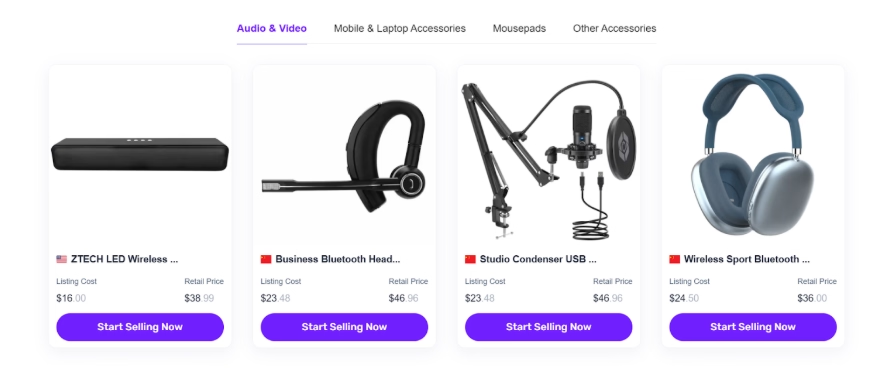
- Recently launched tech accessories
- Trend-driven seasonal products like LED masks or portable fans
2. Growth Stage
In the growth stage, sales begin to increase rapidly as more people become aware of the product. Competitors may enter the market, and the business shifts toward scaling operations.
Characteristics
- Rising demand and revenue
- Increased competition
- Higher profitability
- Expanding product variations
Strategies for the Growth Stage
- Optimize advertising campaigns to reach larger audiences
- Create product bundles to increase order value
- Expand distribution, including faster-shipping suppliers
- Introduce variations such as new colors, sizes, or limited editions
- Enhance customer support to maintain strong reviews
Ecommerce sellers who scale quickly during this stage often rely on reliable fulfillment partners to handle increased order volume without delays.
Examples of Products in the Growth Stage
- Wireless earbuds
- At-home fitness gear
- Eco-friendly kitchen tools
- Travel accessories trending on social media
3. Maturity Stage
Maturity is the most profitable stage but also the most competitive. The product is well known, the market is saturated, and brands compete primarily through differentiation, pricing, and branding.
Characteristics
- Peak sales and market penetration
- More competitors and lower margins
- Stabilized product demand
- Strong brand loyalty
Strategies for the Maturity Stage
- Strengthen customer loyalty through rewards or email sequences
- Differentiate with premium bundles or add-ons
- Optimize pricing strategies to stay competitive
- Expand into new regions or platforms
- Improve product quality or packaging
Sellers often evaluate their catalog during this stage to determine which products should be highlighted, optimized, or replaced with newer alternatives.
Examples of Products in the Maturity Stage
- Bluetooth headphones
- Phone cases
- Skincare essentials
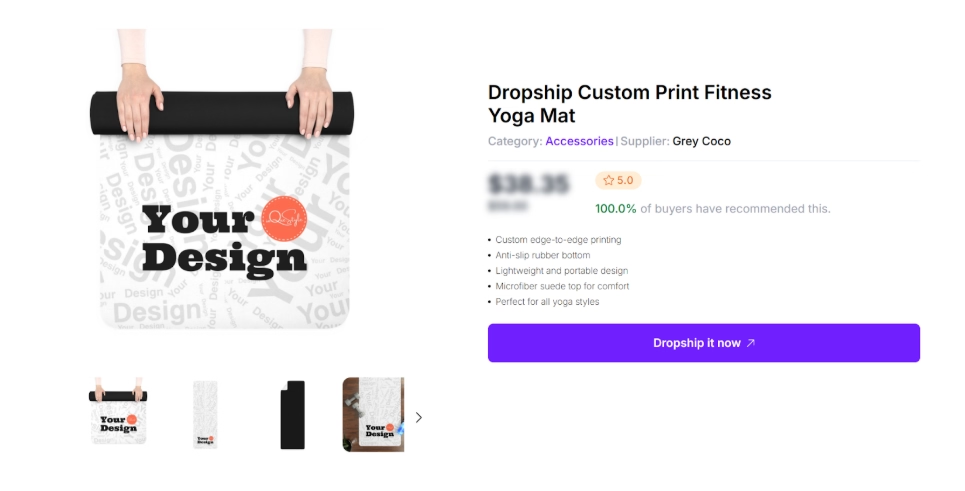
- Yoga mats and resistance bands
4. Decline Stage
Eventually, demand for a product begins to drop. This can happen for several reasons: new innovations, shifting consumer preferences, price pressure, or market saturation.
Characteristics
- Declining sales and profit
- Reduced visibility and interest
- Rising competition with better alternatives
- Higher risk of unsold inventory
Strategies for the Decline Stage
- Bundle the product with newer, higher-demand items
- Offer discounts to clear remaining inventory
- Rebrand or reposition if possible
- Retire the product if sales no longer justify marketing spend
For ecommerce, this stage requires agility. Sellers often rotate out declining items quickly and replace them with trending alternatives sourced through diverse supplier catalogs.
Examples of Products in the Decline Stage
- Outdated electronics
- Fidget toys
- Previous-generation accessories
- Seasonal products post-peak
Understanding the Product Life Cycle Curve
The Product Life Cycle curve visually represents how a product’s sales and profitability change from launch to decline. By understanding the shape of this curve, businesses can anticipate demand patterns, identify the most profitable phases, and adjust marketing, pricing, and inventory strategies accordingly. This section breaks down how the curve works and why it’s a valuable tool for ecommerce decision-making. The typical PLC curve shows:
- Low sales during introduction
- Sharp growth during expansion
- Peak stabilization during maturity
- A downward slope during decline
Profit margins follow a similar pattern, but profitability usually peaks during the growth and maturity stages. Understanding this helps businesses allocate resources strategically — for example, spending more on ads during growth and reducing investment during decline.
Why the Product Life Cycle Matters for Ecommerce Sellers
The Product Life Cycle is one of the most valuable frameworks for ecommerce sellers because it reveals how products behave over time and what actions drive the highest profits at each stage. From knowing when to launch trending items to understanding when to scale or retire a product, the PLC helps online store owners make smarter decisions about sourcing, pricing, marketing, and inventory. This section explains why mastering the PLC is essential for long-term ecommerce success. For ecommerce sellers, especially those working with curated supplier marketplaces, the PLC offers major advantages:
Better Inventory Planning
Knowing a product’s stage helps prevent overstocking declining items or under-ordering items in the growth stage.
Predictable Marketing Strategies
Each stage requires a different promotional approach — new products may need influencers, while mature products thrive through retargeting and bundling.
Improved Pricing Decisions
Prices fluctuate as the product matures. Sellers often charge premium prices early on, then adjust during saturation.
Faster Testing and Scaling
By monitoring the PLC, sellers can quickly phase out slow-moving products and replace them with high-demand items trending upward.
Smarter Product Sourcing
Sourcing products that are clearly in the introduction or growth phase provides higher profit margins and less competition.
Real Examples of the Product Life Cycle
Seeing the Product Life Cycle in action makes the concept easier to understand and apply. Real-world examples show how products rise, peak, and eventually decline due to trends, competition, or shifting consumer behavior. These examples illustrate how the PLC plays out across different industries and help ecommerce sellers recognize similar patterns in their own product catalogs. Understanding PLC becomes easier with real-world examples:
Fidget Spinners
- Introduction: Viral TikTok exposure
- Growth: Massive global demand
- Maturity: Saturated at peak popularity
- Decline: Demand dropped as trend faded
Smartphones
- Introduction: Early tech adopters
- Growth: Rapid global adoption
- Maturity: Highly competitive market
- Decline: Older models replaced by newer ones
Seasonal Decor (e.g., Christmas products)
- Entire cycle repeats yearly
- Sellers anticipate maturity and decline cycles to optimize inventory
Beauty Tools (e.g., Jade rollers, LED masks)
- Rise quickly through influencer trends
- Growth accelerates with social proof
- Maturity as the market saturates
- Decline when newer skincare tech emerges
Strategies for Each Product Life Cycle Stage
Each stage of the Product Life Cycle requires a different approach to marketing, pricing, promotion, and inventory management. By aligning your strategy with the stage your product is in, you can maximize sales, improve efficiency, and stay ahead of competitors. This section outlines the most effective tactics for the introduction, growth, maturity, and decline stages so you can make smarter decisions at every phase.
Understanding the right strategy for each stage is crucial for long-term profitability.
Introduction Stage Strategies
- Focus on brand awareness and education
- Run micro-influencer campaigns
- Use testing platforms or dropshipping to reduce risk
- Highlight unique selling points aggressively
Growth Stage Strategies
- Increase advertising budget
- Introduce variations and accessories
- Strengthen customer support
- Build social proof through reviews
- Expand fulfillment capabilities
This is when ecommerce sellers scale products aggressively.
Maturity Stage Strategies
- Add complementary products to boost average order value
- Offer subscription options or loyalty rewards
- Use retargeting ads to maintain market share
- Enhance product branding and packaging
- Explore new sales channels and international markets
Decline Stage Strategies
- Liquidate inventory through bundles or discounts
- Retire slow products and replace them
- Consider rebranding or repositioning
- Shift focus to new, high-demand trends
How to Use the Product Life Cycle to Choose Winning Products
Selecting profitable products becomes far easier when you understand where they fall within the Product Life Cycle. By identifying whether a product is in the introduction, growth, maturity, or decline stage, ecommerce sellers can predict demand, avoid saturated markets, and focus on items with the highest profit potential. This section explains how to apply PLC insights to consistently choose winning products for your store. For ecommerce sellers, the PLC is a roadmap to profitability.
Monitor Trends Early
Spotting products in the introduction stage allows you to enter the market before competition increases.
Scale During Growth
Fast and efficient scaling during this stage delivers the highest returns.
Leverage Maturity for Stability
Mature products generate reliable revenue when positioned correctly.
Act Quickly in Decline
Avoid holding inventory too long by monitoring sales trends closely.
Use Supplier Marketplaces Wisely
Reliable supplier networks help sellers:
- Test new items cost-effectively
- Source products rapidly during growth
- Replace declining products without delay
This agility is key to staying ahead of competitors.
Common Mistakes Businesses Make With the Product Life Cycle
While the Product Life Cycle is a powerful framework, many businesses struggle to apply it correctly. Misreading a product’s stage or failing to adapt strategy can lead to lost revenue, excess inventory, or missed opportunities. This section highlights the most common mistakes sellers make when managing the PLC, helping you avoid costly errors and make more informed decisions as your products evolve. Businesses frequently misjudge the PLC. Here are the biggest errors:
Staying Too Long in the Decline Stage
Holding onto declining products reduces profitability and storage space.
Misreading the Introduction Stage
Assuming early slow sales equal failure — many winning products need time to gain traction.
Overinvesting During Maturity
When competition peaks, relying solely on one saturated product can backfire.
Ignoring Market Shifts
Consumer preferences shift quickly; continuous research is essential.
Conclusion
The product life cycle is much more than a business concept — it’s a strategic tool that helps ecommerce sellers anticipate demand, optimize marketing, and make informed decisions about product sourcing and inventory. Whether you're launching a new item, scaling a trending product, or preparing to phase out a declining one, understanding the PLC allows you to maximize profits while minimizing risk.
In the fast-paced world of ecommerce, especially when working with diverse supplier networks similar to Spocket, the ability to read the product life cycle gives sellers a competitive edge. It allows them to adapt quickly, introduce winning products at the right moment, and maintain a catalog that consistently meets customer demand.
Mastering the product life cycle is one of the smartest ways to build a resilient, profitable online business — and it ensures that every product in your store serves a purpose, delivers value, and contributes to long-term growth.
Start your dropshipping business today
FAQs About the Product Life Cycle
What is the product life cycle?
The product life cycle describes the progression a product follows from its initial launch to its withdrawal from the market. It shows how sales, demand, and profitability change over time. Businesses use this model to understand market behavior and plan effective strategies at each stage.
What are the four stages of the PLC?
The four stages are Introduction, Growth, Maturity, and Decline. Each stage impacts how a product sells, how competitors react, and how customers engage with it. Different strategies are needed at each phase for pricing, promotion, and inventory management.
Why is the product life cycle important?
The PLC helps businesses make smarter decisions about when to launch new products, when to scale, and when to retire outdated items. It provides a roadmap for forecasting sales, managing marketing budgets, and staying competitive in changing markets. Sellers rely on it to maximize profitability and minimize risk.
Which stage of the PLC is most profitable?
The growth and maturity stages tend to produce the highest profits. During growth, demand rises quickly and competition increases, while maturity offers stable sales and established market presence. These stages allow businesses to optimize pricing, reduce costs, and scale efficiently.
How do ecommerce sellers use the PLC?
Ecommerce sellers analyze the PLC to identify which products are trending, which are reaching saturation, and which should be phased out. This helps them choose high-potential items, adjust marketing strategies, and manage inventory more effectively. Using PLC insights ensures a product catalog that stays fresh, profitable, and aligned with consumer demand.


Launch your dropshipping business now!
Start free trial


Related blogs
How to Set Up Automated Order Fulfillment With Spocket and Shopify
Set up a smoother Shopify dropshipping workflow with Spocket by connecting your store, importing products, processing orders, syncing tracking, and reducing manual fulfillment tasks.

How to Open a Business Bank Account for Your Dropshipping Store
Set up your dropshipping finances the right way with a dedicated business bank account built for payouts, supplier payments, taxes, and long-term store growth.
Spocket vs Dropified: Which Tool Is Better for Multi-Store Scaling?
Compare Spocket and Dropified for multi-store dropshipping, supplier quality, automation, fulfillment, product sourcing, and scaling across ecommerce platforms.