


Printful vs Redbubble: World's Top Print on Demand Service Providers Compared
We compare Printful vs Redbubble to see which print on demand service fits your goals. Review pricing, quality, and features to choose the right platform today.

Starting a custom merchandise business is an exciting venture, but choosing the right platform to bring your designs to life can be overwhelming. The Printful vs Redbubble debate is one of the most common among new and experienced sellers alike. Both are giants in the print on demand space, yet they operate in fundamentally different ways.
One functions as a backend fulfillment partner for your own brand, while the other is a bustling marketplace where your art fights for visibility. To determine which is better Printful or Redbubble, you need to look beyond the surface. It's not just about who prints a shirt; it's about how you want to do business.
In this detailed comparison, we'll break down the nuances of each platform. We'll look at real print quality, costs, integrations, and the overall business model. Whether you are looking for a simple Redbubble print on demand sign up process or a full-scale e-commerce operation, this guide will help you decide.
What is Printful?
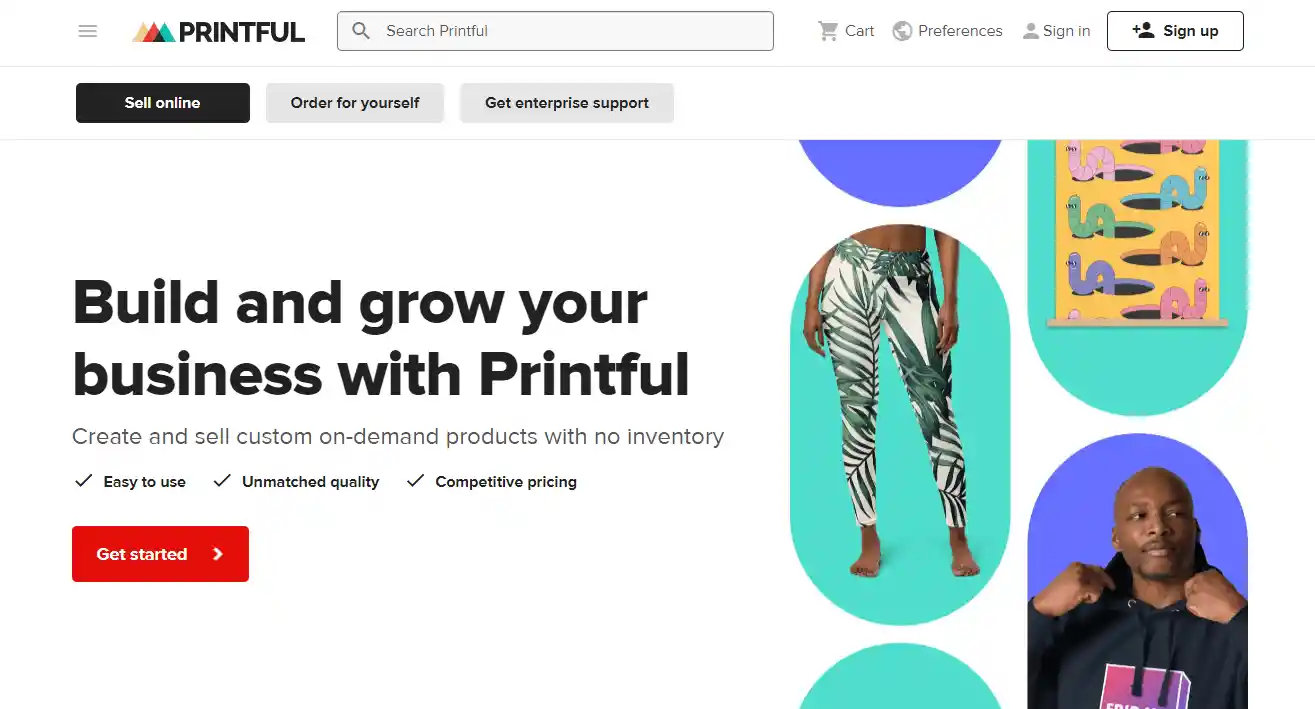
Printful is a print-on-demand dropshipping and fulfillment company. Unlike a marketplace, Printful does not have a storefront where customers browse. Instead, it operates silently in the background for thousands of online businesses. You connect Printful to your own independent online store—whether it's on Shopify, Etsy, or WooCommerce.
When a customer buys a t-shirt from your website, the order is automatically sent to Printful. They print the design, pack it, and ship it directly to your customer, often using your branding on the packaging and labels. This makes Printful an ideal solution for entrepreneurs who want to build a specific brand and control the entire customer experience. They offer a massive catalog of products, from apparel to home decor, and are known for their consistent quality.
How Does Printful Work?
Understanding the mechanics of Printful is crucial to appreciating why so many entrepreneurs consider it the gold standard for Printful vs Redbubble comparisons. It's a system designed for automation and branding. For a broader look at how you can integrate such services into your business model, you can read more about dropshipping in general.
Seamless Store Integration
The first step in using Printful is connecting it to an e-commerce platform. Printful offers native integrations with all the major players, including Shopify, WooCommerce, Etsy, and BigCommerce. This integration is deep; it doesn't just list products. It syncs inventory, automatically imports orders, and sends tracking information back to your store. This means you can manage a high volume of sales without manually processing a single order. It turns your small store into a logistics operation. If you're interested in the specifics of how this fulfillment method works, you can check out this detailed guide on Printful dropshipping.
The Design and Mockup Process
Once your store is connected, you start creating products. Printful provides a powerful, browser-based design tool. You can upload your artwork, but you can also add text, clipart, or even use premium stock images directly in the tool. You get to see a realistic mockup of your product instantly. You can choose the placement of the design, the color of the garment, and even the print size. This level of customization ensures that what you see is what you (and your customer) will get, allowing for precise product listings. This process is particularly effective for creating items like customized t-shirts.
Warehousing and Branding
A standout feature in any Printful vs Redbubble review is Printful's branding capability. With Redbubble, the package arrives with Redbubble's branding. With Printful, you can order custom packing slips, branded stickers, and even have your own brand name printed on the inside neck label of your clothing. This makes the unboxing experience feel professional and personal. Furthermore, Printful offers a warehousing service. If you have products from other suppliers or your own inventory, you can ship them to Printful, and they will store and pack them alongside your POD items, creating a unified fulfillment strategy.
Printful vs Redbubble: Business Models
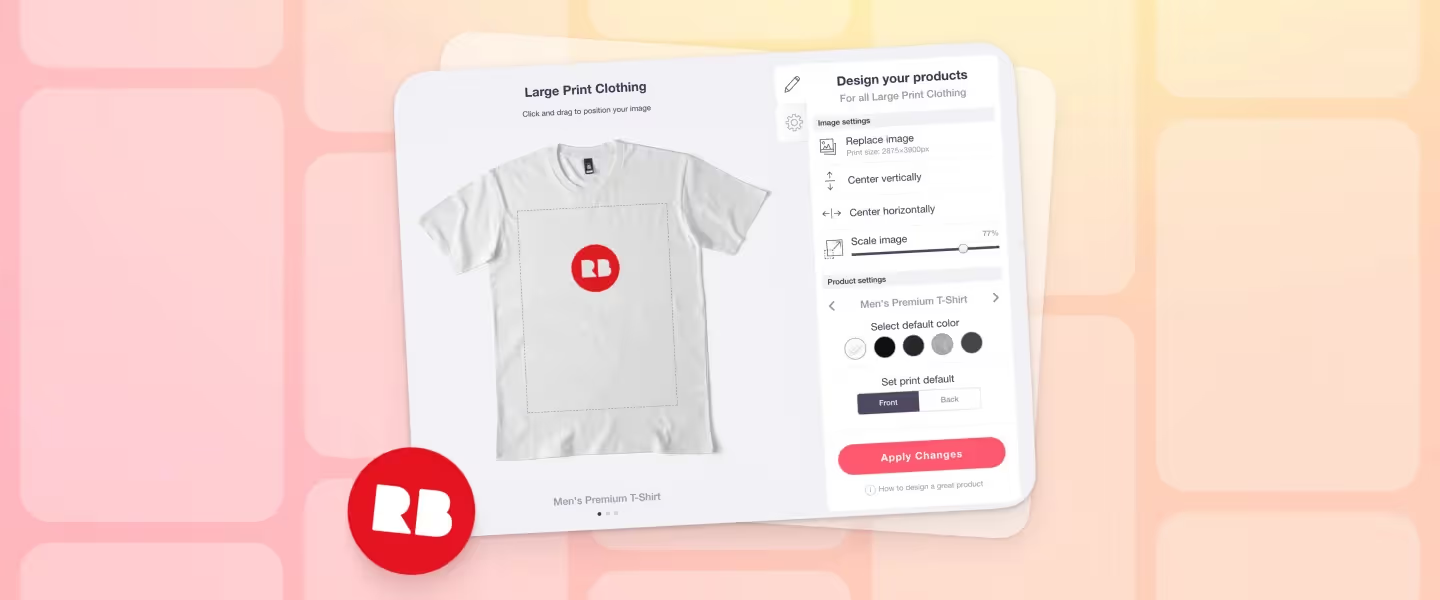
The most significant difference in the Printful vs Redbubble comparison is the business model. Printful is a fulfillment service. You must bring your own customers, market your own products, and manage your own storefront. You are the retailer. Printful is your silent partner, handling production and shipping.
Redbubble, however, is a marketplace. When you upload a design to Redbubble, it lives on their domain. They are responsible for marketing the site, driving traffic, and processing payments. You are essentially an artist licensing your work to Redbubble. They handle the customer service and the printing, but you lose direct contact with the buyer. This is the core distinction: with Printful, you build an asset (your brand and customer list); with Redbubble, you rent space in someone else's store.
Printful vs Redbubble: Pricing
The question of Printful vs Redbubble cost is layered because their fee structures are completely different.
With Printful, there are no monthly fees to use the basic service. You only pay for the product and shipping when an order is placed. You set your own retail price. For example, a shirt might cost you $10 to produce, and you can sell it for $25. Your profit is $15. However, if you want access to discounts, you can opt for the Printful Growth plan, which starts at a monthly fee but offers up to 33% off products, increasing your margins. You can compare this model with other options by looking at Spocket pricing to see different cost structures.
Redbubble's pricing is based on commission. You set a margin on top of their base price. However, the Printful vs Redbubble price comparison gets tricky with Redbubble's account tiers. A Redbubble Standard account is subject to a 50% platform fee on monthly earnings. This means if you earn $40 in a month, Redbubble takes $20. Higher-tier accounts (Premium, Pro) have lower fees (20% and 0%) but require you to drive more sales or be invited. You also pay an "excess markup fee" if you try to increase your prices too high. Because Redbubble handles the traffic, they take a significant cut of the profit.
Printful vs Redbubble: Integrations
When looking at Printful vs Redbubble integrations, the focus differs. Printful is built to integrate with sales channels. It connects with over 20 e-commerce platforms, including Shopify, WooCommerce, BigCommerce, Squarespace, Wix, and even marketplaces like Etsy and eBay. This allows you to manage a multi-channel sales strategy from one central point. They also offer a robust API for developers who want to build custom integrations.
Redbubble, being a marketplace, doesn't "integrate" with stores in the same way. You don't connect Redbubble to a separate store; Redbubble is the store. Their integration is with the customer's wallet and social media sharing tools. You can integrate your Redbubble shop with social media accounts to share your products, but the sales funnel ends at Redbubble.com. You cannot use Redbubble to fulfill orders for your own independent website.
Printful vs Redbubble: Customer Support
Customer support is a critical factor in any Printful vs Redbubble review. Printful offers 24/7 customer support via email and live chat for all users. They have an extensive help center and are generally praised for their responsiveness, though some users note that resolving complex issues can sometimes take a few messages. They are proactive in communicating production delays or policy changes.
Redbubble's support structure is different. Since they are a marketplace, they handle customer service for the end-buyer directly. For artists, support is available, but user reviews on app stores frequently mention frustrations with account suspensions, lack of clear communication, and difficulty resolving issues. The "customer" Redbubble prioritizes is the shopper, and the support for sellers can sometimes feel secondary to the platform's needs.
Printful vs Redbubble: Dropshipping Products
The product range is a huge factor in deciding which is better Printful or Redbubble. Printful boasts a catalog of over 340 products, ranging from standard apparel and hats to more unique items like banners, pillows, and even custom swimwear. They focus on using high-quality, brand-name blanks like Bella+Canvas and Gildan. They also offer various printing techniques, including DTG, embroidery, and all-over print. Specific items like bucket hats and personalized mugs are popular choices on both platforms.
Redbubble also offers a wide variety of products, including stickers (a major category for them), phone cases, tapestries, and apparel. They have an exclusive "Fan Art Program" that allows artists to legally sell designs featuring licensed characters from brands like Netflix, which is a massive draw for many designers. However, the base products can vary, and quality control has been questioned.
If Printful's catalog doesn't have exactly what you want, or if you are looking for different supplier networks, there are alternatives. For example, Spocket is a fantastic alternative to consider. While Printful has in-house production, Spocket connects you to a global network of suppliers, some of which offer print-on-demand services. One of the major advantages of using a platform like Spocket is that Spocket has no MOQs, allowing you to test products without committing to large inventories. If you are looking to expand your product range or find specific items not offered by Printful, exploring platforms like Spocket and checking out their trending dropshipping products can be a great next step to diversify your dropshipping products.
Printful vs Redbubble: Which Sells Better?
This is the million-dollar question in the Printful vs Redbubble debate. The answer depends entirely on your definition of "sells better."
If "sells better" means higher volume with less effort, Redbubble might seem better initially. Because Redbubble has its own traffic, a design could sell without you spending a dime on ads. They have millions of visitors per month. However, you are competing with millions of other designs. Your product might get lost, and the Printful vs Redbubble profit margins are much slimmer due to fees.
If "sells better" means higher profitability and building a sustainable brand, Printful is the winner. You control the marketing, so you can target specific audiences. You capture the customer's email address, allowing you to market to them again. A customer who buys from "YourBrand.com" is more likely to return than a customer who bought from "Redbubble.com." You can build a loyal following, which leads to long-term, consistent sales. Printful enables you to build an asset; Redbubble allows you to earn a commission.
Printful vs Redbubble: Pros and Cons
To summarize the operational differences, here is a breakdown of the advantages and disadvantages of each platform based on real user experiences.
Printful Pros and Cons
Printful is the powerhouse for serious e-commerce entrepreneurs. Determining is Printful better than Redbubble often comes down to these factors.
Pros
- Superior Branding Control: You can remove all references to Printful. Custom labels, packing slips, and returns under your brand name make your business look professional and established.
- High-Quality Printing: Printful is widely regarded for its consistent print quality. They use professional equipment and have multiple in-house facilities to maintain standards. The colors are vibrant, and the prints are durable.
- Extensive Integration Options: The ability to connect with Shopify, Etsy, and WooCommerce from one dashboard allows you to manage a multi-platform empire efficiently.
- Sample Order Discounts: You can order samples of your products at a 20% discount to check the quality before selling them to customers, ensuring your standards are met.
Cons
- Higher Product Base Costs: Because of their quality and in-house facilities, the base cost of products is generally higher than some competitors, which can squeeze your margins if you don't price accordingly.
- Responsibility for Marketing: You are 100% responsible for driving traffic. If you don't market, you won't make sales. This requires time, skill, and often a budget for advertising.
Redbubble Pros and Cons
Redbubble is the artist's gateway to easy, passive income potential. Asking is Redbubble better than Printful depends on your desire for simplicity.
Pros
- Built-in Audience: The biggest pro is the existing traffic. Redbubble invests heavily in SEO and marketing, bringing millions of buyers to the site where your art is listed.
- Extremely Low Barrier to Entry: The Redbubble print on demand sign up is free and fast. You don't need to set up a store, manage a domain, or handle any tech. Just upload and go.
- Fan Art Program: This is a unique advantage. You can legally sell designs based on major franchises, which is nearly impossible to do on your own store without risking copyright infringement.
Cons
- Inconsistent Print Quality: Reviews and transcript analyses often point to faded or blurry prints. The quality can be acceptable, but it rarely wows customers, and consistency can be an issue.
- High Fees and Lower Margins: With platform fees eating up to 50% of your earnings on a Standard account, the Printful vs Redbubble profit potential heavily favors Printful for volume sellers.
- Lack of Customer Data: You don't own the customer. Redbubble keeps all the data, meaning you cannot build an email list or market directly to those buyers again. You are entirely dependent on the marketplace.
Is Printful Legit?
Yes, Printful is a completely legitimate and highly reputable company. Founded in 2013, they have fulfilled over 60 million orders. They are a trusted partner for major e-commerce platforms and have physical offices and production facilities in the US, Europe, and Mexico. They are transparent about their pricing, production times, and company policies. Their legitimacy is further confirmed by the thousands of positive reviews and the fact that they power stores for major brands and individual entrepreneurs alike. You can sign up for their service directly through their website.
Is Redbubble Legit?
Redbubble is also a legitimate and publicly traded company (parent company Articore). They have been in business since 2006 and have paid out hundreds of millions of dollars in commissions to artists. They are a well-known entity in the art community. However, their "legitimacy" as a fair partner is sometimes questioned by sellers due to strict account suspension policies and complex fee structures. For buyers, it is a safe place to shop. For sellers, it is a legitimate platform, albeit one with significant control over your ability to sell. You can visit their marketplace to see how it operates.
Printful vs Redbubble: Which to Choose?
The choice in the Printful vs Redbubble showdown hinges on your long-term goals. If you want to build a brand, control your customer experience, and maximize profit per sale, the path is clear. You have to weigh whether you want to manage a brand or just upload art.
- Choose Printful if: You are an entrepreneur ready to build a brand. You are willing to learn marketing and want to create a sustainable business asset. You prioritize print quality and a professional unboxing experience for your customers. You want to own your traffic and customer data. If this sounds like you, you can get started by signing up for a service like Spocket to explore supplier networks.
- Choose Redbubble if: You are an artist who wants to test the waters of print on demand without any upfront cost or technical hassle. You want to see if your designs have market appeal without spending money on ads. You are interested in creating fan art for licensed properties.
Conclusion
For those leaning towards the entrepreneurial route, Printful provides the tools to build something lasting. It requires more work upfront, but the potential for long-term reward is significantly higher. And if you ever need to expand beyond Printful's catalog, remember that the world of dropshipping is vast, with alternatives offering unique products and supplier networks to further grow your brand. Try Spocket to do Print on demand dropshipping today!
Start your dropshipping business today
Printful vs Redbubble FAQs
Can I use Printful and Redbubble at the same time?
Yes, you can. Many sellers use Printful to fulfill orders on their own branded website while also listing designs on Redbubble for passive income. However, you must manage your inventory and designs separately, as they are completely different systems.
What are the shipping times like for Printful vs Redbubble?
Printful typically takes 2-5 business days for fulfillment, plus shipping time which varies by location. Redbubble's fulfillment is generally fast, often around 7 days, due to their global network of production partners. Both offer tracking.
Which platform has the better t-shirt quality for customers?
Based on transcript reviews and user feedback, Printful generally offers superior and more consistent print quality. Redbubble's prints are often described as "acceptable" but can sometimes appear faded or slightly blurry compared to Printful's vibrant output.
Is it really free to start selling on Redbubble?
Yes, signing up and uploading designs is completely free. Redbubble makes money by taking a commission and fees from your sales, so there are no upfront costs for the artist.
Does Printful offer a money-back guarantee?
Printful offers a 20% discount on sample orders so you can test quality before selling. They also have a quality guarantee; if a product is defective or damaged, they will reprint or refund it, ensuring you and your customer are satisfied.
How does the Printful vs Redbubble payment structure work?
With Printful, you collect the full payment from your customer via your own store (like Shopify), and then you pay Printful for the product and shipping. With Redbubble, they collect the money, take out their fees and production costs, and pay you the remaining commission monthly, usually by the 15th.


Launch your dropshipping business now!
Start free trial.avif)


Related blogs

Best Ways to Find Winning Print on Demand Products to Sell in 2026
Learn how to find winning print on demand products in 2026 using trend research, niche validation, margin checks, and supplier criteria.

.avif)
Print on Demand Profit Margins: What to Realistically Expect in 2026
Learn realistic print on demand profit margins in 2026, what costs reduce profits, product margin ranges, pricing tips, and how to increase POD earnings.
How to Price Print on Demand Products for Maximum Profit
Learn how to price print on demand products with the right cost, margin, value, and testing strategy to protect profit and grow your store.

