NFT Loyalty Program: The Latest Trend in the Industry
Learn about NFT loyalty programs in 2026. See how they are powering blockchain ecommerce and where the crypto world is headed.

You scan a QR code at the register. A small digital token lands in your phone. That token is not a point. It does not expire. You own it. Later, that same token unlocks a private sale or a backstage video. This is not a future idea. Brands are doing it right now. An NFT loyalty program replaces boring punch cards with digital assets customers actually want to keep. NFT marketing built around ownership beats discounts every time.
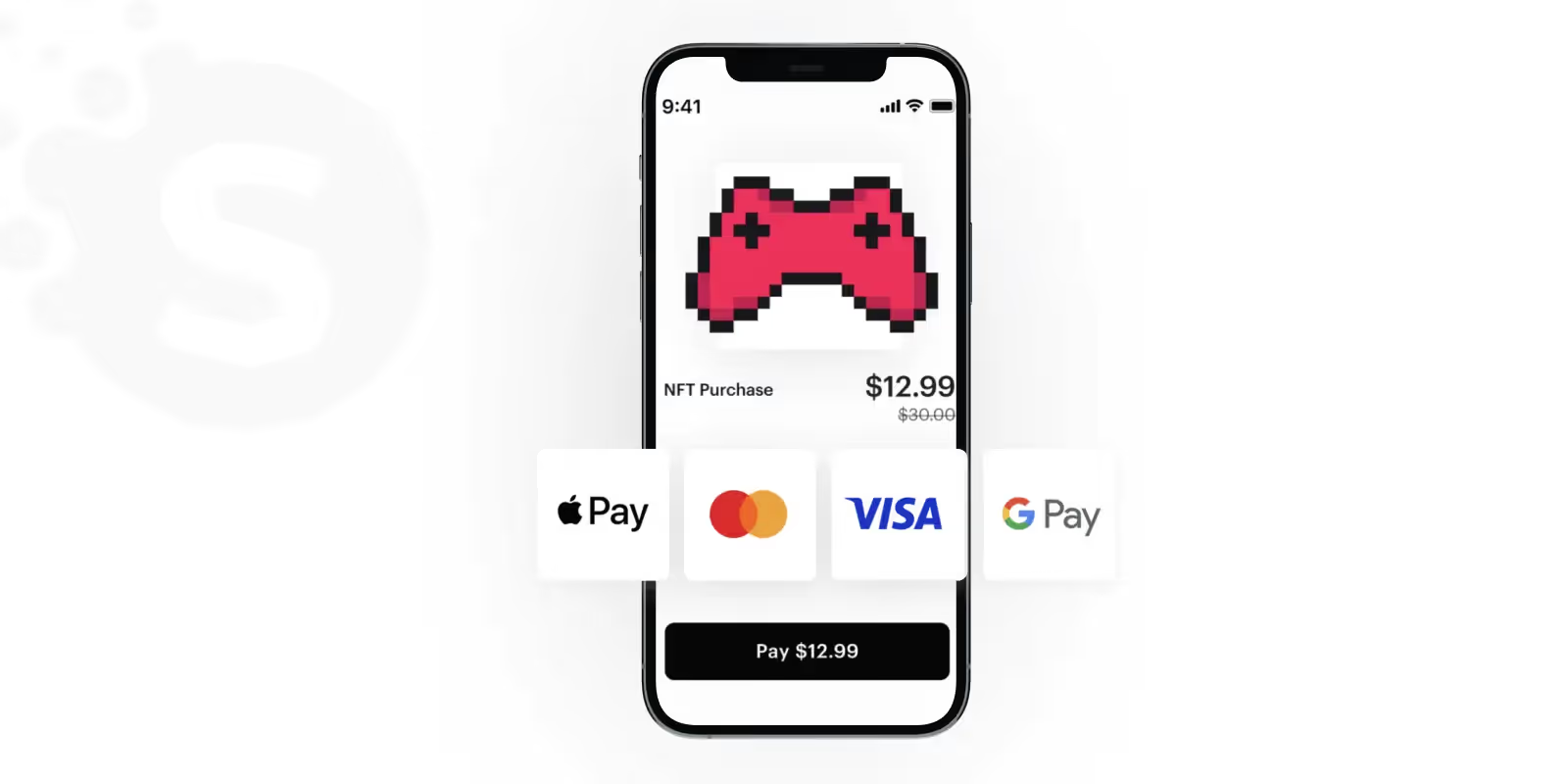
And blockchain ecommerce makes all of this work without a central database. If you want customers who return, bring friends, and flex your brand online, you need to understand how an NFT loyalty program changes the game.
What is an NFT Loyalty Program?
An NFT loyalty program gives customers digital tokens stored on a blockchain. Each token proves the customer did something: bought a product, showed up to an event, or referred a friend. The token lives in the customer's own wallet, not your server.
Traditional loyalty points sit inside your app. You control them. You can change the rules. You can let them expire. Customers know this. That is why most points go unused.
An NFT loyalty program flips the power. The customer owns the token. They can hold it, trade it, or sell it. The token carries real value because it unlocks something specific. Early product access. A discount code. A ticket to a members only event. Want to sell NFT art? Check this out.
What is NFT Marketing?
NFT marketing works differently. You are not pushing a promotion. You are building a collection of verified owners. Blockchain ecommerce gives you a transparent ledger. Every token issued, every perk redeemed gets recorded.
You can design an NFT loyalty program with tiers. A basic token gives 10% off. A rare token grants VIP event access. A legendary token includes a one on one call with your founder.
The shift matters. Traditional programs reward spending. An NFT loyalty program rewards engagement, loyalty, and community participation. You turn casual buyers into stakeholders who have a reason to care about your brand's future. Read our post on the best NFT apps to get some extra help.
Why Old Loyalty Programs Feel Broken?
Look at your wallet. How many loyalty cards sit there unused? How many points have expired? Traditional programs have real problems.
Here is what fails most often:
- No ownership. Your points live on the brand's server. If the brand changes the rules or shuts down, your points vanish. Customers feel this risk.
- No transferability. You cannot gift your points to a friend. You cannot trade them. You cannot sell them if you stop shopping there.
- Siloed value. Coffee shop points only work at that coffee shop. Airline miles only work on that airline. Each program stands alone.
- Expiration dates. Nothing frustrates customers more than losing earned rewards. Yet most traditional programs force expiration.
An NFT loyalty program solves each of these. Customers own their tokens in their own wallets. They can transfer or trade them. Blockchain ecommerce allows interoperability across brands that choose to partner. Tokens do not expire unless you program them to.
NFT marketing that leans into ownership gets better results. You will see higher retention. You will see customers return more often. The old model treats loyalty as a cost. You give away discounts to keep people buying. An NFT loyalty program treats loyalty as an asset. Customers value the token. They want to collect more. They want to show them off.
You might worry about complexity. But modern tools hide the blockchain. Customers just need a wallet. The experience can be as simple as scanning a QR code. The question is not whether this works. The question is whether you will adopt it before your competitors do.
How Blockchain Ecommerce Powers NFT Loyalty?
Blockchain ecommerce is not just about taking crypto payments. It is about rethinking how online retail handles trust, ownership, and customer relationships. Loyalty programs sit right in the middle of this change.
When you run an NFT loyalty program on a blockchain, every transaction records on a public ledger. Customers can verify their rewards at any time. No hidden point devaluations. No mysterious expirations.
Here is what blockchain ecommerce gives you:
- Transparency. Customers see exactly what they earned and what perks come with their token. No fine print.
- Security. Only the wallet owner can access and transfer their NFTs. Fraud becomes nearly impossible.
- Automation. Smart contracts handle reward distribution. When a customer hits a milestone, the system mints their token automatically. No manual work.
- Portability. A token from your brand could unlock perks at partner brands. This creates cross promotion opportunities that traditional points cannot match.
- NFT marketing benefits directly from this infrastructure. You can run campaigns that reward specific actions. You can airdrop surprise tokens to loyal holders. You can create referral programs that mint tokens automatically.
The technical side has gotten simpler. You do not need to build everything from scratch. Several platforms offer no code tools to launch an NFT loyalty program quickly. Wallet connection is straightforward.
Blockchain ecommerce removes the friction that killed early Web3 experiments. The technology works. The customer experience can feel just as smooth as any traditional checkout. What matters is designing the program around real value, not technical features.
NFT Loyalty Programs Examples
Several major brands have proven that an NFT loyalty program delivers real results. You will notice a pattern: the successful programs focus on utility and community, not speculation.
- Nike ties physical sneakers to digital twins. Buy a pair of shoes, receive an NFT representing that product. That NFT proves authenticity and unlocks exclusive content. It turns a one time purchase into an ongoing relationship. NFT marketing here focuses on the collector mindset.
- Michelin launched the 3xplorer Club with digital passports. Holders get access to exclusive dining experiences, motorsport events, and limited edition collectibles. By this year, the program grew to 900 active holders. Michelin's blockchain ecommerce strategy proves that traditional luxury brands can thrive in Web3 by offering real world perks.
- Clinique gave away NFTs instead of selling them. The beauty brand created digital collectibles dedicated to popular products and gave them exclusively to members of their existing loyalty program. This low friction entry point introduced customers to digital assets without requiring a crypto purchase.
- Starbucks Odyssey tried something ambitious. The program offered "journey stamps" that unlocked unique experiences. It showed the potential, but also the risks. Complexity hurt adoption. The average coffee drinker did not want to learn about wallets and gas fees. The program shut down after about 18 months.
What do successful NFT loyalty program examples share?
They focus on real utility. The NFT is not the reward itself. It is the key that unlocks rewards. Exclusive access, physical products, VIP events. Things customers actually value.
They integrate with existing programs. Successful brands do not throw away their current loyalty infrastructure. They layer NFTs on top as an enhancement.
They prioritize community. An NFT loyalty program works best when holders feel like insiders. Private channels, holder only events, voting on future products. These social elements drive long term engagement.
Common Mistakes That Kill NFT Loyalty Programs
Not every NFT loyalty program succeeds. Some high profile efforts failed. Those failures teach clear lessons.
Mistake 1: Too much complexity
Starbucks Odyssey is the best example. The program had two separate loyalty currencies. Customers had to learn about NFT marketplaces, wallets, and blockchain basics just to participate. The average customer did not want to jump through those hoops.
You need to remove every barrier. Wallet setup should take less than a minute. Claiming an NFT should be one click. If a customer gets confused, they will leave.
Mistake 2: No real utility
An NFT with no perks is just a picture. Customers do not want collectibles. They want what the collectible unlocks. A discount. An experience. A product. The moment your NFT does something useful, it stops being a gimmick.
Mistake 3: Launch and forget
Some brands mint NFTs, send them out, and then go silent. That is not loyalty. That is a one time stunt. The programs that work deliver ongoing value. Monthly perks. Surprise airdrops. Community updates. Loyalty builds in the days and weeks after launch, not on day one.
Mistake 4: Legal blind spots
If your NFT connects to financial rewards, stores personal data, or gates real world access, you need legal advice. Different countries treat NFTs differently. Get the compliance right before you launch.
Mistake 5: Ignoring gas fees
Depending on which blockchain you use, transaction costs can add up. Some networks charge a few cents per mint. Others can charge dozens of dollars. Choose a chain with low fees or cover the minting costs yourself.
How to Launch Your Own NFT Loyalty Program?
Ready to build your own NFT loyalty program? Here is a clear path.
Step 1: Define your goal
Why are you launching this? More repeat purchases? Higher average order value? Deeper community engagement? Be specific. Your goal determines everything else.
Step 2: Pick your blockchain
You need a network that balances cost, speed, and adoption. Ethereum has the most tools but higher fees. Polygon and BNB Chain offer low costs and fast transactions. Solana is fast and cheap but has a smaller ecosystem. Pick based on where your customers already are. You can make money with Bitcoin also.
Step 3: Design your NFT utility
This is the most important decision. What does holding your NFT actually do? Early product access? Exclusive discounts? Token gated content? Physical merchandise? Voting rights? Pick benefits that align with your brand and excite your customers.
Step 4: Set up wallet infrastructure
Customers need a place to store their NFTs, so you should understand how cryptocurrency payments work. You can recommend popular wallet options or integrate wallet connection directly into your site. Make onboarding as frictionless as possible. One click wallet creation is the goal.
Step 5: Plan your NFT marketing launch
How will people learn about your program? Email your existing loyalty members first. Run social campaigns that show the benefits. Partner with complementary brands to cross promote. Launch momentum matters.
Step 6: Mint and distribute
Use a platform that handles the technical complexity. You want to focus on strategy, not smart contract debugging. Many no code tools exist specifically for launching an NFT loyalty program.
Step 7: Measure and iterate
Track wallet connections, mint rates, redemption activity, and community engagement. Use the data to refine your perks and messaging. An NFT loyalty program is a living system, not a one time campaign.
Blockchain ecommerce platforms have matured significantly. You do not need a team of blockchain developers to get started. The tools exist. The infrastructure works. What matters is having a clear vision and executing it consistently. Start with a small batch of NFTs for your top 100 customers. Learn what works and then scale.
The Future of NFT Loyalty Programs
Where is the NFT loyalty program trend heading next? Expect three shifts.
- First, cross brand interoperability will grow. Your NFT from one brand could unlock perks at partner brands automatically. This turns isolated loyalty programs into connected networks. Blockchain ecommerce makes this seamless because wallets verify ownership without needing central databases.
- Second, dynamic NFTs will become standard. These are tokens that evolve based on customer behavior. Level up your NFT by making more purchases. Unlock new artwork by referring friends. Your digital asset grows alongside your relationship with the brand.
- Third, NFT marketing will focus entirely on utility. The speculative phase is over. Customers want tangible value, not promises. Successful NFT loyalty program designs will prioritize real world experiences, physical products, and genuine community access. The technology is ready. The customer appetite exists. Early adopters are already seeing results. The window to establish yourself as a leader in this space is open right now.
Conclusion
The era of boring loyalty points is ending. An NFT loyalty program gives customers ownership, exclusivity, and real value. NFT marketing that focuses on utility beats hype every time. Blockchain ecommerce provides the infrastructure to make loyalty transparent, secure, and portable across brands. You do not need to be a crypto expert to get started.
The tools exist. The playbook is clear. Launch small. Learn fast. Build a community of owners, not just shoppers. The brands that act now will own the future of customer loyalty.
Start your dropshipping business today
NFT Marketing 2026 FAQs
Do customers need a crypto wallet to join an NFT loyalty program?
Yes, but modern wallets are simple. Most work as browser extensions or mobile apps. Setup takes less than a minute. You can guide customers through the process with a short video or a one page guide. If you notice confusion, offer a bonus reward for completing wallet setup.
Can an NFT loyalty program work for a local retail store?
Yes. You do not need a global brand. A coffee shop could issue NFTs that unlock a free drink every tenth purchase. A boutique could offer early access to new arrivals. Start with a simple QR code scan at the register.
What happens to the NFTs if I switch blockchain platforms?
NFTs live on the blockchain where you mint them. They do not move automatically. You would need to airdrop new tokens on the new chain or build a bridge. Plan your chain choice carefully before launching at scale.
How do I prevent customers from gaming the system with fake wallets?
You can require social verification or email signup before minting. You can also limit one NFT per wallet address. For high value rewards, use a verification service that checks wallet history and flags suspicious activity.
Are NFT loyalty programs just a trend or here to stay?
The underlying technology of verifiable digital ownership is not going away. Even if the term NFT fades, the concept of token based loyalty will stick. Brands that build now will have a head start when the market matures further.
How much does it cost to launch an NFT loyalty program?
Costs vary widely. Some no code platforms charge a monthly subscription starting under 100 dollars. Blockchain transaction fees add a few cents per mint on low cost chains. You can launch a pilot program for less than 500 dollars total.


Launch your dropshipping business now!
Start free trial.avif)