How to Market Your Print on Demand Dropshipping Products in 2026
Learn how to market print on demand dropshipping products in 2026 using niche research, SEO, short-form videos, creator campaigns, paid ads, and retention marketing.

.avif)

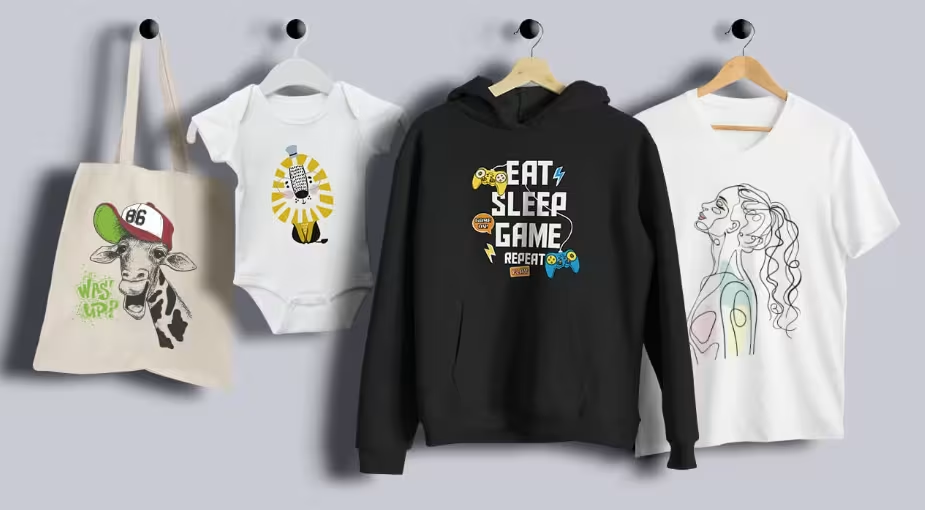
Print on demand dropshipping is one of the most flexible ways to start an ecommerce business without buying inventory upfront. You can create designs, place them on products like t-shirts, hoodies, mugs, tote bags, posters, phone cases, and home decor items, then sell them through your online store. Once a customer places an order, the supplier prints and ships the product.
But in 2026, simply uploading designs is not enough. The market is more competitive, customers have more choices, and generic products are easier to ignore. To build a profitable print on demand dropshipping business, you need strong marketing that connects your products with the right audience.
The goal is not to sell to everyone. It is to reach people who already care about your niche, your message, or the lifestyle your product represents. This guide explains how to market your print on demand dropshipping products in 2026 .
Why Marketing Matters for Print on Demand Dropshipping
Marketing is what turns a simple product listing into something customers want to buy. Most print on demand products are not purchased only because they are useful. They are bought because they feel relatable, personal, funny, emotional, stylish, or gift-worthy.
Strong marketing helps you:
- Reach the right audience
- Build trust before purchase
- Make products feel more valuable
- Improve conversion rates
- Reduce wasted ad spend
- Increase average order value
- Encourage repeat purchases
- Build a recognizable brand
Print on demand sellers often face higher per-item costs than bulk inventory businesses. That means your products must feel worth the price. Better marketing helps customers understand why your product is different from a cheaper or more generic option.
How to Market Your POD Products
Marketing your print on demand products starts with understanding who you are selling to and why they would care. Instead of promoting every product to everyone, focus on a clear niche, strong product visuals, benefit-driven descriptions, and content that speaks directly to your target audience.
1. Start With a Profitable Niche
A clear niche gives your marketing direction. Without one, your store can feel random, your content becomes harder to plan, and your ads may target too many people at once.
A niche is a specific market segment built around an interest, identity, hobby, profession, lifestyle, community, or occasion. Examples include dog moms, gym lovers, teachers, gamers, nurses, book lovers, new parents, coffee lovers, or minimalist home decor buyers.
Choose a Niche With Real Demand
A good niche should be specific enough to stand out but broad enough to support sales. “Pet lovers” is too broad. “Funny gifts for corgi moms” is more focused. “Minimalist wall art for home gym owners” is another example of a niche with clear product direction.
To find demand, study:
- Search trends
- Marketplace bestsellers
- Social media hashtags
- TikTok and Instagram content
- Pinterest searches
- Reddit communities
- Customer reviews
- Seasonal buying patterns
You are looking for proof that people already spend money in the niche. Passion is helpful, but buyer intent matters more.
Understand the Buyer Behind the Product
Once you choose a niche, think about the person who will buy from you. Are they buying for themselves or as a gift? Do they want something funny, emotional, stylish, practical, or personalized?
Ask yourself:
- Who is this product for?
- What problem, feeling, or identity does it represent?
- Where does this audience spend time online?
- What kind of content do they enjoy?
- What makes them trust a store?
- What would make them share the product?
The better you understand your buyer, the easier it becomes to write product descriptions, create ads, plan social posts, and choose influencers.
2. Build a Brand Around Your Audience
Many print on demand stores fail because they look like random collections of designs. A strong brand makes your store feel more trustworthy, memorable, and focused.
Your brand does not need to be complicated. It simply needs to tell customers who your products are for and what kind of experience they can expect.
Define Your Brand Personality
Before marketing your products, decide how your brand should feel. Is it funny, bold, cozy, premium, cute, sarcastic, inspirational, minimalist, or gift-focused?
For example:
- A teacher gift store may sound witty and relatable.
- A pet lover store may feel warm, playful, and emotional.
- A fitness apparel store may sound bold and motivational.
- A minimalist wall art store may feel calm and premium.
Your brand personality should appear in your product titles, descriptions, social captions, emails, ads, and visuals.
Keep Your Visual Style Consistent
Consistency makes your store look more professional. If every product image, font, and caption feels different, customers may not remember your brand.
Keep these elements aligned:
- Logo
- Product mockups
- Fonts
- Brand colors
- Product page layout
- Social media templates
- Email design
- Photography style
Even simple consistency can make your store look more polished than competitors who only upload basic mockups.
3. Create Product Visuals That Sell the Lifestyle
Customers cannot touch or try POD products before buying. Your visuals must help them imagine the product in real life. A plain product image shows what the item looks like. A lifestyle image shows why the customer would want it.
Use Lifestyle Mockups
Lifestyle mockups make your products feel more relatable. Instead of showing only a flat t-shirt, show it being worn by someone who matches your target audience.
Examples include:
- A dog mom hoodie worn during a walk
- A teacher mug on a classroom desk
- A fitness tank in a gym setting
- A tote bag styled at a bookstore
- A canvas print displayed in a bedroom
- A holiday mug placed near festive decor
The image should match the buyer’s world. If your audience loves cozy home decor, use warm home settings. If your niche is fitness, use active and energetic visuals.
Order Samples for Original Content
Samples help you check product quality, print accuracy, sizing, packaging, and delivery experience. They also help you create original content for social media and ads.
You can use samples for:
- Product photos
- Reels
- TikToks
- Unboxing videos
- Product styling clips
- Behind-the-scenes content
- Customer-style videos
Original content often feels more trustworthy than generic mockups. It also gives you more material for ads, product pages, and creator briefs.
4. Optimize Product Pages for SEO and Sales
Your product page is where marketing turns into revenue. Even if your social post or ad gets attention, a weak product page can lose the customer.
A strong product page should be clear, searchable, persuasive, and trustworthy.
Write Search-Friendly Product Titles
Your title should include the product type, niche, and main selling point. Avoid vague names that only describe the design.
Instead of “Cute Shirt,” use “Funny Corgi Mom T-Shirt for Dog Lovers.”
Instead of “Coffee Mug,” use “Personalized Teacher Coffee Mug for Classroom Gifts.”
Clear titles help customers understand the product quickly and improve search visibility.
Write Benefit-Focused Product Descriptions
Do not only list product features. Explain why the customer will love the product.
A good product description should include:
- Who the product is for
- What occasion it suits
- Why the design matters
- Material or comfort details
- Size and fit information
- Gift potential
- Care instructions
- Shipping expectations
- Personalization details
For example, instead of writing, “This is a printed mug,” say, “A thoughtful coffee mug for teachers who start every school day with caffeine, patience, and a little humor.”
That simple shift makes the product feel more personal.
Add Keywords Naturally
SEO helps your products appear in search results and marketplace searches. Use keywords naturally in titles, descriptions, collection pages, blog posts, and image alt text.
Useful keywords include:
- Print on demand products
- Print on demand dropshipping
- Custom t-shirts
- Personalized mugs
- Custom hoodies
- Niche gifts
- Personalized gifts online
- Funny teacher gifts
- Dog mom gifts
- Custom wall art
- Dropshipping products
Do not overuse keywords. The content should still sound natural and useful.
5. Use Social Media to Build Demand
Social media is one of the best marketing channels for print on demand dropshipping because POD products are visual, emotional, and community-driven.
The best social content does not only say “buy this.” It shows why the product is relatable, funny, useful, stylish, or gift-worthy.
Focus on Short-Form Video
Short-form video should be a major part of your 2026 marketing strategy. TikTok, Instagram Reels, YouTube Shorts, and Pinterest videos can help you show products in action.
Content ideas include:
- Product reveal videos
- Design process clips
- “Pack an order with me” videos
- Gift guide videos
- Niche jokes
- Before-and-after design videos
- Product styling clips
- Customer reaction-style videos
- Seasonal product launches
- Behind-the-scenes content
Start each video with a strong hook. For example:
- “For every dog mom who talks to her pet like a person.”
- “Teacher gifts that are actually useful.”
- “A hoodie for introverts who love canceled plans.”
- “Custom wall art for your first apartment.”
Specific hooks attract the right audience faster than broad product promotions.
Turn One Product Into Multiple Content Angles
You do not need a new product for every post. One product can be marketed in several ways. A personalized mug can be promoted as:
- A birthday gift
- A teacher appreciation gift
- A desk accessory
- A holiday stocking stuffer
- A funny office gift
- A cozy morning routine item
Testing different angles helps you discover what your audience responds to best.
6. Work With Creators and Micro-Influencers
Influencer marketing works well for print on demand because creators already have trust with specific communities.
You do not need large influencers. Micro-influencers often have smaller but more engaged audiences. A teacher creator, pet creator, fitness creator, gamer, or book reviewer can make your product feel more authentic to their community.
Choose Creators Based on Audience Fit
Do not choose influencers only by follower count. Choose creators whose audience matches your ideal customer.
Look for:
- Niche alignment
- Real engagement
- Authentic content
- Clear audience trust
- Good video quality
- Consistent posting
- Strong comment activity
If you sell dog mom products, work with pet creators. If you sell teacher mugs, work with teacher creators. If you sell gym apparel, work with fitness creators.
Give Creators Clear Campaign Angles
Instead of asking creators to simply post the product, give them a clear content idea. Examples include:
- “Show this as a gift for new dog moms.”
- “Use this mug in your morning teacher routine.”
- “Style this hoodie for a cozy weekend.”
- “Create a holiday gift guide featuring this item.”
- “Show the product from unboxing to daily use.”
Give direction, but let the creator speak naturally. Content performs better when it feels like a real recommendation.
7. Use SEO to Build Long-Term Traffic
Paid ads can bring fast traffic, but SEO helps your store get discovered over time. This is important for POD sellers because many customers search for specific gift ideas, personalized items, and niche products.
Create SEO-Friendly Collection Pages
Collection pages help organize products and target broader search terms. Examples include:
- Gifts for dog moms
- Funny teacher shirts
- Personalized family mugs
- Custom gym apparel
- Minimalist wall art
- Gifts for coffee lovers
- Custom tote bags for book lovers
- Matching couple hoodies
- Holiday gifts for pet owners
Each collection should have a helpful intro, relevant products, natural keywords, and internal links.
Publish Blog Content Around Buyer Intent
Blog content helps you reach shoppers before they decide what to buy. It also gives you a chance to link to your products and collections. Blog ideas include:
- Best gifts for dog moms
- Personalized gifts for teachers
- Funny coffee mugs for coworkers
- Best custom hoodies for winter
- Unique fitness gifts for gym lovers
- How to choose wall art for your bedroom
- Holiday gift ideas for pet owners
- Best gifts for introverts
- Custom gift ideas for couples
Each blog should answer a real question or help customers choose a product.
8. Run Paid Ads With a Testing Mindset
Paid ads can help scale your store, but they can also waste money if your product, audience, creative, or landing page is weak.
Start with small tests. Test different products, hooks, creatives, audiences, and offers before increasing your budget.
Test Different Creative Angles
For POD products, the creative often matters more than complex ad settings. A product may fail with one angle but perform well with another. Test angles such as:
- Gift-focused
- Humor-based
- Identity-based
- Seasonal
- Personalized
- Lifestyle
- Problem-solution
- Bundle-focused
- Limited-time offer
For example, a hoodie could be marketed as a cozy winter product, a gift for dog lovers, a funny introvert statement, or a matching couple item. Each angle may attract a different buyer.
Retarget Interested Shoppers
Many customers do not buy on the first visit. Retargeting helps bring them back. Retarget:
- Product page visitors
- Cart abandoners
- Social media engagers
- Video viewers
- Email subscribers
- Past customers
Use retargeting ads to show reviews, bestselling products, free shipping thresholds, bundles, or limited-time offers.
9. Build Email and SMS Marketing Early
Email and SMS help you sell beyond the first visit. Social media platforms change, ad costs rise, and algorithms shift. But an email list gives you a direct way to reach people who already showed interest.
Set Up Core Automations
Start with basic automated flows before creating complex campaigns. Useful flows include:
- Welcome series
- Abandoned cart reminders
- Browse abandonment emails
- Post-purchase follow-up
- Review requests
- Product recommendations
- Win-back campaigns
- Holiday campaigns
- New product launches
These flows help recover missed sales and encourage repeat purchases.
Personalize Based on Customer Interest
Personalized emails perform better because they feel relevant. A customer who views dog mom products should receive pet-related recommendations. A customer who buys fitness apparel should see related fitness designs.
Segment customers by:
- Products viewed
- Products purchased
- Collections browsed
- Gift interest
- Purchase frequency
- Email engagement
- Location
Relevant messaging makes customers more likely to click, buy, and return.
10. Use Social Proof to Build Trust
Customers are more likely to buy when they see that others have purchased and enjoyed the product. This is especially important for newer POD stores.
Collect Reviews and Customer Photos
Social proof such as Reviews reduce uncertainty. Customer photos are even more powerful because they show the product in real life. Encourage reviews by:
- Sending post-purchase emails
- Offering a small future discount
- Asking for photos
- Making reviews easy to submit
- Featuring customer content on product pages
- Sharing user-generated content on social media
Even a few strong reviews can improve trust and conversion rates.
Add Trust Signals to Product Pages
Your product page should answer customer doubts before they become reasons not to buy. Include:
- Clear shipping timelines
- Return or replacement policy
- Size guides
- Product care instructions
- Secure checkout messaging
- Customer reviews
- Real product photos
- Personalization instructions
Customers should understand what they are buying and what happens after they place an order.
Conclusion
Marketing print on demand dropshipping products in 2026 requires more than uploading designs and waiting for sales. The most successful sellers understand their audience deeply. They do not just sell products; they sell identity, humor, emotion, lifestyle, and gifting value. Their marketing shows customers why the product feels personal and worth buying.
Start with a niche that has demand. Build a consistent brand around that audience. Create strong product visuals, optimize your product pages, use short-form video to create interest, and collect emails so you can build repeat sales.
With a focused strategy and a reliable product foundation through Spocket, you can build a print on demand dropshipping store that attracts the right customers, earns trust, and grows sustainably in 2026.
Start your dropshipping business today
FAQs About Marketing Print on Demand Dropshipping Products
What is the best way to market print on demand products in 2026?
The best way is to combine niche targeting, short-form video, SEO, social proof, creator partnerships, email marketing, and paid ad testing. Start with a clear audience, create products around their interests, and use content to show why the product matters.
Which social media platform is best for POD products?
TikTok, Instagram, Pinterest, and YouTube Shorts can all work well. TikTok and Instagram are useful for relatable and viral content, Pinterest is strong for gift discovery, and YouTube Shorts can help with product storytelling.
Do I need paid ads to sell POD products?
No, but paid ads can help you scale faster. Many sellers begin with organic social media, SEO, creator content, and email marketing. Once you know which products and messages work, paid ads can bring more traffic.
How do I make my POD products stand out?
Choose a specific niche, create original designs, use better visuals, write benefit-focused descriptions, add personalization where possible, collect reviews, and build a consistent brand.
How can Spocket help with POD dropshipping marketing?
Spocket can help sellers build a stronger product foundation by connecting them with reliable suppliers and quality products. Better sourcing and clearer supplier expectations can support stronger marketing, better trust, and a more professional store experience.


Launch your dropshipping business now!
Start free trial


Related blogs
Best Ways to Find Winning Print on Demand Products to Sell in 2026
Learn how to find winning print on demand products in 2026 using trend research, niche validation, margin checks, and supplier criteria.

.avif)
Print on Demand Profit Margins: What to Realistically Expect in 2026
Learn realistic print on demand profit margins in 2026, what costs reduce profits, product margin ranges, pricing tips, and how to increase POD earnings.
How to Price Print on Demand Products for Maximum Profit
Learn how to price print on demand products with the right cost, margin, value, and testing strategy to protect profit and grow your store.