


The Global Expansion Guide: Scaling Your Store to the UK, EU, and Australia
Scale international dropshipping to the UK, EU, and Australia with taxes, shipping, localization, pricing, and supplier strategies—powered by Spocket.
.avif)

International expansion is one of the fastest ways to grow a dropshipping brand once you’ve proven product-market fit in your home market. But scaling international dropshipping isn’t just “turning on worldwide shipping.” The UK, EU, and Australia each come with their own tax rules, delivery expectations, consumer protections, and localization needs—and getting those right is the difference between smooth growth and refund-heavy chaos.
This guide is built like an operator playbook. You’ll learn how to evaluate demand, set up taxes (VAT/GST), localize your storefront, choose shipping and returns strategies, and build a supplier stack that helps you deliver reliably across regions—with Spocket supporting the sourcing side.
Why international dropshipping works when you do it intentionally
Going global can diversify revenue, reduce dependence on one market, and unlock new customer segments—especially if you’ve already nailed your product, creative, and store UX. A big part of successful global expansion is planning for costs, compliance, and operational readiness before you flip the switch.
For many store owners, this is also where the “real business” begins: instead of chasing quick wins, you build a system that can grow steadily over time. If your long-term goal is to make money online through a scalable side hustle—or eventually build passive income—international expansion can be a major lever, as long as logistics and customer experience stay tight.
Which market should you enter first: UK, EU, or Australia?
Before you touch taxes or shipping, choose the right first expansion market. The best first step is usually the region that matches your product category, shipping feasibility, and operational complexity tolerance.
UK: a strong “first international step” for many stores
The UK is often simpler than a multi-country EU rollout because it’s one primary market with shared language (for English stores), clear consumer expectations, and strong ecommerce maturity. But you’ll still need to plan for VAT and returns expectations.
EU: the biggest upside, with the most operational complexity
Europe offers significant market opportunity, but requires careful planning for multi-language, VAT handling, and country-by-country delivery performance. Shopify’s Europe expansion guidance emphasizes planning across regulations, localization, and market entry structure.
Australia: high purchasing power, but distance changes logistics math
Australia can be great for certain categories, but shipping times and costs can make or break profitability if you’re not using local or region-optimized fulfillment.
Decision shortcut
- Want speed and lower complexity → start with UK
- Want scale potential and you’re operationally ready → go EU
- Want a premium-leaning market and you can solve logistics → go Australia
Market research that actually predicts international sales
This section helps you avoid expanding based on vibes. The goal is to validate demand and purchasing intent—then confirm you can fulfill profitably.
What to check before you launch
- Current international traffic in your analytics (UK/EU/AU visits already happening)
- Add-to-cart and checkout rates by country (even with no shipping enabled yet)
- Competitor presence in those regions (pricing, shipping promises, local trust signals)
- Product-market fit indicators (search demand, social engagement from those countries)
- Your “delivered cost” math (product + shipping + duties + returns risk)
Global expansion playbooks typically highlight readiness, financial planning, and execution structure as key foundations before entering a new market.
Building a Strong Operational Foundation for International Dropshipping
Before you scale into the UK, EU, or Australia, your backend operations need to be airtight. International dropshipping isn’t just about unlocking new traffic—it’s about mastering taxes, shipping models, duties, returns, localization, payments, pricing, support, and supplier reliability.
Each of these elements directly impacts trust, conversion rates, refund levels, and long-term profitability. In this section, we’ll break down how to structure your compliance, logistics, and supplier strategy so your global expansion runs smoothly instead of becoming an expensive lesson in avoidable mistakes.
1. Taxes and compliance: the part you can’t wing
International dropshipping lives or dies on compliance. If customers get surprise charges or your store is unclear about tax handling, refunds go up and trust goes down.
UK VAT basics (high-level)
UK sales may require VAT considerations depending on how goods are sold and shipped. Your safest approach is to configure tax collection properly and ensure your checkout experience is transparent about taxes and any potential import charges.
EU VAT: expect structure, not chaos
For Europe, VAT is a major operational consideration, especially if selling across multiple EU countries. Europe expansion guidance stresses planning for taxes and compliance early as part of entry strategy.
Australia GST: plan for customer expectations
Australia typically expects GST handling to be clean and consistent. If your pricing looks “too cheap” and customers later face charges, returns and disputes rise.
Practical rule: If you’re not 100% sure how to handle VAT/GST for your setup, use professional guidance. Global expansion guides consistently emphasize getting compliance right early to avoid expensive fixes later.
2. Shipping strategy: win trust with speed and clarity
Shipping isn’t just logistics—it’s marketing. Your delivery promise shapes conversion rates, customer satisfaction, and review velocity.
Choose your shipping model
Model A: Cross-border shipping from one region
- Simple to run
- Often slower
- Higher risk of customs delays and “where is my order?” tickets
Model B: Local or regional fulfillment (recommended for scaling)
- Faster delivery
- Higher conversion and lower refunds
- Requires better supplier/warehouse coverage
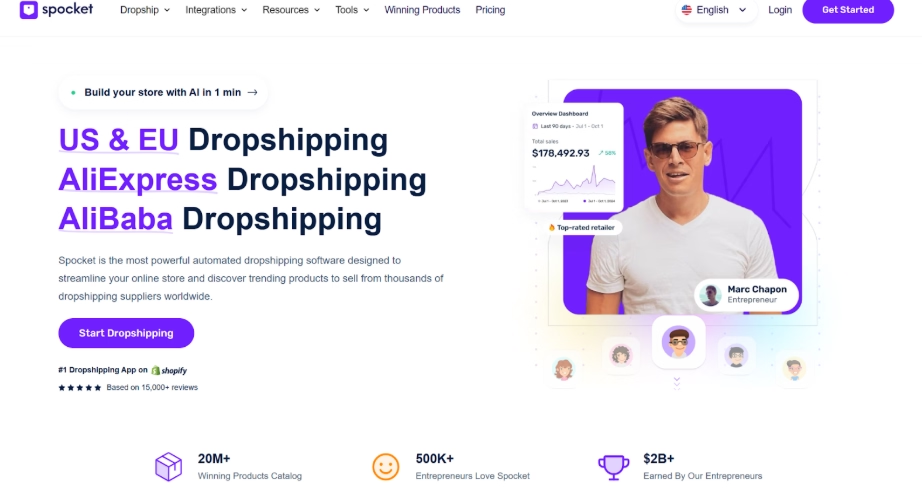
This is where Spocket becomes useful for international dropshipping: access to suppliers with better shipping options can make your delivery promise realistic rather than hopeful.
Build delivery promises that reduce refunds
- Use delivery ranges (not exact dates)
- Add a “processing time” line
- Put shipping info on product pages, cart, and confirmation email
- Make tracking expectations clear
Expansion frameworks commonly emphasize operational readiness and customer experience consistency as you enter new markets.
3. Duties and customs: avoid surprise fees
Customers hate surprise charges. If they get hit with duties at delivery, they’ll blame you—then request refunds.
Your options
- DDU (Delivered Duties Unpaid): customer may pay duties on arrival (higher refund risk)
- DDP (Delivered Duties Paid): duties included in price/shipping (better experience, more work)
If you can’t offer DDP, your next best option is being extremely clear about possible import charges before purchase.
4. Returns and consumer rights: get this right or pay for it
UK, EU, and Australia have strong consumer protection cultures. If your returns process is unclear, you’ll lose trust quickly.
Set up a returns system that scales
- Local return address where possible (or consolidated returns partner)
- Clear return windows and conditions
- Fast refunds for verified returns
- Dedicated policy pages localized per region (currency, address, timelines)
5. Localization: the fastest conversion rate upgrade you’ll make
Localization is not just translation. It’s making the store feel “built for me.”
UK localization
- GBP pricing
- Shipping timelines in UK terms
- Spelling preferences (UK English)
- Local trust signals (delivery, returns clarity)
EU localization
- EUR pricing (or country currency where feasible)
- Country-specific shipping timelines
- Local payment methods (more on that next)
- Multi-language for top markets (start with 1–2 languages first)
Australia localization
- AUD pricing
- Shipping policies that match distance realities
- Local customer support hours or at least clear response windows
6. Payments: you’ll lose sales without local payment methods
A huge portion of international conversion comes down to payments. If customers can’t pay the way they prefer, they won’t “figure it out”—they’ll bounce.
What to support
- Multi-currency checkout
- Cards (obvious)
- Region-common wallets and bank options where relevant
- Clear refund timelines in local currency
Payments, banking, and cost management are core operational pillars for cross-border growth.
7. Pricing for UK, EU, Australia without killing margin
International pricing isn’t “convert USD to GBP/EUR/AUD.” You need margin buffers for:
- Higher shipping costs
- Higher return rates early on
- Currency fluctuation
- Taxes and duty handling
- Regional ad costs
A practical pricing approach
- Calculate landed cost per region (product + shipping + expected loss rate)
- Add a “risk buffer” (returns/delays/chargebacks)
- Price with local psychology (ending digits, bundle logic)
- Test conversion at two price points before scaling spend
International growth comes with challenges and costs, so planning and budgeting are essential.
8. Customer support: the hidden scaling bottleneck
When you expand internationally, support volume rises—mostly because shipping questions rise.
Set expectations before tickets happen
- Shipping FAQ by region
- Tracking expectations (when updates appear)
- Customs/duties transparency
- Proactive “your order is on the way” emails
Operational tip
Set up support macros for:
- “Where is my order?”
- “Tracking hasn’t updated”
- “Do I pay customs fees?”
- “How do returns work in my country?”
This reduces response time and protects brand trust.
9. Supplier strategy for international dropshipping
This is the section that decides whether you scale smoothly—or drown in delays.
What your supplier setup must solve
- Regional shipping speed
- Consistent product quality
- Reliable tracking
- Stable inventory (stockouts kill scaling)
- Return/refund responsiveness
This is where Spocket is a strong fit for international expansion: it helps you access suppliers better suited for faster delivery expectations and a more brand-ready experience—especially when you’re scaling beyond a single country.
If you’re serious about international dropshipping, your supplier stack should be built for fulfillment reality, not just product variety.
A 30-day rollout plan for UK, EU, Australia
Here’s a practical rollout you can follow without breaking your current store.
Days 1–7: Validate and prepare
- Choose one region first (UK or one EU country is common)
- Identify 10–20 products that make sense to ship there
- Create region-specific shipping/returns policies
- Set currencies and payment options
Days 8–14: Launch “soft”
- Turn on shipping for your target region
- Start with small ad budgets
- Monitor delivery performance and customer questions
- Fix friction fast (checkout, pricing, shipping messaging)
Days 15–30: Scale responsibly
- Increase spend only after support and delivery look stable
- Add localized creatives and landing page tweaks
- Introduce region-specific bundles
- Expand to the next country/region after stability
Planning, model selection, and risk control—this rollout keeps you disciplined.
Common international expansion mistakes to avoid
This section saves you money immediately.
- Launching EU “as a whole” with no country strategy
- Hiding duties info and hoping customers won’t notice
- Using one shipping promise for every region
- Pricing without buffer, then losing margin on refunds
- Scaling ads before fulfillment is proven
- Not localizing payments and currency
- Expanding product catalog too early
Pro tip: Execution details and cost planning are what separate successful expansion from expensive experiments.
Conclusion: scale globally without breaking what already works
International dropshipping is one of the most powerful growth moves you can make once your store has traction. The UK, EU, and Australia can expand your customer base, stabilize revenue, and turn a local store into a global brand—but only if you treat expansion like an operational upgrade, not a shipping toggle.
If you’re building a long-term side hustle, exploring apps to make money, or trying to make money without investment, global expansion can still be a smart play—but the fastest path is always the disciplined one: start with one market, prove the system, then expand.
Ready to scale international dropshipping with fewer fulfillment headaches? Start building a stronger supplier foundation with Spocket so you can source products that are easier to ship, easier to trust, and easier to scale across the UK, EU, and Australia.
Start your dropshipping business today
FAQs about Scaling Your Store Globally
What is international dropshipping?
International dropshipping is selling products to customers in other countries while a supplier fulfills and ships the order directly to the buyer, without you holding inventory. The complexity comes from taxes, customs, shipping times, and localization.
Should I expand to the UK or EU first?
If you want lower complexity, the UK is often a simpler first step. If you want bigger upside and you’re operationally ready for multi-country planning, the EU can be worth it. The best choice depends on your product category, shipping feasibility, and ability to support localized customer experiences.
Do I need to charge VAT/GST when dropshipping internationally?
Often, yes—VAT/GST and other tax requirements can apply depending on where you sell, where goods ship from, and your sales volume. It’s important to set up taxes correctly and make checkout pricing transparent to reduce disputes.
How do I reduce refunds when selling internationally?
Be upfront about shipping timelines, clarify duties/customs, offer reliable tracking, and create region-specific returns policies. Refunds drop fastest when expectations match reality.
How can Spocket help with global scaling?
Spocket helps you strengthen sourcing for international dropshipping by connecting you with suppliers better suited for faster shipping expectations and a more reliable customer experience, making it easier to scale across the UK, EU, and Australia.


Launch your dropshipping business now!
Start free trial


Related blogs
Dropshipping Supplier Directory: Where to Find Vetted Suppliers
Browse our directory of vetted dropshipping suppliers across the US and EU, complete with niches, shipping speed, and pricing. Start your free trial today.

How to Negotiate With Dropshipping Suppliers: 9 Tactics That Actually Work
Learn how to negotiate with dropshipping suppliers on price, MOQs, and payment terms. Proven tactics and email scripts to boost your margins. Try Spocket free.

Best Clothing Dropshipping Suppliers: The 2026 Guide
Compare the best clothing dropshipping suppliers for 2026 — US/EU shipping speeds, pricing, and product quality — and find the right fit to launch your store.
