Guide to Write a Dropshipping Business Plan
Learn how to write a dropshipping business plan with market research, suppliers, pricing, marketing, finances, and a simple template.
.avif)

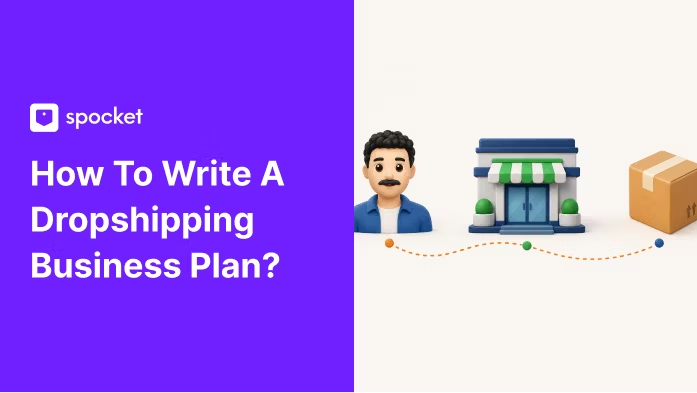
Dropshipping is one of the easiest ecommerce models to start, but building a profitable store takes more than uploading products and running ads. A clear dropshipping business plan helps you define your niche, choose reliable suppliers, set realistic pricing, plan marketing channels, manage operations, and forecast financial goals before investing time or money. Since dropshipping allows you to sell products without holding inventory, your supplier ships orders directly to customers after a purchase is made. That makes supplier selection, shipping speed, product quality, and profit margins critical from day one. With platforms like Spocket, entrepreneurs can source high-quality products from US and EU suppliers, automate product importing, and build a stronger foundation for a scalable dropshipping business. A good plan gives your store direction, structure, and long-term growth potential.
What is a Dropshipping Business Plan?
A dropshipping business plan is a written roadmap that explains how your online store will make money, attract customers, source products, manage suppliers, and grow over time. Unlike a traditional retail plan, it does not focus on buying bulk inventory or managing a warehouse. Instead, it focuses on product selection, supplier reliability, shipping timelines, pricing, marketing, and customer experience.
In dropshipping, you sell products without keeping stock. When a customer places an order, the supplier ships the product directly to them. Shopify describes dropshipping as a retail fulfillment method where the seller does not buy inventory upfront, and the supplier handles direct shipping to the customer.
A good dropshipping business plan usually covers:
- Your niche and target audience
- Product categories and pricing strategy
- Supplier and fulfillment plan
- Marketing channels like SEO, paid ads, TikTok, email, and influencers
- Startup costs, monthly expenses, and revenue goals
- KPIs such as conversion rate, average order value, CAC, refund rate, and delivery time
The goal is simple: avoid guessing. Many beginners start by testing random products, choosing poor suppliers, or spending on ads without knowing their margins. A business plan helps you make smarter decisions before money goes out.
The dropshipping market is growing fast, but competition is also rising. Precedence Research estimates the global dropshipping market at $537.81 billion in 2026, which shows the opportunity is real, but only planned stores are more likely to survive long term.
Why Do You Need a Dropshipping Business Plan Before Starting?
Starting a dropshipping store is simple, but growing one profitably needs planning. Since you do not control inventory directly, your success depends heavily on product choice, supplier reliability, pricing, marketing, and customer trust.
It Helps You Choose a Profitable Niche
A dropshipping business plan forces you to validate your niche before launching. Instead of picking products only because they look trendy, you study demand, competition, pricing, seasonality, and customer pain points.
A good niche should have:
- Clear buyer demand
- Products with healthy profit margins
- A specific audience
- Low shipping or damage risk
- Room for repeat purchases, bundles, or upsells
This helps you build a store around real customer needs, not guesswork.
It Helps You Find Reliable Suppliers
Your supplier directly affects product quality, delivery speed, refunds, and customer reviews. That is why supplier planning is one of the most important parts of a dropshipping business plan.
Before choosing suppliers, check:
- Product quality
- Processing time
- Shipping regions
- Average delivery time
- Return and refund policies
- Inventory reliability
- Tracking availability
Platforms like Spocket can support this part of the plan by helping store owners source products from vetted suppliers, especially when faster shipping and product quality are priorities.
It Keeps Your Pricing and Margins Realistic
Many beginners calculate profit only by subtracting product cost from selling price. That is not enough. A realistic dropshipping financial plan should include all major costs.
These may include:
- Product cost
- Shipping fees
- Transaction fees
- App subscriptions
- Ad spend
- Discounts
- Returns and refunds
- Taxes
For example, if you sell a product for $40 and your product, shipping, fees, and ads cost $30, your real profit is only $10 before other business expenses. Planning this early helps you avoid products that look profitable but are difficult to scale.
It Gives You a Marketing Roadmap
A dropshipping business plan helps you decide how customers will find your store. Without this, you may end up testing too many channels without a clear strategy.
Your plan can include:
- SEO for long-term organic traffic
- Paid ads for faster testing
- TikTok and Instagram content for product discovery
- Influencer marketing for trust and reach
- Email marketing for abandoned carts and repeat sales
- Affiliate or marketplace strategies for extra visibility
This makes your marketing more focused and easier to measure.
It Helps You Track Progress
A plan also gives you numbers to track. Instead of only asking, “Are we getting sales?” you can measure whether the store is actually improving.
Important dropshipping KPIs include:
- Conversion rate
- Average order value
- Gross margin
- Customer acquisition cost
- Repeat purchase rate
- Refund rate
- Delivery time
- Return on ad spend
These metrics help you understand what is working, what needs fixing, and when your store is ready to scale.
How to Write a Dropshipping Business Plan Step by Step?
A dropshipping business plan does not need to be complicated. It should clearly explain what you will sell, who you will sell to, how you will source products, and how your store will become profitable. Since dropshipping is based on selling without holding inventory, your plan should focus heavily on suppliers, pricing, fulfillment, marketing, and customer experience.
Write an Executive Summary
Your executive summary is a short overview of your dropshipping store. Write it after finishing the full plan, but place it at the beginning.
Include:
- Store name
- Niche and product categories
- Target audience
- Unique selling point
- Supplier approach
- Sales channels
- Revenue goal
- Launch timeline
Example:
“[Store Name] is a niche dropshipping store selling eco-friendly home products to urban shoppers. The store will use vetted suppliers, automated fulfillment, SEO, and social media marketing to build a profitable ecommerce brand within 12 months.”
Define Your Dropshipping Business Model
Next, explain how your store will make money. This helps you stay focused instead of testing random products.
You can choose from:
- A general niche store
- A one-product store
- A branded niche store
- A print-on-demand store
- A Shopify dropshipping store
- A premium supplier-based store
For example, if your goal is faster shipping and better product quality, a premium supplier-based model makes more sense. This is where Spocket helps merchants source products from reliable US and EU suppliers and build a stronger supplier strategy from the start.
Choose and Validate Your Niche
Your niche decides who you serve and what problems your store solves. Do not choose a niche only because it is trending. Validate it first.
Ask:
- Is there steady demand?
- Are people already buying similar products?
- Can the product be shipped safely?
- Is the audience easy to target?
- Are the margins strong after ads and fees?
- Can you create bundles, upsells, or repeat purchases?
A strong niche gives your store direction. It also makes SEO, paid ads, product pages, and brand messaging easier.
Conduct Market and Competitor Research
Market research helps you understand demand, pricing, competitors, and gaps in the market. This step prevents you from entering a niche blindly.
Check:
- Competitor product prices
- Shipping promises
- Customer reviews and complaints
- Best-selling products
- Ad creatives and offers
- SEO keyword opportunities
- Target customer behavior
The opportunity is large, but competition is real. Precedence Research estimates the global dropshipping market at $537.81 billion in 2026, growing from $434.98 billion in 2025. That growth makes planning even more important if you want to stand out.
Define Your Target Customer
A good dropshipping business plan should not only define what you sell. It should define who you are selling to.
Include:
- Age range
- Location
- Income level
- Lifestyle
- Pain points
- Buying triggers
- Preferred platforms
- Common objections
- Product expectations
Example:
“Busy pet owners in the US aged 25–45 who want affordable, useful pet products that make daily care easier and ship quickly.”
The clearer your customer profile is, the easier it becomes to choose products, write product descriptions, create ads, and build trust.
Plan Your Product Strategy
Your product strategy should explain what you will sell and why those products make sense for your audience.
Focus on products that are:
- Lightweight
- Easy to explain visually
- Problem-solving
- Not fragile
- High in perceived value
- Reasonable to ship
- Available from reliable suppliers
- Capable of healthy profit margins
Also plan your hero products, seasonal products, bundles, upsells, and cross-sells. Spocket can support this step by helping you discover quality products and source from suppliers that match your shipping and customer experience goals.
Create a Supplier and Fulfillment Plan
Supplier planning is one of the most important parts of a dropshipping business plan. Your supplier affects delivery time, product quality, tracking, refunds, and customer reviews.
Before choosing a supplier, check:
- Where is the supplier located?
- What is the processing time?
- What are the shipping costs?
- Is tracking available?
- What happens if an item is out of stock?
- How are damaged products handled?
- Are returns and refunds clear?
- Are product images and descriptions accurate?
Always keep backup suppliers where possible. One supplier delay can affect your ads, reviews, and customer trust.
Build Your Brand Positioning
Modern dropshipping works better when your store feels like a real brand, not a random product catalog.
Define:
- Brand promise
- Tone of voice
- Visual style
- Store name
- Product photography direction
- Trust signals
- Customer service standards
- Differentiation
For example, your positioning could be “fast-shipping home essentials,” “eco-friendly pet accessories,” or “affordable luxury wellness products.” Clear positioning helps customers remember you and gives your store a reason to exist beyond discounts.
Create a Marketing and Sales Plan
Your marketing plan explains how people will find your store and why they will buy from you.
Include:
- SEO: Product pages, collection pages, blogs, comparison keywords, and internal links
- Paid ads: Meta ads, TikTok ads, Google Shopping, retargeting, and creative testing
- Social media: Reels, TikTok videos, UGC, Pinterest, and influencer content
- Email/SMS: Welcome flows, abandoned cart emails, post-purchase emails, and win-back campaigns
- CRO: Reviews, trust badges, FAQs, product videos, bundles, and clear shipping details
This keeps your marketing focused instead of scattered across too many platforms.
Plan Your Store Operations
Your operations plan explains how your store will run after a customer places an order.
Include:
- Ecommerce platform
- Product importing
- Inventory syncing
- Order routing
- Customer support
- Refund and return handling
- Tracking emails
- Supplier communication
- Analytics tools
- Automation tools
Platforms like Spocket can simplify product sourcing, importing, and parts of the fulfillment workflow, which makes operations easier to manage as your store grows.
Create Your Financial Plan
Your financial plan should show whether your store can actually make money.
Track:
- Startup costs
- Monthly expenses
- Product costs
- Shipping fees
- App subscriptions
- Payment processing fees
- Marketing budget
- Gross margin
- Net profit
- Break-even point
Use this simple formula:
Profit per order = Selling price - product cost - shipping cost - transaction fees - ad cost - refund/return allowance
Do not ignore ad costs or refunds. A product may look profitable at first, but once you include fees, discounts, and customer acquisition cost, the margin may shrink quickly.
Set Goals, KPIs, and Milestones
Finally, set measurable goals so you know whether your dropshipping store is improving.
Track:
- Conversion rate
- Average order value
- Gross margin
- Customer acquisition cost
- Repeat purchase rate
- Refund rate
- Delivery time
- Revenue growth
Example 90-day goals can include launching with 20 tested products, publishing 10 SEO blogs, testing 5 ad creatives per hero product, reaching the first 100 orders, and keeping refund rates below 5%.
A dropshipping business plan is not a one-time document. Review it regularly and update it as you learn what products, suppliers, channels, and offers actually work.
Example Dropshipping Business Plan Summary
Here’s a simple fictional example to show how a dropshipping business plan can look in practice:
EcoNest Essentials is a Shopify dropshipping store focused on eco-friendly home storage and kitchen products for urban customers in the US. The store will sell lightweight, practical products sourced from vetted suppliers and prioritize reliable 7–12 day delivery. Its marketing strategy will focus on SEO, Pinterest, TikTok product videos, and email marketing to build steady traffic without depending only on paid ads.
In the first 90 days, EcoNest Essentials will test 20 products, identify 3 hero products, track customer feedback, and aim for stable gross margins before scaling ad spend.
Common Mistakes to Avoid When Writing a Dropshipping Business Plan
Even a simple dropshipping business plan can save you from expensive mistakes. Here are the most common ones to avoid:
Choosing Products Before Understanding the Customer
Good products come from customer research, not random trend lists. Before selecting products, understand your audience’s needs, pain points, budget, and buying behavior.
Ignoring Shipping Times
Shipping directly affects customer trust, reviews, refunds, and repeat purchases. Always include expected delivery times and backup supplier options in your plan.
Using Unrealistic Profit Margins
Many beginners forget to include ad costs, payment fees, app subscriptions, discounts, returns, and refunds. Your plan should show real profit, not just the difference between product cost and selling price.
Depending Only on Paid Ads
Paid ads can help test products quickly, but they should not be your only growth channel. A stronger plan includes SEO, email marketing, organic social content, influencer outreach, and retention.
Not Testing Suppliers
Never scale a product without checking supplier quality first. Order samples, review packaging, test delivery speed, and confirm return policies before investing heavily in marketing.
Treating the Plan as a One-Time Document
Your dropshipping business plan should change as your store grows. Review it monthly or quarterly based on real data such as sales, conversion rate, refund rate, customer feedback, and shipping performance.
Conclusion
A dropshipping business plan gives your store a clear direction before you invest in products, tools, or marketing. It helps you choose the right niche, work with reliable suppliers, build stronger branding, plan your pricing, manage operations, and track financial goals with more confidence. For beginners, it reduces guesswork. For existing store owners, it creates a smarter path to scale. Keep reviewing your plan as you collect real sales, customer, and supplier data. If your plan depends on reliable suppliers, faster shipping, and quality products, Spocket can help you build a stronger supplier and product sourcing strategy from the start.
Start your dropshipping business today
Write a Dropshipping Business Plan FAQs
What is a dropshipping business plan?
A dropshipping business plan is a clear roadmap that explains how your store will choose products, find suppliers, attract customers, manage orders, control costs, and make a profit without holding inventory.
How do I write a dropshipping business plan?
To write a dropshipping business plan, start with an executive summary, then define your niche, target audience, product strategy, supplier plan, marketing channels, store operations, financial projections, KPIs, and risk management plan.
Do I need a business plan for dropshipping?
Yes, you need a dropshipping business plan to avoid guesswork. It does not have to be long, but it should clearly cover your niche, products, suppliers, pricing, marketing, operations, and financial goals.
What should be included in a dropshipping business plan?
A dropshipping business plan should include an executive summary, market research, customer profile, product strategy, supplier plan, marketing strategy, operations plan, startup costs, revenue projections, KPIs, risks, and growth plan.
How long should a dropshipping business plan be?
A simple dropshipping business plan can be 5–10 pages, especially for beginners. If you are seeking funding, building partnerships, or scaling an existing store, a more detailed plan may be useful.
How much money do I need to start a dropshipping business?
The cost to start dropshipping depends on your platform, tools, samples, branding, and marketing budget. Include store setup, product testing, app subscriptions, paid ads, payment fees, and an emergency buffer in your plan.
What is the most important part of a dropshipping business plan?
The most important parts of a dropshipping business plan are niche validation, reliable suppliers, pricing strategy, customer acquisition, and financial planning. These decide whether your store can attract buyers and become profitable.
Can I start dropshipping without a business plan?
Yes, you can start dropshipping without a business plan, but it increases the risk of poor product choices, unreliable suppliers, weak pricing, high ad costs, and unclear growth direction.
How do I calculate profit in a dropshipping business plan?
Calculate dropshipping profit by subtracting product cost, shipping, transaction fees, ad spend, discounts, refunds, returns, and app costs from your selling price. This gives a more realistic view of profit per order.
How often should I update my dropshipping business plan?
Update your dropshipping business plan monthly during launch and every quarter once your store is stable. Revise it whenever your niche, supplier, pricing, marketing channels, or financial goals change.


Launch your dropshipping business now!
Start free trial


Related blogs
Dropshipping Supplier Directory: Where to Find Vetted Suppliers
Browse our directory of vetted dropshipping suppliers across the US and EU, complete with niches, shipping speed, and pricing. Start your free trial today.

How to Negotiate With Dropshipping Suppliers: 9 Tactics That Actually Work
Learn how to negotiate with dropshipping suppliers on price, MOQs, and payment terms. Proven tactics and email scripts to boost your margins. Try Spocket free.

Best Clothing Dropshipping Suppliers: The 2026 Guide
Compare the best clothing dropshipping suppliers for 2026 — US/EU shipping speeds, pricing, and product quality — and find the right fit to launch your store.