


How to Start a Side Hustle in 2026
Learn how to start a side hustle in 2026 with practical steps, high-paying ideas, and a realistic plan to earn extra income without burning out.

.avif)

Starting a side hustle in 2026 isn’t about chasing hype. It’s about building a reliable second income stream that fits your schedule, matches your skills, and has room to grow. The good news is that it’s easier than ever to start because the tools, platforms, and buyer demand are already there. The “hard” part is choosing the right idea and executing consistently.
This guide is built to be practical. You’ll learn how to start a side hustle step-by-step, pick an idea that pays, validate it quickly, and turn it into real income—whether you want quick cashflow, a long-term business, or something that can eventually become passive income.
What makes a side hustle worth starting in 2026
A side hustle only works if it’s sustainable. Many people start with excitement, then quit because it becomes too time-consuming or doesn’t pay enough. A good side hustle in 2026 usually checks at least three of these boxes:
- Low startup cost (or zero)
- Clear demand (people already buy it)
- Repeatable delivery (you can do it weekly without burnout)
- Skill-building (it improves your earning power over time)
- Scalable (you can raise prices, productize, or grow audience)
A Step-by-Step Framework to Launch and Validate Your Side Hustle in 2026
Before you worry about scaling or making big money, you need a clear structure. The difference between side hustles that quietly fade away and those that grow into reliable income streams is having a defined process.
The steps below walk you through setting your goal, choosing a high-demand idea, matching it to your schedule, validating it quickly, building a clear offer, and committing to one acquisition channel. Follow this framework, and you’ll move from “thinking about it” to actually earning.
Step 1: Decide what you want from your side hustle
This sounds basic, but it’s the step that prevents wasted months. Different goals lead to different side hustle choices. Choose your primary goal:
Goal A: Make money fast (quick cashflow)
Pick something service-based where you can sell your time:
- freelancing
- tutoring
- editing
- design support
- virtual assistance
Goal B: Build a scalable business
Choose something that can grow beyond your hours:
- ecommerce
- print on demand
- content + affiliate
- digital products
Goal C: Make money without investment
Focus on skills + platforms you already have:
- content services
- micro-consulting
- selling templates
- freelancing with a simple portfolio
A side hustle that fits your goal is far easier to maintain than one you picked because it looked cool on TikTok.
Step 2: Pick a high-demand side hustle idea for 2026
The best way to pick an idea is to start with what people already pay for, then choose a lane that matches your time and strengths.
Many 2026 side hustle roundups repeatedly highlight categories like freelancing, tutoring, pet services, reselling, content creation, and online selling as common starting points.
Inc’s 2026 coverage also frames “promising” side businesses around areas with ongoing demand and the ability to scale beyond a small gig.
Here are side hustle categories that tend to work well in 2026:
Skill-based services that pay well
- Freelance writing, editing, SEO content
- Social media management and short-form scripts
- Website or landing page support (no-code included)
- Bookkeeping and admin support
- Niche tutoring and coaching
These are strong because you can start with a simple offer and improve pricing as you gain results.
Commerce-based hustles that can scale
- Print on demand products
- Dropshipping and curated product stores
- Reselling and flipping
- Digital products (templates, packs, mini-guides)
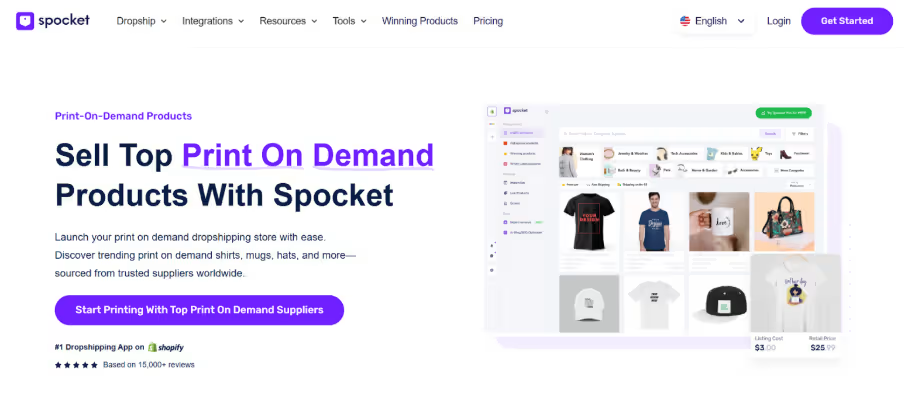
This is where Spocket can fit naturally if you want an ecommerce side hustle without holding inventory. You can build a niche store with curated products and fulfill through suppliers, which helps reduce upfront risk while you test what sells.
Step 3: Choose a “side hustle model” that matches your schedule
A lot of people fail because they choose a hustle that doesn’t match their available time. Pick one of these models:
Model 1: 5–10 hours/week (best for busy schedules)
- Editing / writing packages
- Tutoring sessions
- VA support for one client
- Simple reselling/flipping
- Print on demand designs in small batches
Model 2: 10–20 hours/week (faster growth)
- Consistent freelancing + outreach
- Content creation with a weekly publishing plan
- Ecommerce store building + marketing
- Community-driven services (local + online)
Model 3: 20+ hours/week (build toward full-time)
- Agency-style services
- Ecommerce scaling
- Monetized YouTube/blog/newsletter systems
The key is choosing a model you can actually execute consistently. Consistency beats intensity.
Step 4: Validate your idea before you overbuild it
This is the “make it real” step. Validation means proving one of two things:
- People will pay for it (best validation), or
- People are actively searching for it and engaging with it (early signal)
A simple validation checklist
- Can you find at least 10 competitors already selling it? (That’s usually a good sign.)
- Are people asking questions about it in public (Reddit, YouTube comments, forums)?
- Are there active listings for it on marketplaces?
- Can you get 3–5 real conversations with potential buyers in 48 hours?
If your idea fails validation, don’t quit—pivot. The fastest side hustlers treat validation like a test, not a life decision.
Step 5: Build a simple offer people understand instantly
Side hustles start making money when your offer is clear. Not “I can help with marketing,” but “I will deliver X result in Y timeframe.”
Strong offer examples
- “I write 4 SEO blog posts per month for Shopify brands.”
- “I edit 20 short-form scripts per month for creators.”
- “I build a 7-email welcome series that increases first purchase conversion.”
- “I set up a niche ecommerce store and list 30 products.”
- “I create print-on-demand designs for a specific niche and launch a mini-collection.”
Clarity reduces friction. Friction is what kills early momentum.
Step 6: Pick one acquisition channel and commit for 30 days
Most people spread themselves too thin. In 2026, attention is fragmented, so focus matters even more. Choose ONE channel:
Channel A: Direct outreach (fastest to first client)
- LinkedIn messages
- cold email
- DMs to businesses in your niche
- Upwork/Fiverr proposals (high volume)
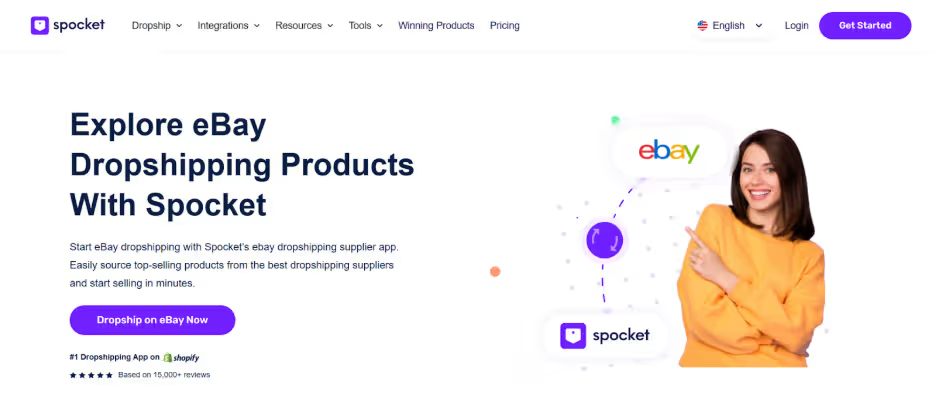
Channel B: Marketplace listings
Channel C: Content-led growth (slower start, compounding)
- YouTube
- TikTok/Shorts
- blog SEO
Step 7: Set a pricing strategy that doesn’t trap you
A common mistake is pricing too low, then burning out. Your side hustle should improve your life, not consume it.
Beginner pricing rule
Start with a “starter package” that’s easy to say yes to, then raise pricing after:
- 3 wins (good feedback/results)
- a repeat client
- proof you can deliver reliably
A simple ladder
- Starter: low risk, limited scope
- Standard: best value, most popular
- Premium: faster delivery + deeper outcome
If your side hustle is product-based (ecommerce, POD), your “pricing” is your margin structure. Don’t sell items with no room for ads, refunds, or platform fees.
Step 8: Build a weekly system so you don’t quit
A side hustle becomes real when it has a routine. You don’t need motivation—you need a system.
A realistic weekly plan (5–8 hours/week)
- 1 hour: outreach or posting content
- 2–3 hours: delivery / production
- 1 hour: improve your offer (portfolio, samples, templates)
- 1 hour: admin (tracking, invoices, scheduling)
- 30 minutes: learning / optimization
This is how you stack progress without burnout.
Side hustle ideas that fit 2026 trends
This section helps you pick ideas aligned with what’s working now and where demand is headed. Online-first work and flexible income options, especially through freelancing platforms and online marketplaces. Side businesses that can scale or tap into fast-growing industries. Let’s explore more!
High-paying skill hustles
These are strong if you want predictable income:
- Freelance writing and editing
- Social media systems for small businesses
- Bookkeeping/admin support
- Tutoring and coaching
- AI-assisted business workflows (helping small businesses use tools better)
Ecommerce side hustles that can scale
These are strong if you want something that can become a “real business”:
- Print on demand collections
- Curated product store
- Niche dropshipping
If you’re building an ecommerce side hustle, Spocket can support the sourcing and fulfillment side so you can focus on brand, product selection, and marketing rather than stocking inventory.
Content + affiliate side hustles
These are slower at first but can compound:
- YouTube channels in a niche you can sustain
- Blog SEO targeting buyer-intent queries.
- Newsletters with niche recommendations
This lane is often the closest to passive income, but it requires consistency upfront.
A practical 14-day launch plan for your first side hustle
If you want a simple start that doesn’t overwhelm you, follow this.
Days 1–2: Pick your lane + offer
- Decide service vs product vs content
- Write your “one sentence offer”
- Choose your niche audience
Days 3–4: Build 3 samples
- If service: create mock examples
- If ecommerce: create 10 product angles and listing drafts
- If content: outline 10 topics
Days 5–7: Set up your storefront/profile
- Portfolio page or marketplace profile
- Simple intake form
- A pricing starter package
Days 8–14: Promote daily
- 10 outreach messages/day OR
- 1 piece of content/day OR
- 5 marketplace listings/day
The goal is not perfection. It’s volume + learning.
Common mistakes when starting a side hustle in 2026
A quick under-the-hood look at what usually goes wrong:
- Picking an idea you can’t sustain: If you hate the work, you won’t stick to it. Choose something you can do even on low-energy days.
- Overbuilding before validation: A logo, website, and brand kit won’t save an idea people won’t buy.
- Relying on one income stream: Diversify early when possible: a service + a small product, or content + affiliate.
- Ignoring basic admin: Track income, expenses, and time so your side hustle doesn’t become chaos. Practical guides often call out the importance of planning (and in some regions, taxes/requirements) when you start earning.
How to keep your side hustle growing after month one
Your first month is about proving you can start. Month two is about improving your economics. Focus on:
- Raising pricing or improving margins
- Reducing delivery time using templates and systems
- Converting one-off clients into retainers
- Building repeatable acquisition (weekly outreach or weekly content)
This is where a side hustle turns into a stable income stream.
Conclusion
Learning how to start a side hustle in 2026 is less about finding a “secret idea” and more about choosing a realistic lane, validating demand, and executing consistently. Start with a simple offer, choose one acquisition channel, and build a weekly system you can maintain. If you want to make money online, explore skill-based services first for quick cashflow.
If you want something that can grow into passive income, build assets—content, products, or ecommerce systems—over time. Either way, treat your side hustle like a small business from day one, and you’ll give yourself the best odds of real results (not just a short-lived attempt).
Ready to turn your side hustle into an online store? Start exploring products and launch your first listings with Spocket so you can sell faster, validate demand, and build a scalable income stream without managing stock.
Start your dropshipping business today
FAQs About How to Start a Side Hustle
What is the best side hustle to start in 2026?
The best side hustle is the one you can execute consistently and that has real demand. Many 2026 lists highlight flexible options like freelancing, online selling, and service-based gigs because they’re accessible and scalable.
How can I start a side hustle with no money?
Start with a skill-based offer like writing, editing, tutoring, or admin support. You can also create templates or simple digital products. These are common “make money without investment” paths because they require time and execution more than cash.
How long does it take for a side hustle to make money?
Service hustles can generate income within days if you do outreach consistently. Product and content hustles can take longer, but they can scale more over time. Guides for 2026 emphasize picking strategies that match your schedule and sticking with a plan.
Are side hustles still worth it with so much competition?
Yes, but the bar is higher. It’s easier than ever to start, which also means more competition—so you win with clarity, consistency, and better execution.
How do I choose between freelancing and ecommerce?
Freelancing is usually faster cashflow; ecommerce has more scaling potential. If you want to sell products without holding inventory, platforms like Spocket can support the operations while you focus on niche selection and marketing.


Launch your dropshipping business now!
Start free trial


Related blogs

Make Money With A Website Without Selling Anything
Learn how to make money with a website without selling anything using ads, affiliate marketing, and passive income strategies.


Make Money by Offering Online Presentation Design Services
Learn how to make money online with presentation design services: pricing, niches, packages, getting clients, selling templates, and scaling your income.


How to Make Money on Medium
A complete guide to earning on Medium: Partner Program, Boost, publications, writing frameworks, promotion, and extra income streams that stack.
