


How to Handle Negative Reviews for Your Dropshipping Store?
1 bad review can haunt your store for life. Learn exactly how to respond, when to refund, and how to turn negative feedback into a reason for new customers to trust you.
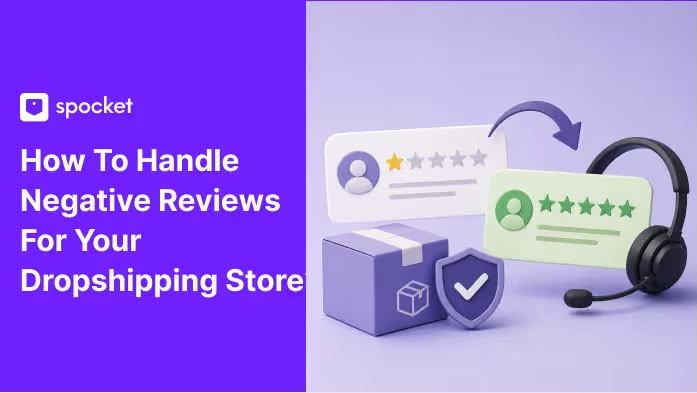

Nobody likes seeing a one-star review pop up in their store. Your stomach drops. You get defensive. You want to argue, explain, prove the customer wrong. That's human. But acting on that impulse will cost you more than the review itself. Because here's the thing most dropshippers don't realize: the person who wrote the review already left. They might never come back. But hundreds of future customers are about to read it, and they're watching how you handle it.
.webp)
A bad review isn't just a complaint. It's a public test of your customer service. Pass it and you earn trust from everyone watching. Fail it—by arguing, ignoring, or copy-pasting a generic apology—and you confirm every doubt a new visitor had about buying from an unfamiliar store. This guide walks through exactly how to read, respond to, and resolve negative feedback in a way that protects your store's reputation and sometimes even wins you a customer back.
Why Negative Reviews Hit Dropshippers Harder?
Dropshipping stores start with a trust deficit. You're not a known brand. The customer took a chance on you. When something goes wrong—a late shipment, a product that looks different from the photos, a sizing issue—it confirms their fear that your store isn't legit. Fair or not, that's the reality.
And because you don't control the fulfillment, some problems genuinely aren't your fault. A supplier changes packaging without telling you. A shipping carrier loses a package. The product quality dips on a reorder. It still lands on your store. It still has your name on the receipt. The customer doesn't care about your supplier relationship. They care that you sold them something and it didn't meet expectations.
So your response has to do two things at once. Address the individual customer's complaint with empathy and a solution. And signal to every future customer reading the exchange that you're a real business that fixes problems. That's the balancing act.
The Mindset Shift That Changes Everything
Before we get into templates and tactics, you need to reframe how you see negative reviews. Most store owners read a bad review as a personal attack. Someone publicly criticizing something you built. The instinct is to defend yourself.
Try this instead. Picture that customer standing at a physical checkout counter, telling you the exact same complaint to your face, while a line of other customers waits behind them, listening. How would you respond? You wouldn't argue. You wouldn't ignore them. You'd acknowledge the problem, apologize for the experience, and offer to make it right—knowing that everyone watching is judging whether they want to do business with you.
That's what's happening online. The original reviewer reads your response once. Hundreds of potential customers read it over the following months. Your response isn't really for the angry reviewer. It's for the silent audience deciding whether to trust you with their credit card.
How to Read a Negative Review Without Getting Defensive?
Here is how you go about it:
1. Give yourself space between reading and responding.
2. Never reply within five minutes of seeing the review. Your emotional brain is in charge during those first moments, and it will write something you'll regret.
3. Read the review twice. First, just absorb it.
4. Feel whatever you feel. Then read it again looking for the actual complaint beneath the emotion. "This product is garbage" usually means "This product didn't do what I expected." "Scam store, never buying again" often translates to "My order took three weeks and nobody communicated with me." The words are angry. The underlying issue is usually specific and fixable. Separate facts from feelings.
The facts are things like "the package arrived damaged" or "the color doesn't match the photo." Those you can verify and address. The feelings are "I'm disappointed" or "I feel ripped off." Those you acknowledge but don't debate. Nobody ever changed their mind because you explained why their feelings were wrong.
How to Respond to Negative Reviews?
A good response has four parts. Keep it short. Nobody reads paragraphs of corporate apology.
- Start with acknowledgement. Thank them for taking the time to leave feedback. Yes, even if the review was unfair. This signals maturity and shows other readers you're not defensive.
- Then apologize for their experience. Notice the wording. You're not admitting fault for something you didn't do. You're expressing regret that their experience fell short. "I'm sorry your order didn't arrive in the condition we expect" is different from "I'm sorry we messed up." The first is being honest when the problem happens somewhere in the supply chain. The second admits liability you might not want to admit.
- Then offer a resolution or explain what happened. If the product was damaged, offer a replacement or refund. If the shipping was late, explain what caused the delay and what you're doing to prevent it.
- If the customer misunderstood the product, gently clarify without blaming them. "The sizing chart in the product images shows that this item runs small, but we're working on making that even clearer" is better than "You ordered the wrong size."
- Finally, invite them to continue the conversation offline. Provide a support email or phone number. This moves any further back-and-forth out of public view and shows readers you're willing to personally handle problems.
Start your dropshipping business today
Dropship for Free with Spocket
Real Response Templates You Can Adapt
Here are some you can steal and use immediately:
1. For a late delivery complaint
"Thank you for your feedback, and I'm genuinely sorry your order took longer than expected to arrive.
We rely on shipping estimates from our suppliers, and sometimes delays happen that are outside our control. We're actively working to improve our delivery times by partnering with faster fulfillment centers. Please reach out to [support email] and I'll personally look into your order and make this right for you."
2. For a product quality issue:
"I appreciate you taking the time to share this. I'm sorry the [product] didn't meet your expectations. That's not the experience we want for any customer. We've shared your feedback with our supplier to prevent this from happening again. Please contact us at [support email] so we can arrange a replacement or refund right away."
3. For a sizing or fit complaint:
"Thank you for your review. I'm sorry the sizing didn't work out for you. We include a detailed size chart in our product images, but I understand it can still be tricky to get the right fit online. We're happy to exchange this for a different size, just email us at [support email] and we'll get that sorted."
4. For a review that's vague or seems unfair:
"Thank you for sharing your thoughts. I'm sorry to hear your experience wasn't what you hoped for. We'd love the chance to understand what went wrong and make it better. Please reach out to us at [support email] so we can address your specific concerns directly."
Notice what these all have in common. They're calm. They're specific. They offer a path forward. They never blame the customer. They never trash the supplier. They take ownership even when the fault is shared.
The Public Relations Bonus Most Store Owners Miss
When you respond well to a negative review, you're not just handling a complaint. You're marketing your store. Studies across the hospitality industry show that a majority of consumers read multiple reviews before making a purchase decision. They're looking for patterns. One bad review won't sink you. Ten bad reviews with zero responses will.
A thoughtful response to a one-star review tells a future customer, "If something goes wrong with my order, this business will take care of me." That's more powerful than ten five-star reviews from strangers. People know that problems happen. They want to know how you handle them.
If you want to see this in action, look at how Airbnb handles customer complaints. Their support team acknowledges, apologizes, and resolves, often within hours. That responsiveness builds trust even when the initial experience was bad. Your store can do the same thing on a smaller scale.
What to Do After You Respond?
Your response goes live. Now what?
If the customer replies and the conversation escalates, take it offline. "I'd love to resolve this fully. Please email me at [address] and I'll handle it personally." Don't get into a public back-and-forth. It looks messy and nobody wins.
If the issue was a genuine mistake on your end—a damaged product, a wrong item shipped—offer a concrete fix. Refund or replace. Don't just apologize into the void. Action backs up your words.
If the customer updates their review after you resolve the issue, that's gold. A one-star that becomes a three or four-star, with a note saying "the seller reached out and fixed everything," is more convincing than a perfect review from someone who had no problems.
When to Offer a Refund or Replacement?
Not every bad review deserves a refund. If the customer simply changed their mind or didn't read the product description, you can politely explain without giving away money. But when the fault is genuinely on your side—or when the review is so damaging that leaving it unresolved will hurt future sales—offer a real remedy.
A refund costs you the product cost and shipping.
Let's say that's $15. A one-star review sitting at the top of your page for six months could cost you dozens of sales. Do the math. Sometimes eating the $15 is the smarter business decision.
The same logic applies to reaching out proactively. If you see a negative review, don't just respond publicly.
Contact the customer directly through whatever channel you have. An email that says "I saw your review and I want to personally make this right" can flip someone from an enemy to advocate in 10 minutes. Not everyone will respond. But the ones who do often update their reviews.
Preventing Negative Reviews Before They Happen
The best way to handle bad reviews is to have fewer of them. That starts with your supplier choice. If you're sourcing from US-based suppliers through Spocket, the products ship faster and the quality is more consistent. That alone eliminates the biggest source of dropshipping complaints: long shipping times and products that look nothing like the photos.
Also, set expectations clearly on your product pages and during checkout. Show estimated delivery times before the customer buys. Include a size chart for clothing. Show multiple real photos of the product, not just the supplier's polished marketing shots.
Mention if a product runs small, if the color might vary slightly from the screen, if it's made from a material that wrinkles easily. Over-deliver on transparency. Under-promise and over-deliver on the product.
When you're browsing trending dropshipping products, look for items with clear descriptions and high-quality supplier photos. The less guesswork for the customer, the fewer disappointed reviews.
Conclusion
Negative reviews are going to happen. You can't control every supplier, every shipment, every customer expectation. What you can control is how you show up afterward. Read the review without defensiveness. Respond with empathy, a solution, and an invitation to connect offline. Treat every public reply as a message to future customers, not just the angry one. Do that consistently and your one-star reviews will actually help you sell more. Because people don't trust perfect stores. They trust stores that fix problems.
Ready to source products that generate fewer complaints in the first place? Start your free trial with Spocket and browse US and EU suppliers with fast shipping and consistent quality.
How to Handle Negative Reviews for Your Dropshipping Store FAQs
Should I delete negative reviews from my store?
No. Most platforms like Shopify don't allow you to selectively delete reviews unless they violate content policies. Even if you could, a store with only five-star reviews looks fake. Customers are suspicious of perfection. A few negative reviews with thoughtful responses builds more trust than a flawless rating.
How fast should I respond to a bad review?
Within 24 to 48 hours. Fast enough to show you're attentive, but not so fast that you reply emotionally. Give yourself at least an hour between reading and responding. A calm, considered reply beats a speedy one that sounds defensive.
What if the review is completely unfair or untrue?
Respond politely with the facts, but don't call the customer a liar. "We've reviewed your order and our records show that the item was delivered within the estimated timeframe we provided at checkout" is professional. "You're wrong and your review is fake" is not. Let the facts speak without attacking the reviewer.
Can I offer a refund in exchange for removing a bad review?
Be careful with this. Some platforms prohibit offering incentives for review removal. Instead, resolve the issue first—send a replacement, process a refund—and then politely ask if they'd consider updating their review to reflect the resolution. Never demand it as a condition.
Should I respond to positive reviews too?
Yes. It shows you're engaged across the board, not just doing damage control. A simple "Thank you for your kind words, we're so glad you loved the product" goes a long way. It also encourages more customers to leave reviews knowing you'll actually read them.


Launch your dropshipping business now!
Start free trial.avif)


Related blogs
Dropshipping Supplier Directory: Where to Find Vetted Suppliers
Browse our directory of vetted dropshipping suppliers across the US and EU, complete with niches, shipping speed, and pricing. Start your free trial today.

How to Negotiate With Dropshipping Suppliers: 9 Tactics That Actually Work
Learn how to negotiate with dropshipping suppliers on price, MOQs, and payment terms. Proven tactics and email scripts to boost your margins. Try Spocket free.

Best Clothing Dropshipping Suppliers: The 2026 Guide
Compare the best clothing dropshipping suppliers for 2026 — US/EU shipping speeds, pricing, and product quality — and find the right fit to launch your store.
