How to Get Paid to Talk to Lonely People Online: Start Here If You’re New!
Get paid to talk to lonely people online and earn in USD. We’ve reviewed 10 legit sites that help you get paid for talking to strangers on the internet.


As much as you'd hate to admit it, getting paid to talk to lonely men or lonely people in general through various online platforms can make you good money. You can offer platonic companionship, emotional support, and set your own rates and availability. You can be a virtual friend, someone empathetic, or just assist seniors and get through their daily tasks all completely online from the comfort of your home. If this sounds like a gig that you're interested in, and you want to make money by talking to lonely people online, then keep reading.
How It Works

Sounds very simple, right? Every night, after you're done with work, you can set aside some time, relax, and just chat with someone online. I know it sounds ridiculous, but you do get paid for it. And when you lend your ears to someone who is having a hot tea, you just feel rewarded. Like as if you're making a good difference. Of course, this is not a full-time gig. We would consider this more of a side hustle or something to kill your time with, but it's worth it than talking to strangers online free.
And the best part? You get paid in USD!
Make Money Talking to Lonely People Online: 10 Legit Sites that Pay in USD
So, where do you find good websites that pay money to talk to lonely people online? We've rounded up the list for you! Here are the best sites to make money talking to lonely people online in 2026:
1. FriendPC
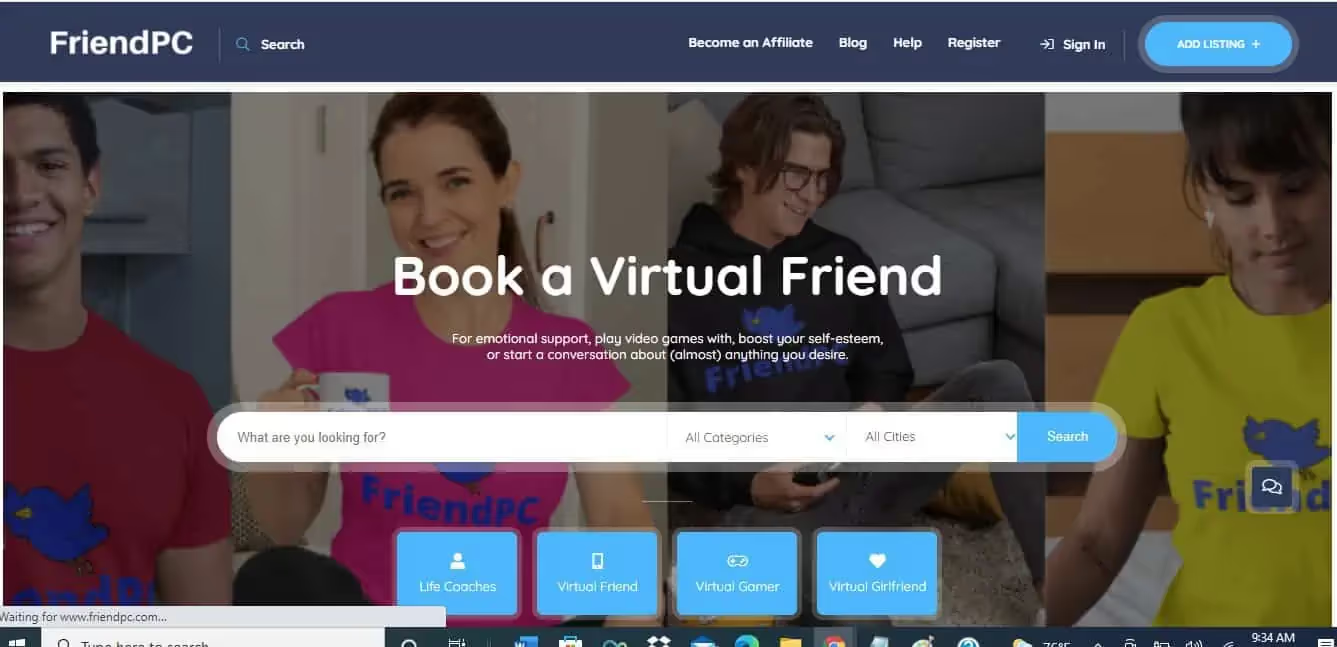
FriendPC works simple. You sign up, create a profile, and wait for users to request you as a cyber friend. Once matched, you chat via text or sometimes video. The platform handles all the payments, so you don't have to worry about invoicing or tracking who owes you what.
The catch? Payment isn't instant. FriendPC pays monthly, which means if you start talking to people on January 5th, you won't see money until February. That's something to keep in mind if you need cash urgently. Also, they don't pay a flat rate. Instead, you earn per minute—typically somewhere around $0.50 to $1 per minute, depending on the service and what you offer.
Who uses FriendPC? Mostly older adults looking for casual conversation, people dealing with isolation, and sometimes folks just wanting to vent or talk about their interests. The conversations are usually light. Someone might want to chat about their garden, their pets, or just how their day went. Nothing crazy heavy, though the occasional person will want deeper emotional support.
Some people get 10 chats a week; others get 50. If you're starting out, expect to earn anywhere from $50 to $300 a month if you're putting in a few hours a week. Scale that up, and you could hit $500 to $1,000 monthly if you're online regularly and build a small base of repeat users.
2. Talkroom

Talkroom works differently than FriendPC. Instead of waiting for users to find you, you browse available chat requests and claim them. Someone posts that they want to chat about fitness, movies, or just need someone to listen, and you jump in if it interests you.
The upside? You have more control. You're not sitting around waiting; you're picking conversations that actually appeal to you. The downside is competition. Other chat providers are seeing the same requests, so if you're slow to respond, someone else grabs it.
Payment on Talkroom typically ranges from $0.25 to $1 per minute, depending on the conversation type. Some chats pay better than others—emotional support or specialized topics sometimes command higher rates. You get paid weekly, which is faster than FriendPC. Weekly payments mean you see money quicker, which matters if you're using this to cover bills.
3. Rent a Cyber Friend

This one's blunt about what it is: you're a cyber friend. Not a therapist, not a life coach, just someone to talk to. That clarity helps. You know what you're signing up for.
Rent a Cyber Friend operates on a profile-based system similar to FriendPC. Users browse friend profiles and send requests. Rates usually sit between $1 to $3 per hour—not per minute, per hour. So if someone books you for two hours, you make $2 to $6. That sounds lower than the per-minute platforms, but the math can work out if you get regular bookings.
Payment comes biweekly. That's decent timing—not as fast as weekly, but faster than monthly. The platform takes a cut, obviously. They handle payment processing, customer service complaints, and profile hosting, so they earn their share.
If you get three 2-hour bookings per week, you're making $6 to $18 weekly, or $24 to $72 monthly. If you build a base of regular users who ask for you by name, that number climbs. Some people on this platform have rotations of 5-10 repeat customers, which means predictable income and less time spent on new-customer onboarding.
4. Rent a Local Friend

Rent a Local Friend is more flexible about what you offer. You can chat, but you can also offer other services like video calls, longer-term mentorship, or even helping someone plan an event via messaging. Some providers get creative and bundle services.
The rate structure here is $15 to $50 per hour depending on what you're offering and your experience. That's noticeably higher than the other platforms. Why? Because the platform attracts users willing to pay premium rates. They're not looking for a quick 15-minute chat; they're booking an hour or more.
You set your own prices within the platform's range. That's important to know when you get paid to talk to lonely people online there. You're not locked into a single rate. If you're good at what you do and get five-star reviews, you can charge toward the higher end. New providers often start lower to build reviews, then bump prices up.
Payment is weekly, and the platform takes a smaller percentage than some competitors. You earn $12 to $45 per hour after their cut. If you book 10 hours a month, that's $120 to $450. Book 20 hours, and you're at $240 to $900.
One consideration: this platform requires a more professional approach. Your profile matters. You need a good photo, a clear bio, and reviews. Users are paying premium rates, so they expect quality time. If you're serious about this as income, Rent a Local Friend can work.
5. Circle of Friends

Circle of Friends positions itself as a social app where people hire companions for conversation. It's newer than some of the other platforms, which means less competition but also a smaller user base.
The earning model is per-minute at $0.75 to $1.50 per minute. Payment is weekly. The platform handles verification and matching, so you're not spending time hunting for users like you would on Talkroom.
What's different here? Circle of Friends emphasizes friendships over one-off chats. The algorithm tries to match you with users you'll actually enjoy talking to, not just whoever requests you. If it works, you end up chatting with the same people regularly, which means easier, more enjoyable income. Yes, it helps you get paid to chat online.
6. Friend.com

Friend.com is one of the older platforms in this space. It's established, stable, and has a large user base, which means steady work if you sign up.
Rates range from $1 to $2 per minute, paid weekly. The platform takes about 30% of earnings, which is standard. You can work as much or as little as you want—there's no minimum.
The user base skews older and more isolated, so conversations often feel meaningful. People aren't just killing time; they're genuinely lonely. That can be emotionally taxing, but it also means people are likely to rebook you if you're kind and consistent.
One drawback: Friend.com has stricter rules about conversation topics. They don't allow political debates, adult content, or anything that could be problematic. That's actually good for professionalism, but it does limit what you can discuss.
7. Wealthy Men Dating

This one's a bit different. Wealthy Men Dating lets you earn by having audio conversations with men—usually older, often looking for companionship or dating prospects. It's not romantic; it's companionship income.
The rates? $50 to $200 per hour depending on demand and your profile. That's significantly higher than text-based platforms. Why? Because it's live audio, requires more time commitment, and there's higher demand from users willing to pay.
Payment is weekly and you can earn money by chatting with strangers online. You need to be comfortable with voice calls and can handle longer conversations (sometimes 1-2 hours at a time). The job itself is lighter on emotional labor than some platforms—you're chatting, not necessarily doing deep emotional support work.
One 2-hour call pays $100 to $400. If you get two calls a week, you're making $200 to $800 weekly. Scale up to three calls, and you're looking at $300 to $1,200 weekly. That's real money.
The trade-off: it requires you to be "on" for longer stretches, and the audience is specific. If you're not comfortable chatting with older men for extended periods, this isn't for you.
8. Fiverr

Fiverr isn't designed just for this, but plenty of people use it to offer companionship services. You set your own rate and create a gig description. Customers find you through search or browse.
Rates vary widely. Some people charge $10 for 30 minutes of chat; others charge $30. Fiverr takes 20% of earnings, and you keep 80%.
The advantage of Fiverr is control and direct customer relationships. You set everything—price, boundaries, service details. No platform algorithm; it's just you and your gig description.
The downside is competition and discoverability. Thousands of people offer similar services, so standing out requires a great profile, good photos, and positive reviews. You're also doing all the marketing yourself.
Earning potential depends on your pricing and how often you get bookings. Charge $20 per hour and get 10 bookings monthly, you're making $200. Get 30 bookings, and you're at $600.
9. GiggleCrowd
GiggleCrowd is a UK-based platform, but they accept providers from several countries. It's focused on text-based companionship for isolated or lonely individuals.
Payment is per minute at $0.50 to $0.80 per minute, paid weekly. The user base is smaller than US-focused platforms, but users tend to be committed repeat customers. You might chat with the same person three times a week.
What makes GiggleCrowd different? They prioritize kind, patient people. If you're the type who genuinely enjoys listening, this platform values that. Users appreciate consistency and genuine interest in their lives.
Income is modest but predictable. Regular users mean you can count on steady bookings. Three 30-minute chats a week could net you $45 to $72 weekly, or around $180 to $290 monthly. Not huge, but stable.
10. CuddleComfort

CuddleComfort is mainly physical cuddling services, but they also have virtual cuddle sessions via video. Some providers do video calls where they chat while doing calming activities like reading or just being present.
Rates are $50 to $100 per hour for video sessions. Payment is weekly via PayPal.
The catch? You need to be comfortable on video, and you're essentially charging for your time and presence in a calm, nurturing way. It's less about having interesting conversations and more about being a calming presence.
If you're good at this, the income is solid. Two 1-hour sessions per week at $50 per hour is $100 weekly or $400 monthly. At the higher rate, it's $800 monthly.
Conclusion
Talking to people online for money isn't a get-rich-quick scheme. It's a legit side hustle that takes patience and consistency. Some months you'll make $100; other months you might hit $500 or more depending on how much time you put in, which platform you choose, and how good you are at connecting with people.
If you enjoy talking to people, listening without judgment, and being patient with folks who might be struggling, you can build real income here. Not life-changing money for most people, but helps pay the bills. So, yes, get paid to talk to lonely people online and have fun! You can also earn money with Spocket on the side.
Start your dropshipping business today
Get Paid to Talk to Lonely People FAQs
How much can I actually make talking to lonely people online?
It depends on the platform and how often you're available. Most platforms pay between $0.50 and $3 per minute for text chat, or $15 to $100 per hour for longer conversations. If you do 10 hours of chatting per week, expect $75 to $1,000 monthly depending on rates. Realistic expectation for casual part-time work: $200 to $500 monthly.
Is it safe to talk to strangers online for money?
Most platforms have safety features like user verification, the ability to block people, and reporting systems. You stay anonymous using a username, and you never share personal information like your address or phone number. Choose established platforms with good reviews, and trust your instincts—if a conversation feels off, you can end it.
Do I need experience or special skills to get started?
No special skills required. You just need to be a good listener, patient, and able to hold a conversation. Some platforms prefer people over 18, and background checks vary. Start with your profile and be honest about what you enjoy talking about. Users appreciate genuine interest over polished expertise.
Can I do this full-time instead of part-time?
Technically yes, but most people treat it as a side gig because income fluctuates. If you're online 40 hours a week and average $1 per minute across chats, you'd make around $2,400 monthly. That's possible but requires consistency and a solid customer base. Many people combine it with other work.
What if someone asks me for personal information or tries to meet me offline?
Don't give it out. These platforms have clear policies against users requesting personal details or trying to move conversations off the platform. Report anyone who asks, and you can block them. The platform's job is to keep you safe; they take these violations seriously.
How do I get paid, and is it reliable?
Most platforms pay via PayPal or direct deposit weekly or biweekly. Money goes into your account automatically. Established platforms like FriendPC, Talkroom, and Friend.com are reliable about payments. Newer or smaller platforms might be slower or less transparent. Read reviews and start with established options if you're worried.


Launch your dropshipping business now!
Start free trial.avif)


Related blogs
How to Set Up Automated Order Fulfillment With Spocket and Shopify
Set up a smoother Shopify dropshipping workflow with Spocket by connecting your store, importing products, processing orders, syncing tracking, and reducing manual fulfillment tasks.


How to Open a Business Bank Account for Your Dropshipping Store
Set up your dropshipping finances the right way with a dedicated business bank account built for payouts, supplier payments, taxes, and long-term store growth.
Spocket vs Dropified: Which Tool Is Better for Multi-Store Scaling?
Compare Spocket and Dropified for multi-store dropshipping, supplier quality, automation, fulfillment, product sourcing, and scaling across ecommerce platforms.